
Zone heat for a winter as demanding as Minneapolis's, without a flue.
Weeping Water sees winter lows averaging 14°F and a heating season long enough to rival parts of the Upper Midwest. An electric fireplace adds real supplemental warmth to a room without new venting, a gas line, or a chimney permit.
Every Project Starts From One of These Five Situations
A village-sized retrofit that doesn't touch the chimney.
At 1,083 feet in Cass County, Weeping Water doesn't look like a cold-climate town on a map, but the numbers tell a different story—a long, cold heating season and winter lows averaging 14°F put it closer to Minneapolis than to the mild image some outsiders have of eastern Nebraska. In a village of just over 1,000 people, a lot of the housing stock is older farmhouse construction, some of it built with masonry fireplaces originally meant to burn the oak, hickory, and cottonwood that still grow along the Weeping Water Creek bottomland. Few of those fireplaces see wood burned in them regularly anymore, and that's where electric fits in.
Omaha Public Power District serves the area at a residential rate around 12.36 cents per kWh, which is reasonable enough that running a 1,500-watt electric insert or built-in unit through a cold evening doesn't carry much sting. Electric units plug into a standard outlet or tie into a single dedicated circuit, so there's no gas line to run and no masonry work to inspect—a real advantage in a small village where finding a crew for chimney repair or a new gas tie-in can mean a longer wait than it would in a larger town nearby.
Three steps. No salesperson until you're ready.
Tell us about your project
Your zip code, your situation, and the fuel you're leaning toward—or let the answers point you to one.
See what's actually available
The brands dealers within 100 miles genuinely carry—real options, never a catalog mirage.
Get your dealer & Project Guide
A trusted local dealer, plus the free Project Guide & Parts List that names every component of the job.
Frequently Asked Questions
How much does an electric fireplace installation cost in Weeping Water?
A plug-in electric insert or freestanding unit typically runs $300 to $1,200 installed, since it needs nothing more than an existing outlet and a surround. A built-in wall unit that calls for a dedicated 20-amp circuit and some minor framing runs higher, usually $1,200 to $2,500, depending on whether an electrician needs to run new wire from the panel. Either way, there's no chimney or venting work to price in, which keeps electric well below what a wood or gas project costs in town.
Do I need a permit for an electric fireplace in Weeping Water?
In most cases, no—a plug-in unit on an existing circuit doesn't trigger a permit. If you're having a built-in unit wired to its own dedicated circuit, that electrical work generally needs a permit through the Cass County Building and Zoning Department, since Weeping Water is unincorporated-adjacent in terms of inspection authority for a lot of residential electrical work. Your installer or electrician will know which of your project's steps actually require sign-off.
Will an electric fireplace actually heat a room when it's 14°F outside?
It will warm a single room effectively, but it's built for zone heat, not for carrying a whole house through a Cass County cold snap. Most residential units are rated around 1,500 watts, or roughly 5,000 BTU—enough to noticeably warm a living room, finished basement, or bedroom on top of whatever your furnace is already doing, but not a replacement for central heat on a night when the average low sits at 14°F. Homeowners here mostly use electric fireplaces to take the edge off a specific room so the furnace doesn't have to work as hard in that space.
What does an electric fireplace cost to run on OPPD's rates?
At Omaha Public Power District's residential rate of about 12.36 cents per kWh, a typical 1,500-watt unit costs roughly 19 cents an hour to run on full heat. Run it eight hours an evening through a cold stretch and you're looking at about $1.50 a day, or $40 to $50 a month if it's going daily all winter. That's considerably cheaper to operate than most people expect, and it's one reason electric units have stayed popular for finishing basements and bonus rooms around town.
Can I put an electric insert into my home's old masonry fireplace?
Yes, and it's one of the more common electric projects in Weeping Water's older housing stock. A lot of farmhouses here were built with a masonry firebox originally meant for oak or hickory, and many of those chimneys have gone unused for years and would need real money spent on relining or repair to burn wood safely again. An electric insert slides into that same opening, uses the existing mantel and surround, and skips the chimney work entirely—a practical fix when the fireplace is more for the room's character than for heat.
Electric vs. gas—which makes more sense for a Weeping Water home?
It depends on what's already run to your house. Gas fireplaces work well here too, but without a natural gas utility serving most of the village directly, a lot of homes rely on propane, which means a tank, a line, and ongoing delivery costs. Electric skips all of that—no fuel storage, no delivery truck, just a circuit—which makes it the simpler and often cheaper option for a supplemental unit, especially in a room where running new gas line isn't practical. Homes already on propane for their furnace sometimes still choose electric for a second fireplace just to avoid adding another gas appliance to the mix.
How much maintenance does an electric fireplace actually need?
Very little compared to a wood or gas unit—there's no chimney to sweep and no burner or pilot assembly to service. Most upkeep is dusting the vents and occasionally replacing the LED light strip or heating element after years of regular use, which is a DIY job on most models. That low-maintenance profile is part of why electric units are a popular add for finished basements and guest rooms in Weeping Water, where homeowners want supplemental warmth without another system to maintain.
What size electric fireplace do I need for my room?
For a typical bedroom or den in the 150 to 300 square foot range, a standard 1,500-watt unit is plenty given Weeping Water's winters, since it's meant to supplement your existing furnace rather than replace it. Larger open living spaces, common in some of the renovated farmhouses around town, may do better with a wider built-in model or two smaller units placed strategically rather than one oversized unit—a local dealer can walk through your layout and ceiling height before you buy.
Are there any rebates through OPPD for an electric fireplace?
Omaha Public Power District runs energy-efficiency programs periodically, but they're typically aimed at larger-impact upgrades like heat pumps, insulation, and smart thermostats rather than supplemental electric fireplaces, which draw relatively little compared to a home's primary heating system. It's still worth checking OPPD's current program list before you buy, since offerings change year to year, but most Weeping Water homeowners budget for the unit itself rather than counting on a rebate to offset it.
Can I put a TV above my fireplace?
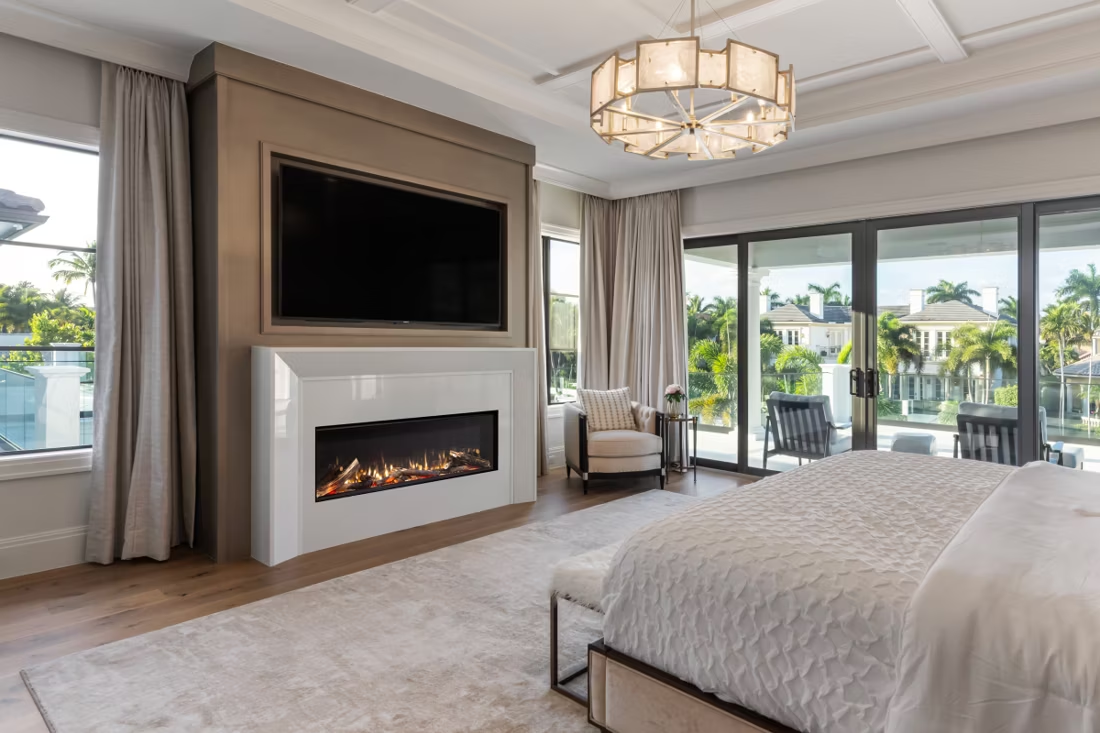
Yes—with an asterisk. Fireplaces are hot and TVs don't like heat. Either put a mantel between them to deflect rising warmth, or choose a fireplace with heat-management technology that creates a cool zone on the wall above—the wall stays around 125 degrees, barely warm, while the room still gets full heat. If you like clean lines and don't want a mantel, heat management is the answer.
Does an electric fireplace need a vent or chimney?
No—that's its superpower. An electric fireplace needs a wall and an outlet, period. No vent pipe, no gas line, no clearances to design around, which is why it works in bedrooms, offices, apartments, and walls where venting a gas or wood unit would be impractical or impossible. Installation is typically the simplest and least expensive of any fireplace type.
Can a fireplace actually lower my heating bill?
Yes—by creating a comfort zone. A furnace heats every square foot of the house just to warm the one room you're in; a gas fireplace on low burns roughly a sixth of the gas a typical furnace does. Set the furnace around 55–60 degrees as a baseline, then heat the rooms your family actually uses. Families who heat this way commonly save $20–$60 a month.
What is an in-home preview and do I need one?
It's a visit where a hearth professional measures your space, confirms the model you picked actually works in your home, and walks the specs—framing, gas line, venting, finish work—before anything is ordered. Some details you just can't know until you see the house. Never make a down payment without one; it's the single most-skipped step that burns buyers.
Nearby Dealers
Hearth shops serving Weeping Water and the surrounding area. Every listing shows whether it is a WhyFire partner, a dealer we have verified as authorized for the brands we recommend, or a local business carrying hearth products. No manufacturer pays for placement. How we verify dealers →
We’ve paused dealer listings for this connection today. Enter your zip or postal code above to find dealers near you, or come back tomorrow.
Popular Electric Brands
Where each brand came from, what's inside it today, and every current model. No brand pays to be here. Not every dealer carries every brand, so enter your zip code to see what's sold near Weeping Water.
Fireplace Xtrordinair
Fireplace Xtrordinair, now often called FireplaceX, is the fireplace brand of Travis Industries, Inc., of Mukilteo, Washington.
5 electric models →DaVinci
DaVinci Custom Fireplaces is a brand of Travis Industries, Inc., of Mukilteo, Washington, the company behind Lopi and Fireplace Xtrordinair.
5 electric models →Kozy Heat
Kozy Heat was founded in 1976 by Dudley Hussong in Lakefield, Minnesota, and incorporated as Hussong Manufacturing Co., Inc. in 1978.
3 electric models →Forge & Flame
Forge & Flame is the stove brand Hearth & Home Technologies introduced in August 2023 to bring Vermont Castings, Harman, and Quadra-Fire under one name.
1 electric model →Electric Service in Weeping Water
An electric fireplace's heater draws about 1,500 watts—pennies per hour at local rates.
Omaha Public Power District
Get your free Project Guide & Parts List for a Weeping Water electric fireplace.
Tell us about your home and which room you're heating, and we'll help you find a trusted local dealer and send a free Project Guide & Parts List with the right unit, circuit requirements, and installation steps for your project.
Find Your Fireplace →