
Real ambiance and zone heat for Yellowstone County, without a chimney.
From Billings to Laurel to Lockwood, electric fireplaces give you flame and warmth in rooms that don't have a flue—no venting, no gas line, no cutting permit. Find the right unit and connect with a trusted local dealer.
Every Project Starts From One of These Five Situations
Zero emissions, zero venting, heat exactly where you need it.
Yellowstone County runs along the Yellowstone River valley from the Billings Rims out through Laurel, Lockwood, Huntley, and Shepherd, with a long, cold winter season and winter lows averaging around 18°F. That's a real cold-climate load—comparable to Fargo, ND—and it's why wood, gas, and pellet all remain standard heating fuels here. Electric fireplaces don't try to replace that primary heat load; instead they've become the go-to choice for finished basements, condos, primary bedrooms, and newer subdivisions in Lockwood and Billings Heights where there's no masonry chimney and no interest in cutting one in.
NorthWestern Energy serves electric power across most of the county, and a plug-in or built-in electric unit draws on that existing service rather than requiring a new gas line or a permitted chimney. That matters during the wildfire smoke events that hit south-central Montana most summers and falls—an electric fireplace produces zero combustion byproducts, so it stays usable for ambiance and supplemental heat on the same days a wood stove might be discouraged. It's also the fastest and least disruptive install of any fuel type, which is why so many Yellowstone County homeowners add one to a room a furnace vent doesn't quite reach.
Three steps. No salesperson until you're ready.
Tell us about your project
Your zip code, your situation, and the fuel you're leaning toward—or let the answers point you to one.
See what's actually available
The brands dealers within 100 miles genuinely carry—real options, never a catalog mirage.
Get your dealer & Project Guide
A trusted local dealer, plus the free Project Guide & Parts List that names every component of the job.
Frequently Asked Questions
How much does an electric fireplace installation cost in Yellowstone County?
A plug-in electric insert that drops into an existing fireplace opening or fits a small console typically runs $300 to $800 with no electrical work required beyond an existing outlet. A built-in wall unit or linear electric fireplace with a custom surround and a dedicated 20-amp circuit usually lands between $1,200 and $3,500 once a licensed electrician is involved. Premium linear units with full mantel work, tile, or stone surrounds in a Billings remodel can reach $4,000 to $5,000. Because there's no venting or gas line to run, electric installs are consistently the least expensive and fastest of the four fuel types in the county.
Can an electric fireplace actually heat a room, or is it just for looks?
Most electric fireplaces put out around 5,000 BTU (roughly 1,500 watts) of real resistance heat, enough to comfortably warm a 300 to 400 square foot room—a bedroom, den, or finished basement space. Given Yellowstone County's long, cold winter season and regular sub-20°F winter mornings, an electric unit isn't sized to replace a furnace or a wood stove as whole-home heat; it's supplemental, zone heat for the room it's in. Homeowners here typically pair one with central heat or a wood/gas appliance elsewhere in the house rather than relying on it alone through a Montana winter.
Do I need a permit to install an electric fireplace in Yellowstone County?
A plug-in unit that uses an existing outlet generally doesn't require a permit. A built-in electric fireplace that needs a new dedicated circuit does require an electrical permit, typically pulled through the City of Billings Building Division inside city limits or Yellowstone County for unincorporated areas like Lockwood or Broadview. The work itself needs to be done by a licensed electrician regardless of permit status—running a new 20-amp circuit isn't a DIY job most local dealers will sign off on if someone else did the wiring.
What's the difference between an electric insert, a wall-mounted unit, and an electric stove?
An electric insert is built to slide into an existing masonry or zero-clearance fireplace opening, giving an old wood-burning fireplace a flame effect and supplemental heat without touching the chimney. A wall-mounted or built-in linear unit is designed into new framing—common in Billings remodels and new Lockwood construction—and offers the widest range of sizes and flame styles. An electric stove is a freestanding cabinet-style unit that mimics a wood stove's footprint, which works well in a cabin or a room where you want the look of a stove without the wood handling. All three plug into standard household current or a dedicated circuit, depending on wattage.
Are electric fireplaces a good option during wildfire smoke season?
Yes—this is one of the clearest local advantages. South-central Montana, including Yellowstone County, sees wildfire smoke advisories most summers and into early fall, and burning wood on heavy smoke days adds to an already degraded airshed. An electric fireplace produces no combustion emissions at all, so it stays fully usable for ambiance or supplemental warmth regardless of local air quality conditions. It's one reason some homeowners with an existing wood stove add an electric insert or unit as a smoke-season alternative in another room.
Will my electric fireplace work during a power outage?
No—an electric fireplace requires household power to run, so it will not operate during an outage, unlike a wood stove or many gas units with battery-backup ignition. Yellowstone County sees winter storms that can knock out power for hours at a time, particularly in outlying areas like Molt, Broadview, and Shepherd. If backup heat during outages matters to your household, most local dealers recommend pairing an electric fireplace (for everyday ambiance and zone heat) with a wood stove, insert, or generator-ready setup elsewhere in the home rather than relying on electric as your only heat source.
Electric vs. wood—which is right for my Yellowstone County home?
Wood remains a serious primary or backup heat source here—BLM's Montana State Office issues cutting permits for public land at $10 per cord during the April-to-October season, and local species like lodgepole pine, ponderosa pine, Douglas fir, and aspen are all common and burn well. Wood works without power, which matters given winter storm outages, but it requires venting, chimney maintenance, and hauling and stacking cordwood. Electric requires none of that—no venting, no permit for a plug-in unit, no smoke—but it depends entirely on grid power and won't carry a home through a multi-day outage. Many Yellowstone County households run both: wood or a wood insert for real backup heat, electric for supplemental warmth in a room the wood stove doesn't reach.
How much does it cost to run an electric fireplace day to day?
A typical 1,500-watt electric fireplace running on the heat setting for five hours costs roughly $0.75 to $1.00 per day at NorthWestern Energy's average residential electric rates—considerably cheaper than most people assume, though it adds up over a full Yellowstone County heating season if used as a primary supplemental source. Running the unit flame-only, without the heater engaged, draws only a few watts and costs pennies per day, which is why many homeowners use theirs for ambiance year-round and reserve the heat function for the coldest stretches.
Electric vs. gas fireplace—which should I choose?
Gas fireplaces put out significantly more heat (typically 20,000+ BTU on a direct-vent unit) and can serve as real supplemental or even primary zone heat through a Yellowstone County winter, but they require a gas line or propane tank and a properly vented flue. Electric fireplaces max out around 5,000 BTU, produce no venting requirement at all, and install in a fraction of the time and cost—often in a single afternoon. For a room with existing gas service and a real heating need, gas usually wins on output. For a retrofit into a condo, a basement, or a room without gas access where ambiance and modest supplemental heat are the goal, electric is typically the simpler and more cost-effective call.
Does an electric fireplace need a vent or chimney?
No—that's its superpower. An electric fireplace needs a wall and an outlet, period. No vent pipe, no gas line, no clearances to design around, which is why it works in bedrooms, offices, apartments, and walls where venting a gas or wood unit would be impractical or impossible. Installation is typically the simplest and least expensive of any fireplace type.
Can I put a TV above my fireplace?
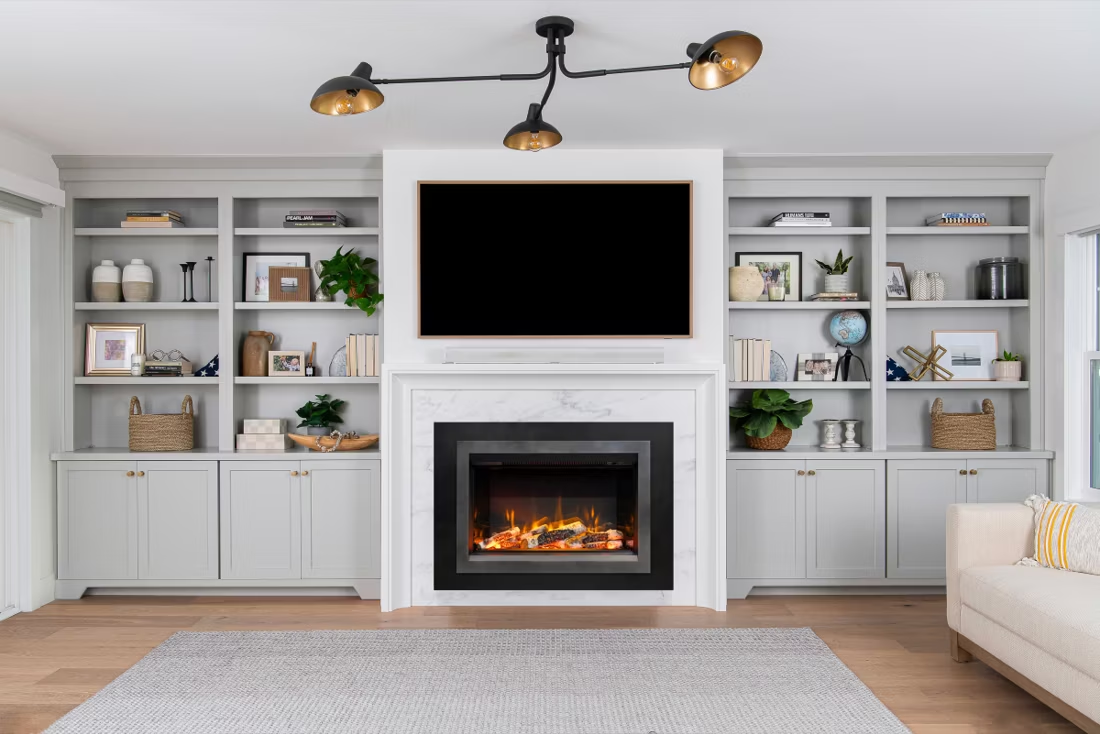
Yes—with an asterisk. Fireplaces are hot and TVs don't like heat. Either put a mantel between them to deflect rising warmth, or choose a fireplace with heat-management technology that creates a cool zone on the wall above—the wall stays around 125 degrees, barely warm, while the room still gets full heat. If you like clean lines and don't want a mantel, heat management is the answer.
Can a fireplace actually lower my heating bill?
Yes—by creating a comfort zone. A furnace heats every square foot of the house just to warm the one room you're in; a gas fireplace on low burns roughly a sixth of the gas a typical furnace does. Set the furnace around 55–60 degrees as a baseline, then heat the rooms your family actually uses. Families who heat this way commonly save $20–$60 a month.
Does a fireplace add value to my home?
On average, a fireplace adds back to the home about the same amount you spent installing it. Add the monthly savings from heating the rooms you actually use instead of the whole house—often hundreds of dollars a year—and the value case is strong before you even count what a fire does for how your family uses the room.
Stove and Fireplace Dealers in Yellowstone County
Listings include WhyFire partner dealers, dealers we have verified as authorized for the brands we recommend, and established local businesses that carry hearth products. Every listing shows which one it is. The ones marked Preferred run on WhyFire's software, so they can show you real pricing and book your appointment right here. No manufacturer pays for placement. How we verify dealers →
White Heating & Air Conditioning
Stove Doctor
Find your electric fireplace in Yellowstone County.
Tell us a bit about your home and we'll put together a free Project Guide & Parts List for your electric fireplace project—the right unit, the exact parts, and a recommended local dealer in Yellowstone County to install it.
Find Your Fireplace →