
Heat that holds up through a Billings winter.
Wood, gas, pellet, and electric fireplace resources for every city and rural community in Yellowstone County—from Billings to Broadview. Find the right unit and connect with a trusted local hearth retailer.
Every Project Starts From One of These Five Situations
Rimrock country heating across Yellowstone County, Montana.
Yellowstone County stretches across the high plains and river breaks of south-central Montana, anchored by Billings along the Yellowstone River. At Zone 6B with roughly 6,754 heating degree days and average winter lows around 18°F, this is a heating climate closer to Bismarck ND than to milder parts of the Mountain West—cold fronts drop off the Beartooth foothills and settle over the valley for days at a time. Lodgepole and ponderosa pine from BLM Montana State Office lands, along with douglas fir and aspen, have long supplied local woodstoves, and a solid stretch of the county still relies on wood or pellet heat as a primary or backup source when the wind picks up and the power grid is stressed.
What you'll find on this hub: hearth retailers, service technicians, and fuel suppliers serving every community in the county—from Billings and Laurel out to Shepherd, Broadview, and the rural stretches along the Yellowstone River. Pick your fuel below to drill into specifics—local dealers, installation costs, recommended units, and the resources that match your project. Whether you're heating a Billings rimrock home or a ranch house outside Broadview, this is the starting point.
Four fuels. One honest answer for Yellowstone County.
Wood
19 models available near Yellowstone County.
Find your wood stove →Gas
104 models available near Yellowstone County.
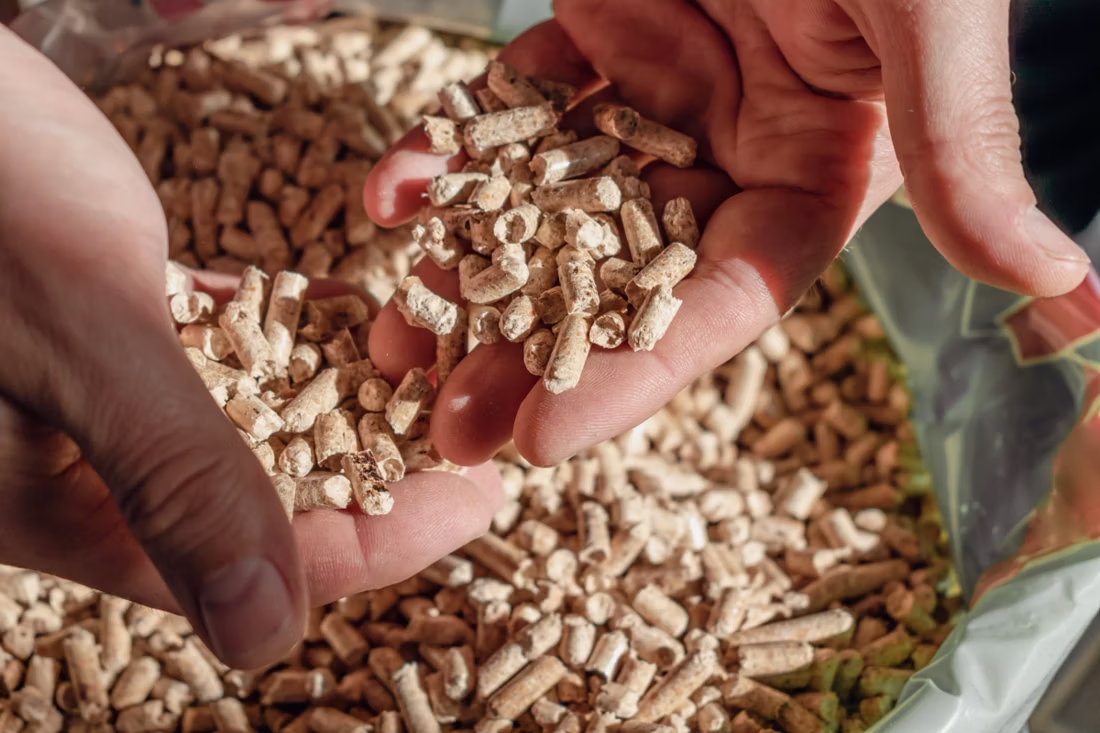
Find your gas fireplace →Pellet
See what's available near Yellowstone County.
Find your pellet stove →Electric
See what's available near Yellowstone County.
Find your electric fireplace →Three steps. No salesperson until you're ready.
Tell us about your project
Your zip code, your situation, and the fuel you're leaning toward—or let the answers point you to one.
See what's actually available
The brands dealers within 100 miles genuinely carry—real options, never a catalog mirage.
Get your dealer & Project Guide
A trusted local dealer, plus the free Project Guide & Parts List that names every component of the job.
Frequently Asked Questions
Which fuel works best in Yellowstone County?
It depends on your home and how you use it. Wood remains a strong primary or backup option in Yellowstone County—lodgepole and ponderosa pine sourced through BLM Montana State Office permits burn hot and clean, and a catalytic or non-catalytic stove holds a fire through the long, wind-driven cold fronts that roll off the Beartooths without needing grid power. Gas is the convenience pick for Billings and Laurel homes on natural gas or propane—push-button heat during a January cold snap with no wood to split or haul. Pellet is a strong middle ground here, especially with Bear Mountain and Lignetics pellets widely stocked locally—less labor than cordwood, similar ambiance, though it does depend on grid power to run the auger and blower. Electric fireplaces work well as supplemental heat in bedrooms, basements, or apartments, but with 6,754 heating degree days and lows regularly in the teens, electric alone isn't enough to carry a Yellowstone County home through winter. Many households here pair wood or pellet as primary heat with gas or electric in secondary rooms.
Do I need a permit to install a fireplace in Yellowstone County?
In most cases, yes. New wood stoves, wood inserts, gas fireplaces, gas inserts, gas stoves, and pellet stoves typically require a building permit, and gas installations also need a separate gas line permit completed by a licensed gas-fitter. Within Billings city limits, permits run through the city building division; in unincorporated parts of Yellowstone County—Shepherd, Broadview, and the rural bench areas—permits are handled through the county building department. Electric fireplaces usually skip the permit unless you're doing a built-in installation with new wiring or a dedicated circuit. Most local hearth retailers in Billings and Laurel handle the permitting process as part of the installation quote, so you're not typically filing paperwork yourself.
Are there air quality restrictions on wood burning in Yellowstone County?
There's no formal winter wood-burning curfew like you'd find in some Pacific Northwest basins, but wildfire smoke is the real air quality concern here—late summer and early fall smoke from regional wildfires can settle into the Yellowstone River valley and linger for days. That's a different issue from woodstove use, but it's worth knowing if you're timing a chimney inspection or stove swap around fire season. For day-to-day burning, current EPA-certified stoves are the standard for new installations, and older uncertified units are increasingly being phased out as homeowners upgrade. If you're burning green or damp lodgepole pine, expect more visible smoke and creosote buildup than with seasoned ponderosa or douglas fir—a good reason to season wood at least six months before burning.
Can one local hearth retailer handle all four fuel types?
Several Billings-area hearth retailers carry three or four fuel types under one roof, which makes cross-shopping easier if you're not sure yet what fits your house. Dealers with broad wood, gas, and pellet lines are common along the Billings retail corridor, and most of them can also special-order or display electric units even if that's a smaller part of their business. Laurel and the smaller towns tend to have fewer standalone hearth retailers, so many of those homeowners drive into Billings for showroom visits and rely on the same dealer's install crew for the actual work. If a dealer only lists one or two fuels, that's usually a sign of specialization—worth asking directly before assuming they don't carry what you need.
How does service work in rural areas of Yellowstone County?
Most chimney sweeps and hearth technicians are based in or near Billings and travel out to Laurel, Shepherd, Broadview, and the ranch country along the Yellowstone River. Expect a modest trip fee for calls well outside the Billings city limits, and expect to book earlier in the fall—September and October appointments fill up fast once the first cold front of the season hits and everyone remembers their chimney hasn't been swept since spring. If you're on a rural property with a wood or pellet stove as your main heat source, it's worth scheduling annual service before the first hard freeze rather than waiting for a mid-January emergency call, since travel time to remote parts of the county can push wait times out by a week or more in peak season.
What's the typical cost range for fireplace installation across all fuel types in Yellowstone County?
Costs vary meaningfully by fuel type. Wood stove or insert installation: roughly $4,000–$8,500 for a typical install, higher for new masonry chimney work in new construction. Gas fireplace, insert, or stove: roughly $4,200–$10,500, with cost driven mainly by gas line length and venting complexity—conversions where gas service already exists land on the lower end. Pellet stove or insert: roughly $4,200–$7,000 for most installs. Electric fireplace: $200–$3,000 for the unit itself, plus $400–$1,100 in labor for anything beyond a simple plug-in unit, which covers most wall-mount and built-in installs. For sharper numbers tied to local Billings-area retailer pricing, see the county + fuel pages above.
Can I install a fireplace myself?
If you're putting a fire in your house on purpose, it's best to work with an expert. Unless you're genuinely experienced in framing, gas line, vent pipe, and the national code on clearances to combustibles, have a professional do it—and ideally the same company that sells you the fireplace, so warranty, service, and liability all live under one roof.
How much should I budget for a fireplace?
For an average home—covering the fireplace, the vent pipe, and basic installation—a budget between $3,900 and $5,500 gives you a lot of options across wood, gas, and pellet. By the time you add finish work, gas line, and electrical, the average complete installation lands between $5,000 and $12,000 all-in. In a remodel or new build, a good rule is to put about 2.5% of the total project cost toward the fireplace.
What is an in-home preview and do I need one?
It's a visit where a hearth professional measures your space, confirms the model you picked actually works in your home, and walks the specs—framing, gas line, venting, finish work—before anything is ordered. Some details you just can't know until you see the house. Never make a down payment without one; it's the single most-skipped step that burns buyers.
I know I want a fireplace—where do I actually start?
Do two things today: snap a photo of the wall or fireplace you want to transform, and take a tape measure to the space—width, height, depth. Those two artifacts answer most of a hearth professional's first questions. Then settle fuel (wood, gas, pellet, or electric) and set a realistic budget: $3,900–$5,500 covers fireplace, vent, and basic install for most homes.
Stove and Fireplace Dealers in Yellowstone County
Listings include WhyFire partner dealers, dealers we have verified as authorized for the brands we recommend, and established local businesses that carry hearth products. Every listing shows which one it is. The ones marked Preferred run on WhyFire's software, so they can show you real pricing and book your appointment right here. No manufacturer pays for placement. How we verify dealers →
White Heating & Air Conditioning
Stove Doctor
Find your fireplace in Yellowstone County.
Pick your fuel below and I'll match you with a trusted local dealer who can walk your home, confirm what's actually installable, and send you a free Project Guide & Parts List—the exact parts, including the vent kit, and the dealer I recommend for your project.
Find Your Fireplace →