
Real heat, zero venting, made for Laurel winters.
No chimney, no gas line, no permit headaches—just a plug-in or hardwired unit that adds real supplemental warmth to a Yellowstone County home. Find the right one and connect with a trusted local dealer.
Every Project Starts From One of These Five Situations
The easiest fireplace upgrade in a hard winter town.
Laurel sits at 3,308 feet along the Yellowstone River east of Billings, in a climate zone (6B) that racks up a heavy winter heating load—comparable to Bismarck, ND—with average winter lows near 15°F, colder than most people expect from a small ag-and-rail town in southern Montana. Homes here run the gamut from turn-of-the-century downtown houses to newer manufactured and modular housing on the outskirts, and a lot of that housing stock either lacks a masonry chimney or was never plumbed for gas. That's exactly the gap an electric fireplace or insert fills.
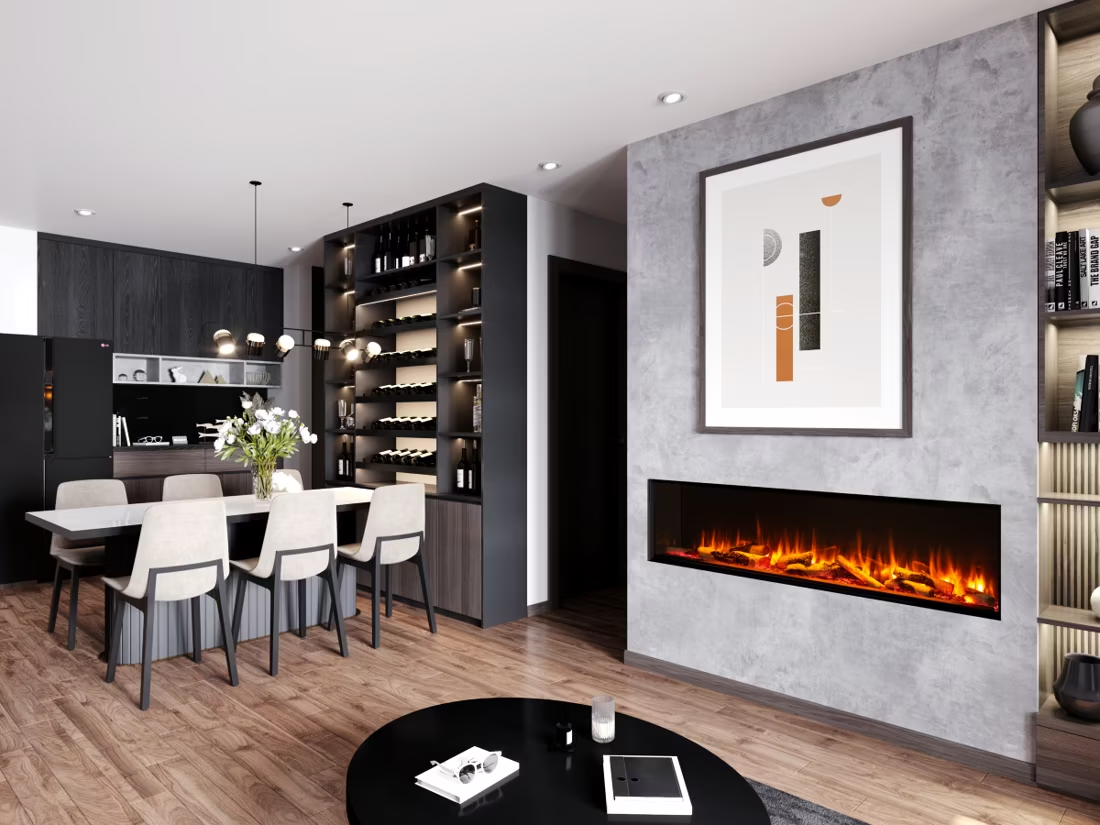
Laurel's electric service splits between NorthWestern Energy and Yellowstone Valley Electric Cooperative depending on which side of town you're on, with residential rates running about 13.35 to 14.23 cents per kWh. That makes an electric fireplace a genuinely low-friction project: no venting to size, no cutting permit, no combustion byproducts to worry about during summer wildfire-smoke season when indoor air quality already takes a hit. Most units plug into a standard outlet or a dedicated 20-amp circuit, and a licensed electrician can have a built-in linear unit running in an afternoon. It won't replace your furnace on the coldest January nights, but it adds real, focused zone heat to whatever room you're actually living in.
Three steps. No salesperson until you're ready.
Tell us about your project
Your zip code, your situation, and the fuel you're leaning toward—or let the answers point you to one.
See what's actually available
The brands dealers within 100 miles genuinely carry—real options, never a catalog mirage.
Get your dealer & Project Guide
A trusted local dealer, plus the free Project Guide & Parts List that names every component of the job.
Frequently Asked Questions
How much does an electric fireplace installation cost in Laurel?
A plug-in electric insert or freestanding stove that drops into an existing fireplace opening or media console typically runs $300 to $1,500 installed—often it's just a matter of setting it in place and plugging it in. A built-in linear electric fireplace that requires framing, a finished surround, and a dedicated 20-amp circuit run by an electrician usually lands between $1,500 and $3,500 in Laurel, depending on the size of the unit and how much wall or cabinetry work is involved. Compare that to a gas insert, which in this area typically needs a gas line extension or propane tank work on top of the unit cost—electric is almost always the lower-cost, faster path for a supplemental heat source.
Will an electric fireplace actually heat my house, or is it just for looks?
Most electric fireplaces put out 4,000 to 9,000 BTUs on the heat setting—enough to comfortably warm a single room (a living room, den, or bonus room) but not enough to carry a whole house through a Yellowstone County winter with a heating load as heavy as Bismarck, ND's. Think of it as zone heat: you run it in the room you're actually sitting in and let your furnace or heat pump handle the rest of the house at a lower setting, which can meaningfully cut your NorthWestern Energy or Yellowstone Valley Electric Co-op bill during the coldest stretches. If you're hoping for whole-home heat, a gas insert or a properly sized central system is a better fit than electric alone.
Do I need a permit to install an electric fireplace in Laurel?
A plug-in unit that uses an existing outlet generally doesn't require a permit—it's treated like any other appliance. A built-in electric fireplace that needs a new dedicated circuit does require an electrical permit, which in Laurel goes through the City of Laurel or Yellowstone County building department depending on your address. Any licensed electrician doing the circuit work will typically pull that permit as part of the job. This is one of the simplest permitting paths of any fireplace fuel type—there's no venting inspection and no chimney to bring up to code.
Which electric utility serves my home in Laurel?
Laurel is split between two providers: NorthWestern Energy serves a large portion of town, while Yellowstone Valley Electric Cooperative covers other areas, particularly toward the rural edges of Yellowstone County. Residential rates run about 14.23 cents per kWh with NorthWestern Energy and about 13.35 cents per kWh with Yellowstone Valley Electric Co-op. If you're not sure which one serves your address, check a recent electric bill—it matters less for the fireplace purchase itself and more for estimating your realistic monthly running cost if you plan to use the unit daily through the winter.
What's the difference between an electric insert, an electric stove, and a wall-mounted electric fireplace?
An electric insert is built to slide into an existing fireplace opening—a natural fit for Laurel's older downtown homes with a masonry firebox that's no longer in regular use. An electric stove is a freestanding cabinet-style unit that sits on the floor, styled to look like a classic wood or gas stove, and works well in homes without any existing fireplace opening at all, including manufactured housing. A wall-mounted or built-in linear electric fireplace is designed into new framing or a media wall and tends to be the choice for remodels and new construction. All three plug in or hardwire the same way—the decision usually comes down to what opening (or lack of one) you're starting with.
Electric vs. gas—which makes more sense for my Laurel home?
Gas gives you more heat output and, with a battery-backup ignition system, can keep running during a power outage—a real consideration when Yellowstone Valley Electric Co-op territory sees occasional winter storm outages. But gas installation in Laurel usually means propane (natural gas access is limited outside the core of town), tank setup or refills, and a licensed gas-fitter, which pushes cost and complexity up. Electric skips all of that: no fuel deliveries, no venting, and a same-day install in most cases. If you want backup heat during an outage, plan around a wood stove or a battery-backed gas unit instead—electric fireplaces go dark exactly when the grid does.
Will my electric fireplace work during a power outage?
No—electric fireplaces need grid power to run the heater element, flame effect, and any fan, so they shut off the moment the power does. That's worth planning around in Laurel, since Yellowstone Valley Electric Co-op's rural lines can go down during heavy winter storms rolling off the Beartooths. If reliable heat during an outage matters to you, an electric fireplace should be an ambiance-and-supplemental-heat addition alongside a furnace with backup power, a propane heater, or a wood-burning appliance—not your only heat source.
What should I look for in an electric fireplace for a cold-climate home like mine?
Look for a unit with a true 4,000+ BTU heater core rather than just an ambiance-only flame effect—brands like Dimplex, Napoleon, and Touchstone all make models with real supplemental heat output and thermostatic control rather than a simple high/low switch. A thermostat matters more in Laurel than in milder climates, since you'll likely run the unit for hours at a stretch through a long winter, and a thermostat-controlled model cycles more efficiently than one left on high constantly. If you're installing in an open floor plan, size up—a unit rated for a 400 sq ft room will struggle to feel warm in a 700 sq ft great room.
What about wood or pellet stoves instead of electric?
Wood is genuinely part of this region's landscape—lodgepole pine, ponderosa pine, Douglas fir, and aspen are all common locally, and the BLM Montana State Office issues cutting permits for about $10 per cord during the April-to-October season. But standalone wood and pellet stoves are less common in Laurel's current housing mix; a lot of the newer and manufactured housing stock has no masonry chimney and would need a full Class A chimney system built from scratch, which is a bigger project and cost than most homeowners are looking to take on. If you already have a working wood-burning setup or specifically want one, it's still a real option worth exploring with a local dealer—but for most Laurel homeowners retrofitting a room with supplemental heat, electric is the simpler, code-easy path with no venting or fuel storage involved.
Can I put a TV above my fireplace?
Yes—with an asterisk. Fireplaces are hot and TVs don't like heat. Either put a mantel between them to deflect rising warmth, or choose a fireplace with heat-management technology that creates a cool zone on the wall above—the wall stays around 125 degrees, barely warm, while the room still gets full heat. If you like clean lines and don't want a mantel, heat management is the answer.
Do electric fireplaces actually produce heat?
Yes—most put out around 4,800–5,000 BTUs from a standard outlet, which comfortably warms a bedroom, office, or den as a comfort-zone heater. What they won't do is carry a whole house the way wood, gas, or pellet can. Think of electric as ambiance-first with honest supplemental heat: flames on with no heat in July, flames plus warmth in January.
How much should I budget for a fireplace?
For an average home—covering the fireplace, the vent pipe, and basic installation—a budget between $3,900 and $5,500 gives you a lot of options across wood, gas, and pellet. By the time you add finish work, gas line, and electrical, the average complete installation lands between $5,000 and $12,000 all-in. In a remodel or new build, a good rule is to put about 2.5% of the total project cost toward the fireplace.
Can I install a fireplace myself?
If you're putting a fire in your house on purpose, it's best to work with an expert. Unless you're genuinely experienced in framing, gas line, vent pipe, and the national code on clearances to combustibles, have a professional do it—and ideally the same company that sells you the fireplace, so warranty, service, and liability all live under one roof.
Nearby Dealers
Hearth shops serving Laurel and the surrounding area. Every listing shows whether it is a WhyFire partner, a dealer we have verified as authorized for the brands we recommend, or a local business carrying hearth products. No manufacturer pays for placement. How we verify dealers →
White Heating & Air Conditioning
Stove Doctor
Electric Service in Laurel
An electric fireplace's heater draws about 1,500 watts—pennies per hour at local rates.
Northwestern Energy LLC - (Mt)
Yellowstone Valley Elec Co-Op
Find your electric fireplace in Laurel.
Tell us a bit about your home and we'll match you with a trusted local dealer and a free Project Guide & Parts List—the right unit, the circuit requirements, and the exact parts for your Laurel project. ,
Find Your Fireplace →