
Steady heat through Valley County's long, hard winters.
With a long, deep heating season and average winter lows near 4°F, Valley County asks a lot of any heating system. A pellet stove or insert delivers consistent, thermostat-controlled heat from Glasgow to Fort Peck to Opheim—and I'll match you with a local dealer who can size and install it right.
Every Project Starts From One of These Five Situations
Convenience that matches the cold.
Valley County sits along the Milk River in northeastern Montana, anchored by Glasgow and the Fort Peck Dam and Reservoir, with a county-wide population under 5,000 spread across a lot of open ground. Winters here run long—October into April is normal—and the numbers back that up: Climate Zone 6B, a long, deep heating season, and an average winter low of just 4°F, a season that runs colder and longer than Fargo, North Dakota's already tough winter average. For homes and shops scattered across that much distance, a heating source that starts reliably and holds a set temperature without constant tending matters as much as raw BTU output.
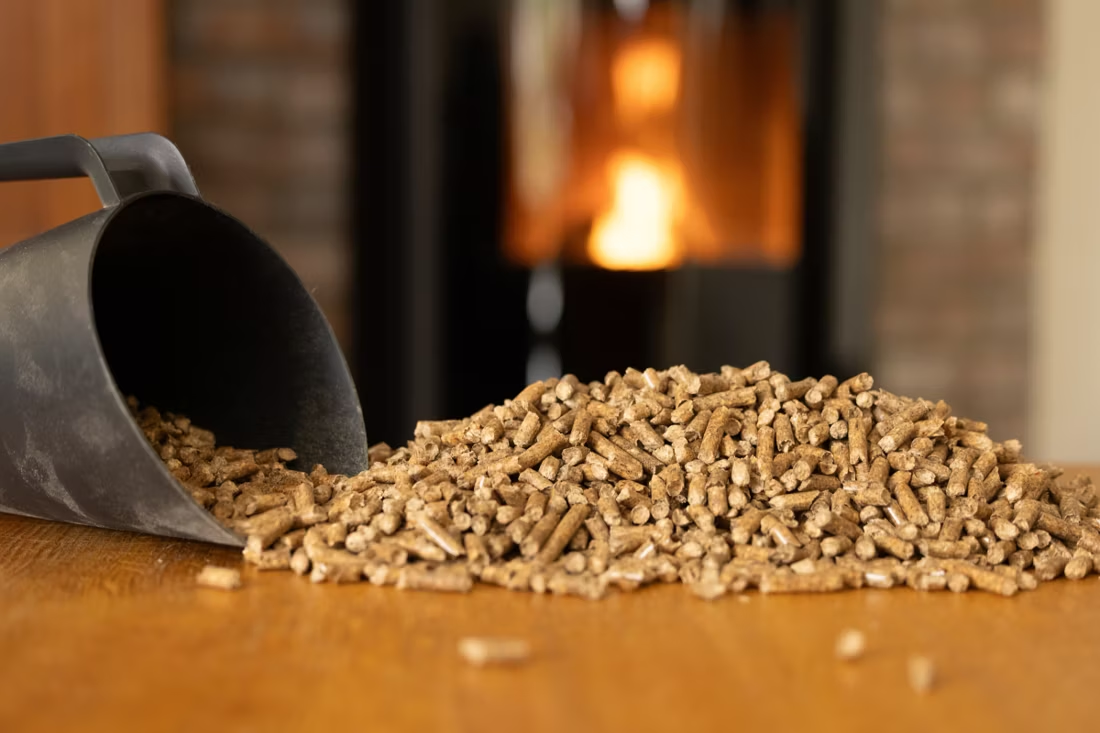
Pellet stoves fit that need well. Load the hopper, set the thermostat, and the auger and blower do the rest—no splitting, hauling, or stacking cordwood from the region's lodgepole pine, ponderosa pine, Douglas fir, or aspen stands, though plenty of Valley County households still burn wood alongside a pellet unit for backup. Regional pellet brands like Bear Mountain, Lignetics, and Forest Energy are widely stocked at farm-and-ranch retailers across the Hi-Line, which keeps fuel sourcing simpler than it is in more remote parts of the state. One honest caveat for a county this rural: pellet stoves need electricity to run the auger and blower, so during a winter storm outage—not uncommon when a Milk River Valley blizzard takes down power lines—a pellet stove alone won't keep the house warm unless it's paired with a generator or backup power.
Three steps. No salesperson until you're ready.
Tell us about your project
Your zip code, your situation, and the fuel you're leaning toward—or let the answers point you to one.
See what's actually available
The brands dealers within 100 miles genuinely carry—real options, never a catalog mirage.
Get your dealer & Project Guide
A trusted local dealer, plus the free Project Guide & Parts List that names every component of the job.
Frequently Asked Questions
How much does a pellet stove installation cost in Valley County?
Pellet stove and insert installations in Valley County typically run in the $3,000 to $6,500 range, depending on whether you're installing a freestanding stove with a straightforward through-wall vent or an insert into an existing masonry fireplace that needs a liner and venting kit. Rural delivery and travel time from the nearest certified installer can add to the estimate, since Valley County covers a lot of ground between Glasgow, Fort Peck, Nashua, and the outlying ranches. A local dealer will give you a firm number after seeing your home, your existing chimney or wall configuration, and your square footage.
Is a pellet stove enough heat for Valley County's winters?
For most homes, yes—a properly sized pellet stove can serve as primary heat in a well-insulated space or strong supplemental heat in a larger or older farmhouse. With a long, deep heating season and winter lows averaging 4°F, sizing matters more here than in milder parts of Montana. A mid-size pellet stove (roughly 40,000-60,000 BTU output) can carry a well-insulated 1,500-2,000 square foot home through most of the season, but older, leakier farmhouses common around Glasgow and the outlying ranch country often need a larger unit or a second heat source for the coldest stretches in January and February.
What happens to my pellet stove during a power outage?
It stops running. Pellet stoves depend on an electric auger to feed fuel and a blower to circulate heat, so when rural power lines go down in a Milk River Valley blizzard—which happens—the stove goes cold along with the furnace. Some households in Valley County pair a pellet stove with a small battery backup or generator specifically for this reason, and others keep a wood stove or fireplace as a no-electricity backup. If reliable heat during extended outages is your top priority, it's worth discussing a wood-burning backup option with your local dealer alongside the pellet install.
Where can I buy pellets in Valley County?
Bear Mountain, Lignetics, and Forest Energy are the pellet brands most commonly stocked at farm-and-ranch and hardware retailers across the Hi-Line, including outlets serving Glasgow and the surrounding towns. Pricing regionally tends to run somewhere in the $230 to $300 per ton range, though it moves with fuel costs and delivery distance, so it's worth checking current pricing locally rather than assuming a number. Buying a season's supply (typically 2-3 tons for a primary-heat home) before the first hard freeze is common practice here, since deliveries can slow once winter weather sets in on rural roads.
Do I need a permit to install a pellet stove in Valley County?
Most new pellet stove and insert installations require a building permit through the Valley County building permit office, primarily to confirm the venting and clearances meet code. Most local hearth dealers handle this paperwork as part of the installation, so it's rarely something homeowners have to navigate on their own. Unlike wood stoves burning permit wood off national forest land, pellet fuel is purchased by the bag or ton, so there's no cutting permit or forest office involved—one less step compared to a wood-burning setup.
How often does a pellet stove need cleaning and maintenance?
Plan on emptying the ash pan every few days during regular use and a deeper cleaning of the burn pot, hopper, and venting once a month during heavy heating season—which in Valley County can mean six or more months of run time. An annual professional service, including a check of the auger motor, blower, and exhaust venting, is recommended before each burning season starts. Pellet stoves produce far less ash and creosote than wood stoves, but the mechanical components (auger, igniter, blower) are what typically need attention over the life of the unit.
Pellet insert vs. freestanding pellet stove—which is right for my home?
A pellet insert fits into an existing masonry fireplace opening and vents through the existing chimney with a liner, which works well for older homes around Glasgow and Fort Peck that already have a wood fireplace they want to convert. A freestanding pellet stove sits on a hearth pad and vents through a wall or roof, giving more flexibility for placement in a shop, garage, or a newer home without an existing fireplace. For outbuildings and detached shops common on Valley County ranch properties, a freestanding unit is usually the simpler installation.
Pellet stove vs. propane—which makes more sense in Valley County?
Natural gas service is limited in much of Valley County's rural reach, so propane is the common alternative fuel for heating, and propane stoves and fireplaces offer instant, thermostat-set heat that keeps working with a battery backup during outages if the unit has the right ignition system. Pellet stoves cost less to run per BTU in most years, give you a more traditional flame appearance, and don't require a propane tank on the property—but they do depend on grid power and require more hands-on loading and cleaning than a propane unit. Many Valley County homeowners choose based on which fuel infrastructure they already have: an existing propane tank tips the decision toward propane, while a household that wants to reduce reliance on delivered fuel often leans pellet.
Pellet stove vs. wood stove—which is right for my Valley County home?
Wood stoves burn cordwood from local lodgepole pine, ponderosa pine, Douglas fir, or aspen, work with zero electricity (a real advantage during a rural power outage), and generally cost less per BTU if you're cutting or buying wood locally. Pellet stoves are far easier to operate day-to-day—no splitting or stacking, more consistent heat output, and less ash—but they need power to run and rely on bagged fuel from regional suppliers like Bear Mountain or Lignetics rather than wood off your own land. For a primary residence with reliable grid power, pellet is often the more convenient daily-use choice; for a remote property or backup heat source where outages are a real concern, wood remains the more resilient option.
Why is a fireplace insert so efficient?
An insert does two things: it seals the chimney completely, so you stop losing air you already paid to heat, and it radiates warmth into the room through the firebox and glass. Most add a heat-exchange fan that pulls cool room air underneath, wraps it around the hot firebox, and pushes it back out warm. Your home is more efficient before you've even lit the first fire.
Why is my open fireplace making my house colder?
Open fireplaces suck—literally. As the fire burns, it consumes air your furnace already paid to heat and pulls it out through the chimney, so the house is actually colder after the fire goes out than before you lit it. An insert fixes this: it seals the chimney, puts fixed glass across the front, and turns that hole in your house into a real heat source.
Can a fireplace actually lower my heating bill?
Yes—by creating a comfort zone. A furnace heats every square foot of the house just to warm the one room you're in; a gas fireplace on low burns roughly a sixth of the gas a typical furnace does. Set the furnace around 55–60 degrees as a baseline, then heat the rooms your family actually uses. Families who heat this way commonly save $20–$60 a month.
What is an in-home preview and do I need one?
It's a visit where a hearth professional measures your space, confirms the model you picked actually works in your home, and walks the specs—framing, gas line, venting, finish work—before anything is ordered. Some details you just can't know until you see the house. Never make a down payment without one; it's the single most-skipped step that burns buyers.
Stove and Fireplace Dealers in Valley County
Pellet Brands Stocked Around Valley County
Manufacturers will point you to the nearest stocking dealer.
Find your pellet stove in Valley County.
Tell me a bit about your home and heating goals, and I'll match you with a trusted local dealer serving Valley County—plus a free Project Guide & Parts List with the exact parts, including the vent kit, for your pellet installation.
Find Your Fireplace →