
Instant heat and ambiance for the long Hi-Line winter.
No venting, no chimney, no wood hauling—just a plug or a dedicated circuit. Find the right electric fireplace for a Valley County home and get matched with a trusted local dealer.
Every Project Starts From One of These Five Situations
A clean, simple option in a county built around wood and propane.
Valley County stretches across nearly 5,000 square miles of northeastern Montana's Hi-Line—Glasgow, Fort Peck, Nashua, Hinsdale, and Opheim, with Fort Peck Reservoir and the Missouri River cutting through open plains. With only about 4,854 residents spread across that much land, homes here are often older farmhouses and ranch houses set well apart from the nearest neighbor, let alone a natural gas main. With a long, harsh heating season and winter lows averaging just 4°F—cold in the range of Fargo or Bismarck—the primary heat load in most Valley County homes is carried by a wood stove burning local lodgepole pine, ponderosa pine, Douglas fir, or aspen, or by a propane furnace where wood isn't practical.
That's the honest context for electric fireplaces here: in a climate zone 6B county with winters this severe, straight electric resistance heat is expensive to run as a whole-home solution, so most Valley County installs are zone heat—a fireplace in the living room or a converted den that takes the edge off without running the furnace, or a unit that adds ambiance without the work of tending a stove. The upside is real, though. Electric units need no chimney, no venting, and no clearance to combustibles, which makes them the simplest and cheapest fireplace project available in the county—plug-in models install in an afternoon, and built-ins just need a dedicated circuit. They also produce zero smoke, which matters during wildfire-smoke summers when outdoor burning and even some wood-burning advisories get restricted regionally.
Three steps. No salesperson until you're ready.
Tell us about your project
Your zip code, your situation, and the fuel you're leaning toward—or let the answers point you to one.
See what's actually available
The brands dealers within 100 miles genuinely carry—real options, never a catalog mirage.
Get your dealer & Project Guide
A trusted local dealer, plus the free Project Guide & Parts List that names every component of the job.
Frequently Asked Questions
How much does an electric fireplace installation cost in Valley County?
A plug-in freestanding or wall-mount electric fireplace runs $300 to $800 installed, since it plugs into a standard outlet and needs no permit or electrical work. A built-in electric insert or a linear wall unit that needs a dedicated 20-amp circuit, framing, and a finished surround typically runs $1,000 to $2,500, depending on the size of the unit and how much carpentry is involved. Given the distances in Valley County—Fort Peck, Nashua, Hinsdale, and Opheim are all a haul from Glasgow—expect a modest trip charge if your installer is coming from town.
Can an electric fireplace heat my whole home in a climate this cold?
Realistically, no. With winter lows averaging 4°F and a long, harsh heating season each year, Valley County sits in the same cold-climate range as Fargo or Bismarck, and straight electric resistance heat is too costly to carry a whole house through that kind of winter. Most homeowners here use an electric fireplace as zone heat for one room—the living room, a converted porch, a bedroom addition—while a wood stove or propane furnace handles the main heating load. Think of it as taking the chill off a specific space, not replacing your furnace.
What's the difference between an electric insert, a wall-mount unit, and a freestanding electric stove?
An electric insert is built to slide into an existing masonry fireplace opening, giving an old wood-burning fireplace a clean, no-mess upgrade without touching the chimney. A wall-mount or linear unit is recessed into a wall or hung like a piece of art, popular in newer builds or remodels where there's no existing fireplace at all. A freestanding electric stove sits on the floor like a wood stove but plugs into an outlet—a good fit for a mobile home or an outbuilding around Fort Peck or the reservoir where running gas or wood isn't practical. All three heat a single room; none are designed to replace a whole-home heat source in a county this cold.
Do I need a permit or an electrician to install an electric fireplace in Valley County?
A simple plug-in unit needs neither—it's no different from plugging in a space heater. A built-in or wall-mount unit that requires a new dedicated circuit does need an electrician, and larger installs may need a permit through the county building department in Glasgow. Most local dealers coordinate the electrical work as part of the install, which is worth it in a county where finding a licensed electrician on short notice can mean a long drive from town.
Electric vs. wood—which makes sense for my Valley County home?
Wood remains the backbone of home heating for a lot of Valley County households, particularly outside Glasgow where wood stoves burning local lodgepole pine, ponderosa pine, Douglas fir, or aspen provide real heat output and keep working when the power lines go down in a Hi-Line winter storm. Electric fireplaces can't match that on a cold night without power, and they cost more per BTU to run. What electric does well is convenience and cleanliness—no ash, no smoke, no wood to split and stack—for a secondary room or a home where the woodstove already handles the heavy lifting. Many Valley County homes end up with both: wood for primary heat, electric for a bedroom or den.
Electric vs. propane—which is the better secondary heat source?
With no natural gas infrastructure reaching most of Valley County, propane is the common alternative to wood for whole-home heating, and it's also used in gas fireplaces and stoves. Electric fireplaces don't compete with propane on heat output or running cost per BTU, but they're far simpler to install—no tank, no gas line, no annual service call. If you already have a propane furnace carrying the load, an electric fireplace is often the easier, cheaper way to add ambiance or supplemental warmth to one room rather than extending gas line to a space that doesn't need a full heat source.
How much does it cost to run an electric fireplace in Valley County?
Most electric fireplaces draw around 1,500 watts on the heat setting, which works out to roughly 10 to 20 cents an hour depending on your electric cooperative's rate—a modest add-on to a monthly bill if it's used for a few hours an evening in one room. Run continuously as a primary heat source through a Hi-Line winter, though, the cost climbs fast, which is exactly why most homeowners here pair electric with wood or propane rather than relying on it alone.
Are electric fireplaces a good option during wildfire smoke season?
Yes. Valley County deals with wildfire smoke in summer and shoulder seasons, and there are periods when outdoor burning and even some wood-stove use gets discouraged regionally due to air quality. An electric fireplace produces no smoke and no particulate emissions at all, so it's a clean option for ambiance or supplemental heat on a cool evening without adding to smoke concerns—one reason some Valley County homeowners install one alongside their wood stove rather than instead of it.
What features matter most for an electric fireplace in a cold, rural county like Valley?
Look for a unit with a strong supplemental heat rating (most top out around 1,500 watts, which is the practical ceiling for a 120-volt circuit) and a thermostat that can hold a room temperature reliably rather than just a low/high toggle—useful for an addition or converted porch that swings cold overnight. LED flame effects that run without the heater on are worth having too, since a lot of Valley County households want the fireplace look on mild days without adding electric heat load on top of whatever the wood stove or propane furnace is already carrying. A local dealer can walk through wattage and circuit requirements for your specific room.
Can I put a TV above my fireplace?
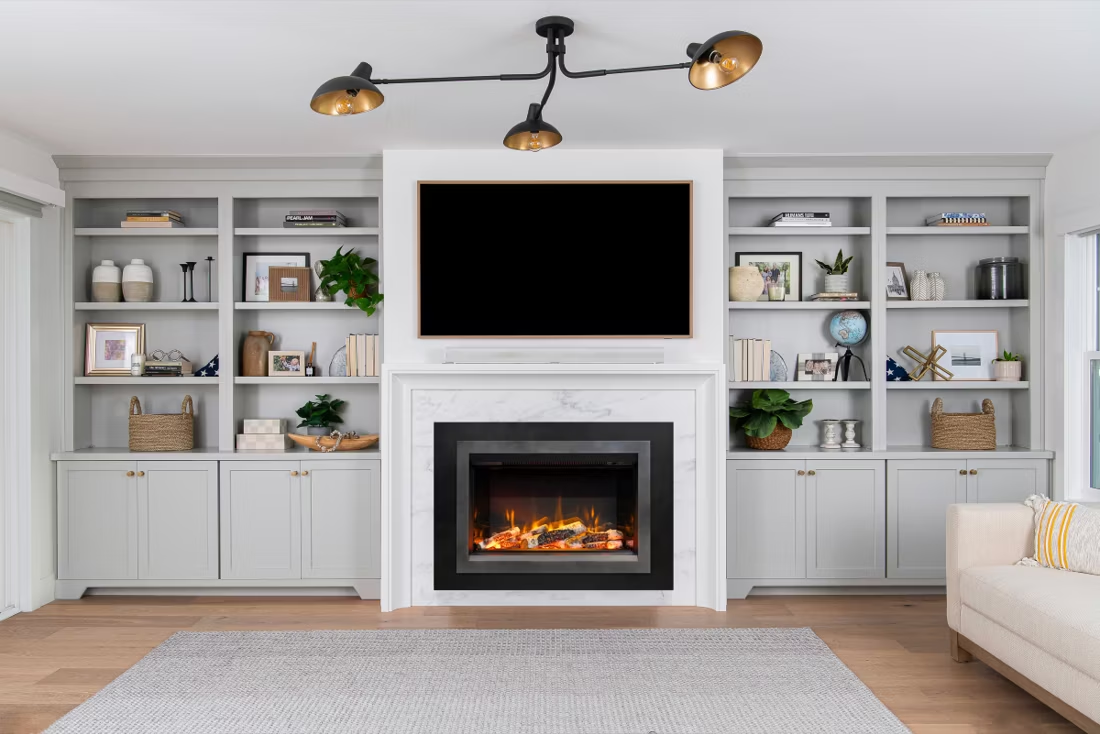
Yes—with an asterisk. Fireplaces are hot and TVs don't like heat. Either put a mantel between them to deflect rising warmth, or choose a fireplace with heat-management technology that creates a cool zone on the wall above—the wall stays around 125 degrees, barely warm, while the room still gets full heat. If you like clean lines and don't want a mantel, heat management is the answer.
Does an electric fireplace need a vent or chimney?
No—that's its superpower. An electric fireplace needs a wall and an outlet, period. No vent pipe, no gas line, no clearances to design around, which is why it works in bedrooms, offices, apartments, and walls where venting a gas or wood unit would be impractical or impossible. Installation is typically the simplest and least expensive of any fireplace type.
Can I install a fireplace myself?
If you're putting a fire in your house on purpose, it's best to work with an expert. Unless you're genuinely experienced in framing, gas line, vent pipe, and the national code on clearances to combustibles, have a professional do it—and ideally the same company that sells you the fireplace, so warranty, service, and liability all live under one roof.
Does a fireplace add value to my home?
On average, a fireplace adds back to the home about the same amount you spent installing it. Add the monthly savings from heating the rooms you actually use instead of the whole house—often hundreds of dollars a year—and the value case is strong before you even count what a fire does for how your family uses the room.
Stove and Fireplace Dealers in Valley County
Find your electric fireplace in Valley County.
Tell us about your home and how you plan to use it, and we'll put together a free Project Guide & Parts List—the right electric fireplace or insert, the exact parts including any circuit work needed, and a trusted local dealer serving Valley County to install it.
Find Your Fireplace →