
Reliable gas heat for Sweet Grass County's long winters.
From Big Timber to the ranches along the Boulder River, propane-fueled gas fireplaces deliver instant, dependable heat through winters that run 6,910 heating degree days deep. Find the right unit and connect with a trusted local dealer.
Every Project Starts From One of These Five Situations
Dependable heat where the grid and the woodpile both have limits.
Sweet Grass County sits in the Yellowstone River valley between the Crazy Mountains and the Absaroka-Beartooth front, with Big Timber as the county seat and a population under 1,800 spread across ranches, river bottomland, and small-town blocks. Winters here average 20°F lows and rack up 6,910 heating degree days—a cold season closer in severity to Bozoman's than to anywhere in the lower Midwest, and one that stretches from October well into April. Summers bring their own complication: wildfire smoke settles into the valley in July and August, which is part of why more homeowners are looking at gas as a smoke-free way to add heat without opening a damper.
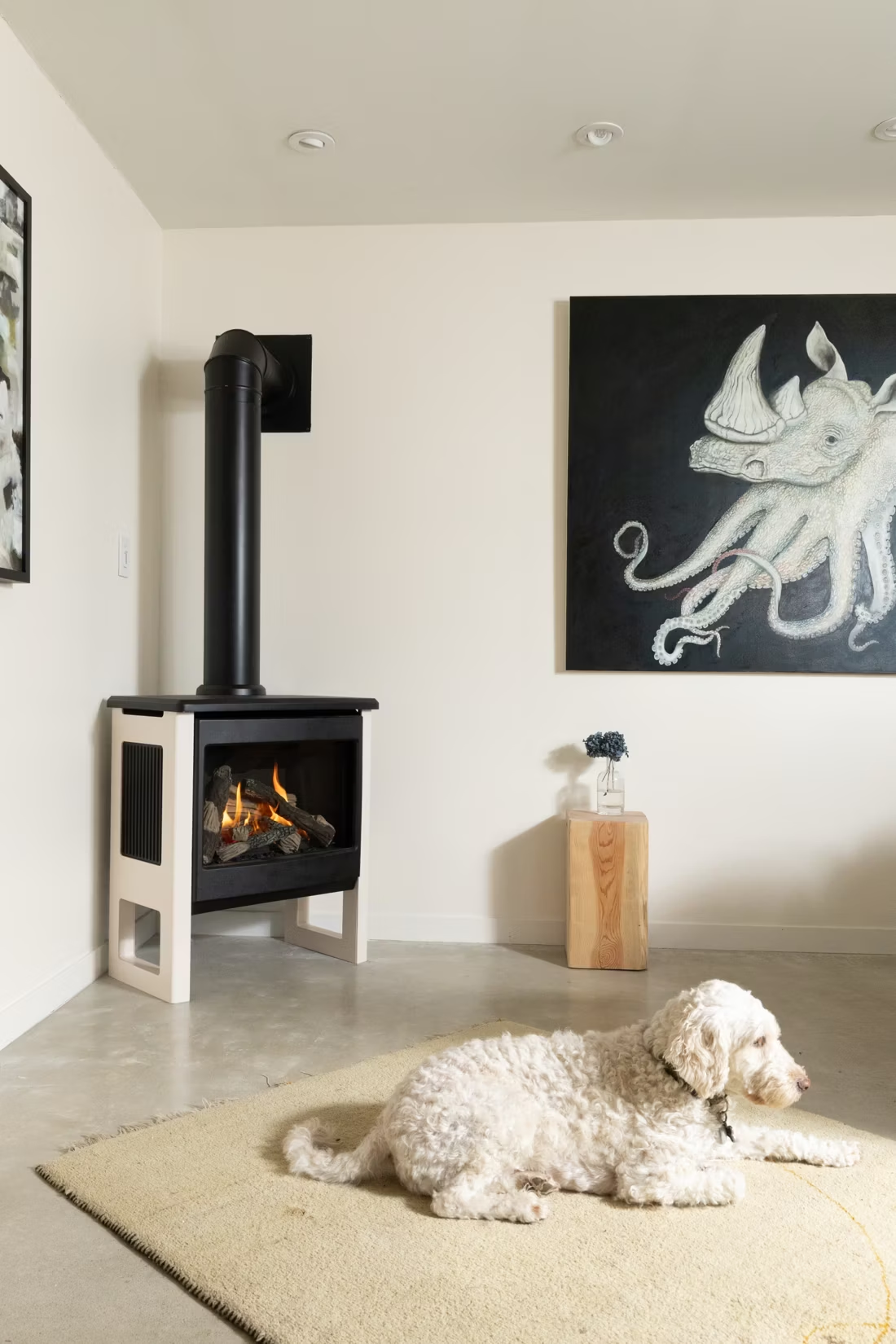
Sweet Grass County has no natural gas utility distribution network, so propane is the standard fuel for gas fireplaces here—delivered by regional suppliers serving Big Timber and the outlying ranches along the Boulder River and Sweet Grass Creek. A direct-vent propane fireplace or insert gives you heat at the flip of a switch, works as backup heat during the ice-storm outages that occasionally take down rural power lines for a day or more, and pairs well with a wood stove or furnace as a second, lower-maintenance heat source for the parts of the house you use daily.
Three steps. No salesperson until you're ready.
Tell us about your project
Your zip code, your situation, and the fuel you're leaning toward—or let the answers point you to one.
See what's actually available
The brands dealers within 100 miles genuinely carry—real options, never a catalog mirage.
Get your dealer & Project Guide
A trusted local dealer, plus the free Project Guide & Parts List that names every component of the job.
Frequently Asked Questions
How much does a gas fireplace installation cost in Sweet Grass County?
A typical gas fireplace or insert installation in Sweet Grass County runs roughly $4,000 to $10,500, depending on the unit, whether a propane tank needs to be installed or upsized, and how much gas line work is involved. A direct-vent insert going into an existing masonry fireplace with propane already on site sits at the lower end. New construction or a fresh installation on a ranch property without existing propane service—tank placement, buried line, venting—runs toward the higher end. Homes well outside Big Timber, out toward the Crazy Mountains foothills or up the Boulder River road, should expect a modest travel charge added to the estimate.
Can I convert my existing wood fireplace to gas?
Yes, and it's a common request in a county where a lot of older ranch houses and Big Timber homes have a masonry fireplace that rarely gets used. A propane insert typically drops into that existing opening, using the chimney as the vent path with a stainless liner. Cost usually lands between $4,000 and $8,500 depending on the insert and whether propane service already reaches the house. If there's no tank on the property yet, factor in the cost of a tank set and line run from your propane supplier as a separate line item.
Do I need natural gas, or is propane the standard here?
Propane is the standard—there's no natural gas utility line running through Sweet Grass County, so essentially every gas fireplace installed in Big Timber or the surrounding ranch country runs on propane from a tank. Most homes already have a tank for a furnace, range, or water heater, and adding a fireplace is a matter of tapping into that existing line or upsizing the tank if the household's total propane load calls for it. If you're building new or don't have propane service yet, your installer will coordinate the tank set with a local supplier as part of the project. Worth noting for ranch properties off the plowed county roads: schedule propane deliveries with some lead time in winter, since access can be slower after a heavy snow.
Will my gas fireplace work during a power outage?
Most direct-vent propane fireplaces with intermittent pilot ignition (IPI) run on a battery backup—a set of AA batteries inside the unit that keep the igniter working when the power drops, so the fireplace lights on demand just like normal. That matters in Sweet Grass County, where wind and ice can take down rural power lines for a day or more and restoration crews have a lot of ground to cover. Valor fireplaces take a different approach: their pilot assembly generates its own electricity through a thermocouple, so there's no battery to remember or replace, ever. Ask your local dealer which ignition system is on any unit you're considering, especially if the fireplace will double as backup heat on a ranch property.
What's the difference between a gas fireplace, gas insert, and gas stove?
A gas fireplace is a fully built-in unit framed into a wall—the right call for new construction or a remodel where there's no existing opening. A gas insert is built to drop into an existing masonry fireplace, sealing it up and using the chimney as the vent path, which is the common upgrade for older Big Timber homes with a fireplace that's more decorative than functional. A gas stove is freestanding, sits on a hearth pad, and can go almost anywhere with the right clearances and venting—a good fit for a shop, cabin, or a room without an existing chimney. Most Sweet Grass County homeowners with an existing fireplace opening go with an insert.
Do I need a permit to install a gas fireplace in Sweet Grass County?
Yes—new gas fireplace and insert installations require a building permit through the Sweet Grass County Building Department, and the propane line work needs to be done by a licensed gas-fitter. Most local hearth dealers coordinate both the permit and the gas-fitter as part of the installation, so you're not left managing separate trades yourself. If your property already has a propane furnace or range, the fireplace hookup is usually a straightforward addition to the existing system rather than a new service setup.
What's the difference between vented and vent-free gas fireplaces?
Vented (direct-vent) gas fireplaces draw combustion air from outside and exhaust it back outside through a sealed pipe—they're the cleanest and safest option and the one most local installers recommend for Sweet Grass County. Vent-free units burn propane directly into the room without outside venting; they're legal in Montana but come with strict room-sizing rules and require an oxygen depletion sensor, and their output derates somewhat at Big Timber's roughly 4,100-foot elevation and higher up toward the Crazy Mountains foothills. Given the county's long, cold heating season, most homeowners here are better served by a direct-vent unit that performs consistently regardless of elevation or room size.
How often should my gas fireplace be serviced?
Plan on an annual inspection—a technician checks the burner, pilot assembly, venting, and the propane connections, and cleans the glass and interior. It's a lighter job than a wood chimney sweep but just as important, since a fireplace that sits unused most of the year (common in guest rooms and seasonal ranch houses) can develop pilot or igniter issues that only show up when you actually need the heat. Expect to pay roughly $150 to $250 for the service call; because Sweet Grass County is sparsely populated, some technicians travel from Livingston or Billings, so booking ahead of the first cold snap is worth doing.
Gas vs. wood—which is right for my Sweet Grass County home?
Wood is genuinely cheap here—lodgepole pine, ponderosa pine, Douglas fir, and aspen are all available through Custer Gallatin National Forest and BLM Montana State Office cutting permits running $5 to $20 per cord, and a lot of county residents already cut their own. Wood also keeps working without electricity, which matters on an outage-prone rural line. Propane gas, on the other hand, gives you instant heat with no ash or creosote, no summer smoke concerns during a wildfire-smoke month when the last thing you want is another source of particulates in the house, and far less physical upkeep. Many Sweet Grass County homes run both: wood as the primary or backup heat source in a main room, propane in a bedroom, sunroom, or shop where convenience matters more than fuel cost.
Can I put a TV above my fireplace?
Yes—with an asterisk. Fireplaces are hot and TVs don't like heat. Either put a mantel between them to deflect rising warmth, or choose a fireplace with heat-management technology that creates a cool zone on the wall above—the wall stays around 125 degrees, barely warm, while the room still gets full heat. If you like clean lines and don't want a mantel, heat management is the answer.
Is my gas fireplace wasting gas?
If it was installed more than 15 years ago, probably. Older gas fireplaces keep a standing pilot light burning all the time, and that little flame can cost a couple hundred dollars a year. Newer models use pilot-on-demand ignition—the pilot lights only when you use the fireplace and goes out when you turn it off.
Does a fireplace add value to my home?
On average, a fireplace adds back to the home about the same amount you spent installing it. Add the monthly savings from heating the rooms you actually use instead of the whole house—often hundreds of dollars a year—and the value case is strong before you even count what a fire does for how your family uses the room.
Can I install a fireplace myself?
If you're putting a fire in your house on purpose, it's best to work with an expert. Unless you're genuinely experienced in framing, gas line, vent pipe, and the national code on clearances to combustibles, have a professional do it—and ideally the same company that sells you the fireplace, so warranty, service, and liability all live under one roof.
Find your gas fireplace in Sweet Grass County.
Tell us a bit about your home near Big Timber or out on the ranch, and we'll put together a free Project Guide & Parts List—the exact parts, including the vent kit, and a trusted local dealer to install it right.
Find Your Fireplace →