
Clean electric heat for Sweet Grass County's wind-whipped winters.
From Big Timber to Melville and McLeod, electric fireplaces give Sweet Grass County homes zero-smoke zone heat without a chimney or a wood pile. We'll match you with a trusted local dealer who can tell you what actually fits your wiring and your budget.
Every Project Starts From One of These Five Situations
A clean, low-maintenance option for a small, spread-out county.
Sweet Grass County is home to about 1,800 people spread across roughly 1,900 square miles along the Yellowstone River, with the Crazy Mountains rising to the north and the Absaroka foothills to the south. Big Timber, the county seat, sits in a notorious wind gap between the Crazies and the Absarokas—gusts of 60-plus mph are routine, and they cut through a 20°F average winter low a lot faster than the thermometer suggests. With a winter heating load on par with places like Bozeman just up the interstate, most homes here run on wood, propane, or electric baseboard as primary heat, with an electric fireplace layered in for a specific room or a specific evening.
Electric fireplaces have earned a real place in Sweet Grass County homes for a few practical reasons: no chimney to maintain on an older ranch house, no combustion byproducts during wildfire smoke season when the Custer Gallatin National Forest closes trails and the air already carries enough particulate, and no cutting or hauling wood for a unit that's mainly there for ambiance and supplemental warmth in a living room or bedroom. What electric won't do is replace your primary heat source or keep the house warm if NorthWestern Energy's rural lines go down in a Crazy Mountain windstorm—which is worth being honest about before you buy.
Three steps. No salesperson until you're ready.
Tell us about your project
Your zip code, your situation, and the fuel you're leaning toward—or let the answers point you to one.
See what's actually available
The brands dealers within 100 miles genuinely carry—real options, never a catalog mirage.
Get your dealer & Project Guide
A trusted local dealer, plus the free Project Guide & Parts List that names every component of the job.
Frequently Asked Questions
How much does it cost to install an electric fireplace in Sweet Grass County?
A plug-in freestanding or mantel-style electric fireplace typically runs $400 to $900 installed, since it just needs a standard 120V outlet—often a same-day job. A built-in linear unit set into a wall or existing masonry opening usually runs $1,200 to $2,500, mainly because it needs a dedicated 20-amp circuit run by a licensed electrician, plus any framing or trim work. If you're out toward Melville or McLeod, expect a modest trip charge added to the quote, since most licensed electricians serving Sweet Grass County are based in or around Big Timber or drive in from Livingston.
Will my electric fireplace still work if the power goes out?
No—and this matters more in Sweet Grass County than in most places. Wind events funneling through the gap between the Crazy Mountains and the Absarokas regularly knock down rural power lines in this county, and an electric fireplace, no matter how good, goes dark the moment the grid does. If you want heat you can count on during a January outage, that's a job for a wood stove or a propane appliance with battery-backup ignition—not electric. Most homes I talk to in this county end up with electric for daily convenience and something else (wood, propane, or a generator) as the real backup plan.
Can an electric fireplace actually heat a home in this climate?
Not a whole home, and not on its own. Most electric fireplaces top out around 1,500 watts—roughly 5,000 BTU—which is enough to comfortably warm a single room, but nowhere near what's needed across a full house in a climate with a winter heating load on par with places like Bozeman. In Sweet Grass County, electric fireplaces work best as zone heat: warming the room you're actually sitting in so you can turn down the thermostat on your central propane furnace or wood stove elsewhere in the house. Anyone telling you an electric unit will replace your primary heat source here isn't being straight with you.
Do I need a permit to install an electric fireplace in Sweet Grass County?
A simple plug-in unit on an existing outlet generally doesn't require a permit. A built-in unit that needs a new dedicated circuit does—the electrical work has to be pulled by a Montana-licensed electrician and inspected under the state electrical permit program administered through the Department of Labor & Industry, since Sweet Grass County doesn't run its own separate electrical inspection office. Most local installers handle scheduling the inspection as part of the job, so you're not chasing it down yourself.
What type of electric fireplace fits Sweet Grass County homes best?
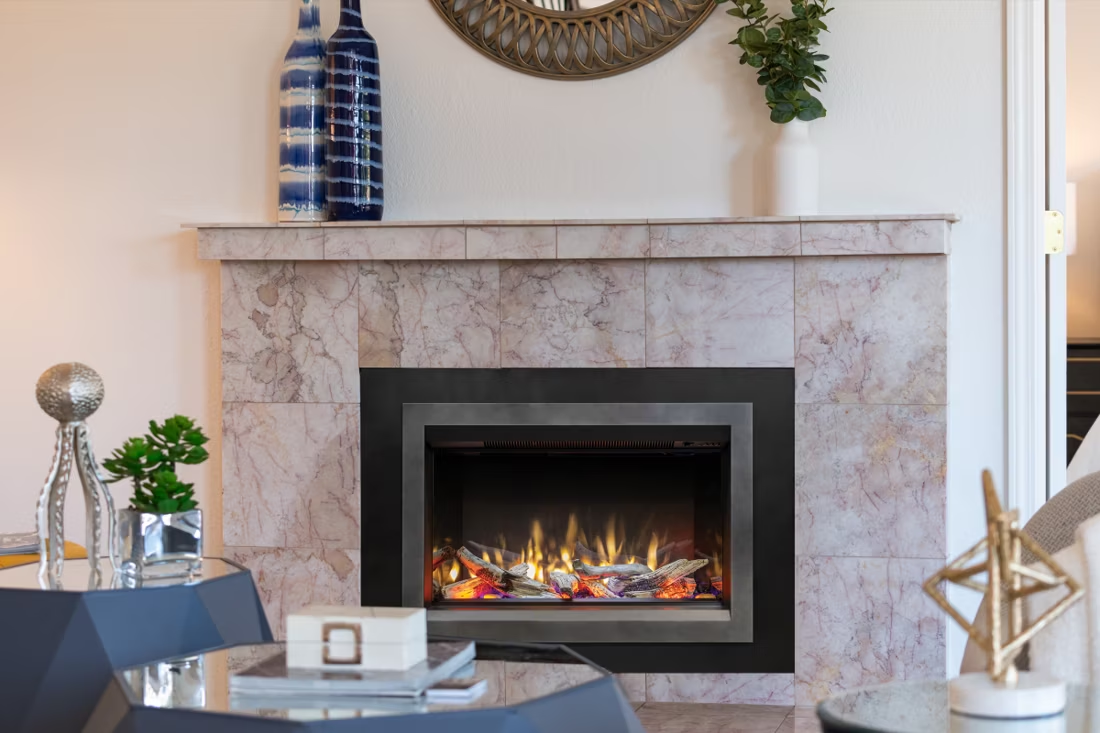
For older ranch houses and log homes around Big Timber, McLeod, and Melville that already have a masonry fireplace opening, an electric insert is usually the cleanest fit—it slides into the existing surround and uses the mantel you've already got. For newer construction or a remodel, a built-in linear unit set flush into a wall gives a modern look without needing an opening at all. Freestanding stove-style units are a good option for a cabin, shop, or outbuilding where you want portable, no-wiring heat. A local dealer can walk you through Dimplex, Napoleon, and other options against your actual room and wall setup.
Electric vs. wood—which makes more sense for my Sweet Grass County home?
Wood is still the backbone of heat for a lot of homes in this county, and for good reason: lodgepole pine, ponderosa pine, Douglas fir, and aspen are all available through Custer Gallatin National Forest and BLM cutting permits for $5 to $20 a cord, and a wood stove keeps running when the power doesn't. Electric wins on maintenance and cleanliness—no chimney, no ash, no smoke to add to the air during wildfire season, and no hauling cordwood. Most homeowners here don't pick one over the other so much as split the job: wood or propane for real heat and outage backup, electric for the room you actually want warm and glowing on a Tuesday night.
Electric vs. propane—which is the better fit outside Big Timber?
Since Sweet Grass County has no natural gas mains outside the immediate Big Timber area, propane is the standard fuel for a lot of rural homes, and it puts out considerably more heat than an electric fireplace—enough to serve as genuine supplemental or even primary zone heat. Electric skips the tank, the delivery truck, and the fuel cost entirely, but it's capped at what a household circuit can deliver. If you already have a propane tank on the property for your furnace or water heater, a propane fireplace insert often makes more sense; if you don't want another fuel account to manage, electric is the simpler, lower-commitment choice.
What electrical work does an electric fireplace actually need?
A small plug-in unit just needs a standard 120V, 15-amp outlet—most living rooms already have one nearby. A built-in or larger linear unit typically draws close to 1,500 watts and needs its own dedicated 20-amp circuit, which means running new wire back to the panel. In some of the older farmhouses and ranch homes scattered around the county, that can also mean confirming the panel has room for another breaker before work starts—something worth asking a licensed electrician to check before you commit to a specific unit.
Where do I find someone to install an electric fireplace in a county this small?
With under 1,800 residents spread across the county, Sweet Grass County doesn't support a large bench of full-time hearth installers the way a bigger town would—most electricians here work out of Big Timber or drive in from Livingston or Columbus for larger jobs. That's exactly the gap we're built for: rather than guessing at a name from a search result, we match you with a trusted dealer who actually services this part of Montana, knows the wiring realities of local homes, and can size a unit correctly for your room before anyone shows up with tools.
Do electric fireplaces actually produce heat?
Yes—most put out around 4,800–5,000 BTUs from a standard outlet, which comfortably warms a bedroom, office, or den as a comfort-zone heater. What they won't do is carry a whole house the way wood, gas, or pellet can. Think of electric as ambiance-first with honest supplemental heat: flames on with no heat in July, flames plus warmth in January.
Does an electric fireplace need a vent or chimney?
No—that's its superpower. An electric fireplace needs a wall and an outlet, period. No vent pipe, no gas line, no clearances to design around, which is why it works in bedrooms, offices, apartments, and walls where venting a gas or wood unit would be impractical or impossible. Installation is typically the simplest and least expensive of any fireplace type.
How much should I budget for a fireplace?
For an average home—covering the fireplace, the vent pipe, and basic installation—a budget between $3,900 and $5,500 gives you a lot of options across wood, gas, and pellet. By the time you add finish work, gas line, and electrical, the average complete installation lands between $5,000 and $12,000 all-in. In a remodel or new build, a good rule is to put about 2.5% of the total project cost toward the fireplace.
What is an in-home preview and do I need one?
It's a visit where a hearth professional measures your space, confirms the model you picked actually works in your home, and walks the specs—framing, gas line, venting, finish work—before anything is ordered. Some details you just can't know until you see the house. Never make a down payment without one; it's the single most-skipped step that burns buyers.
Find your electric fireplace in Sweet Grass County.
Tell us about your home and we'll match you with a trusted local dealer and send over a free Project Guide & Parts List—sized for your room, with the exact wiring and unit needed for your Sweet Grass County installation.
Find Your Fireplace →