
Heat your home through a Sweet Grass County winter.
Wood, gas, pellet, and electric fireplace resources for Big Timber and the rural communities around it—Melville, McLeod, Greycliff, and Springdale. Find the right fuel for your home and get matched with a local hearth retailer who knows this stretch of the Yellowstone Valley.
Every Project Starts From One of These Five Situations
Ranch-country winters along the Yellowstone River in Sweet Grass County, Montana.
Sweet Grass County sits along the Yellowstone River in south-central Montana, with the Absaroka-Beartooth Mountains rising to the south and Big Timber—elevation roughly 4,100 feet—serving as the county seat and only incorporated town. With about 1,793 residents spread across nearly 1,900 square miles, this is genuinely rural country: ranches, river bottoms, and forest land far outnumber city blocks. Winters run long and cold, with average lows near 20°F and a heating season on par with Bozeman, about an hour west, and not far off Helena. Wood heat has deep roots here: lodgepole pine, ponderosa pine, Douglas fir, and aspen are all locally abundant, and personal-use firewood permits through Custer Gallatin National Forest and the BLM Montana State Office let ranch families cut their own supply from public land east of town.
What you'll find on this hub: hearth retailers, service technicians, and fuel suppliers covering the whole county—from Big Timber out to Melville and McLeod in the foothills, and down the Yellowstone corridor to Greycliff and Springdale. Because this is such a low-density county, most retailers and technicians are based in Big Timber and travel to serve the surrounding ranches and small communities. Pick your fuel below to see local dealers, typical installation costs, and the specifics that matter for your project—whether that's a wood stove for a ranch house off the grid or a gas insert for a home in town.
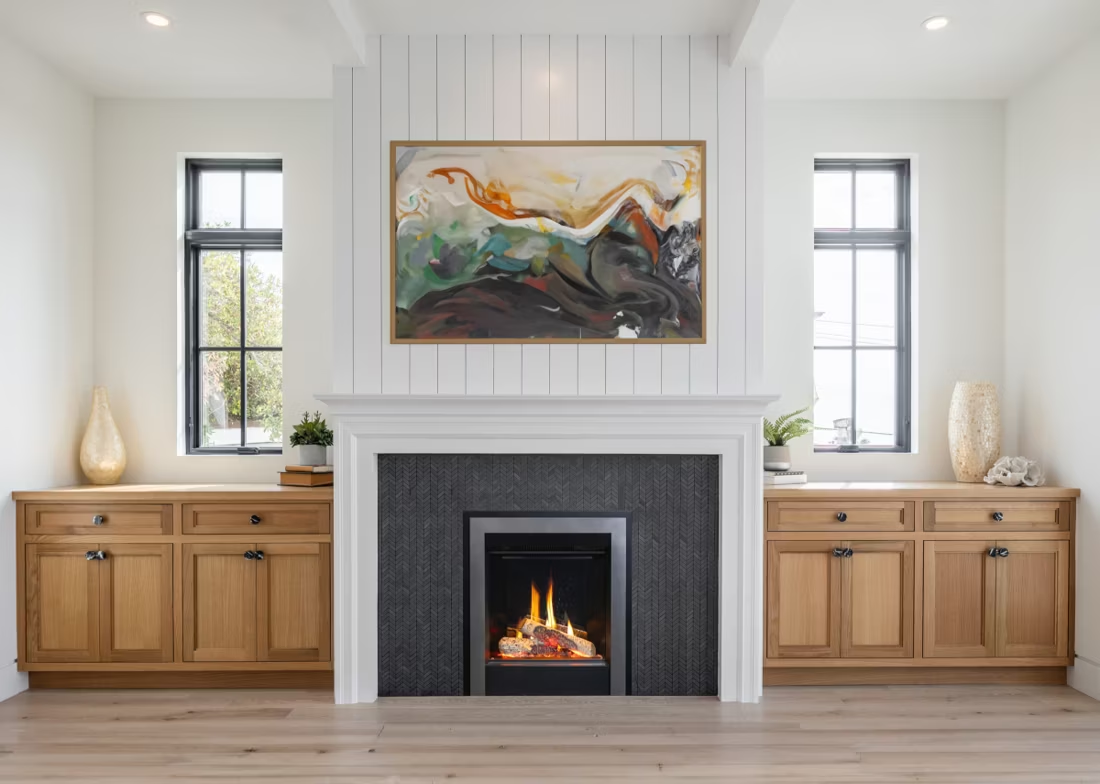
Four fuels. One honest answer for Sweet Grass County.
Wood
54 models available near Sweet Grass County.
Find your wood stove →Gas
104 models available near Sweet Grass County.
Find your gas fireplace →Pellet
See what's available near Sweet Grass County.
Find your pellet stove →Electric
See what's available near Sweet Grass County.
Find your electric fireplace →Three steps. No salesperson until you're ready.
Tell us about your project
Your zip code, your situation, and the fuel you're leaning toward—or let the answers point you to one.
See what's actually available
The brands dealers within 100 miles genuinely carry—real options, never a catalog mirage.
Get your dealer & Project Guide
A trusted local dealer, plus the free Project Guide & Parts List that names every component of the job.
Frequently Asked Questions
Which fuel works best in Sweet Grass County?
It depends on the property. Wood is a natural fit for the ranches and rural homes that make up most of the county—lodgepole pine, ponderosa pine, Douglas fir, and aspen are all locally available, and many families cut their own under a Custer Gallatin National Forest or BLM personal-use permit. A catalytic wood stove can hold a fire well past midnight at the 20°F average winter lows this county sees, and wood keeps working if a winter storm knocks out power along the Yellowstone corridor. Propane is the practical convenience fuel here, since piped natural gas isn't available in most of the county—a propane fireplace or insert gives instant heat without hauling wood. Pellet stoves are a solid middle ground for in-town Big Timber homes, with Bear Mountain, Lignetics, and Forest Energy all sold through regional dealers. Electric works well as supplemental heat in a bedroom or den but isn't built to carry a home through a Sweet Grass County winter on its own. Many households end up pairing wood or pellet as the primary heat source with propane or electric as backup.
Do I need a permit to install a fireplace in Sweet Grass County?
In most cases, yes—new wood stoves, wood inserts, propane fireplaces, propane inserts, and pellet stoves typically need a building permit, and propane installations also require the gas line work to be done or signed off by a licensed propane installer. Within Big Timber, permits run through the town's building office; for the ranches and unincorporated communities like Melville, McLeod, Greycliff, and Springdale, permitting goes through the county. Electric fireplaces usually skip the permit process unless you're doing a built-in installation with new wiring. Most local hearth retailers handle the paperwork as part of the installation, so you generally aren't filing it yourself.
Does wildfire smoke affect wood burning in Sweet Grass County?
It's more of a warm-season concern than a winter one here. Sweet Grass County sits close to the Absaroka-Beartooth wilderness and Custer Gallatin National Forest, and summer and early-fall wildfire smoke can settle into the Yellowstone Valley for days at a time. That's a different issue than home wood-stove burning—it mainly affects outdoor burning permits and defensible-space rules around the forest boundary rather than indoor stove use in January. Still, if you're installing a new wood stove, it's worth choosing an EPA 2020 NSPS-certified unit—it burns cleaner on the coldest nights and gives you more efficiency per cord, which matters when winter lows sit around 20°F for weeks at a stretch.
Can I cut my own firewood for a stove in Sweet Grass County?
Many residents do. Personal-use firewood permits are available through Custer Gallatin National Forest and the BLM Montana State Office for public land in and around the county, and lodgepole pine, ponderosa pine, Douglas fir, and aspen are all common species to cut. Seasoning matters more than species here—green lodgepole and Douglas fir both need six months to a year of dry storage before they'll burn clean and hot. If you're installing a new stove, ask your local retailer to size the firebox for the wood you actually have access to; a stove built for hardwood cords won't perform the same on a truckload of green pine.
How does hearth service work in a county this rural?
Most technicians serving Sweet Grass County are based in Big Timber and drive out to the surrounding ranches and communities—Melville and McLeod in the foothills, Greycliff and Springdale along the Yellowstone. Expect a modest travel fee for calls outside town, and plan ahead: pre-season service scheduled in late summer or early fall is far easier to book than an emergency call in the middle of a January cold snap. If you're on a ranch well outside town, it's worth keeping spare parts on hand—igniter batteries for a propane unit, a spare gasket for a wood stove door—since a service visit may take a day or two to arrange.
What's the typical cost range for fireplace installation across fuel types in Sweet Grass County?
Wood stove or insert installation: roughly $4,500–$9,500 for a typical install, more if new chimney chase work is needed for a standalone ranch house. Propane fireplace, insert, or stove: about $4,500–$10,500 depending on tank setup and gas line distance, since most of the county runs on propane rather than piped gas. Pellet stove or insert: around $4,500–$7,500 for a standard installation. Electric fireplace: $200–$3,000 for the unit itself, plus $400–$1,200 in labor for anything beyond a simple plug-in install. Because dealer travel distance affects labor costs out here, it's worth getting a specific quote for your property—see the county + fuel pages above for more detail tied to local retailer pricing.
Can a fireplace actually lower my heating bill?
Yes—by creating a comfort zone. A furnace heats every square foot of the house just to warm the one room you're in; a gas fireplace on low burns roughly a sixth of the gas a typical furnace does. Set the furnace around 55–60 degrees as a baseline, then heat the rooms your family actually uses. Families who heat this way commonly save $20–$60 a month.
What are the biggest mistakes people make buying a fireplace?
Five come up constantly: budgeting for the unit but not the full job (vent, gas line, electrical, finish work); drowning in options instead of starting from style and fuel; buying without an in-home preview; handing installation to a handyman instead of a pro; and giving up out of sheer indecision. Every one is avoidable with a clear plan—step one, step two, step three.
Can I install a fireplace myself?
If you're putting a fire in your house on purpose, it's best to work with an expert. Unless you're genuinely experienced in framing, gas line, vent pipe, and the national code on clearances to combustibles, have a professional do it—and ideally the same company that sells you the fireplace, so warranty, service, and liability all live under one roof.
Should the dealer who sells my fireplace also install it?
Ideally, yes. A fireplace project involves vent pipe, gas line, electrical, and often tile or stone. Hire three or four separate trades and you own the liability and the game of telephone between them. One company selling and installing means one accountable party, start to finish—ask about factory training, on-time completion records, and what happens if an inspection fails.
Stove and Fireplace Dealers in Sweet Grass County
Listings include WhyFire partner dealers, dealers we have verified as authorized for the brands we recommend, and established local businesses that carry hearth products. Every listing shows which one it is. The ones marked Preferred run on WhyFire's software, so they can show you real pricing and book your appointment right here. No manufacturer pays for placement. How we verify dealers →
Warmstone Fireplaces & Designs
Finest Flames Stove & Hearth
Find your fireplace in Sweet Grass County.
Tell us about your home and we'll match you with a local hearth retailer and send a free Project Guide & Parts List—the right unit, the vent kit, and a plan built for a Sweet Grass County winter.
Find Your Fireplace →