
Reliable pellet heat for Stillwater County's 7,700-degree-day winters.
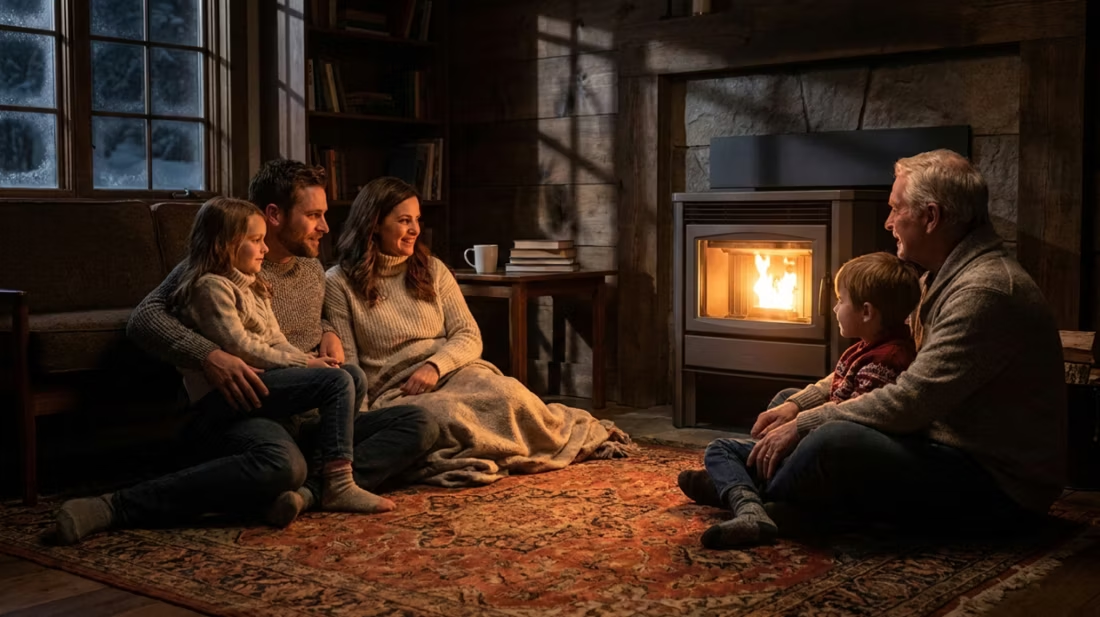
From Columbus and Absarokee up toward Fishtail and the Beartooth foothills, pellet stoves deliver steady, thermostat-controlled heat without the daily wood-splitting. We'll match you with a trusted local dealer who can size and install one correctly.
Every Project Starts From One of These Five Situations
Consistent, thermostat-controlled heat for a demanding climate.
Stillwater County runs from the Yellowstone River valley near Columbus and Rapid up into the foothills toward Absarokee, Fishtail, and Nye, with under 4,300 people spread across a lot of open ground. At 7,736 heating degree days and average winter lows around 10°F, the county sits in the same cold-climate tier as Duluth, MN—long stretches of hard winter where a heat source that runs itself matters. That's a big draw for pellet stoves out here: load the hopper, set the thermostat, and the stove holds a steady burn without the daily cutting, splitting, and stacking that wood heat demands.
Regional pellet brands like Bear Mountain, Lignetics, and Forest Energy are widely stocked by Montana hearth dealers, and pellet appliances burn cleaner than open wood combustion—a real plus during summer wildfire smoke events, since pellet stoves aren't the source of the air quality problem the way outdoor burning can be. The one honest caveat for a rural county like Stillwater: pellet stoves need electricity to run the auger and blower, so if you're on a stretch of road that loses power during winter storms, a small backup power plan—a generator or a battery-backup module some dealers offer—is worth discussing before you buy.
Three steps. No salesperson until you're ready.
Tell us about your project
Your zip code, your situation, and the fuel you're leaning toward—or let the answers point you to one.
See what's actually available
The brands dealers within 100 miles genuinely carry—real options, never a catalog mirage.
Get your dealer & Project Guide
A trusted local dealer, plus the free Project Guide & Parts List that names every component of the job.
Frequently Asked Questions
How much does a pellet stove installation cost in Stillwater County?
Pricing depends on the unit, the venting run through your wall or existing chimney, and whether you need a dedicated electrical outlet installed for the auger and blower motor. In rural Montana markets like Stillwater County, installed pellet stove projects commonly land in the low-to-mid four figures once venting and electrical work are included—but the only way to get a firm number is an in-home look, since older farmhouses near Fishtail or Nye often need different wall-vent routing than a newer build near Columbus. A local dealer can walk your specific setup and give you an exact quote.
What size pellet stove do I need for my home?
Sizing depends on square footage, insulation, and how far up in elevation your home sits. With 7,736 heating degree days and winter lows averaging 10°F across the county, most Stillwater County homes need a mid-to-large hopper capacity to get through a full overnight burn without a 2 a.m. refill—especially homes in the higher, colder ground toward the Beartooth foothills versus the river-valley communities near Columbus and Rapid. A stove sized for a milder climate will run its hopper dry too fast here. A local dealer will size the unit to your square footage and elevation during a free in-home consultation.
Where can I find a certified pellet stove dealer near me?
Look for dealers whose installers carry NFI (National Fireplace Institute) certification, which covers proper venting, clearance, and electrical setup for pellet appliances. Given how spread out Stillwater County is—Columbus, Absarokee, Fishtail, Reed Point, and the scattered ranches in between—expect a modest travel charge on installs farther from the main highway corridor. Working with the same dealer who sells you the stove keeps warranty coverage and code compliance in one hand rather than split between a big-box purchase and a separate installer.
What's the difference between a pellet stove and a pellet insert?
A pellet stove is a freestanding unit that sits on a hearth pad and vents out through a wall or existing chimney—it can go almost anywhere in the home with the right clearances. A pellet insert is built to slide into an existing masonry fireplace opening, turning a drafty open hearth into a sealed, hopper-fed heat source. For Stillwater County homes with an older fireplace already in place, an insert usually makes more sense since it reuses the chimney you have. Homes without an existing fireplace, or those adding heat to a shop or addition, are typically better suited to a freestanding stove.
Do I need a permit to install a pellet stove in Stillwater County?
Most pellet stove installations require a building permit, and if you're adding a dedicated electrical outlet for the auger and blower, an electrical permit as well. Your local building department can confirm the exact process for your township, and most installers handle the permit paperwork as part of the job. Unlike wood stoves, pellet appliances aren't typically caught up in wildfire-smoke air quality advisories, since they don't rely on open outdoor burning—one of the practical advantages of pellet heat in a county where summer smoke events are a real concern.
What's the best pellet stove for Stillwater County's climate?
For a county running 7,736 heating degree days, look at units with a larger hopper capacity so you're not refilling in the middle of a cold night—brands like Harman and Lopi build models designed for exactly this kind of sustained-burn use, and local dealers typically stock pellet fuel from regional producers like Bear Mountain, Lignetics, and Forest Energy to keep it fed. If you're in a stretch of the county prone to winter power outages—common in the more remote areas toward Nye and Fishtail—ask your dealer about battery-backup options for the auger and blower motor, since a pellet stove without power simply stops burning.
Where can I buy pellet fuel in Stillwater County?
Regional brands like Bear Mountain, Lignetics, and Forest Energy are the ones most Montana hearth dealers stock, and many will deliver by the pallet or ton rather than requiring you to haul bags yourself. Expect a modest delivery surcharge for the more remote parts of the county—out toward Nye, Fishtail, or the ranch roads off the highway—compared to picking up in Columbus. Buying a season's supply in late summer, before demand and shipping costs climb heading into fall, is standard practice for a lot of local homeowners.
Pellet stove vs. wood stove—which is right for my home?
Wood stoves burn cordwood you can cut yourself—BLM Montana State Office permits run about $10 per cord during the April-to-October cutting season, and lodgepole pine, ponderosa pine, Douglas fir, and aspen are all common locally. Wood also keeps working during a power outage, which matters on the county's more remote stretches. Pellet stoves trade that self-sufficiency for convenience: load the hopper, set the thermostat, and walk away, with less ash and no splitting—but they need electricity to run, so an outage means no heat unless you've got a battery backup or generator. For homes where reliable grid power is a given, pellet often wins on convenience. For homes farther from town where outages run longer, wood is worth keeping as at least a backup.
Pellet vs. gas—which makes more sense in Stillwater County?
Gas fireplaces offer instant on-off heat with no fuel handling, but most of rural Stillwater County runs on propane rather than piped natural gas, which means tank installation or refills factor into the ongoing cost. Pellet stoves run on bagged or bulk fuel from regional suppliers like Bear Mountain and Lignetics, offer a more substantial, radiant heat output than many gas units, and tend to cost less per BTU over a full Montana winter. If convenience and zero fuel handling matter most, gas is worth a look. If you want strong, sustained heat and don't mind loading a hopper every day or two, pellet is usually the better value out here. A local dealer can walk you through both based on your home and current fuel setup.
What's the difference between an insert and a zero-clearance fireplace?
An insert is a fireplace that slides into a pre-existing wood-burning fireplace—if you don't have one, there's nothing to insert it into. A zero-clearance fireplace is built into a framed wall, which makes it the answer for remodels and new construction. Simple test: existing masonry fireplace means insert; blank or framed wall means zero-clearance.
How often does a pellet stove need cleaning?
A clean pellet stove is a happy pellet stove. Plan on cleaning the burn pot about once a week when you're burning regularly—ash and clinkers gum up the air holes just like a pellet barbecue. Most pellet stove problems trace back to skipped cleaning that nobody explained up front. Some designs make it easy with a trapdoor burn pot: pull a lever and the gunk drops into the ash pan.
Can a fireplace actually lower my heating bill?
Yes—by creating a comfort zone. A furnace heats every square foot of the house just to warm the one room you're in; a gas fireplace on low burns roughly a sixth of the gas a typical furnace does. Set the furnace around 55–60 degrees as a baseline, then heat the rooms your family actually uses. Families who heat this way commonly save $20–$60 a month.
What is an in-home preview and do I need one?
It's a visit where a hearth professional measures your space, confirms the model you picked actually works in your home, and walks the specs—framing, gas line, venting, finish work—before anything is ordered. Some details you just can't know until you see the house. Never make a down payment without one; it's the single most-skipped step that burns buyers.
Stove and Fireplace Dealers in Stillwater County
Pellet Brands Stocked Around Stillwater County
Manufacturers will point you to the nearest stocking dealer.
Find your pellet stove in Stillwater County.
Tell us about your home and we'll match you with a trusted local dealer and send over a free Project Guide & Parts List—the right pellet stove or insert for your space, the vent kit it needs, and who to call to get it installed correctly.
Find Your Fireplace →