
Reliable heat for every corner of Stillwater County.
Wood, gas, pellet, and electric fireplace resources for every town along the Yellowstone River and up into the Beartooth foothills—from Columbus to Fishtail and Nye. Find the right unit and connect with a trusted local hearth retailer.
Every Project Starts From One of These Five Situations
Long, cold winters at the foot of the Beartooths.
Stillwater County sits along the Yellowstone River corridor and climbs into the foothills of the Beartooth Mountains, with a climate zone of 6B, winter lows averaging around 10°F, and a heating season on par with Bozeman, just up the road. Lodgepole pine, ponderosa pine, Douglas fir, and aspen are the firewood species locals actually burn, much of it cut under personal-use permits from the BLM Montana State Office, which manages the scattered public parcels that make up a good share of the county's timbered land. This isn't inversion country like some Montana basins—the air-quality issue here is summer and fall wildfire smoke drifting down from the Absaroka-Beartooth backcountry, not winter stagnation.
What you'll find on this hub: hearth retailers, service technicians, and fuel suppliers covering the whole county—from the county seat in Columbus out to Absarokee, Fishtail, Nye, Reed Point, Rapelje, and Park City. With a population of just 4,260 spread across a large area, most homeowners here work with a dealer based in Columbus or make the drive to Billings for a wider selection. Pick your fuel below to see local dealers, installation costs, and the resources that fit a Beartooth-foothills project.
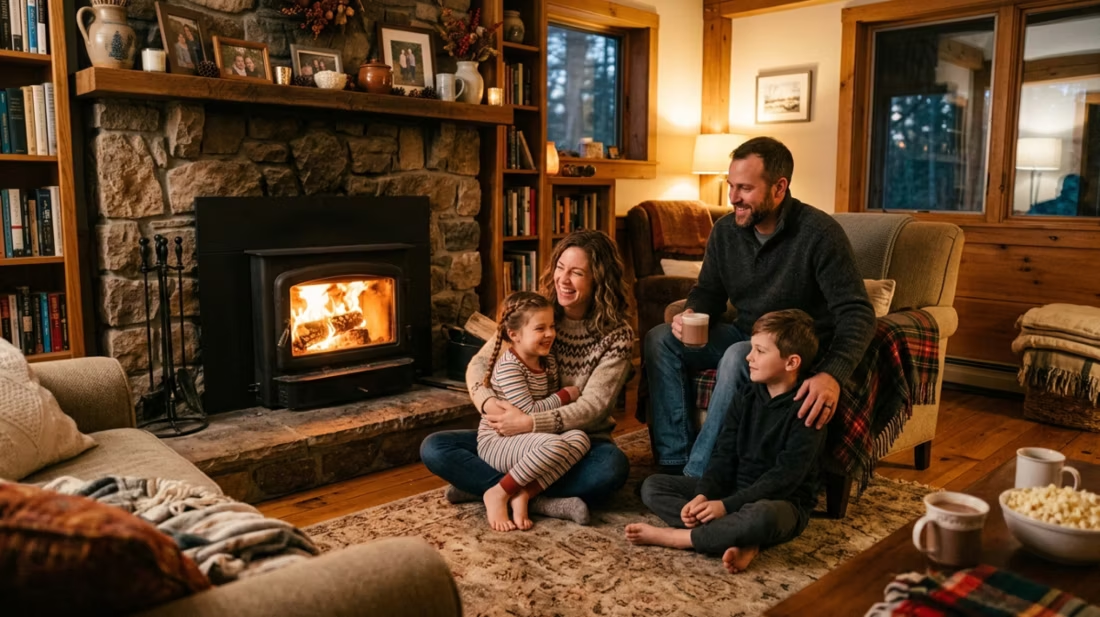
Four fuels. One honest answer for Stillwater County.
Wood
26 models available near Stillwater County.
Find your wood stove →Gas
104 models available near Stillwater County.
Find your gas fireplace →Pellet
See what's available near Stillwater County.
Find your pellet stove →Electric
See what's available near Stillwater County.
Find your electric fireplace →Three steps. No salesperson until you're ready.
Tell us about your project
Your zip code, your situation, and the fuel you're leaning toward—or let the answers point you to one.
See what's actually available
The brands dealers within 100 miles genuinely carry—real options, never a catalog mirage.
Get your dealer & Project Guide
A trusted local dealer, plus the free Project Guide & Parts List that names every component of the job.
Frequently Asked Questions
Which fuel works best in Stillwater County?
It depends on the home and how far out you live. Wood is the backbone fuel for a lot of Stillwater County households—lodgepole pine, ponderosa pine, Douglas fir, and aspen are the species people actually cut off BLM Montana State Office land, and a catalytic or hybrid stove rated for a long overnight burn earns its keep when winter lows average 10°F and the heating season runs past 7,700 degree-days, a load comparable to Bozeman's. Gas is the convenience choice where propane delivery is reliable—natural gas mains reach Columbus but not the more rural corners like Fishtail or Nye, so propane tanks are the norm there. Pellet stoves are a solid middle ground; Bear Mountain, Lignetics, and Forest Energy pellets are all regionally stocked, though delivery on gravel roads in a hard winter can be its own logistics puzzle. Electric works fine for a bedroom or a cabin loft, but it's not going to carry a house through a Beartooth-foothills January on its own. Most households here run wood or pellet as primary heat with propane or electric as backup.
Do I need a permit to install a fireplace or cut my own firewood in Stillwater County?
For firewood, yes—most of the accessible public timber in the county falls under the BLM Montana State Office, and you need a personal-use firewood permit before cutting lodgepole pine or Douglas fir, even on land that looks open to anyone. For appliance installation, the county requires building permits for new wood stoves and inserts, gas fireplaces and inserts, and pellet stoves; gas work also needs a licensed propane or gas fitter for the line connection. Electric units are usually exempt unless you're hardwiring a built-in into a new circuit. With a county this size, the building department isn't large, so permit turnaround can run a bit longer than you'd see in a bigger jurisdiction—most local retailers build that lead time into the install schedule and pull the permit for you.
Does wildfire smoke affect wood burning in Stillwater County?
The air-quality issue here is different from what you'd find in a winter-inversion basin. Stillwater County's real concern is summer and early-fall wildfire smoke drifting down from the Absaroka-Beartooth backcountry, which can sit over the Yellowstone River valley for days at a time—that's the event locals actually plan around, not a mandatory winter burn curtailment. There's no formal red/yellow burn-ban program tied to wood stoves here the way there is in some Montana basin communities. Still, an EPA 2020 NSPS-certified stove burns a cord more efficiently and produces less visible smoke, which matters for your neighbors and stretches your woodpile further across a heating season this long.
Can one local retailer handle all four fuel types in a county this small?
With only about 4,260 residents spread across a large stretch of the Yellowstone valley and Beartooth foothills, Stillwater County doesn't support a large roster of dedicated hearth showrooms. Most homeowners either work with a dealer based in or near Columbus or drive to Billings, roughly 30–40 minutes northwest, where multi-fuel retailers carrying wood, gas, pellet, and electric lines run rural service routes out through Absarokee, Fishtail, Nye, Reed Point, and Rapelje. A single service trip is often scheduled alongside other calls along the same corridor, so getting on the calendar early in the fall—before the first hard freeze—gets you seen sooner rather than later.
How does service work in remote parts of the county, like Fishtail or Nye?
Chimney sweeps and gas technicians covering Stillwater County typically stage out of Billings or Columbus and run set routes along the Highway 78 and Nye Road corridors rather than offering true same-day dispatch. If you're out toward Fishtail, Nye, or the East Rosebud drainage, expect a modest trip fee and expect that booking in August or September—well ahead of the first cold snap—is far easier than trying to line up an emergency midwinter visit once snow has closed roads. Keeping a spare battery on hand for gas ignition units and a backup cord of wood is common practice for households this far from a service center.
What's the typical cost range for fireplace installation across all fuel types in Stillwater County?
Ranges vary by fuel and, out here, by how far the crew has to drive. Wood stove or insert installation: roughly $4,500–$9,500 for a typical retrofit, more for new chimney construction on an off-grid or newly built property. Gas fireplace, insert, or stove: about $4,500–$11,000 depending on whether propane line work is involved, since most of the county runs on tanks rather than mains. Pellet stove or insert: typically $4,500–$7,500, with Bear Mountain, Lignetics, or Forest Energy pellets sourced locally or trucked in. Electric fireplace: $200–$3,000 for the unit itself, plus $400–$1,200 in labor for anything beyond a plug-in install. Rural trip fees for installers coming from Billings or Columbus can add a few hundred dollars on top of these ranges—ask up front when you get quotes.
Can a fireplace actually lower my heating bill?
Yes—by creating a comfort zone. A furnace heats every square foot of the house just to warm the one room you're in; a gas fireplace on low burns roughly a sixth of the gas a typical furnace does. Set the furnace around 55–60 degrees as a baseline, then heat the rooms your family actually uses. Families who heat this way commonly save $20–$60 a month.
Does a fireplace add value to my home?
On average, a fireplace adds back to the home about the same amount you spent installing it. Add the monthly savings from heating the rooms you actually use instead of the whole house—often hundreds of dollars a year—and the value case is strong before you even count what a fire does for how your family uses the room.
I know I want a fireplace—where do I actually start?
Do two things today: snap a photo of the wall or fireplace you want to transform, and take a tape measure to the space—width, height, depth. Those two artifacts answer most of a hearth professional's first questions. Then settle fuel (wood, gas, pellet, or electric) and set a realistic budget: $3,900–$5,500 covers fireplace, vent, and basic install for most homes.
Wood, gas, pellet, or electric—how do I choose?
Match the fuel to your life, not the other way around. Wood: lowest fuel cost and total power-outage independence, but you're hauling and stacking. Gas: press a button, set a thermostat, no maintenance to speak of. Pellet: wood economics with automatic feeding, in exchange for weekly cleaning and a need for electricity. Electric: plugs in anywhere with honest supplemental heat. Nobody regrets the fuel that fits how they actually live.
Stove and Fireplace Dealers in Stillwater County
Listings include WhyFire partner dealers, dealers we have verified as authorized for the brands we recommend, and established local businesses that carry hearth products. Every listing shows which one it is. The ones marked Preferred run on WhyFire's software, so they can show you real pricing and book your appointment right here. No manufacturer pays for placement. How we verify dealers →
Finest Flames Stove & Hearth
White Heating & Air Conditioning
Find your fireplace in Stillwater County.
Tell us your fuel and your town—Columbus, Absarokee, Fishtail, Nye, or anywhere else in the county—and we'll match you with a trusted local dealer and send you a free Project Guide & Parts List: the exact parts, including the vent kit, and the dealer we recommend for your project.
Find Your Fireplace →