
Steady heat for Roosevelt County winters that top 7,800 heating degree days.
With an average winter low near 6°F and a climate zone 6B heating season that runs long and hard across the Fort Peck Reservation, Roosevelt County households want heat that keeps feeding itself through a blizzard. I match you with a trusted local dealer who knows hopper sizing, venting, and what actually holds up out here—not a big-box guess.
Every Project Starts From One of These Five Situations
A clean, low-smoke option for a county that already deals with wildfire haze.
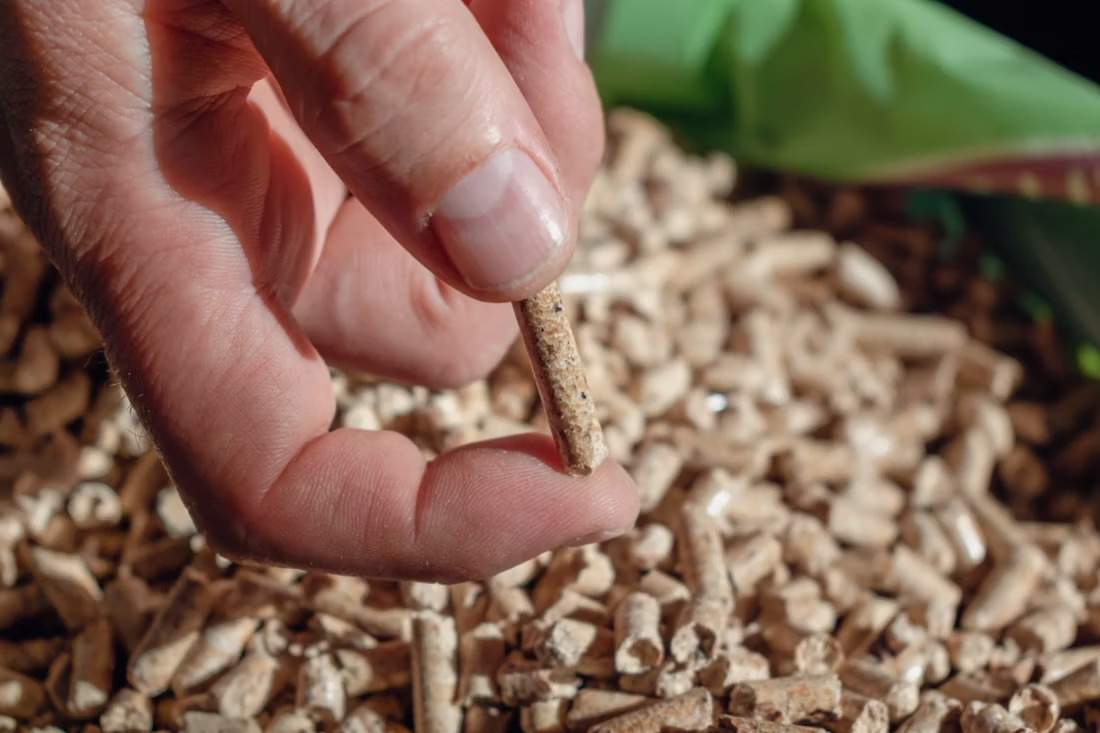
Roosevelt County sits in the far northeastern corner of Montana along the Missouri River, encompassing most of the Fort Peck Indian Reservation and small communities spread wide across open prairie—Wolf Point, Poplar, Culbertson, and Brockton. With roughly 4,979 residents scattered across a large rural footprint and 7,806 heating degree days, the heating season here runs comparable to Fargo, ND—long, cold, and exposed to steady prairie wind that pulls heat out of a home fast. The county isn't heavily timbered itself, so the lodgepole pine, ponderosa pine, douglas fir, and aspen that go into regional pellet production are milled from forested parts of Montana further west and trucked in as compressed fuel, which is part of why pellet heat has taken hold here even without local stands of timber to cut.
Summers in Roosevelt County increasingly bring drifting wildfire smoke from fires burning in western Montana and across the Canadian border, so a lot of homeowners like that a pellet stove burns clean and produces almost no visible exhaust of its own, unlike an open wood fire. The auto-feed hopper is also a practical draw for a county this spread out—a farmstead outside Culbertson or a home on reservation land near Poplar doesn't need someone splitting and stacking cordwood every week, just a supply of bagged pellets. Bear Mountain, Lignetics, and Forest Energy are the three brands most consistently stocked at farm-supply and hardware stores in Wolf Point and Culbertson, and residents who want more selection often make the roughly 60-mile drive east to Williston, ND, where Bakken-era retail growth has kept a wider range of pellet fuel in stock year-round.
Three steps. No salesperson until you're ready.
Tell us about your project
Your zip code, your situation, and the fuel you're leaning toward—or let the answers point you to one.
See what's actually available
The brands dealers within 100 miles genuinely carry—real options, never a catalog mirage.
Get your dealer & Project Guide
A trusted local dealer, plus the free Project Guide & Parts List that names every component of the job.
Frequently Asked Questions
How much does a pellet stove installation cost in Roosevelt County?
Most local installs run $3,500 to $6,500, depending on whether the stove is a freestanding unit vented through an exterior wall or an insert going into an existing masonry fireplace opening. Homes without any existing hearth or vent path—common in older farmhouses around Poplar and Brockton—sit toward the upper end once wall penetration, PL venting, and a proper hearth pad are added. Because Roosevelt County is sparsely populated and installers often cover long distances between Wolf Point, Culbertson, and outlying ranch properties, expect a modest travel charge built into rural quotes.
What size pellet stove do I need for a Roosevelt County home?
With winter lows averaging around 6°F and 7,806 heating degree days, most main living areas in the county call for a mid-to-large pellet stove rated for 1,800 to 2,500 square feet, even in homes that would size smaller in a milder climate. A larger hopper is worth prioritizing too—a 60 to 80 pound capacity means fewer refills during a multi-day blizzard when driving out for more pellets isn't practical. Older, less-insulated farmhouses common outside Wolf Point and Poplar often need the next size up compared to newer, tighter-built homes of the same square footage.
Do I need a permit to install a pellet stove in Roosevelt County?
Yes, a building permit is typically required through the county planning office based in Wolf Point, or through the applicable town if you're inside Poplar, Culbertson, or Brockton city limits. The good news is pellet stove venting is simpler to permit than a masonry wood chimney—most units vent through an exterior wall with 3- or 4-inch PL pipe rather than requiring a full Class A chimney system. A local dealer handling the install will typically pull the permit and coordinate the inspection as part of the job.
Will my pellet stove still work if the power goes out?
Not without a backup power source. Pellet stoves rely on electricity to run the auger, igniter, and combustion blower, so a power outage stops the stove even with a full hopper. That matters in Roosevelt County, where prairie blizzards and ice storms can knock down exposed lines served by Missouri River Electric Cooperative, sometimes for a day or more in the more remote stretches of the reservation. Many rural households here pair a pellet stove with a small backup generator or battery inverter sized to run the stove's electronics, and some keep a wood stove or fireplace as a no-power fallback for the worst weather.
How do I plan pellet fuel storage for a long Roosevelt County winter?
Given the county's 7,806 heating degree days, a household running a pellet stove as a primary or heavy supplemental heat source typically burns through 2 to 3 tons of pellets over a full winter. Because Wolf Point, Poplar, and Culbertson have limited retail stock compared to a larger market, most local dealers and homeowners recommend buying your ton or two before the first snow rather than restocking bag by bag mid-winter, since supply can tighten once cold weather sets in across the region. Bear Mountain, Lignetics, and Forest Energy bags need to stay bone dry—a garage, shed, or basement works, but any damp storage area will swell and break down the pellets before you can burn them.
Why is pellet more common than cutting your own firewood in Roosevelt County?
Roosevelt County is mostly open prairie and reservation farmland rather than forested public land, so there isn't a nearby national forest issuing personal-use cutting permits the way there is in western Montana. The lodgepole pine, ponderosa pine, douglas fir, and aspen that make up regional pellets are sourced from timbered areas further west and compressed into fuel that ships out to rural retailers, which is often more practical for county residents than driving hours to reach standing timber. That logistics gap is a big reason pellet stoves have a real foothold here even though the county isn't wood country in the traditional sense.
How much maintenance does a pellet stove need?
Plan on emptying the ash pan every few days during heavy winter use, wiping the glass weekly, and vacuuming the hopper and auger area monthly to keep pellet dust from building up. A full professional service—checking the igniter, gaskets, and combustion blower—is worth scheduling once a year, ideally in late summer before the heating season starts in earnest. Households running the stove daily through a Roosevelt County winter put more hours on the components than a mild-climate home, so staying ahead of that annual service call helps avoid a mid-January breakdown.
Are there rebates or tax credits available for a pellet stove in Roosevelt County?
The federal biomass stove tax credit (Section 25(D)) offers 30% of the total cost, including installation, up to $2,000, for pellet stoves rated at 75% efficiency or higher—most modern EPA-certified pellet stoves from brands like Bear Mountain-compatible models qualify. Montana doesn't currently layer a statewide rebate on top of that federal credit, so it's worth confirming with your installer that the specific model and its certification paperwork meet the efficiency threshold before you file.
Pellet vs. propane—which makes more sense in Roosevelt County?
Natural gas service is limited to nonexistent across most of the county's small towns, so propane delivery is the common alternative to wood or pellet heat for whole-home systems. Propane gives you thermostat control without hauling fuel bags, but prices swing with the regional delivery market and remote farmsteads pay more for tank fills the further they sit from a supplier's route. A pellet stove trades that price volatility for a fuel you buy by the ton once or twice a season, plus the auto-feed convenience that a wood stove doesn't offer—for a lot of Roosevelt County households, running pellet in the main living space and keeping propane or electric baseboard as backup elsewhere is the practical split.
Why is my open fireplace making my house colder?
Open fireplaces suck—literally. As the fire burns, it consumes air your furnace already paid to heat and pulls it out through the chimney, so the house is actually colder after the fire goes out than before you lit it. An insert fixes this: it seals the chimney, puts fixed glass across the front, and turns that hole in your house into a real heat source.
Are pellet stoves loud?
They make some noise—there are two fans running plus an auger motor that turns as it feeds pellets. But there's a real range: premium models are engineered quiet, and the best offer a whisper-quiet mode you can comfortably watch TV next to. If noise matters in your room, ask to hear a stove running before you buy—it's a five-minute test that saves years of annoyance.
What is an in-home preview and do I need one?
It's a visit where a hearth professional measures your space, confirms the model you picked actually works in your home, and walks the specs—framing, gas line, venting, finish work—before anything is ordered. Some details you just can't know until you see the house. Never make a down payment without one; it's the single most-skipped step that burns buyers.
Can a fireplace actually lower my heating bill?
Yes—by creating a comfort zone. A furnace heats every square foot of the house just to warm the one room you're in; a gas fireplace on low burns roughly a sixth of the gas a typical furnace does. Set the furnace around 55–60 degrees as a baseline, then heat the rooms your family actually uses. Families who heat this way commonly save $20–$60 a month.
Pellet Brands Stocked Around Roosevelt County
Manufacturers will point you to the nearest stocking dealer.
Get your free Project Guide & Parts List for a pellet stove in Roosevelt County.
Tell me about your home, your hopper and refill preferences, and how you plan to heat through a Roosevelt County winter, and I'll match you with a trusted local dealer and send a free Project Guide & Parts List—the exact equipment, vent kit, and recommended installer for your pellet project.
Find Your Fireplace →