
Pellet heat built for Powder River County's brutal winters.
Consistent, low-maintenance heat for a county of roughly 449 people spread across the high plains near Broadus—without the daily wood-splitting a working ranch doesn't have time for.
Every Project Starts From One of These Five Situations
Convenience that keeps pace with ranch life.
Powder River County sits in Montana's IECC climate zone 6B—long, hard winters with sustained subzero stretches typical of the high plains stretching toward the Wyoming line. With roughly 449 residents scattered across nearly 1,700 square miles centered on Broadus, this is about as low-density as heating markets get, and that shapes what's practical here. A working ranch already burns daylight on livestock, fencing, and equipment before winter chores even start—hauling and splitting cordwood on top of that is a real cost, even with lodgepole pine, ponderosa pine, douglas fir, and aspen standing in the surrounding forests and draws.
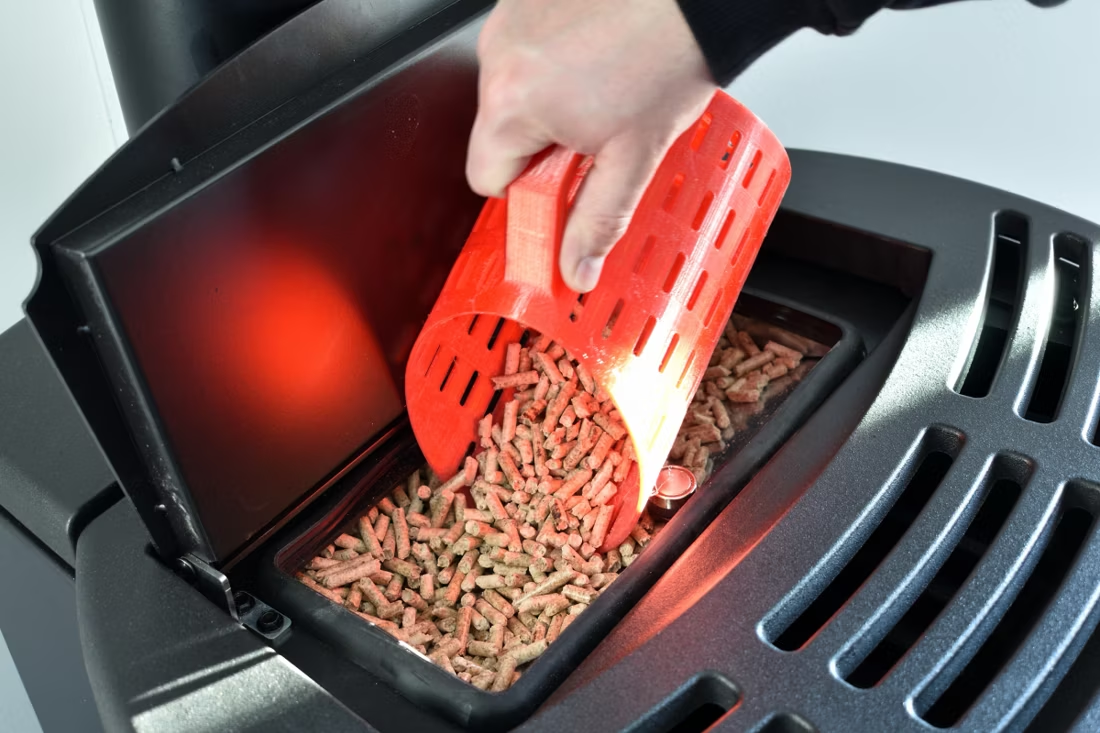
A pellet stove trades that labor for a hopper you fill once or twice a day and a thermostat that holds a steady temperature through a howling January night. Regional pellet brands—Bear Mountain, Lignetics, Forest Energy—supply this part of Montana, typically through farm-and-ranch supply stores or seasonal pallet orders rather than a dedicated hearth shop on every corner. Because Powder River County is thinly populated, most homeowners here end up working with a dealer based in Miles City or across the state line in Sheridan, Wyoming—which is exactly the kind of match Find My Fireplace exists to make: a real installer who knows this climate, not a big-box guess.
Three steps. No salesperson until you're ready.
Tell us about your project
Your zip code, your situation, and the fuel you're leaning toward—or let the answers point you to one.
See what's actually available
The brands dealers within 100 miles genuinely carry—real options, never a catalog mirage.
Get your dealer & Project Guide
A trusted local dealer, plus the free Project Guide & Parts List that names every component of the job.
Frequently Asked Questions
How much does a pellet stove installation cost in Powder River County?
Nationally, a typical pellet stove installation runs $3,000 to $6,000 depending on the unit, venting length, and whether you're installing into an existing fireplace opening or a fresh wall location. In a county as sparsely populated as Powder River, expect the dealer quote to include a trip charge or delivery fee, since the nearest full-service installer is usually based in Miles City or over the line in Sheridan, Wyoming rather than in Broadus itself. Ask for that travel cost up front—it's a normal part of pricing out here, not an add-on to be surprised by.
Where do I buy pellets in a county this small?
Powder River County doesn't have the pellet-store density you'd find in a bigger market, so most residents stock up rather than buy as needed. Regional brands like Bear Mountain, Lignetics, and Forest Energy are typically available through farm-and-ranch supply outlets in Broadus or nearby towns, often sold by the pallet (a ton at a time) rather than single bags. Given how far winter storms can shut down county roads, buying a season's worth of pellets in September or October—before the first hard freeze—is the standard local practice rather than an occasional errand.
Do pellet stoves work if the power goes out?
No—pellet stoves rely on an electric auger to feed fuel and a blower to distribute heat, so a power outage shuts the unit down unless you have backup power. On the high plains around Powder River County, where a single winter storm can knock out rural electric service for a stretch, many ranch households already run a generator for well pumps and livestock equipment. If backup heat during outages matters to you, ask your dealer about a small inverter generator sized for a pellet stove, or consider keeping a wood stove as a secondary heat source using the lodgepole pine or ponderosa pine already available on the land.
What size pellet stove do I need for a zone 6B home?
Climate zone 6B means sustained cold rather than occasional cold snaps, so sizing here should lean toward the higher end of a stove's rated square footage rather than the low end. A stove rated for 1,500 square feet will work harder and burn through pellets faster in a Powder River County winter than the same stove in a milder zone. Older ranch houses with single-pane windows and minimal insulation—common in this part of Montana—also lose heat faster, which pushes sizing up further. A local dealer will factor in your home's insulation and layout during an in-home or phone consultation before recommending a specific unit.
Do I need a permit to install a pellet stove in Powder River County?
Outside the town limits of Broadus, much of Powder River County has limited formal building code enforcement, which is typical for low-population rural Montana counties. That said, manufacturer installation instructions and NFPA venting clearances still apply regardless of local permitting, and your homeowner's insurance will expect the install to meet code even if no inspector shows up. If your property sits within Broadus town limits, check with the town before installing. Either way, a qualified installer will build the install to code whether or not a permit is pulled—that protects you either way.
What's the best pellet stove for this part of Montana?
For a zone 6B climate with long, cold stretches, look for a stove with a large hopper capacity so you're not refilling every few hours overnight, and a higher maximum BTU output to keep pace with sustained subzero temperatures. Brands whose pellets are actually stocked regionally—Bear Mountain, Lignetics, Forest Energy—are worth prioritizing since fuel availability matters more out here than in a market with pellets on every shelf. Your dealer can also advise on pellet quality: harder wood pellets with low ash content burn cleaner and require less frequent maintenance, which matters when the nearest service call is a real drive.
How much maintenance does a pellet stove need?
Compared to a wood stove or chimney system, a pellet stove is lower-maintenance: the burn pot needs emptying every few days depending on use, the ash pan needs periodic cleaning, and the venting (typically a smaller PL-rated pipe rather than a full masonry chimney) needs an annual inspection. For a ranch household already managing plenty of equipment maintenance through the winter, this is one of pellet heat's real advantages over cordwood—less hauling, less splitting, and a shorter maintenance list overall.
Pellet vs. wood—which makes more sense for a Powder River County ranch?
Wood is essentially free heat if you're already cutting lodgepole pine, ponderosa pine, douglas fir, or aspen off your own land or nearby forest ground, and it works without electricity—a real advantage during a winter power outage on the high plains. Pellet stoves trade that self-sufficiency for convenience and cleaner burning, which matters given the region's wildfire smoke concerns in late summer and fall; a pellet stove doesn't add to seasonal smoke the way an inefficient wood burn can. Many Powder River County households end up running both—wood as the primary or backup heat source using timber already on the property, and a pellet stove for the daily convenience of a thermostat-controlled living space.
Do wildfire smoke concerns affect pellet stove use here?
Powder River County's air quality concern is wildfire smoke rather than winter inversion, which mainly affects late-summer and fall conditions rather than pellet-burning season. Pellet stoves burn considerably cleaner than an open wood fire or an older uncertified wood stove, producing minimal particulate output—which is one reason some residents choose pellet heat specifically to avoid adding to smoke-heavy air during dry years. There's currently no curtailment program targeting pellet appliances in this part of Montana, but it's worth checking with your dealer if regional air quality advisories become more frequent.
How often does a pellet stove need cleaning?
A clean pellet stove is a happy pellet stove. Plan on cleaning the burn pot about once a week when you're burning regularly—ash and clinkers gum up the air holes just like a pellet barbecue. Most pellet stove problems trace back to skipped cleaning that nobody explained up front. Some designs make it easy with a trapdoor burn pot: pull a lever and the gunk drops into the ash pan.
Why is a fireplace insert so efficient?
An insert does two things: it seals the chimney completely, so you stop losing air you already paid to heat, and it radiates warmth into the room through the firebox and glass. Most add a heat-exchange fan that pulls cool room air underneath, wraps it around the hot firebox, and pushes it back out warm. Your home is more efficient before you've even lit the first fire.
Can a fireplace actually lower my heating bill?
Yes—by creating a comfort zone. A furnace heats every square foot of the house just to warm the one room you're in; a gas fireplace on low burns roughly a sixth of the gas a typical furnace does. Set the furnace around 55–60 degrees as a baseline, then heat the rooms your family actually uses. Families who heat this way commonly save $20–$60 a month.
How much should I budget for a fireplace?
For an average home—covering the fireplace, the vent pipe, and basic installation—a budget between $3,900 and $5,500 gives you a lot of options across wood, gas, and pellet. By the time you add finish work, gas line, and electrical, the average complete installation lands between $5,000 and $12,000 all-in. In a remodel or new build, a good rule is to put about 2.5% of the total project cost toward the fireplace.
Pellet Brands Stocked Around Powder River County
Manufacturers will point you to the nearest stocking dealer.
Find your pellet stove in Powder River County.
Tell us about your home and your winters, and we'll put together a free Project Guide & Parts List—the right pellet stove, the vent kit it needs, and a trusted local dealer who can actually get it installed out here.
Find Your Fireplace →