
Instant heat for Powder River County's coldest, windiest nights.
Propane-fed gas heat for ranch homes scattered across Powder River County—reliable warmth that doesn't depend on hauling wood or waiting on a delivery truck in a blizzard. Find the right unit and connect with a trusted local dealer.
Every Project Starts From One of These Five Situations
Propane-powered comfort across ranch country.
Powder River County is one of the least populated counties in Montana—roughly 449 people spread across nearly 3,300 square miles of open range around Broadus. Climate zone 6B here means genuinely severe winters: long stretches of single-digit and sub-zero cold driven by wind off the plains, not unlike what Bismarck, North Dakota deals with most winters. There's no city gas main running out to most of this county—homes and ranch outbuildings are spread far enough apart that piped natural gas infrastructure was never built. Wildfire smoke is the other seasonal concern, which is part of why a growing number of homeowners here are pairing wood-burning setups with a gas backup that doesn't need tending.
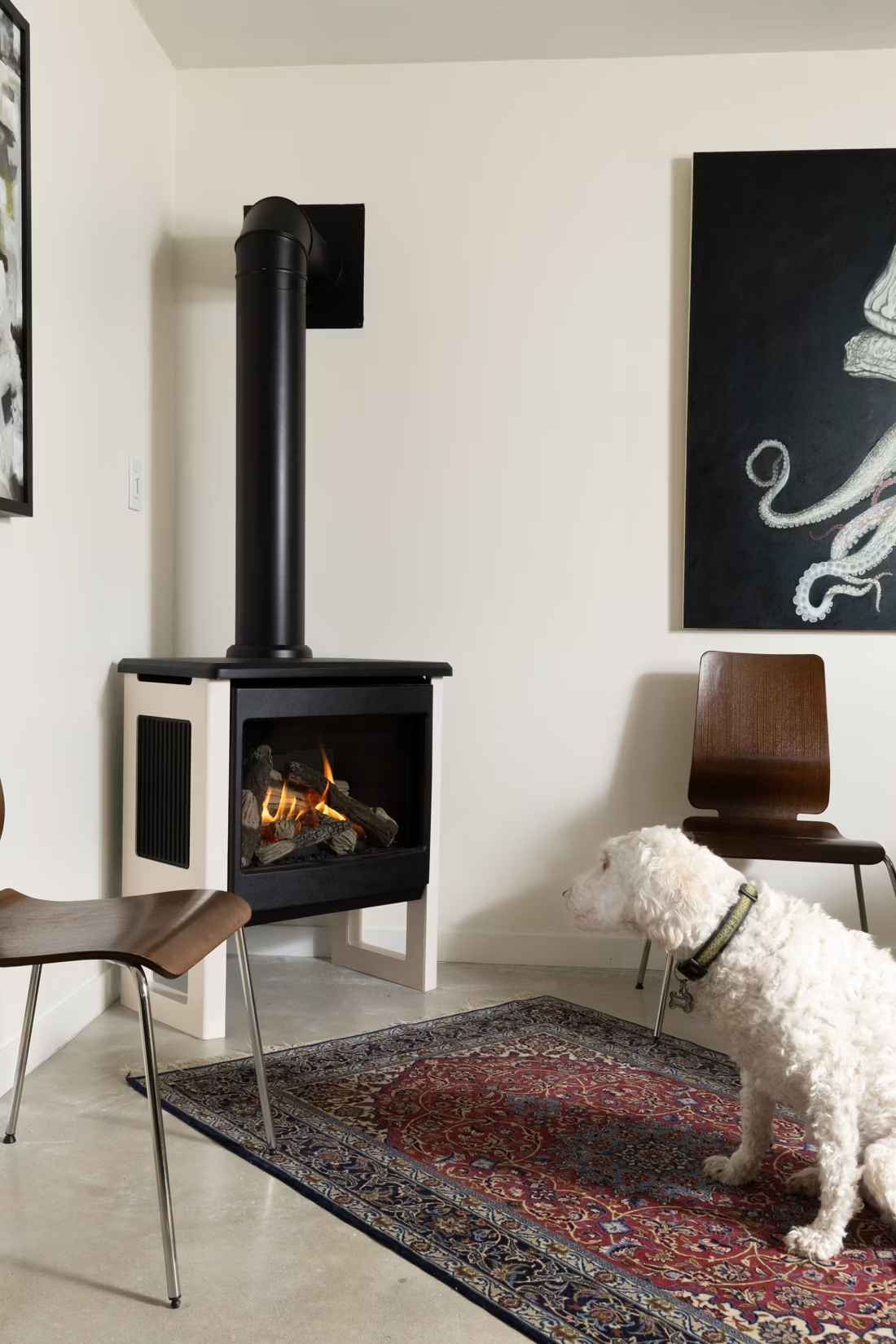
For Powder River County, 'gas fireplace' almost always means propane. Regional propane suppliers deliver and fill tanks for ranch properties throughout the county, and a direct-vent propane fireplace or insert gives you heat at the flip of a switch without hauling lodgepole pine or ponderosa pine from the woodpile every time a storm rolls through. For homeowners managing a working ranch with limited time for daily wood-tending, or a second home that sits empty for weeks at a stretch, propane's on-demand reliability is a real advantage—especially with a battery-backed ignition system that keeps working through a power outage.
Three steps. No salesperson until you're ready.
Tell us about your project
Your zip code, your situation, and the fuel you're leaning toward—or let the answers point you to one.
See what's actually available
The brands dealers within 100 miles genuinely carry—real options, never a catalog mirage.
Get your dealer & Project Guide
A trusted local dealer, plus the free Project Guide & Parts List that names every component of the job.
Frequently Asked Questions
How much does a gas fireplace installation cost in Powder River County?
Expect a range of roughly $3,800 to $9,500 for a propane fireplace or insert installation, depending on the unit, whether a propane tank is already in place, and how much venting or framing work is involved. Because Powder River County is so sparsely populated—under 500 residents spread across a huge area—installers based out of Broadus or neighboring counties often factor in travel time to reach outlying ranch properties, which can add to the quote versus a similar job in a denser Montana town. Get a firm number from a local dealer after they've seen your home and your existing propane setup, if any.
Is natural gas available in Powder River County, or is it all propane?
It's propane. Powder River County's population density doesn't support piped natural gas infrastructure, so homes here run on propane delivered by regional suppliers and stored in an on-site tank. If you're building new or converting an existing fireplace, plan for either an existing tank hookup or a new tank installation as part of the project. Most gas fireplace models sold for this market are configured for propane from the start, so this isn't a limitation—it's simply how heating fuel works across most of rural southeastern Montana.
Will my gas fireplace still work if the power goes out?
For most models, yes. Units with intermittent pilot ignition (IPI) run on battery backup—typically standard AA batteries—so the fireplace lights and operates normally even with the grid down. In a county where winter storms and high winds regularly knock out rural power lines, that's not a minor feature. Valor's gas fireplaces take a different approach: the pilot's thermocouple generates the electricity the unit needs to run, so there's no battery to remember or replace. Ask your local dealer about the ignition system on any unit you're weighing, especially if your property sees frequent outages.
What's the difference between a gas fireplace, gas insert, and gas stove?
A gas fireplace is a fully built-in unit framed into a wall—the right call for new construction or a major remodel. A gas insert drops into an existing masonry fireplace opening, using the existing chimney as a sealed vent path and converting an old open hearth into an efficient heat source. A gas stove is a freestanding unit that sits on a hearth pad like a wood stove but burns propane. For the older ranch houses common throughout Powder River County that already have a wood fireplace, an insert is usually the simplest upgrade; a detached shop or newer build without an existing chimney is better suited to a freestanding stove or built-in unit.
Do I need a permit to install a gas fireplace in Powder River County?
Powder River County doesn't run a large permitting office the way more populated Montana counties do—questions about building permits typically route through the county offices in Broadus, and enforcement on rural, unincorporated ranch land can be lighter than in town. That said, the propane line and tank work itself should always be done by a licensed propane technician or gas-fitter regardless of local permitting, since improper line pressure or venting is a genuine safety hazard. A local hearth dealer handling both the appliance and the gas connection is the safest way to make sure that part is done right.
What's the difference between vented and vent-free gas fireplaces?
Vented (direct-vent) gas fireplaces draw combustion air from outside and exhaust the byproducts back outside through a sealed pipe—they're the cleaner, more universally recommended option and what most local dealers install by default. Vent-free units burn propane directly into the room air without external venting; they're legal in Montana but come with strict room-sizing rules and require an oxygen depletion sensor. For a Powder River County home already dealing with wildfire smoke as a seasonal air quality concern, a direct-vent unit is generally the better fit—it doesn't add any combustion byproducts to indoor air on top of what's already coming in from outside during smoke season.
How often should a propane fireplace be serviced?
Plan on an annual inspection, ideally before the coldest stretch of winter sets in. A technician checks the burner, pilot assembly, venting, and gas connections, and cleans the glass and interior—a straightforward visit that typically runs $150 to $250. Given the distances involved in Powder River County, it's worth scheduling service alongside a propane tank fill or delivery when possible, so you're not paying for a dedicated trip out to the ranch.
Gas vs. wood—which makes more sense for a Powder River County home?
Wood remains a strong choice here—lodgepole pine, ponderosa pine, Douglas fir, and aspen are all locally available, and a wood stove keeps working with zero dependence on propane delivery or the power grid, which matters when a road gets snowed in. Propane wins on convenience: no hauling, no ash, instant heat for a ranch house or line shack you're not tending daily. Pellet stoves from brands like Bear Mountain, Lignetics, or Forest Energy split the difference on cleanliness but need electricity to run the auger, so they're not a storm-proof backup the way wood is. Many Powder River County homes end up with wood as the primary or backup heat source and a propane unit for the rooms where convenience matters most.
How do I size a propane tank for a fireplace on a larger property?
Tank sizing depends on how many propane appliances you're running—a fireplace alone uses far less propane than a furnace, water heater, or range, so if you already have a tank for other appliances, adding a fireplace usually just means confirming the tank and regulator can handle the extra load. If a fireplace is your only propane use, a smaller tank or even a portable cylinder setup may be enough. Given the distances propane trucks travel to reach ranch properties in Powder River County, it's worth asking your supplier about a tank size that reduces how often you need a delivery, particularly if your property is on a road that's hard to reach after a big snow.
Why is my open fireplace making my house colder?
Open fireplaces suck—literally. As the fire burns, it consumes air your furnace already paid to heat and pulls it out through the chimney, so the house is actually colder after the fire goes out than before you lit it. An insert fixes this: it seals the chimney, puts fixed glass across the front, and turns that hole in your house into a real heat source.
Why is a fireplace insert so efficient?
An insert does two things: it seals the chimney completely, so you stop losing air you already paid to heat, and it radiates warmth into the room through the firebox and glass. Most add a heat-exchange fan that pulls cool room air underneath, wraps it around the hot firebox, and pushes it back out warm. Your home is more efficient before you've even lit the first fire.
How much should I budget for a fireplace?
For an average home—covering the fireplace, the vent pipe, and basic installation—a budget between $3,900 and $5,500 gives you a lot of options across wood, gas, and pellet. By the time you add finish work, gas line, and electrical, the average complete installation lands between $5,000 and $12,000 all-in. In a remodel or new build, a good rule is to put about 2.5% of the total project cost toward the fireplace.
Can I install a fireplace myself?
If you're putting a fire in your house on purpose, it's best to work with an expert. Unless you're genuinely experienced in framing, gas line, vent pipe, and the national code on clearances to combustibles, have a professional do it—and ideally the same company that sells you the fireplace, so warranty, service, and liability all live under one roof.
Get matched with the right gas fireplace for your Powder River County home.
Tell us about your home and your current propane setup, and we'll put together a free Project Guide & Parts List—the exact parts, including the vent kit, and a trusted local dealer who can install it.
Find Your Fireplace →