
Steady warmth through Pondera County's brutal winters.
From Conrad to Valier, pellet heat delivers thermostat-steady warmth through the Rocky Mountain Front's long heating season—without the daily wood-splitting. Find the right stove and connect with a trusted local dealer.
Every Project Starts From One of These Five Situations
Consistent heat without the wood-splitting labor.
Pondera County sits along Montana's Rocky Mountain Front in the heart of the Golden Triangle wheat belt, with roughly 4,300 residents spread between Conrad, Valier, and a lot of open farm and ranch land in between. At Climate Zone 6B with 7,980 heating degree days, the county racks up a heating season on par with Bismarck or Fargo—average winter lows near 11°F, with wind-driven cold snaps that can hold much lower for days at a time when the chinooks aren't blowing through. That's a long, demanding season for any heating appliance, and it's why so many farmhouses and in-town homes here run supplemental heat on top of whatever's in the furnace room.
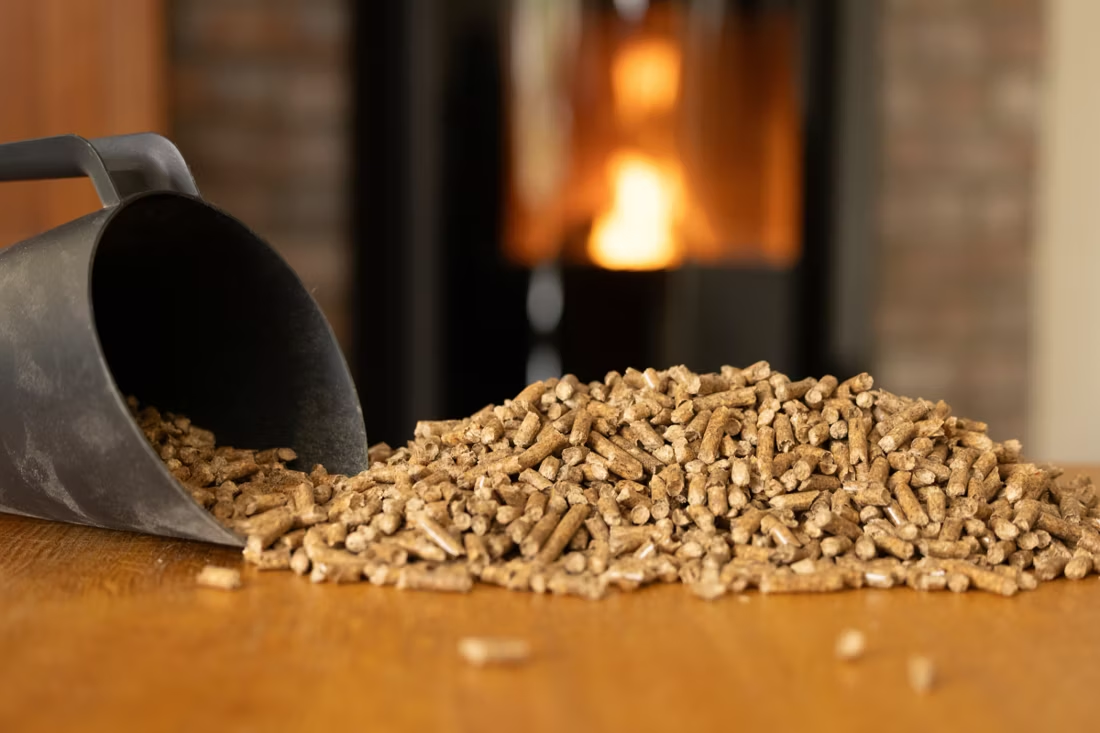
Pellet appliances have earned a solid place in that mix. They run on compressed hardwood or softwood pellets rather than the split lodgepole pine, ponderosa pine, Douglas fir, or aspen that fuels most local wood stoves, and regional brands like Bear Mountain, Lignetics, and Forest Energy are widely stocked at ag and hardware suppliers across north-central Montana. For a county where wildfire smoke is a recurring late-summer and fall concern along the Front, a pellet stove's cleaner, more complete combustion is a real advantage over open wood burning—and the auto-feed hopper means you're not tending a fire every few hours during a stretch of sub-zero weather. The tradeoff is that pellet stoves need electricity to run the auger and blower, which matters in a rural county where winter storms can knock out power for hours; most homeowners here pair a pellet stove with a small backup power plan or keep a wood-burning option in reserve.
Three steps. No salesperson until you're ready.
Tell us about your project
Your zip code, your situation, and the fuel you're leaning toward—or let the answers point you to one.
See what's actually available
The brands dealers within 100 miles genuinely carry—real options, never a catalog mirage.
Get your dealer & Project Guide
A trusted local dealer, plus the free Project Guide & Parts List that names every component of the job.
Frequently Asked Questions
How much does a pellet stove installation cost in Pondera County?
Most pellet stove installations in Pondera County land between roughly $3,500 and $6,500, depending on the stove's hopper capacity and BTU output, whether it vents through an existing masonry chimney with a liner or through a simpler through-wall pellet vent kit, and how much electrical work is needed to run the unit. A through-wall vent installation in a farmhouse without a chimney is typically the more affordable route since it skips chimney liner work entirely. Homes further out from Conrad or Valier may see a modest travel charge added for installer drive time, which is worth asking about up front.
What size pellet stove do I need for my home?
Sizing depends on square footage, ceiling height, and how well-insulated the home is—and in a county averaging 7,980 heating degree days, it pays to size a little generously rather than run a small stove flat-out all winter. Smaller units (up to roughly 1,000 sq ft) suit a single large room or a well-sealed cabin, mid-size stoves (1,000–2,000 sq ft) cover most main living areas in older Conrad and Valier homes, and larger units handle bigger farmhouses or homes used as primary heat. Older farmhouses with drafty construction and high ceilings often need to size up compared to the square footage alone. A local dealer can walk your home and size it properly during an in-person visit.
Where can I buy pellets locally in Pondera County?
Regional brands including Bear Mountain, Lignetics, and Forest Energy are the most common pellets sold through ag supply and hardware retailers serving north-central Montana, and dealers in and around Conrad typically stock or can order pallets of 40-lb bags. Pricing in this part of the state generally runs in the $250-$320 per ton range, though it can shift with fuel and freight costs given the distances between distribution points and rural Pondera County towns. Buying a season's supply early in the fall, before the coldest stretch hits, is common practice here since availability can tighten once winter demand picks up.
Do I need a permit to install a pellet stove in Pondera County?
Yes—new pellet stove installations typically require a building permit through the Pondera County building and planning department, covering the appliance placement, clearances, and venting. Because most pellet stoves vent through a simple through-wall kit rather than requiring a full masonry chimney, the permitting and inspection process is generally more straightforward than for a wood-burning insert. Local dealers who install what they sell usually handle the permit paperwork as part of the job, so it's worth confirming that up front when you get a quote.
Will my pellet stove work during a power outage?
Not on its own—pellet stoves rely on an electric auger to feed fuel and a blower to circulate heat, so a power outage stops the stove even with a full hopper. That matters in Pondera County, where winter storms and high winds along the Rocky Mountain Front can take down rural power lines for hours or longer. Homeowners who want heat guaranteed through an outage typically pair a pellet stove with a small battery backup or generator sized for the stove's low wattage draw, or keep a wood-burning stove or fireplace as a no-electricity backup. Ask a local dealer about the wattage draw on any model you're considering so you can size backup power correctly.
What's the best pellet stove for a climate like Pondera County's?
For a heating season this long and cold, look at models with a larger hopper capacity—60 lbs or more—so you're not reloading multiple times a day during a hard cold snap. Brands like Harman, Lopi, and England's Stove Works build units suited to sustained, high-output burning, which matters when overnight lows drop well below the county's 11°F average during a stretch of true Front-country cold. For farmhouses used as a primary heat source, sizing toward the higher end of a dealer's BTU recommendation is generally the safer call; for supplemental heat in one zone of the house, a mid-size unit is usually plenty. A local dealer can match hopper size and BTU output to your specific home and heating goals.
Are pellet stoves a good option given wildfire smoke concerns in the area?
Yes, and it's one of the reasons pellet stoves have gained ground in this part of Montana. Pellets burn more completely and cleanly than split cordwood, producing far less particulate output—a real benefit during the late-summer and fall stretches when wildfire smoke from regional fires already pushes local air quality lower. A pellet stove doesn't add meaningfully to that burden the way heavy wood-stove use can. It's not a regulatory requirement here the way it is in some non-attainment areas, but it's a practical consideration worth factoring in if smoke-heavy seasons are a recurring concern for your household.
Pellet stove vs. wood stove—which is right for my home?
Wood stoves burning local lodgepole pine, ponderosa pine, Douglas fir, or aspen work without electricity, which is a real advantage during the power outages that come with Rocky Mountain Front winter storms, and self-cut or locally purchased firewood can be cheaper than pellets over a season. Pellet stoves offer thermostat-level convenience, cleaner combustion, easier loading, and less daily maintenance—but they go dark in a power outage unless you've got backup power in place. For Pondera County homes used to harsh, sustained cold, a common approach is a pellet stove for daily convenience and a wood stove or fireplace kept ready as the outage backup. A local dealer can talk through both options based on your home and how you use it.
How often does a pellet stove need cleaning and maintenance?
Ash needs to be emptied every few days to weekly depending on how much you're running the stove, and the burn pot should be scraped out regularly to keep combustion efficient—heavy winter use in a county with 7,980 heating degree days means more frequent attention than a stove used only occasionally. Most manufacturers recommend a full deep clean of the hopper, auger, and venting once a year, ideally before the heating season starts in the fall. A professional inspection at that same time catches worn gaskets or auger issues before they leave you without heat during a cold stretch—worth scheduling early given how quickly winter can set in along the Front.
Why is a fireplace insert so efficient?
An insert does two things: it seals the chimney completely, so you stop losing air you already paid to heat, and it radiates warmth into the room through the firebox and glass. Most add a heat-exchange fan that pulls cool room air underneath, wraps it around the hot firebox, and pushes it back out warm. Your home is more efficient before you've even lit the first fire.
Are pellet stoves loud?
They make some noise—there are two fans running plus an auger motor that turns as it feeds pellets. But there's a real range: premium models are engineered quiet, and the best offer a whisper-quiet mode you can comfortably watch TV next to. If noise matters in your room, ask to hear a stove running before you buy—it's a five-minute test that saves years of annoyance.
Can a fireplace actually lower my heating bill?
Yes—by creating a comfort zone. A furnace heats every square foot of the house just to warm the one room you're in; a gas fireplace on low burns roughly a sixth of the gas a typical furnace does. Set the furnace around 55–60 degrees as a baseline, then heat the rooms your family actually uses. Families who heat this way commonly save $20–$60 a month.
Should the dealer who sells my fireplace also install it?
Ideally, yes. A fireplace project involves vent pipe, gas line, electrical, and often tile or stone. Hire three or four separate trades and you own the liability and the game of telephone between them. One company selling and installing means one accountable party, start to finish—ask about factory training, on-time completion records, and what happens if an inspection fails.
Pellet Brands Stocked Around Pondera County
Manufacturers will point you to the nearest stocking dealer.
Find your pellet stove in Pondera County.
Tell us a bit about your home and heating goals, and we'll match you with a trusted local dealer and put together a free Project Guide & Parts List—the exact parts, including the vent kit, and the dealer we'd recommend for your pellet project in Pondera County.
Find Your Fireplace →