
Find the right fireplace for every town in Pondera County.
Wood, gas, pellet, and electric fireplace resources for Conrad, Valier, Dupuyer, and the ranch country in between. We match you with a trusted local dealer and hand you a free plan for your project.
Every Project Starts From One of These Five Situations
Wind, cold, and long winters along the Rocky Mountain Front.
Pondera County sits against the Rocky Mountain Front in north-central Montana, where Chinook winds can swing temperatures 40 degrees in an afternoon but winter still settles in hard for months at a time. With an average winter low near 11°F and a winter heating load about as demanding as Duluth, MN or Fargo, ND, the heating load here runs closer to Duluth, MN or Fargo, ND than to most of the Lower 48—this is a place where a heating system has to work, not just look good. Local wood supply leans on lodgepole pine, ponderosa pine, Douglas fir, and aspen off the Front and the Sweet Grass Hills, and wildfire smoke in late summer is enough of a concern that some homeowners lean on pellet or gas units to avoid adding to bad-air days.
This hub rolls up what's available across the whole county—not just Conrad, the county seat, but Valier, Dupuyer, Ledger, and the ranches scattered between them. Pick a fuel below to see local dealers, typical installed costs, and the units that actually make sense for a Pondera County winter. Whether you're heating a Conrad Main Street bungalow or a place out toward the Front with no natural gas line anywhere near it, this is the starting point.
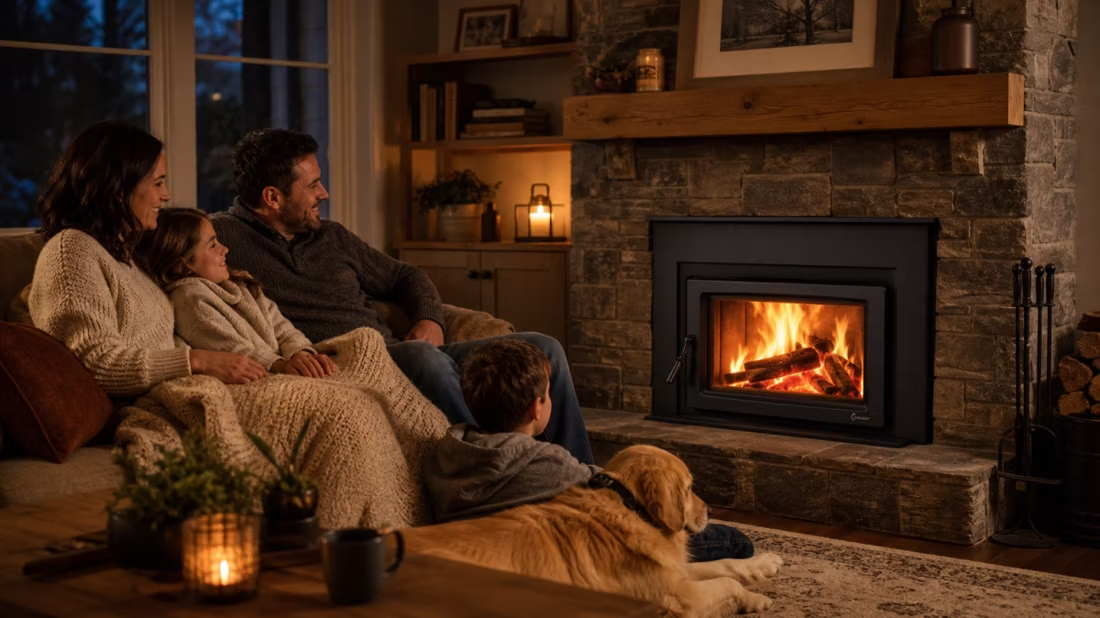
Four fuels. One honest answer for Pondera County.
Three steps. No salesperson until you're ready.
Tell us about your project
Your zip code, your situation, and the fuel you're leaning toward—or let the answers point you to one.
See what's actually available
The brands dealers within 100 miles genuinely carry—real options, never a catalog mirage.
Get your dealer & Project Guide
A trusted local dealer, plus the free Project Guide & Parts List that names every component of the job.
Frequently Asked Questions
Which fuel makes the most sense in Pondera County?
It depends on where you are in the county and what your home already has. Wood remains a strong choice in rural Pondera County—lodgepole pine and Douglas fir are locally cut and cheap relative to propane, and a catalytic stove can hold a burn through a long single-digit night without constant tending. Gas is the practical pick if you're in Conrad or Valier with a line already run, or if you're on propane and want set-it-and-forget-it heat that still works if the power's out (with a battery-backed IPI unit). Pellet is worth a look for homeowners worried about wildfire smoke days in late summer—it burns cleaner than open wood and Bear Mountain and Lignetics pellets are both regionally available. Electric is realistic as a supplemental heater in a bedroom or den, but with a winter heating load about as demanding as Duluth or Fargo, it's not going to carry a Pondera County winter on its own. Most homes here end up running two fuels—one as backbone, one for backup or supplemental rooms.
Do I need a permit to install a fireplace in Pondera County?
In most cases, yes. New wood stoves, wood inserts, gas fireplaces, gas inserts, and pellet stoves typically require a building permit through the county or city building department, and any gas connection work needs a licensed installer and a separate gas permit. Wood-burning appliances need to meet current EPA emissions standards to be installed new—this matters more here than in some counties given the late-summer wildfire smoke concerns that already put pressure on local air quality. Electric fireplaces generally skip the permit process unless you're hardwiring a built-in unit into a new circuit. Most hearth retailers who work this county handle the permitting as part of the installation, which is worth confirming up front given how spread out Pondera County is.
Does wildfire smoke affect fireplace choice in Pondera County?
It's a factor, though less regulatory than in some Western counties—Pondera doesn't have the winter inversion issues you'd see in a basin like Klamath Falls, OR, but late-summer and early-fall wildfire smoke from fires along the Front and in western Montana can sit over the county for days. That's pushed some homeowners toward pellet stoves, which burn cleaner and don't add particulate load during an already smoky stretch, or toward gas as the primary unit with wood kept as backup. If you're set on wood, an EPA-certified catalytic stove burning seasoned lodgepole or Douglas fir will run far cleaner than an older uncertified unit—worth factoring in if you're replacing an old stove rather than starting from scratch.
Can one local dealer handle wood, gas, pellet, and electric?
Some can, though with a county population under 4,500, the dealer base is smaller than you'd find near Great Falls. A handful of hearth retailers serving Conrad and the surrounding towns carry three or four fuel types and can show you working displays side by side; others specialize in one or two—often wood and gas, since those two cover the bulk of local demand. If you're weighing fuels against each other, ask up front which fuels a dealer actually stocks and installs regularly versus special-orders, since that affects both lead time and service availability down the road.
How does service work for homes outside Conrad and Valier?
Most technicians working Pondera County are based in Conrad or drive in from Shelby or Great Falls, and they route rural calls together where they can—so scheduling in advance rather than calling mid-storm gets you faster service and usually saves a trip fee. Expect an extra $40-$80 for calls well outside town limits, more for the far edges of the county near Dupuyer or out toward the Sweet Grass Hills. Pre-season sweeps and gas inspections (August-October) are far easier to book than emergency midwinter calls, and if you're on wood heat with no backup, it's worth having a plan for a failed chimney or blocked flue during a stretch of 11°F nights.
What does fireplace installation typically cost across fuel types in Pondera County?
Costs run a bit above statewide averages given the distances dealers travel. Wood stove or insert installation: roughly $5,000-$10,000 for a standard install, more if new chimney chase work is needed. Gas fireplace, insert, or stove: roughly $5,000-$12,000, with propane tank setup and line runs adding cost for homes without existing gas service. Pellet stove or insert: roughly $5,000-$8,000 installed. Electric fireplace: $200-$3,000 for the unit itself, plus $400-$1,200 in labor for anything beyond a simple plug-in install. Rural travel fees can add a few hundred dollars on top of any of these depending on how far from Conrad or Valier you are—the county + fuel pages break out cost detail tied to specific local retailer pricing.
Wood, gas, pellet, or electric—how do I choose?
Match the fuel to your life, not the other way around. Wood: lowest fuel cost and total power-outage independence, but you're hauling and stacking. Gas: press a button, set a thermostat, no maintenance to speak of. Pellet: wood economics with automatic feeding, in exchange for weekly cleaning and a need for electricity. Electric: plugs in anywhere with honest supplemental heat. Nobody regrets the fuel that fits how they actually live.
How much should I budget for a fireplace?
For an average home—covering the fireplace, the vent pipe, and basic installation—a budget between $3,900 and $5,500 gives you a lot of options across wood, gas, and pellet. By the time you add finish work, gas line, and electrical, the average complete installation lands between $5,000 and $12,000 all-in. In a remodel or new build, a good rule is to put about 2.5% of the total project cost toward the fireplace.
Can I install a fireplace myself?
If you're putting a fire in your house on purpose, it's best to work with an expert. Unless you're genuinely experienced in framing, gas line, vent pipe, and the national code on clearances to combustibles, have a professional do it—and ideally the same company that sells you the fireplace, so warranty, service, and liability all live under one roof.
What is an in-home preview and do I need one?
It's a visit where a hearth professional measures your space, confirms the model you picked actually works in your home, and walks the specs—framing, gas line, venting, finish work—before anything is ordered. Some details you just can't know until you see the house. Never make a down payment without one; it's the single most-skipped step that burns buyers.
Stove and Fireplace Dealers in Pondera County
Listings include WhyFire partner dealers, dealers we have verified as authorized for the brands we recommend, and established local businesses that carry hearth products. Every listing shows which one it is. The ones marked Preferred run on WhyFire's software, so they can show you real pricing and book your appointment right here. No manufacturer pays for placement. How we verify dealers →
Mountain View Co-Op
Bullfrog Spas & Stoves
Nevin's Tire Center
All About You Plumbing & Heating
Electric City Plumbing
Get matched with a local Pondera County dealer.
Tell us your fuel and your town—Conrad, Valier, Dupuyer, or anywhere between—and we'll send you a free Project Guide & Parts List with the exact parts, vent kit included, and the local dealer we recommend for your home.
Find Your Fireplace →