
Steady, efficient heat for Phillips County's coldest stretches.
With winter lows averaging 7°F and roughly 7,826 heating degree days a year, Phillips County homes need heat that doesn't quit. Pellet stoves deliver consistent, thermostat-controlled warmth without the wood-splitting labor—find the right unit and connect with a trusted local dealer.
Every Project Starts From One of These Five Situations
Efficient heat that keeps up with a 7,826-HDD winter.
Phillips County spans more than 5,200 square miles of open north-central Montana prairie along the Missouri River, with the Bear Paw foothills rising to the south and the Canadian border about 50 miles north. It's sparsely populated—roughly 2,569 people county-wide, most of them in and around Malta—which means ranch homes, older farmhouses, and ag outbuildings scattered across long distances rather than dense subdivisions. Climate zone 6B and an average winter low of 7°F make this one of the harder places in the Lower 48 to heat efficiently, with a heating season that rivals Fargo or International Falls in total degree days.
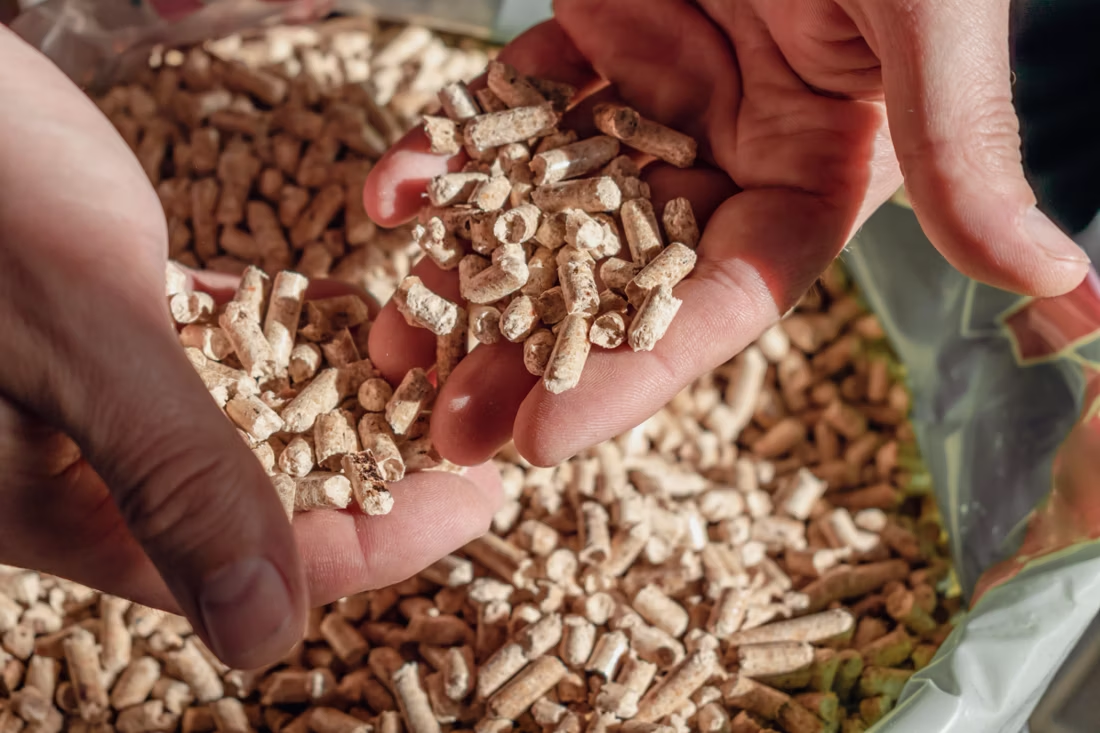
There's no widespread natural gas infrastructure across most of rural Phillips County, so households typically run on propane, electric baseboard, or wood—and pellet stoves have found a real niche as an efficient middle ground. Regional mills like Bear Mountain, Lignetics, and Forest Energy produce pellets from the same lodgepole pine, ponderosa pine, Douglas fir, and aspen that fuel local wood stoves, but in a compressed, low-ash form that burns cleaner and stores easily in a shop or mudroom. That matters during late-summer wildfire smoke events, too—a pellet stove doesn't add to the particulate load the way an older wood stove can. The tradeoff is that pellet stoves need electricity to run the auger and blower, which is a real consideration on a rural electric cooperative grid like Big Flat Electric's, where storm outages can stretch longer than they would in town.
Three steps. No salesperson until you're ready.
Tell us about your project
Your zip code, your situation, and the fuel you're leaning toward—or let the answers point you to one.
See what's actually available
The brands dealers within 100 miles genuinely carry—real options, never a catalog mirage.
Get your dealer & Project Guide
A trusted local dealer, plus the free Project Guide & Parts List that names every component of the job.
Frequently Asked Questions
How much does a pellet stove installation cost in Phillips County?
Across north-central Montana, a typical pellet stove installation runs roughly $3,500 to $6,500, depending on the unit, whether you're venting through an existing chimney or need new through-wall venting, and hearth pad requirements. Freestanding pellet stoves are generally less expensive to install than pellet inserts going into an existing masonry fireplace. Given how spread out Phillips County is, expect installers based near Malta to factor some travel time into quotes for ranch properties well outside town—ask about that up front.
What size pellet stove do I need for my home?
Sizing depends on square footage, ceiling height, insulation, and whether the stove is your primary or backup heat source. In a county running 7,826 heating degree days a year, most homeowners size up rather than down—a stove rated for the low end of a room's square footage will struggle on the coldest January nights. Older farmhouses and ranch homes with limited insulation, common throughout Phillips County, generally need a larger hopper capacity and higher max BTU output than the same square footage in a newer, tighter-built home. A local dealer can size your space accurately during an in-home visit.
Will a pellet stove work if the power goes out?
Not on its own. Pellet stoves rely on an electric auger to feed fuel and a blower to distribute heat, so a power outage stops the stove regardless of how much fuel is in the hopper. That's a real consideration in rural Phillips County, where outages on the Big Flat Electric Cooperative system can run longer than in a denser service area. Some homeowners pair a pellet stove with a small backup generator or battery inverter sized to run the stove's low-draw electronics, and others keep a wood stove or propane heater as true off-grid backup. If reliable heat during extended outages is your top priority, it's worth discussing both options with a local dealer before you commit to pellet as your only heat source.
Where can I buy pellets in or near Phillips County?
Regional brands including Bear Mountain, Lignetics, and Forest Energy are the most common pellets sold and stocked in this part of Montana, milled from softwoods like lodgepole pine, ponderosa pine, and Douglas fir grown across the state. Given how rural Phillips County is, most households buy pellets by the ton or pallet and store a season's supply at once rather than making frequent short trips—your local dealer can tell you which brands they stock and whether seasonal pre-buy pricing is available before the coldest months hit.
Do I need a permit to install a pellet stove in Phillips County?
Most jurisdictions in Montana require a building permit for a new solid-fuel appliance installation, including pellet stoves, through the county building department. Because pellet stoves vent through a smaller-diameter pipe than wood stoves and don't require full masonry chimney work, the permitting and inspection process is typically simpler and faster than a wood stove install. A local installer who's worked in Phillips County before can walk you through what's required for your specific property.
Pellet stove vs. wood stove—which makes more sense out here?
Wood stoves work independent of electricity, which matters on a rural grid, and pair naturally with the lodgepole pine, ponderosa pine, and aspen that are common firewood species across this part of Montana. Pellet stoves trade that off-grid resilience for convenience—load the hopper, set the thermostat, and get more consistent heat output without splitting or stacking cordwood, plus lower particulate output during wildfire smoke season. For a primary residence with reliable power, pellet often wins on day-to-day convenience. For a place where extended outages are a real risk, many Phillips County homeowners keep a wood stove as backup even if pellet is their everyday heat.
Pellet stove vs. propane heater—which is more efficient for this climate?
With natural gas largely unavailable across rural Phillips County, propane is the default alternative to pellet or wood for a lot of homes. Pellet stoves generally cost less per BTU to run than propane, especially as propane prices climb in winter demand spikes, and pellets are easier to store in bulk without a tank lease. Propane systems have the advantage of not needing electricity for basic operation in some configurations, and they integrate more easily with whole-house heating. Many households in this climate zone run propane as central heat and add a pellet stove for zone heating in the main living space—cutting propane usage without replacing the system entirely.
How often does a pellet stove need cleaning and maintenance?
Plan on cleaning the burn pot and ash areas weekly during heavy winter use, and a full professional service—including the exhaust fan, hopper, and venting—at least once a year, typically before the heating season starts in early fall. Pellet stoves produce far less ash and creosote than wood stoves, but the auger, igniter, and blower motor are mechanical parts that need periodic attention. In a county where certified service techs aren't on every corner, it's worth asking your dealer about their service turnaround before you buy, especially since a mid-winter breakdown in a 7°F stretch isn't something you want to wait out.
What's the best pellet stove for Phillips County's climate?
Look for a stove with a large hopper capacity—40 to 80 pounds—so it can run overnight without refilling during the coldest stretches, and a BTU rating suited to whole-home heating if it's your primary source rather than supplemental. Higher-end units with automatic ignition and thermostat control hold steady output better through the deep cold this climate zone sees regularly. For older, less-insulated ranch homes common in the county, sizing toward the higher end of a stove's rated range is usually the safer call. A local dealer can match hopper size and BTU output to your specific home and heating goals.
Why is a fireplace insert so efficient?
An insert does two things: it seals the chimney completely, so you stop losing air you already paid to heat, and it radiates warmth into the room through the firebox and glass. Most add a heat-exchange fan that pulls cool room air underneath, wraps it around the hot firebox, and pushes it back out warm. Your home is more efficient before you've even lit the first fire.
How often does a pellet stove need cleaning?
A clean pellet stove is a happy pellet stove. Plan on cleaning the burn pot about once a week when you're burning regularly—ash and clinkers gum up the air holes just like a pellet barbecue. Most pellet stove problems trace back to skipped cleaning that nobody explained up front. Some designs make it easy with a trapdoor burn pot: pull a lever and the gunk drops into the ash pan.
What is an in-home preview and do I need one?
It's a visit where a hearth professional measures your space, confirms the model you picked actually works in your home, and walks the specs—framing, gas line, venting, finish work—before anything is ordered. Some details you just can't know until you see the house. Never make a down payment without one; it's the single most-skipped step that burns buyers.
Can I install a fireplace myself?
If you're putting a fire in your house on purpose, it's best to work with an expert. Unless you're genuinely experienced in framing, gas line, vent pipe, and the national code on clearances to combustibles, have a professional do it—and ideally the same company that sells you the fireplace, so warranty, service, and liability all live under one roof.
Pellet Brands Stocked Around Phillips County
Manufacturers will point you to the nearest stocking dealer.
Find your pellet stove in Phillips County.
Tell us about your home and heating goals, and we'll match you with a trusted local dealer serving Phillips County—plus a free Project Guide & Parts List with the exact stove, vent kit, and installation plan for your place. We're a neutral matchmaker, not a manufacturer or retailer—just a straight answer on what's actually available and installable near Malta. Copy_cta_eyebrow: Ready to Start?
Find Your Fireplace →