
Zone heat and real ambiance for Phillips County's long winters.
Plug-in warmth for ranch homes and Malta-area houses where running a chimney or a new propane line isn't practical. Find the right electric unit and connect with a trusted local dealer.
Every Project Starts From One of These Five Situations
Electric heat that keeps up without the venting hassle.
Phillips County is big, empty, and cold—roughly 5,200 square miles of prairie and Missouri River breaks with fewer than 2,600 residents scattered from Malta out to Dodson, Saco, and Whitewater. With a winter heating season as demanding as Fargo, North Dakota's and a winter low averaging 7°F, the climate here runs closer to Fargo than to most of Montana's mountain towns, and most homes lean on wood or propane as their primary heat source. Electric fireplaces don't try to replace that—they fill a different job: adding real, controllable warmth to a single room without opening up a wall for venting or running a gas line out to a distant bunkhouse or shop.
Power in most of Phillips County comes through Big Flat Electric Cooperative, and reliability is generally solid outside of the occasional prairie ice storm or blizzard-driven outage. Because electric units plug into a standard outlet (or a dedicated circuit for larger built-ins) and produce zero combustion byproducts, they're an easy fit for additions, converted porches, guest bedrooms, and the manufactured and modular homes common throughout rural Phillips County—places where a masonry chimney or a Class A pipe run just isn't in the budget or the floor plan. Pair one with your existing wood stove or propane furnace and you've got flexible heat where you actually sit, without touching your primary system.
Three steps. No salesperson until you're ready.
Tell us about your project
Your zip code, your situation, and the fuel you're leaning toward—or let the answers point you to one.
See what's actually available
The brands dealers within 100 miles genuinely carry—real options, never a catalog mirage.
Get your dealer & Project Guide
A trusted local dealer, plus the free Project Guide & Parts List that names every component of the job.
Frequently Asked Questions
How much does an electric fireplace installation cost in Phillips County?
Most electric fireplace projects in Phillips County run $500 to $1,500 installed. A plug-in freestanding unit or a simple wall-mount on an existing outlet sits at the low end—often closer to the cost of the unit itself plus an hour of labor. Built-in models that require a dedicated 20-amp circuit, new framing, or work inside a mobile or modular home's electrical panel run toward the higher end, especially once a licensed electrician has to travel out from Malta or Havre to reach more remote ranch properties near the Fort Belknap area or the Missouri River breaks.
What size electric fireplace do I need for my home?
Electric fireplaces are rated for heating a single room, not a whole house—figure roughly 400 square feet of coverage per 1,500-watt heater element under normal conditions. Given how cold Phillips County winters run, most homeowners size for the room itself (a living room, a bedroom addition, a den) rather than trying to stretch one unit across an open floor plan. A 1,000-2,000 watt insert or wall unit handles most single rooms; larger built-ins with dual heaters can cover a bigger great room, but they're still meant to supplement your wood stove or propane furnace on the coldest nights, not replace it.
Where can I find someone to install an electric fireplace near me?
Because Phillips County's population is spread thin—Malta is the only real town of any size—most electric fireplace installs are handled by a licensed electrician who also does general residential wiring, sometimes paired with the retailer who sold the unit. Simple plug-in models don't require an installer at all. For a built-in unit needing a new circuit, expect to schedule ahead and possibly pay a trip charge if you're out toward Dodson, Saco, or Whitewater. Ask any local retailer whether they coordinate the electrical work directly, which simplifies things considerably.
Do I need a permit to install an electric fireplace in Phillips County?
A plug-in freestanding or insert model generally doesn't require a permit since there's no venting or gas work involved. If your installation involves adding a new dedicated electrical circuit—common with larger built-in units—that electrical work typically needs to go through Phillips County's building office in Malta and be signed off by a licensed electrician. Most installers handle this paperwork as part of the job, so it's worth asking upfront rather than assuming it's not needed.
What's the difference between an electric fireplace, insert, and stove?
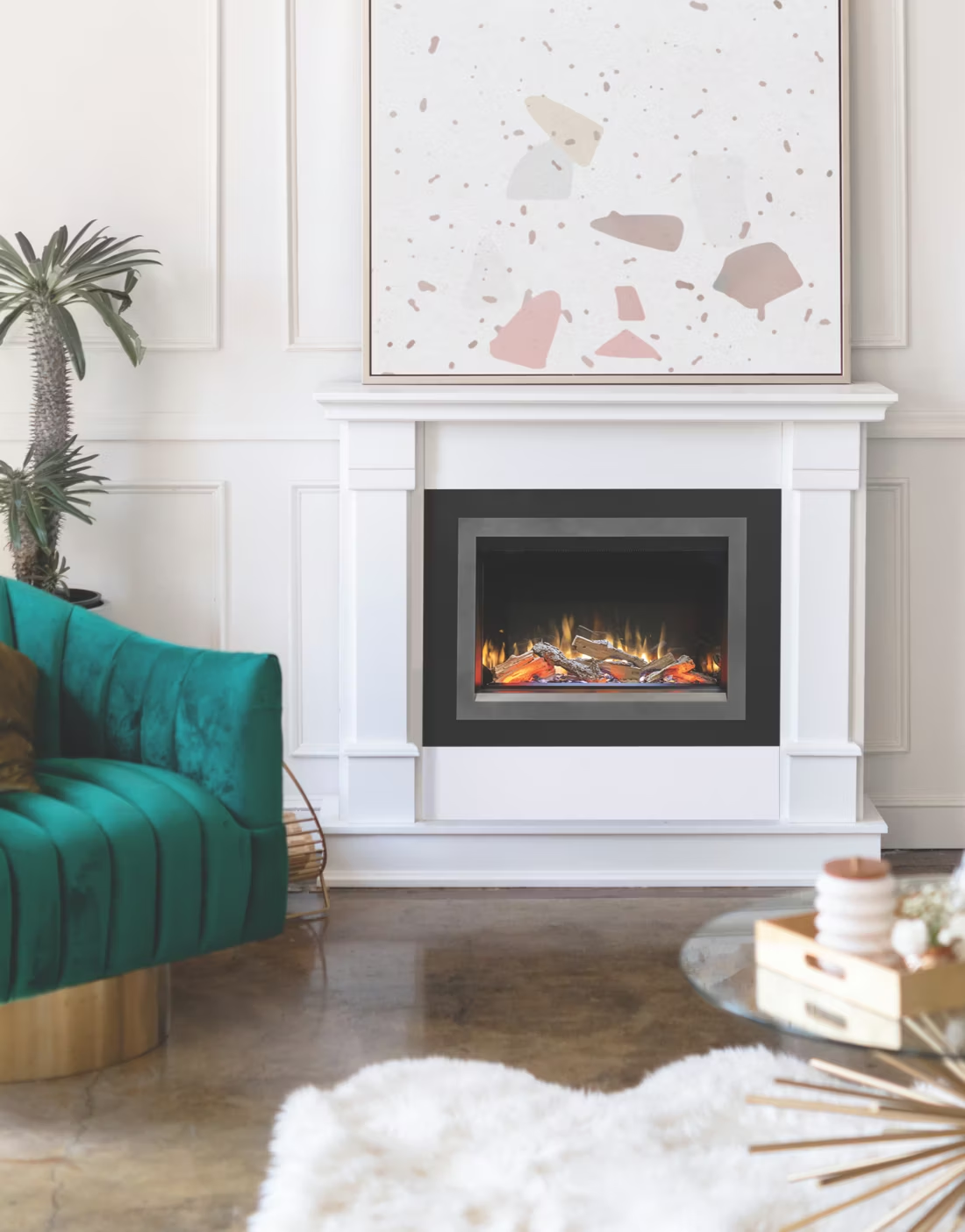
An electric fireplace is typically a built-in or wall-mounted unit designed to look like a framed hearth, often with a realistic flame display. An electric insert is sized to slide into an existing masonry fireplace opening, instantly converting a cold, unused wood fireplace into usable heat without touching the chimney. An electric stove is a freestanding cabinet-style unit that mimics a wood stove's look and can sit anywhere near an outlet. For Phillips County homes with an existing fireplace that's rarely used, an insert is often the simplest upgrade; for new rooms or additions, a built-in or freestanding unit gives more flexibility.
Is an electric fireplace a good primary heat source in Phillips County's climate?
No—and it's worth being direct about that. With a winter heating season as demanding as Fargo, North Dakota's and winter lows that regularly drop well below zero, electric resistance heat alone can't keep up with a Phillips County winter as your only heat source, and running one continuously will show up fast on a power bill. Nearly every home here relies on wood, propane, or a combination of the two for primary heat, with electric fireplaces used as targeted zone heat in a specific room or as backup for a wood stove during shoulder-season months. Think of it as heating the room you're actually in, not the whole house.
Will my electric fireplace work during a power outage?
No—unlike a wood stove or some battery-backed gas units, an electric fireplace needs grid power to run its heater and flame effects, so it goes dark the moment the power does. Big Flat Electric Cooperative generally keeps service reliable across Phillips County, but prairie ice storms and blizzards can still knock out lines for hours or longer in outlying areas. If backup heat during an outage matters to you—and in this county, it often does—pair your electric fireplace with a wood stove or propane appliance that doesn't depend on electricity to produce heat.
Electric vs. wood—which is right for my Phillips County home?
Wood, sourced from local lodgepole pine, ponderosa pine, Douglas fir, or aspen, delivers real heat output that keeps working through a power outage and handles Phillips County's coldest stretches as primary heat—though occasional wildfire smoke advisories in late summer and fall are worth factoring in if you're also thinking about outdoor burning. Electric offers instant on-off control, zero smoke or ash, and the ability to add warmth and ambiance to a single room with no venting at all—but it depends entirely on the grid and isn't built to carry a whole house through a Montana winter. Most Phillips County homeowners end up with both: wood or propane for the bones of their heating, electric for the room where they actually spend their evenings.
Electric vs. pellet stove—which makes more sense here?
Pellet stoves burning bagged fuel from brands like Bear Mountain, Lignetics, or Forest Energy produce meaningfully more heat than an electric unit and can serve as genuine supplemental or even primary heat in a well-insulated Phillips County home—but they still need electricity to run the auger and blower, so they share the same outage vulnerability as an electric fireplace. If your priority is heat output with easier fuel handling than cordwood, look at pellet. If your priority is zero maintenance, no venting, and pure convenience for a single room, electric is the simpler answer. Neither should be your only heat source in a county where winter lows regularly sit near zero.
Can I put a TV above my fireplace?
Yes—with an asterisk. Fireplaces are hot and TVs don't like heat. Either put a mantel between them to deflect rising warmth, or choose a fireplace with heat-management technology that creates a cool zone on the wall above—the wall stays around 125 degrees, barely warm, while the room still gets full heat. If you like clean lines and don't want a mantel, heat management is the answer.
Do electric fireplaces actually produce heat?
Yes—most put out around 4,800–5,000 BTUs from a standard outlet, which comfortably warms a bedroom, office, or den as a comfort-zone heater. What they won't do is carry a whole house the way wood, gas, or pellet can. Think of electric as ambiance-first with honest supplemental heat: flames on with no heat in July, flames plus warmth in January.
How much should I budget for a fireplace?
For an average home—covering the fireplace, the vent pipe, and basic installation—a budget between $3,900 and $5,500 gives you a lot of options across wood, gas, and pellet. By the time you add finish work, gas line, and electrical, the average complete installation lands between $5,000 and $12,000 all-in. In a remodel or new build, a good rule is to put about 2.5% of the total project cost toward the fireplace.
Can I install a fireplace myself?
If you're putting a fire in your house on purpose, it's best to work with an expert. Unless you're genuinely experienced in framing, gas line, vent pipe, and the national code on clearances to combustibles, have a professional do it—and ideally the same company that sells you the fireplace, so warranty, service, and liability all live under one roof.
Find your electric fireplace in Phillips County.
Tell us a bit about your home and we'll put together a free Project Guide & Parts List for your electric fireplace project—matched with a trusted local dealer who can install it right.
Find Your Fireplace →