
Steady heat for McCone County's long, quiet winters.
From Circle to Vida to Brockway, ranch houses across McCone County need heat that doesn't demand a full-time woodpile. A pellet stove or insert gets you there—matched to a local dealer who knows how far the nearest delivery truck actually has to drive.
Every Project Starts From One of These Five Situations
Consistent warmth without a woodpile to tend.
McCone County is about as remote as heating decisions get in Montana—a population of 545 spread across open plains and coulees along the Fort Peck Reservoir, with Circle as the only real town. Winters here sit in climate zone 6B: long stretches below zero, punishing wind across open country, and the kind of cold that makes daily wood-splitting a real chore for an aging ranching population. Summers bring their own concern—wildfire smoke drifting off the grasslands and coulee breaks—which is one more reason a clean-burning appliance that doesn't add smoke to the air has appeal here beyond just convenience.
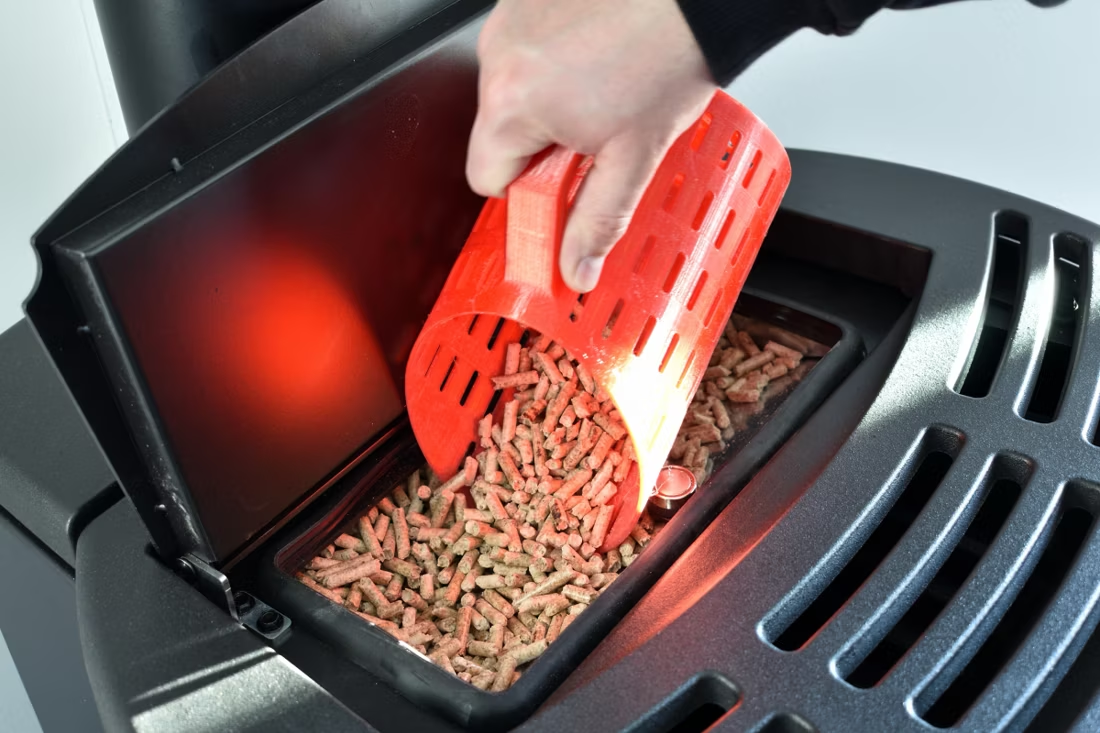
Pellet stoves solve a specific problem for McCone County households: automatic feed, thermostatic control, and a fuel that stacks in bags instead of cords stacked in the yard. Bear Mountain, Lignetics, and Forest Energy pellets are the common regional brands, typically trucked in through farm and ranch supply outlets in Glendive, Sidney, or Miles City rather than sold in-county, since there's no dedicated hearth retailer in a county this small. That means planning ahead for a ton or two before the roads get bad. It also means a pellet stove works best as a primary or near-primary heat source paired with a backup plan—because unlike a wood stove, the auger and blower need electricity, and rural power lines out here can go down in a blizzard just like the roads do.
Three steps. No salesperson until you're ready.
Tell us about your project
Your zip code, your situation, and the fuel you're leaning toward—or let the answers point you to one.
See what's actually available
The brands dealers within 100 miles genuinely carry—real options, never a catalog mirage.
Get your dealer & Project Guide
A trusted local dealer, plus the free Project Guide & Parts List that names every component of the job.
Frequently Asked Questions
How much does a pellet stove installation cost in McCone County?
Expect a typical installed pellet stove project in McCone County to run somewhere in the $3,000 to $6,500 range, depending on the unit, whether you're venting through an existing chimney or a fresh wall penetration, and hearth pad requirements for clearance. Because there's no hearth dealer based in the county itself, installers most often come from Glendive, Sidney, or Miles City, and a trip charge for the drive out to Circle, Vida, or Brockway is common and worth asking about up front.
Pellet stove or wood stove—which makes more sense out here?
For daily convenience, pellet wins—no splitting, no hauling, and a thermostat that holds a steady temperature through a McCone County cold snap without you tending it every few hours. But pellet stoves need electricity to run the auger and blower, and that's the real trade-off in a county this remote: when a winter storm takes down the power line to a ranch outside Vida or Brockway, a pellet stove goes dark right along with the lights. That's why a lot of McCone County households that switch to pellet for everyday use still keep a wood stove or a generator as backup—the same reason a lot of eastern Montana and North Dakota ranch homes near the Fargo and Bismarck corridor make the same call.
Where can I buy pellets near McCone County?
There's no dedicated pellet retailer inside the county, so most households buy Bear Mountain, Lignetics, or Forest Energy pellets through farm and ranch supply stores in Glendive, Sidney, or Miles City and either haul them home or arrange delivery. Expect roughly $260 to $340 per ton depending on the brand and how far the delivery truck has to travel. Given the distances involved, most people buy their season's supply—often 2 to 4 tons for a home using pellet as primary heat—in one or two trips before winter sets in rather than restocking bag by bag.
Do I need a permit to install a pellet stove in McCone County?
Yes—a new solid-fuel appliance installation, including a pellet stove or insert, requires a building permit through McCone County, covering hearth clearance, wall or roof penetration for the vent, and code compliance for the specific model. Most installers coming out from Glendive or Sidney will handle the permit paperwork as part of the job, which is worth confirming before you sign a contract given how far a return trip out to Circle or Vida can be if something needs correcting after the fact.
What size pellet stove do I need for a McCone County home?
Sizing in a 6B climate zone with open, wind-exposed plains runs on the larger side of manufacturer charts—an older ranch house with single-pane windows and long uninsulated runs will need more BTU per square foot than the same size home in a milder climate. As a rough guide, a stove rated for 1,500 to 2,000 square feet handles most McCone County farmhouses as a primary heat source; larger or older homes with less insulation often do better with a stove sized for the next bracket up, especially if you're aiming to heat the whole house rather than just the main living area.
How many tons of pellets will I burn in a McCone County winter?
For a home relying on pellet heat as the primary source through a full McCone County winter, plan on roughly 3 to 4 tons of Bear Mountain, Lignetics, or Forest Energy pellets. Homes using a pellet stove as supplemental heat alongside a furnace typically burn 1 to 2 tons. Given how far out delivery has to come, most local households buy their full season's supply in advance rather than reordering mid-winter, and store it somewhere dry—a mudroom or enclosed porch works better than an open shed given the wind.
What's the difference between a pellet stove and a pellet insert?
A pellet stove is a freestanding unit on its own hearth pad, vented through a wall or existing chimney—it can go almost anywhere with proper clearance. A pellet insert is built to slide into an existing masonry fireplace opening, which is a common option for older McCone County farmhouses that already have a brick or block fireplace sitting mostly unused. If you've got an existing fireplace, an insert usually costs less to install since it uses the chimney you already have; if you don't, a freestanding stove is the more straightforward choice.
How much maintenance does a pellet stove need?
Pellet stoves need more routine attention than a wood stove but less than you'd think—ash removal every few days to a week depending on how hard you're running it, a glass wipe-down as needed, and a full cleaning of the burn pot, auger, and exhaust venting once a year, ideally before the season starts. An annual professional inspection is worth it for a home this far from the nearest service call, since catching a worn igniter or a clogged vent in September beats troubleshooting it during a January cold snap when the nearest technician is an hour-plus drive away.
What happens to my pellet stove during a power outage?
It stops running—the auger that feeds pellets and the blower that pushes heat into the room both need electricity, so a pellet stove offers no heat during an outage unless you have backup power. For McCone County, where winter storms can knock out rural power lines for stretches, a small battery backup or a generator sized to run the stove is a reasonable investment, and it's a question worth asking your installer about directly. Some households split the difference by running pellet as their everyday heat and keeping a wood stove or propane heater on hand strictly for outages.
Why is a fireplace insert so efficient?
An insert does two things: it seals the chimney completely, so you stop losing air you already paid to heat, and it radiates warmth into the room through the firebox and glass. Most add a heat-exchange fan that pulls cool room air underneath, wraps it around the hot firebox, and pushes it back out warm. Your home is more efficient before you've even lit the first fire.
What's the difference between an insert and a zero-clearance fireplace?
An insert is a fireplace that slides into a pre-existing wood-burning fireplace—if you don't have one, there's nothing to insert it into. A zero-clearance fireplace is built into a framed wall, which makes it the answer for remodels and new construction. Simple test: existing masonry fireplace means insert; blank or framed wall means zero-clearance.
Can a fireplace actually lower my heating bill?
Yes—by creating a comfort zone. A furnace heats every square foot of the house just to warm the one room you're in; a gas fireplace on low burns roughly a sixth of the gas a typical furnace does. Set the furnace around 55–60 degrees as a baseline, then heat the rooms your family actually uses. Families who heat this way commonly save $20–$60 a month.
How much should I budget for a fireplace?
For an average home—covering the fireplace, the vent pipe, and basic installation—a budget between $3,900 and $5,500 gives you a lot of options across wood, gas, and pellet. By the time you add finish work, gas line, and electrical, the average complete installation lands between $5,000 and $12,000 all-in. In a remodel or new build, a good rule is to put about 2.5% of the total project cost toward the fireplace.
Pellet Brands Stocked Around McCone County
Manufacturers will point you to the nearest stocking dealer.
Find your pellet stove in McCone County.
Tell us about your home in Circle, Vida, Brockway, or anywhere else in McCone County, and we'll match you with a trusted local dealer and a free Project Guide & Parts List—the exact parts, vent kit included, for your pellet stove or insert project.function_output_removed_no_such_key_or_role
Find Your Fireplace →