
Warm, reliable heat for McCone County's coldest nights.
Propane-fueled gas fireplaces and inserts built for the wind-scoured plains around Circle and the rest of McCone County. Find the right unit and get matched with a trusted local dealer who can actually get parts and a crew out to you.
Every Project Starts From One of These Five Situations
Clean, instant heat for the wide-open plains of McCone County.
McCone County sits in Climate Zone 6B in northeastern Montana, a landscape of wheat and cattle country cut by the Missouri and Yellowstone drainages, with the county seat in Circle. With roughly 545 residents spread across a county larger than some states, winters here run long, dry, and genuinely brutal—plains wind can turn a cold night into a dangerous one fast, and blizzards regularly knock out rural power for hours or days at a time. Wood heat has deep roots here, with lodgepole pine, ponderosa pine, Douglas fir, and aspen all commonly cut and burned, but a growing number of ranch homes and in-town properties around Circle are adding gas fireplaces and inserts for the instant, no-tending heat that fits a working ag schedule.
There's no natural gas utility line running through McCone County—this is propane territory, supplied by tank and delivered from regional suppliers based out of Glendive, Sidney, or Miles City. That changes a few things: your installer will size and coordinate a propane tank (or tap an existing one) rather than run a gas main, and a unit with battery-backup ignition is worth prioritizing given how often plains wind events take down the grid out here. Wildfire smoke in late summer and fall is also a real consideration for anyone weighing wood versus gas—a sealed, direct-vent gas fireplace keeps burning clean regardless of what's happening with regional air quality.
Three steps. No salesperson until you're ready.
Tell us about your project
Your zip code, your situation, and the fuel you're leaning toward—or let the answers point you to one.
See what's actually available
The brands dealers within 100 miles genuinely carry—real options, never a catalog mirage.
Get your dealer & Project Guide
A trusted local dealer, plus the free Project Guide & Parts List that names every component of the job.
Frequently Asked Questions
How much does a gas fireplace installation cost in McCone County?
Expect a propane fireplace or insert installation in McCone County to run roughly $3,500 to $8,500, depending on the unit, whether a new propane tank needs to be set, and how much gas line work is involved between the tank and the appliance. Because McCone County is so sparsely populated, the nearest full-service hearth dealer may be based out of Glendive, Sidney, or Miles City, and a modest travel charge for the installation crew is common for jobs out toward Circle, Vida, or the more remote parts of the county. Get a firm quote after an in-home visit rather than relying on a phone estimate—tank placement and line runs vary a lot on rural properties.
Can I convert my existing wood fireplace to gas?
Yes. A propane insert can usually be set into an existing masonry fireplace using a stainless liner run through your current chimney, which keeps the cost down since you're not building new venting from scratch. In McCone County this typically runs $4,000 to $7,500, with the propane tank setup as a separate line item if you don't already have one on the property. It's a common upgrade for older ranch houses around Circle that were built with a wood-burning fireplace as the only hearth option decades ago and now want something that lights with the flip of a switch on a February morning.
Do I need natural gas, or is propane the only option in McCone County?
Propane is effectively the only option. McCone County has no natural gas utility infrastructure—there's no pipeline network reaching Circle or the surrounding rural sections, which is typical for a county this sparsely populated in northeastern Montana. Every gas fireplace, insert, or stove installed here runs on propane, supplied by tank and refilled by a regional propane provider. Your installer will size the tank to your appliance's BTU output and set it at the correct distance from the home per code—this is worth planning before you pick a fireplace model, since tank placement can affect where the unit can go.
Will my gas fireplace work during a power outage?
Most modern gas fireplaces will, and that matters here. Units with IPI (intermittent pilot ignition) run on battery backup—typically AA batteries built into the unit—that kick in automatically the moment power drops, so the fireplace lights on demand just like normal. Given how often plains wind and blizzard events take down rural power lines in McCone County, this isn't a minor feature—it's often the deciding factor. Valor fireplaces take a different approach worth asking about: their pilot assembly generates its own electricity, so there's no battery to maintain at all. Ask your local dealer about the ignition system on any unit you're considering.
What's the difference between a gas fireplace, gas insert, and gas stove?
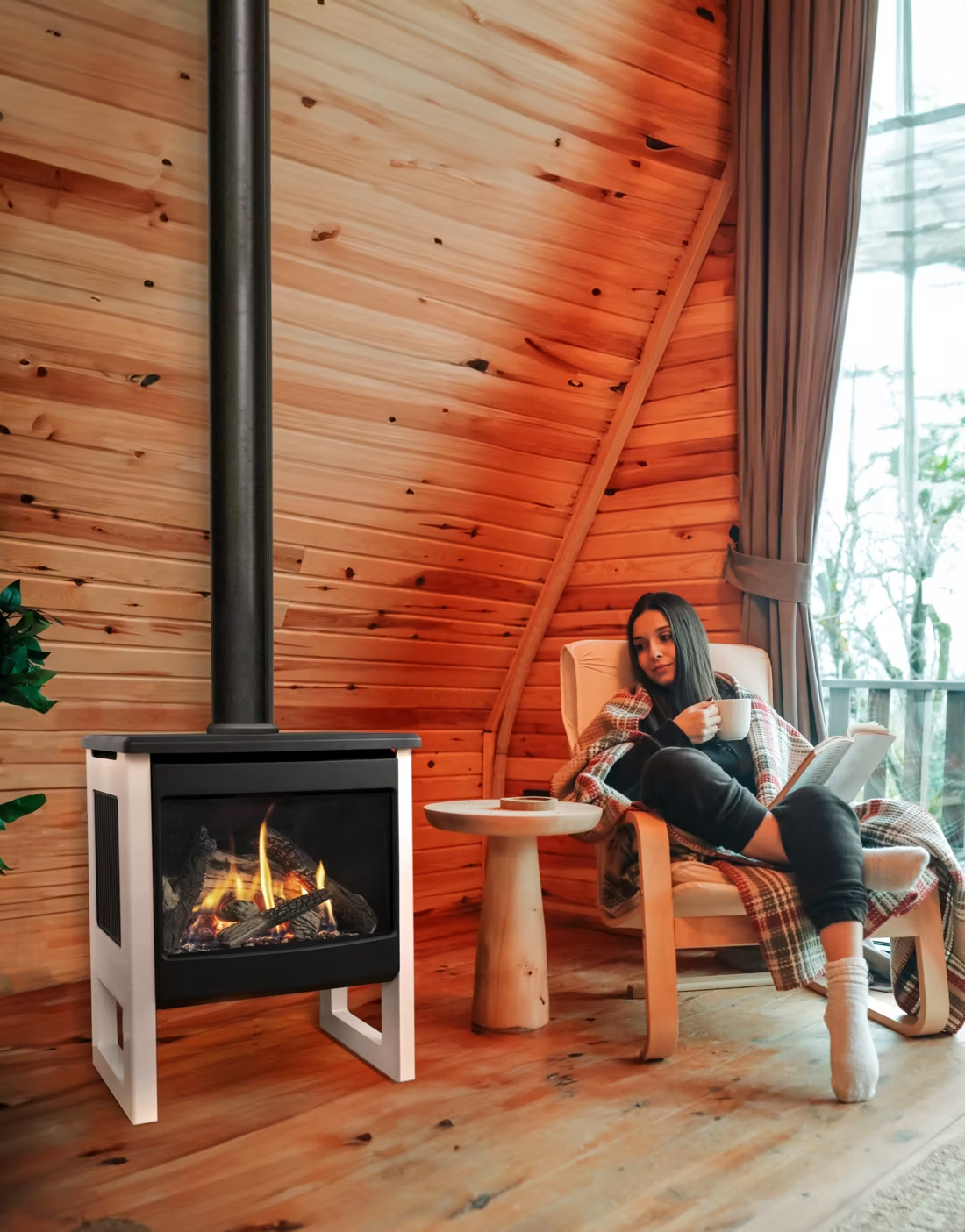
A gas fireplace is a fully built-in unit framed into a wall—the right choice for new construction or a remodel. A gas insert fits into an existing masonry fireplace opening, using the chimney as a venting path for a liner while sealing off the old open hearth. A gas stove is a freestanding cabinet-style unit that sits on the floor, similar in footprint to a wood stove but running on propane. For most McCone County homes with an older wood fireplace already in place, an insert is the straightforward path—for a home without an existing fireplace, a built-in unit or freestanding stove is usually the better fit.
Do I need a permit to install a gas fireplace in McCone County?
Yes—a building permit is required through the county building office in Circle, and any new or relocated propane tank also needs to be set and connected by a licensed propane technician per state fire code. Most local dealers coordinate the permit and the tank work as part of the install so you're not managing multiple trades yourself. It's worth confirming this upfront with whichever dealer you work with, since permitting logistics in a low-population county can take a little longer than in a larger jurisdiction.
What's the difference between vented and vent-free gas fireplaces?
Vented (direct-vent) gas fireplaces draw combustion air from outside and exhaust it back outside through a sealed pipe—they're the cleanest, safest option and the standard recommendation almost everywhere, including McCone County. Vent-free units burn propane directly into the room without external venting; they're legal in Montana but require careful room-sizing and an oxygen depletion sensor, and they add moisture and combustion byproducts to indoor air. In a tightly sealed, well-insulated ranch home built for Zone 6B winters, that added moisture can be a real problem. Direct-vent units are the more common and more strongly recommended choice for this climate.
How often should my gas fireplace be serviced?
An annual inspection is recommended for any gas appliance—a technician checks the burner, pilot assembly, propane connections, and venting, and cleans the glass and interior. Expect to pay somewhere in the $150 to $250 range for this service. Because service techs covering McCone County often travel from Glendive, Sidney, or Miles City, it's worth scheduling your annual visit in late summer before the first hard freeze rather than waiting until a unit fails on a subzero night.
Gas vs. wood—which is right for my McCone County home?
Wood is still a working option here—lodgepole pine, ponderosa pine, Douglas fir, and aspen are all commonly available locally, and a wood stove keeps burning with zero electricity, which matters during extended rural power outages. But wood means hauling, splitting, and tending, and wildfire smoke concerns in late summer and fall can make burning less appealing on bad-air days. Gas, running on propane in this county, gives you instant on-demand heat with no ash and no smoke, and a battery-backup unit still works through a power outage without you having to feed a fire. Plenty of McCone County homes end up with both—wood in a shop or secondary space, propane gas in the main living area for daily, no-fuss heat.
Is my gas fireplace wasting gas?
If it was installed more than 15 years ago, probably. Older gas fireplaces keep a standing pilot light burning all the time, and that little flame can cost a couple hundred dollars a year. Newer models use pilot-on-demand ignition—the pilot lights only when you use the fireplace and goes out when you turn it off.
What's the difference between an insert and a zero-clearance fireplace?
An insert is a fireplace that slides into a pre-existing wood-burning fireplace—if you don't have one, there's nothing to insert it into. A zero-clearance fireplace is built into a framed wall, which makes it the answer for remodels and new construction. Simple test: existing masonry fireplace means insert; blank or framed wall means zero-clearance.
Does a fireplace add value to my home?
On average, a fireplace adds back to the home about the same amount you spent installing it. Add the monthly savings from heating the rooms you actually use instead of the whole house—often hundreds of dollars a year—and the value case is strong before you even count what a fire does for how your family uses the room.
How much should I budget for a fireplace?
For an average home—covering the fireplace, the vent pipe, and basic installation—a budget between $3,900 and $5,500 gives you a lot of options across wood, gas, and pellet. By the time you add finish work, gas line, and electrical, the average complete installation lands between $5,000 and $12,000 all-in. In a remodel or new build, a good rule is to put about 2.5% of the total project cost toward the fireplace.
Find your gas fireplace in McCone County.
Tell us a bit about your home and we'll put together a free Project Guide & Parts List—the right propane fireplace or insert for your space, the vent kit and parts it needs, and a trusted local dealer matched to your project in McCone County.
Find Your Fireplace →