
Consistent heat for Jefferson County's long, hard winters.
With a winter heating load comparable to Fargo, ND, or Bismarck and winter lows averaging 14°F, Jefferson County homes need heat that doesn't quit. A pellet stove gives you thermostat-simple control—find the right unit and connect with a trusted local dealer.
Every Project Starts From One of These Five Situations
Set-and-forget heat between the Elkhorns and the Boulder valley.
Jefferson County sits in Montana's climate zone 6B, tucked between the Elkhorn Mountains and the Boulder River valley, with a winter heating load comparable to Fargo, ND, or Bismarck. Winter lows average 14°F, and the county's mix of ranchland, forested foothills, and small towns like Boulder, Whitehall, and Clancy means heating needs vary from tight in-town lots to larger acreages with more square footage to cover. Wood heat has deep roots here thanks to easy access to lodgepole pine, ponderosa pine, Douglas fir, and aspen through nearby Helena-Lewis and Clark and Custer Gallatin National Forest cutting permits, but pellet stoves have carved out a real niche for homeowners who want consistent output without splitting, stacking, or feeding a fire by hand.
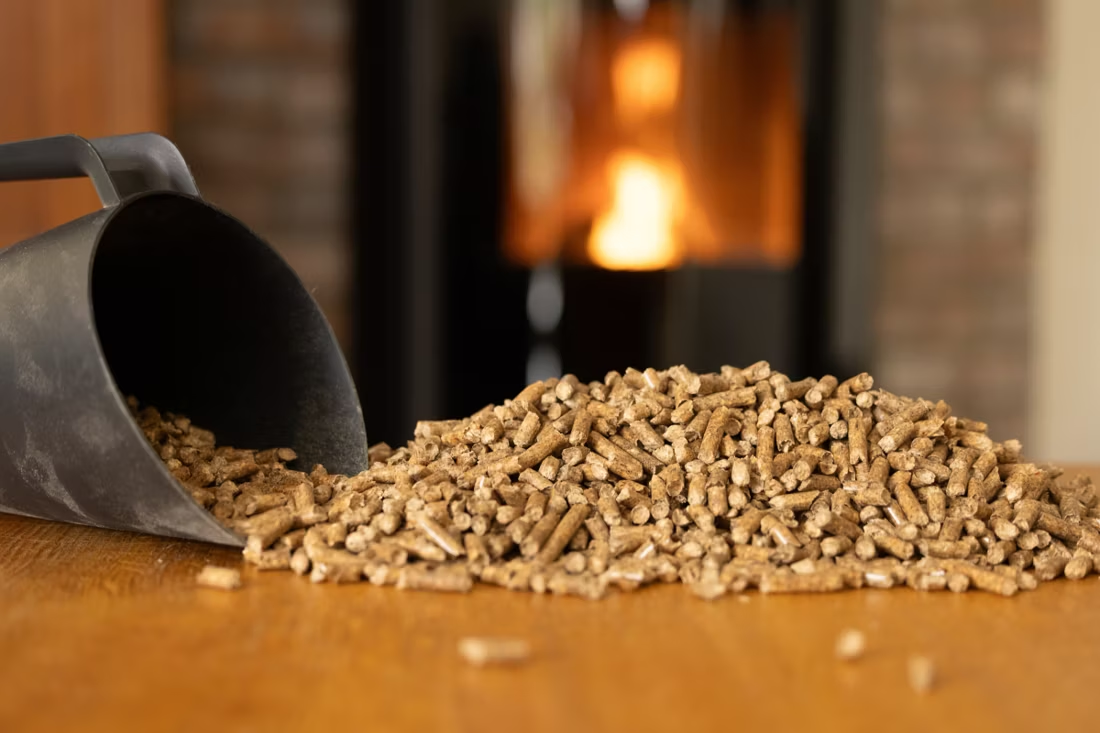
Regional pellet brands including Bear Mountain, Lignetics, and Forest Energy are distributed throughout this part of Montana, so fuel supply isn't the obstacle it can be in more remote counties. A pellet stove loads from a hopper and runs on a thermostat, which matters when Jefferson County's wildfire-smoke summers give way to genuinely cold winters and you want heat that runs steady overnight without someone getting up to reload. The tradeoff is that pellet stoves need electricity to run the auger and blower—worth planning around if you're out toward the Continental Divide foothills where outages can run longer than in Boulder or Whitehall proper.
Three steps. No salesperson until you're ready.
Tell us about your project
Your zip code, your situation, and the fuel you're leaning toward—or let the answers point you to one.
See what's actually available
The brands dealers within 100 miles genuinely carry—real options, never a catalog mirage.
Get your dealer & Project Guide
A trusted local dealer, plus the free Project Guide & Parts List that names every component of the job.
Frequently Asked Questions
How much does a pellet stove installation cost in Jefferson County?
Pellet stove and insert installations in Jefferson County typically run in line with regional averages for Montana—expect a range depending on whether you're installing a freestanding stove with a simple through-wall vent kit, or an insert into an existing masonry fireplace with a liner. Homes in Boulder or Whitehall with straightforward venting sit toward the lower end; installations on rural acreages with longer vent runs or additional electrical work for the hopper motor can run higher. A local dealer will confirm a firm number after seeing your home.
How much pellet fuel will I need for a Jefferson County winter?
With a winter heating load comparable to Fargo, ND, or Bismarck, a Jefferson County home using a pellet stove as a primary heat source can burn through 2 to 3 tons of pellets over a full winter season—more for larger, less-insulated homes or for anyone leaning on the stove heavily during the coldest stretches in January and February. Regional brands like Bear Mountain, Lignetics, and Forest Energy are stocked at dealers throughout the area, so buying a season's supply in early fall before demand picks up is worth planning for.
Do pellet stoves work during a power outage?
Not without a backup power source. Pellet stoves rely on electricity to run the hopper auger and combustion blower, so a standard unit goes dark the moment the power does. For Jefferson County homes further from Boulder or Whitehall where outages can stretch longer during winter storms, some homeowners pair a pellet stove with a small battery backup or generator specifically to keep the auger running. If backup heat during outages is the priority, a wood stove that needs no electricity is worth comparing—plenty of local homes run one of each.
What size pellet stove do I need for my Jefferson County home?
Sizing depends on square footage, insulation, and whether the stove is primary or supplemental heat. As a general guide for this climate zone: smaller units suit single rooms or additions up to around 1,000 square feet, mid-size units handle most main living areas in the 1,000-2,000 square foot range, and larger units are needed for whole-home heating in bigger or older, less-insulated houses common on Jefferson County acreages. Homes at higher elevation in the foothills toward the Elkhorns generally need to size up compared to valley-floor homes in Boulder or Whitehall at the same square footage. A local dealer will size your space during an in-home visit.
Where can I buy pellet fuel in Jefferson County?
Regional brands including Bear Mountain, Lignetics, and Forest Energy are carried by hearth and farm-supply retailers throughout southwestern Montana, and most pellet stove dealers either stock bags themselves or can point you to a reliable local source. Buying early in the fall, before the first cold snap drives up demand, is the standard advice from installers in this part of the state—running out mid-January when a storm rolls through is the scenario everyone tries to avoid.
Do I need a permit to install a pellet stove in Jefferson County?
Most pellet stove installations require a building permit, since the appliance involves venting through an exterior wall or existing chimney and often new electrical circuitry for the hopper and blower. Local dealers who handle installation typically manage the permitting process as part of the job, which is one reason to work with an installer rather than a DIY setup—especially given the mix of in-town lots and larger rural parcels across the county where inspection logistics can differ.
How does a pellet stove compare to a wood stove for Jefferson County's climate?
Wood stoves burn cordwood—abundant locally thanks to lodgepole pine, ponderosa pine, Douglas fir, and aspen available through Helena-Lewis and Clark and Custer Gallatin National Forest cutting permits, which run $5-$20 per cord from May through October—and they keep working with no electricity, which matters during winter storm outages. Pellet stoves trade that off for convenience: load a hopper, set a thermostat, and get consistent heat without splitting or stacking wood, though they stop working without power. For Jefferson County homes with reliable grid service in town, pellet is often the easier day-to-day choice. For more remote properties where outages run long, many homeowners keep a wood stove as backup even if pellet is their daily driver.
How often does a pellet stove need maintenance?
Pellet stoves need more frequent light maintenance than wood stoves but less heavy-duty cleaning. Expect to empty the ash pan every few days during regular winter use, clean the burn pot weekly, and have the unit professionally serviced once a year—typically before the season starts in late summer or early fall. Given how demanding Jefferson County winters are, a stove running most of the winter will need this attention kept up consistently rather than saved for spring.
Is a pellet stove a good fit for a rural Jefferson County property without natural gas?
Yes, and it's a common setup here. Much of Jefferson County outside Boulder and Whitehall doesn't have natural gas service, so households heat with propane, wood, or electric resistance, and pellet stoves fit well into that mix as a supplemental or even primary heat source in a well-insulated home. The main planning point is electrical reliability for the auger and blower—a dedicated circuit and, for some rural homeowners, a small backup power plan for the stove specifically during outages.
What's the difference between an insert and a zero-clearance fireplace?
An insert is a fireplace that slides into a pre-existing wood-burning fireplace—if you don't have one, there's nothing to insert it into. A zero-clearance fireplace is built into a framed wall, which makes it the answer for remodels and new construction. Simple test: existing masonry fireplace means insert; blank or framed wall means zero-clearance.
What does it take to replace an existing fireplace?
Fireplaces are like icebergs—bigger behind the wall than in front of it. Replacement means removing the surrounding tile or stone (the finish material laps onto the fireplace face), pulling the old unit, setting the new one in the same enclosure, and re-finishing the wall. A hearth professional can determine what's behind your wall without demolition during an in-home preview.
How much should I budget for a fireplace?
For an average home—covering the fireplace, the vent pipe, and basic installation—a budget between $3,900 and $5,500 gives you a lot of options across wood, gas, and pellet. By the time you add finish work, gas line, and electrical, the average complete installation lands between $5,000 and $12,000 all-in. In a remodel or new build, a good rule is to put about 2.5% of the total project cost toward the fireplace.
What is an in-home preview and do I need one?
It's a visit where a hearth professional measures your space, confirms the model you picked actually works in your home, and walks the specs—framing, gas line, venting, finish work—before anything is ordered. Some details you just can't know until you see the house. Never make a down payment without one; it's the single most-skipped step that burns buyers.
Pellet Brands Stocked Around Jefferson County
Manufacturers will point you to the nearest stocking dealer.
Find your pellet stove in Jefferson County.
Tell us a bit about your home and we'll match you with a trusted local dealer and a free Project Guide & Parts List—sized for your space, with the vent kit and parts you'll actually need.
Find Your Fireplace →