
Find the right electric fireplace for your Jefferson County home.
Zone heat and ambiance for the Boulder Valley and the Elkhorn foothills—without a chimney, a woodpile, or a gas line. Get matched with a trusted local dealer who installs it right.
Every Project Starts From One of These Five Situations
A supplement, not the whole answer, in a 7,499 HDD county.
Jefferson County sits in the Boulder River and Jefferson River valleys between Butte and Helena, with winter lows averaging 14°F and a heating load—7,499 degree days—that puts it in the same conversation as Bismarck, ND or Duluth, MN. That's a serious cold-climate number, and it's why almost every home here leans on wood, propane, or a solid electric furnace/heat pump as primary heat, with electric fireplaces filling a specific, secondary role: supplemental warmth in a den or bonus room, ambiance in a living room, or a zero-hassle upgrade for a rental or basement apartment in Boulder, Whitehall, or Clancy.
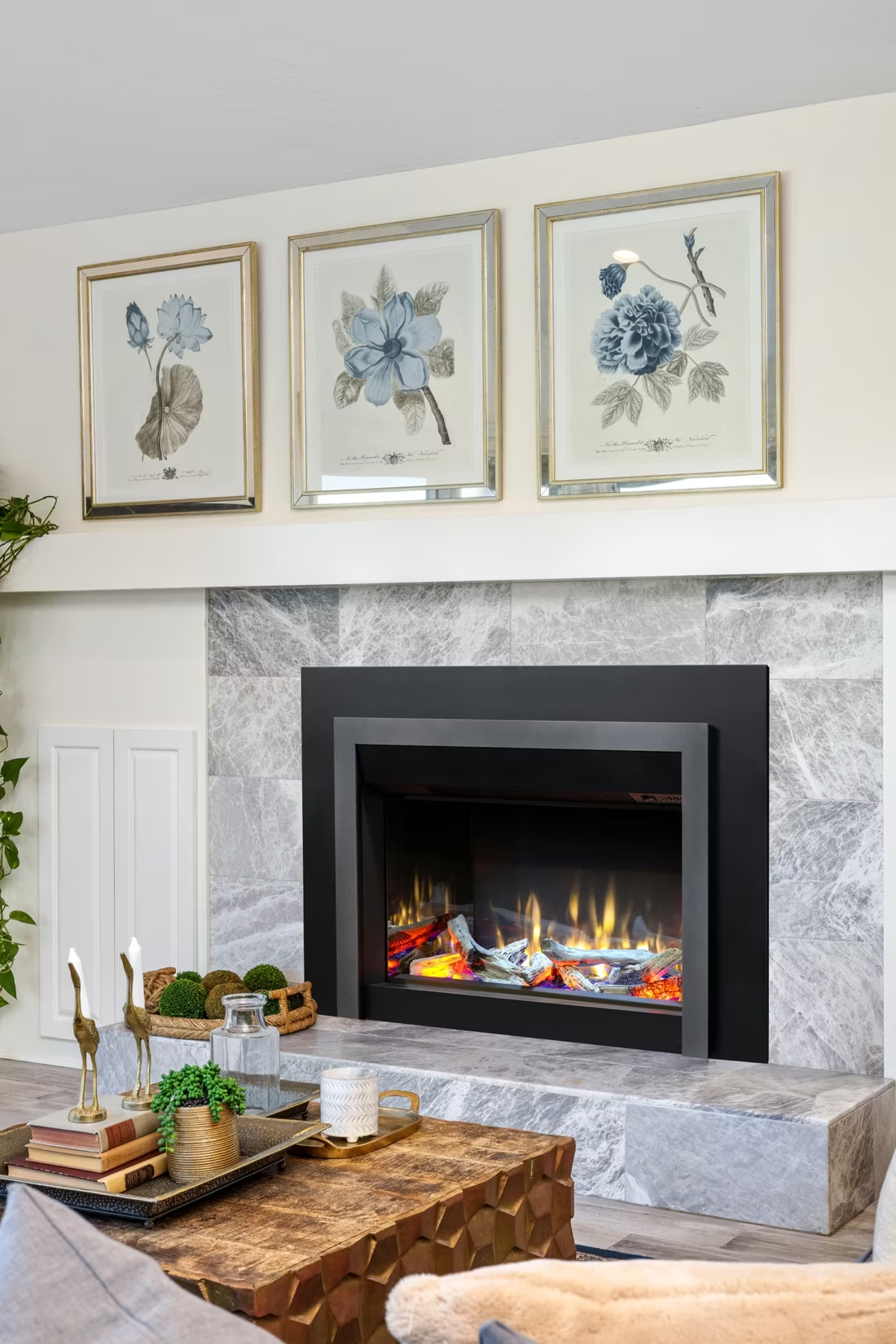
Electric units plug into a standard outlet (most models) or a dedicated 240V circuit for higher-output inserts, and they produce real, if modest, heat—typically 4,000 to 5,000 BTU, enough to take the edge off a single room but not to carry a home through a January cold snap on their own. What they don't need is a chimney, a gas line, or a woodpile, which makes them a practical fit for a finished basement in a Clancy subdivision or a second fireplace in a home already burning lodgepole pine or ponderosa in the main living area. NorthWestern Energy serves electric customers across most of the county, and rate structures matter here—running a resistance-heat insert as a primary source over a full Jefferson County winter adds up fast on the bill.
Three steps. No salesperson until you're ready.
Tell us about your project
Your zip code, your situation, and the fuel you're leaning toward—or let the answers point you to one.
See what's actually available
The brands dealers within 100 miles genuinely carry—real options, never a catalog mirage.
Get your dealer & Project Guide
A trusted local dealer, plus the free Project Guide & Parts List that names every component of the job.
Frequently Asked Questions
How much does an electric fireplace installation cost in Jefferson County?
Electric fireplace installs in Jefferson County typically run $400 to $1,200, and that range covers most of what homeowners actually choose. A plug-in insert dropped into an existing mantel surround or a wall-mounted unit on a standard 120V outlet sits at the low end. A built-in electric fireplace requiring a dedicated 240V circuit—more common for larger units meant to actually heat a room in a Boulder or Whitehall home—runs toward the higher end once an electrician is involved. There's no venting, chimney work, or gas line to budget for, which is the main reason electric costs a fraction of a wood or propane install here.
Can an electric fireplace actually heat a room in a Jefferson County winter?
To a point. Most electric fireplaces put out 4,000 to 5,000 BTU, which will noticeably warm a small-to-medium room with reasonable insulation but won't keep pace on a night when it's 14°F outside—the county's average winter low—let alone during the deeper cold snaps that come with 7,499 heating degree days. Homeowners here generally use electric units as zone heat for a specific room (a converted garage, a home office, a basement suite in Clancy) while relying on a furnace, heat pump, or wood stove for whole-home heat. If you're trying to heat more than one room with electric alone in this climate, you'll be disappointed.
Do I need an electrician to install an electric fireplace?
It depends on the unit. Plug-in electric fireplaces and inserts that run on a standard 120V household outlet don't require an electrician—most homeowners in Boulder, Whitehall, or Clancy install these themselves. Built-in electric fireplaces or higher-output inserts that call for a dedicated 240V circuit do need a licensed electrician to run the circuit and, in some cases, a permit through Jefferson County. Local dealers can tell you which category a given model falls into and whether your existing panel has room for the added circuit.
Is electric a realistic primary heat source for a Jefferson County home?
Generally no, and I'd rather say that plainly than let someone find out the hard way in February. With winter lows averaging 14°F and a heating load on par with Duluth, MN, resistance-heat electric fireplaces don't have the BTU output to carry a home through the season, and running one as primary heat would run up a serious electric bill with NorthWestern Energy. Where electric works well here is as a second heat source—a den, a bonus room, a finished basement—paired with a furnace, heat pump, wood stove, or propane system doing the heavy lifting in the main living space.
Will an electric fireplace work during a power outage?
No—and this is the single biggest tradeoff to understand before choosing electric in Jefferson County. Unlike a wood stove or a properly configured gas fireplace with battery-backup ignition, an electric fireplace is entirely dependent on grid power. Rural stretches of the county—out toward the Elkhorns or along the Jefferson River valley—can see outages last hours during a winter storm, and an electric unit simply goes dark along with everything else. Many local homeowners pair an electric fireplace for everyday convenience with a wood stove or propane heater somewhere in the house as an outage backup.
What's the difference between an electric insert and a built-in electric fireplace?
An electric insert is sized to slide into an existing fireplace opening—including an old, unused wood-burning fireplace—and is a common upgrade for older homes in Boulder or Whitehall that want to retire a drafty masonry firebox without a full remodel. A built-in electric fireplace is designed to be framed into a wall during new construction or a renovation, similar to how a gas fireplace would be installed, and typically offers more heat output and a larger viewing area. For most retrofit projects in Jefferson County's older housing stock, an insert is the simpler and cheaper path.
Do electric fireplaces need any kind of permit in Jefferson County?
Plug-in units generally don't require a permit since there's no new wiring or venting involved. Built-in units that need a new dedicated circuit typically do require an electrical permit, and your electrician will usually pull that as part of the job. There's no equivalent to the building-permit and venting inspections that come with a wood stove or gas fireplace install—one of the appeals of electric for homeowners who want to avoid the permitting process entirely.
How does an electric fireplace compare to a pellet stove for supplemental heat here?
A pellet stove burning bags from Bear Mountain or Lignetics puts out considerably more heat—often 40,000+ BTU on higher-end units—and can genuinely serve as a primary or near-primary heat source in a Jefferson County home, but it needs venting, a hopper to load, and electricity to run its auger and blower, so it also goes dark in an outage. An electric fireplace is lower output, easier to install, and cheaper up front, but it's realistically a supplemental or ambiance choice rather than a heating workhorse. If you're weighing the two for a single room that just needs to feel warmer on a cold evening, electric is the simpler answer; if you need to meaningfully offset your furnace's workload, a pellet stove is the better tool.
Electric vs. wood—which makes more sense for my Jefferson County home?
Wood—burned in a stove fed by lodgepole pine, ponderosa, Douglas fir, or aspen cut under a Helena-Lewis and Clark or Custer Gallatin National Forest permit—delivers real heat output, works with no electricity during a storm, and is the traditional backbone of rural Jefferson County heating. Electric offers none of that heat capacity or outage resilience, but it wins on simplicity: no chimney, no ash, no wood to split and stack, and a cost measured in a few hundred dollars rather than several thousand. Most homeowners here aren't actually choosing between the two for the same room—wood or propane handles the serious heating, and electric fills in as a low-maintenance accent in a secondary space.
Does an electric fireplace need a vent or chimney?
No—that's its superpower. An electric fireplace needs a wall and an outlet, period. No vent pipe, no gas line, no clearances to design around, which is why it works in bedrooms, offices, apartments, and walls where venting a gas or wood unit would be impractical or impossible. Installation is typically the simplest and least expensive of any fireplace type.
Do electric fireplaces actually produce heat?
Yes—most put out around 4,800–5,000 BTUs from a standard outlet, which comfortably warms a bedroom, office, or den as a comfort-zone heater. What they won't do is carry a whole house the way wood, gas, or pellet can. Think of electric as ambiance-first with honest supplemental heat: flames on with no heat in July, flames plus warmth in January.
Does a fireplace add value to my home?
On average, a fireplace adds back to the home about the same amount you spent installing it. Add the monthly savings from heating the rooms you actually use instead of the whole house—often hundreds of dollars a year—and the value case is strong before you even count what a fire does for how your family uses the room.
What is an in-home preview and do I need one?
It's a visit where a hearth professional measures your space, confirms the model you picked actually works in your home, and walks the specs—framing, gas line, venting, finish work—before anything is ordered. Some details you just can't know until you see the house. Never make a down payment without one; it's the single most-skipped step that burns buyers.
Get matched with an electric fireplace dealer in Jefferson County.
Tell us about your home and your room, and we'll send a free Project Guide & Parts List—the right unit, the circuit requirements if any, and a trusted local dealer to install it.
Find Your Fireplace →