
Find the right pellet stove for Hill County's long winters.
Hill County sees over 8,100 heating degree days a year and winter lows averaging 7°F on the open high plains around Havre. A properly sized pellet stove or insert delivers steady, low-maintenance heat through that stretch—find the right unit and connect with a trusted local dealer.
Every Project Starts From One of These Five Situations
Steady heat for the high plains.
Hill County sits on the wind-swept high plains of north-central Montana, along the Milk River near the Canadian border, with Havre as the county seat and the Bear Paw Mountains rising to the south. This is climate zone 6B—8,174 heating degree days a year, on par with Fargo, ND, and winter lows that average 7°F but drop well below zero when Alberta clippers push down across the border. Heating season here runs long, and the wind exposure on open ground makes consistent, dependable heat more important than in sheltered terrain.
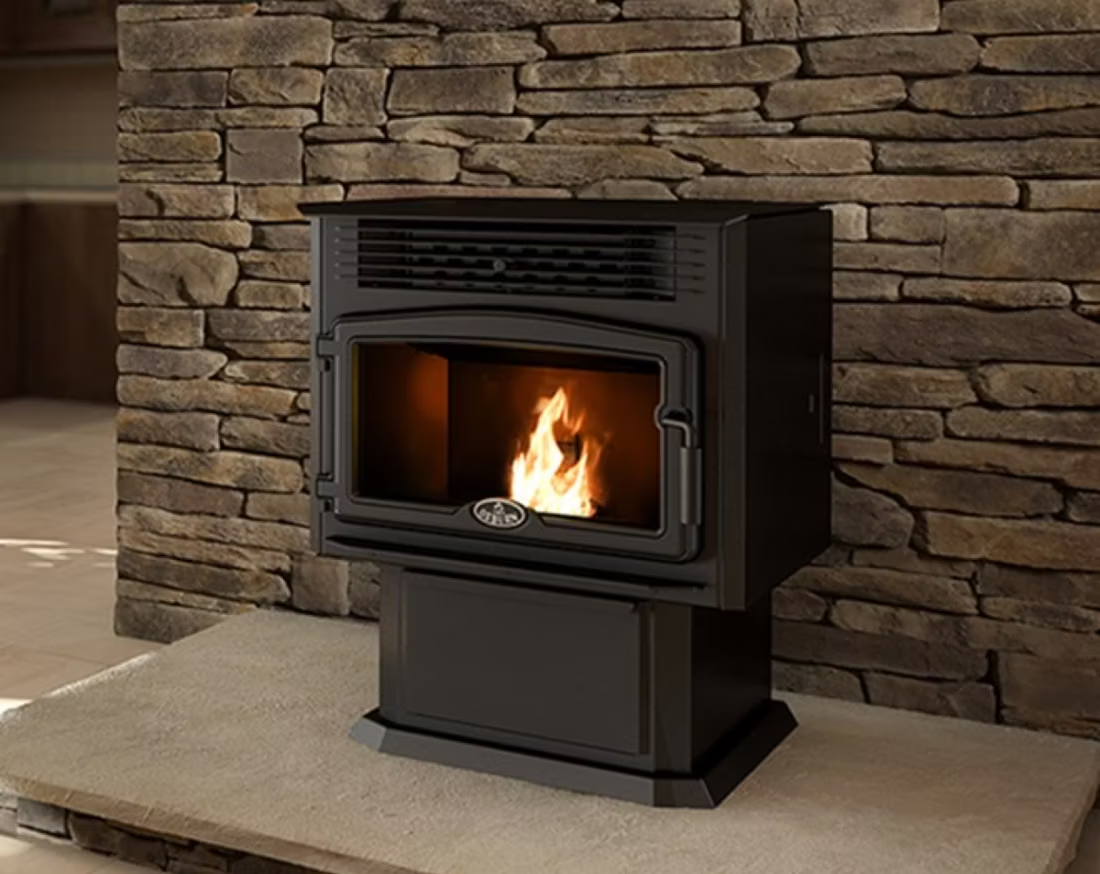
Pellet stoves and inserts have become a practical fit for that reality. A hopper-fed unit burns cleaner than cordwood—a real advantage during wildfire smoke events that periodically affect regional air quality—and delivers a steady, thermostat-controlled heat output without the daily reloading that cordwood demands. Bear Mountain, Lignetics, and Forest Energy pellets are all sold regionally and available through hearth dealers and farm-and-feed retailers serving Havre and the surrounding county. The tradeoff worth understanding up front: pellet stoves run on electricity to power the auger and combustion blower, which matters on the plains where winter storms can knock out power for hours at a time. A local dealer can walk you through battery backup options and whether a dual-fuel wood stove pairing makes sense for your home.
Three steps. No salesperson until you're ready.
Tell us about your project
Your zip code, your situation, and the fuel you're leaning toward—or let the answers point you to one.
See what's actually available
The brands dealers within 100 miles genuinely carry—real options, never a catalog mirage.
Get your dealer & Project Guide
A trusted local dealer, plus the free Project Guide & Parts List that names every component of the job.
Frequently Asked Questions
How much does a pellet stove installation cost in Hill County?
Most pellet stove and insert installations in Hill County run in the range of $3,500 to $7,000, depending on the unit, whether it's a freestanding stove or an insert going into an existing masonry fireplace, and whether new venting or an electrical circuit needs to be added. Homes with an existing fireplace opening are typically on the lower end since the chimney chase can often be reused with a pellet vent liner. Rural properties farther from Havre may see a modest travel charge added to installation quotes.
What size pellet stove do I need for Hill County's climate?
With 8,174 heating degree days and winter lows that regularly drop well below the 7°F average, Hill County homes generally need larger-hopper, higher-output units than milder climates require. A mid-size pellet stove (roughly 40,000–60,000 BTU) handles most single-story homes in the 1,500–2,200 square foot range, but poorly insulated older farmhouses common in the county often need to size up. Look for a hopper capacity of at least 40–60 pounds if you want an overnight burn during the coldest stretches—a local dealer can size this against your home's insulation and square footage during an in-home visit.
Where can I buy pellets locally in Hill County?
Bear Mountain, Lignetics, and Forest Energy are the regional brands most commonly stocked by hearth dealers and farm-and-feed retailers serving Havre and Hill County. Pellets are sold by the 40-pound bag or by the ton, and buying a season's supply in late summer or early fall—before demand and freight costs climb heading into winter—is common practice locally. A typical heating season for a primary-heat pellet stove in this climate runs 2 to 3 tons; supplemental use runs less. Ask your local dealer about seasonal pre-buy programs.
Will my pellet stove work if the power goes out?
Not without a backup power source. Pellet stoves rely on an electric auger to feed fuel and a blower to move heated air, so a power outage stops the stove regardless of how much fuel is in the hopper. This is a real consideration in Hill County, where winter storms and high winds on the open plains can knock out power for extended stretches. Many local homeowners pair a pellet stove with a small battery backup unit or a generator sized to run the stove's low draw, and some households keep a wood stove as backup heat specifically for outage scenarios. Ask a local dealer about battery backup compatibility for the specific model you're considering.
Do I need a permit to install a pellet stove in Hill County?
Yes—new pellet stove and insert installations generally require a building permit through the Hill County Building Department, and the unit itself needs to meet current EPA emissions standards. Most local installers handle the permitting as part of the installation process, including sign-off on venting and any electrical work needed for the stove's circuit. If you're installing in a structure within Havre city limits, confirm whether the city or the county handles the permit for your specific address.
What's the best pellet stove for Hill County's cold winters?
For a climate with 8,174 heating degree days and stretches well below zero, look for a pellet stove with a large hopper (40 pounds or more) for longer unattended burns, a higher maximum BTU output rated for whole-home use rather than supplemental heat, and a reliable auger feed system rated for continuous winter operation. Local dealers carrying Bear Mountain, Lignetics, and Forest Energy pellets can also speak to which stove brands perform most consistently with the pellet quality typically available in the region—pellet hardness and ash content vary by brand and affect how well a given stove runs.
How often does a pellet stove need to be cleaned and serviced?
Pellet stoves need more frequent attention than gas units but less than wood stoves. Plan on cleaning the burn pot and ash pan every few days during heavy winter use, a deeper cleaning of the hopper and auger monthly, and a full professional service—including the exhaust venting and blower—once a year, typically before the heating season starts. For a Hill County home running a pellet stove as primary heat through a long winter, staying on top of the burn pot cleaning in particular prevents the clinker buildup that causes uneven burns and reduced output.
Pellet vs. wood stove—which is right for my Hill County home?
Wood stoves work without electricity, which matters during the power outages that come with plains winter storms, and cordwood from local lodgepole pine, ponderosa pine, Douglas fir, or aspen is often self-sourced or cheaper by the cord. Pellet stoves are more convenient day to day—no splitting or hauling, cleaner burn, and thermostat-style control—but they stop working the moment the power drops unless you have battery backup. Many Hill County households land on a pellet stove for daily convenience with a wood stove or fireplace insert as backup heat, particularly on rural properties where outage response time runs longer.
Are pellet stoves affected by wildfire smoke air quality advisories in Hill County?
No—pellet stoves burn considerably cleaner than cordwood and are generally exempt from the wood-burning curtailment periods that some jurisdictions impose during air quality events. Hill County does see periodic wildfire smoke impacts in late summer and fall, but that affects outdoor air quality rather than restricting pellet stove operation. If air quality advisories are a concern for your household, a pellet unit is typically the lower-friction choice compared to an uncertified wood stove.
What's the difference between an insert and a zero-clearance fireplace?
An insert is a fireplace that slides into a pre-existing wood-burning fireplace—if you don't have one, there's nothing to insert it into. A zero-clearance fireplace is built into a framed wall, which makes it the answer for remodels and new construction. Simple test: existing masonry fireplace means insert; blank or framed wall means zero-clearance.
What do I measure to size a fireplace insert?
Four numbers tell you what fits: the front width, the front height, the back width, and the overall depth of your existing fireplace opening. Grab a tape measure, jot those down, and snap a photo of the wall—those two things do more to move your project forward than anything else you can do today.
What is an in-home preview and do I need one?
It's a visit where a hearth professional measures your space, confirms the model you picked actually works in your home, and walks the specs—framing, gas line, venting, finish work—before anything is ordered. Some details you just can't know until you see the house. Never make a down payment without one; it's the single most-skipped step that burns buyers.
Does a fireplace add value to my home?
On average, a fireplace adds back to the home about the same amount you spent installing it. Add the monthly savings from heating the rooms you actually use instead of the whole house—often hundreds of dollars a year—and the value case is strong before you even count what a fire does for how your family uses the room.
Stove and Fireplace Dealers in Hill County
Pellet Brands Stocked Around Hill County
Manufacturers will point you to the nearest stocking dealer.
Find your pellet stove in Hill County.
Tell us a bit about your home and heating goals, and we'll match you with a trusted local dealer and send over a free Project Guide & Parts List—sized for Hill County's winters, with the vent kit and parts spelled out.
Find Your Fireplace →