
Add real warmth to a Hill County room—no chimney, no venting.
From Havre to the Rocky Boy's Reservation edge, Hill County winters push average lows down to 7°F and add up to a long, demanding heating season each year. An electric fireplace won't replace your furnace, but it adds honest zone heat and real ambiance to a bedroom, office, or basement—plugged in today, no gas line or masonry work required.
Every Project Starts From One of These Five Situations
Electric heat fills the gaps in Hill County's toughest months.
Hill County sits along Montana's Hi-Line, anchored by Havre, with the Bear Paw Mountains to the south and the Rocky Boy's Reservation on its eastern edge. Climate zone 6B and a winter heating load about as demanding as Fargo, ND put this county in the same cold-climate category—winters run long, average lows sit around 7°F, and wind off the open prairie makes drafty older homes and manufactured housing (common throughout rural Hill County) work hard to hold heat. Wood and propane still carry most of the primary heating load here, but electric fireplaces have carved out a real niche: they add supplemental warmth to a single room without touching the existing heating system.
In town, NorthWestern Energy service makes running a dedicated circuit for a built-in electric unit straightforward. Out in unincorporated Hill County—Kremlin, Gildford, Box Elder, and the ranch country toward the Bear Paws—Hill County Electric Cooperative keeps the lights on, though winter storms off the plains can still knock out power for stretches. That's the honest tradeoff: an electric fireplace is clean, ventless, and simple to install in a mobile home or finished basement, but it goes dark the moment the grid does. A trusted local dealer can size the right unit for your space and tell you straight whether it should stand alone or pair with the wood stove or propane heater you already rely on.
Three steps. No salesperson until you're ready.
Tell us about your project
Your zip code, your situation, and the fuel you're leaning toward—or let the answers point you to one.
See what's actually available
The brands dealers within 100 miles genuinely carry—real options, never a catalog mirage.
Get your dealer & Project Guide
A trusted local dealer, plus the free Project Guide & Parts List that names every component of the job.
Frequently Asked Questions
How much does an electric fireplace installation cost in Hill County?
Most electric fireplace projects in Hill County run $300 to $900 for a wall-mounted or insert unit plus $200 to $500 if a licensed electrician needs to run a dedicated 20-amp circuit—many older Havre homes don't have one near the install location. Built-in mantel packages with custom surrounds can reach $1,500 to $2,500 installed. Because there's no chimney, no gas line, and no venting to plan around, electric installs land well below the cost of wood or propane projects common elsewhere in the county.
Can an electric fireplace actually heat a room in Hill County's cold?
A typical electric fireplace runs a 1,500-watt heater good for roughly 5,000 BTU—enough to noticeably warm a 300 to 400 square foot bedroom, office, or finished basement room, especially with the door closed. It will not keep pace as a whole-home heat source once outdoor temperatures drop toward Hill County's average winter low of 7°F, particularly in older or manufactured homes with thinner insulation. Think of it as targeted zone heat that takes pressure off your furnace or wood stove in the rooms you use most, not a replacement for it.
Electric fireplace vs. electric insert vs. electric stove—what's the difference?
An electric fireplace is a built-in wall unit or mantel package designed for a permanent spot in a living room or bedroom. An electric insert is sized to drop into an existing wood-burning fireplace opening—a common fix for older Havre homes with a masonry fireplace that's been capped off or is expensive to keep code-compliant. An electric stove is a freestanding, plug-in unit you can move between rooms or take with you, which makes it a popular choice for renters and for the manufactured housing common in rural Hill County.
Do I need a permit to install an electric fireplace in Hill County?
A standard 120-volt plug-in unit usually needs no permit at all—it's no different than plugging in a space heater. A built-in 240-volt unit or any project that requires a new dedicated circuit does need an electrical permit, pulled by your licensed electrician. Inside Havre city limits, that goes through the City of Havre Building Department; in unincorporated Hill County—Kremlin, Gildford, Box Elder, and outlying ranch properties—it runs through Hill County Planning & Development. Either way, your installer typically handles the paperwork.
Will my electric fireplace work if the power goes out?
No—and this is worth being upfront about. Unlike a wood stove burning local lodgepole pine or ponderosa, an electric fireplace goes dark the instant grid power drops, whether you're on NorthWestern Energy in town or Hill County Electric Cooperative out in the county. Winter storms off the Hi-Line can knock out rural lines for hours at a stretch. If backup heat during outages matters to your household, plan on pairing the electric unit with a wood stove or propane heater rather than relying on it alone.
What's the best electric fireplace for a Hill County home?
Look for units from Dimplex, Amantii, or Touchstone with a true 1,500-watt heater and a thermostat you can dial back—in a small, well-insulated room, full output can overheat the space fast. Given Hill County's long, demanding winter heating season, most homeowners get the most value treating the electric unit as zone heat for a specific room rather than expecting it to carry the load your furnace or wood stove already handles through the coldest stretches of a Hi-Line winter.
How much maintenance does an electric fireplace need?
Very little compared to wood or gas. There's no annual chimney sweep, no CSIA inspection, and no gas line to service. Plan on occasional dusting of the vents and grille, and expect to replace the LED flame bulbs every few years of regular use. If the unit runs several hours a day through the winter, it's worth periodically checking that the outlet or breaker isn't running warm, especially on older household wiring common in Havre's older neighborhoods.
Where can I find someone to install an electric fireplace near me?
Licensed electricians serving Havre and the surrounding Hill County towns—Kremlin, Gildford, Box Elder, and out toward Rocky Boy's—can handle circuit work and mounting, and several local hearth and appliance dealers carry electric fireplace lines directly. A trusted local dealer will also know which units hold up best in the drier, dustier conditions typical of Hill County's wildfire-smoke summers and long heating season.
Electric vs. wood vs. pellet—which fits my Hill County home?
Wood, burned in local lodgepole pine, ponderosa, Douglas fir, or aspen, remains the only one of the three that keeps working when the power's out—a real consideration on the Hi-Line. Pellet stoves, using regional brands like Bear Mountain, Lignetics, or Forest Energy, burn cleaner and load easier than wood but still need electricity to run the auger and blower, so they share electric's outage limitation. Electric fireplaces win on simplicity: no ash, no chimney, no fuel to store, and the lowest install cost of the three. For most Hill County households, the practical answer is a primary system—wood, propane, or furnace—plus an electric fireplace for the room you actually live in.
Do electric fireplaces actually produce heat?
Yes—most put out around 4,800–5,000 BTUs from a standard outlet, which comfortably warms a bedroom, office, or den as a comfort-zone heater. What they won't do is carry a whole house the way wood, gas, or pellet can. Think of electric as ambiance-first with honest supplemental heat: flames on with no heat in July, flames plus warmth in January.
Can I put a TV above my fireplace?
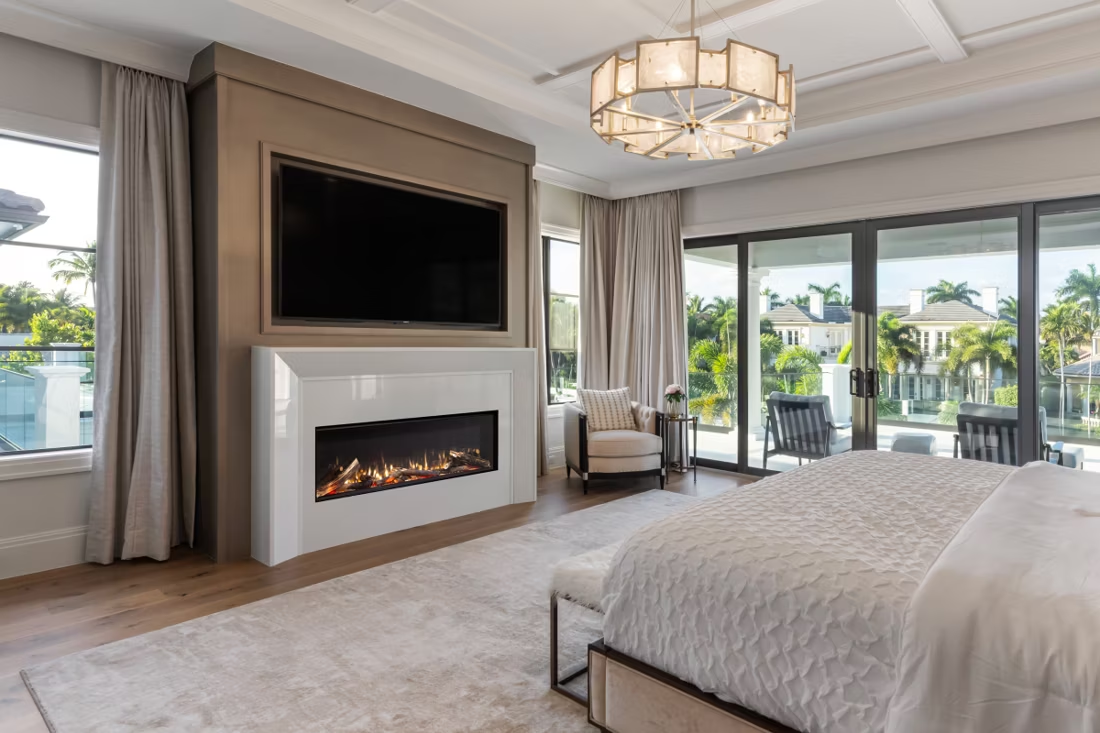
Yes—with an asterisk. Fireplaces are hot and TVs don't like heat. Either put a mantel between them to deflect rising warmth, or choose a fireplace with heat-management technology that creates a cool zone on the wall above—the wall stays around 125 degrees, barely warm, while the room still gets full heat. If you like clean lines and don't want a mantel, heat management is the answer.
How much should I budget for a fireplace?
For an average home—covering the fireplace, the vent pipe, and basic installation—a budget between $3,900 and $5,500 gives you a lot of options across wood, gas, and pellet. By the time you add finish work, gas line, and electrical, the average complete installation lands between $5,000 and $12,000 all-in. In a remodel or new build, a good rule is to put about 2.5% of the total project cost toward the fireplace.
Does a fireplace add value to my home?
On average, a fireplace adds back to the home about the same amount you spent installing it. Add the monthly savings from heating the rooms you actually use instead of the whole house—often hundreds of dollars a year—and the value case is strong before you even count what a fire does for how your family uses the room.
Stove and Fireplace Dealers in Hill County
Find your electric fireplace in Hill County.
Tell us about your home and how you plan to use the room, and we'll match you with a trusted local dealer serving Hill County plus a free Project Guide & Parts List—sized right for your space, with the exact parts and a recommended installer.
Find Your Fireplace →