
Instant heat for Granite County's long mountain winters.
Propane-fired gas fireplaces, inserts, and stoves for the Flint Creek Valley, from Philipsburg to Drummond and the ranches and mountain subdivisions between. Find the right unit and get matched with a trusted local dealer who installs it correctly the first time.
Every Project Starts From One of These Five Situations
Propane fills the gap left by the missing gas main.
Granite County is one of Montana's smallest counties by population—just 1,338 residents spread across the Flint Creek Valley, the historic mining town of Philipsburg at roughly 5,280 feet, and the I-90 corridor town of Drummond. The county sits in climate zone 6B, the same cold-climate designation that covers Helena and much of southwest Montana, meaning long, hard winters with sustained sub-zero stretches at elevation. For a county this rural, running a furnace hard from October through April gets expensive fast, and that's where a gas fireplace or insert earns its place as a zone-heating workhorse in the main living area.
There's no natural gas utility serving Granite County—no mains run out to Philipsburg, Drummond, or the ranches and mountain subdivisions in between. Propane is the standard fuel here, delivered by regional suppliers who already keep tanks filled for furnaces and water heaters across the county. A propane-fired direct-vent fireplace or insert gives Flint Creek Valley homeowners the same instant, flip-a-switch heat you'd get on a natural gas line, without waiting on infrastructure that isn't coming. It's also a clean-burning option during the wildfire smoke seasons that periodically settle into the valley—a gas unit doesn't add anything to an airshed that's already dealing with regional smoke.
Three steps. No salesperson until you're ready.
Tell us about your project
Your zip code, your situation, and the fuel you're leaning toward—or let the answers point you to one.
See what's actually available
The brands dealers within 100 miles genuinely carry—real options, never a catalog mirage.
Get your dealer & Project Guide
A trusted local dealer, plus the free Project Guide & Parts List that names every component of the job.
Frequently Asked Questions
How much does a gas fireplace installation cost in Granite County?
Most gas fireplace and insert installations in Granite County run $4,000 to $10,500, with the spread driven mainly by propane line work and venting rather than the unit itself. A direct-vent insert going into an existing fireplace in one of Philipsburg's older mining-era homes, where a propane line already serves the furnace, sits toward the low end. New construction or a fireplace going into a home or cabin without existing propane service—which means running new line from the tank—pushes toward the higher end. Because the county is so rural, expect a modest travel charge added to quotes for properties well outside Philipsburg or Drummond.
Can I convert my existing wood fireplace to gas?
Yes, and it's a common upgrade in Granite County's older homes, many of which were built with masonry fireplaces during Philipsburg's silver-mining era. A gas insert drops into the existing fireplace opening and uses a stainless liner run up your current chimney, so you keep the look of the original hearth while gaining instant heat and losing the wood-hauling. Conversions typically run $4,000 to $9,000 depending on the insert and whether a new propane line has to be run to the fireplace location.
Do I need natural gas, or is propane the only option in Granite County?
Propane is effectively your only option—Granite County has no natural gas utility, and none of the towns in the county (Philipsburg, Drummond, or the smaller communities around Georgetown Lake and the Flint Creek Range) are served by gas mains. Every gas fireplace or insert installed here runs on propane, either from an existing tank already feeding your furnace and water heater or a new tank set by a regional propane supplier. The fireplace itself doesn't care which fuel it burns—your installer sets the correct orifice and regulator for propane—so the fireplace selection process is identical to what you'd see in a natural-gas market.
Will my gas fireplace work during a power outage?
Most direct-vent gas fireplaces with intermittent pilot ignition (IPI) include a battery backup that keeps the unit operable when the power drops—which matters in a county where winter storms can knock out rural power lines for hours or longer. Valor fireplaces take a different approach: they generate their own electricity through the pilot's thermocouple, so there's no battery to remember. For a ranch or mountain property well off the highway, where a utility crew might take a while to reach you, that kind of self-sufficient ignition is worth asking about.
What's the difference between a gas fireplace, gas insert, and gas stove?
A gas fireplace is a fully built-in unit framed into a wall—the right call for new construction or a cabin without an existing hearth. A gas insert fits into an existing masonry fireplace opening, which is common in Philipsburg's older homes, and uses the existing chimney as a chase for a sealed vent liner. A gas stove is freestanding, sitting on its own hearth pad, and works well in a cabin or outbuilding where there's no fireplace opening to fill. For most Granite County homes with an existing wood fireplace, an insert is the straightforward upgrade.
Do I need a permit to install a gas fireplace in Granite County?
Yes—a building permit is typically required for a new gas fireplace or insert installation, along with sign-off on the propane line work if a new run is needed. Given how rural and small the county is, most homeowners coordinate this through the county building office directly rather than a city desk, since Philipsburg and Drummond don't have their own separate permitting departments. Local installers who regularly work in Granite County handle this paperwork as part of the job.
Should I choose a vented or vent-free gas fireplace?
Vented (direct-vent) units draw combustion air from outside and exhaust it back outside through a sealed pipe—they're the standard, code-compliant choice and the one nearly every installer in this part of Montana will recommend. Vent-free units burn directly into the room air; they're legal in Montana but come with strict room-sizing rules and are a harder sell in a tightly-built, energy-efficient mountain home where indoor air quality matters, especially during wildfire smoke season when you're already managing what's in the air. For Granite County's cold, long-shut-window winters, a direct-vent unit is almost always the better fit.
How often should my gas fireplace be serviced?
Plan on an annual inspection, ideally before the heart of the heating season in October. A technician checks the burner, pilot assembly, propane connections, and venting, and cleans the glass and interior. This is a quick visit compared to a wood-stove chimney sweep, but skipping it is the main way small propane leaks or venting issues go unnoticed in a county where the nearest full-service technician may be a drive away.
Gas vs. wood—which makes more sense in Granite County?
Wood has deep roots here—lodgepole pine, ponderosa pine, Douglas fir, and aspen are all common on the national forest land that covers much of the county's mountain terrain, and a lot of Granite County households still burn cordwood for primary or backup heat, especially since it works without power during outages. Gas offers instant, no-maintenance heat and skips the wood hauling and ash cleanup, which matters if you're managing a ranch or working full time in Philipsburg or Drummond. Many homes end up with both: a propane fireplace for daily convenience in the main living area, and a wood stove or insert elsewhere as backup heat for when the power's out and the propane truck can't get up the road.
Why is a fireplace insert so efficient?
An insert does two things: it seals the chimney completely, so you stop losing air you already paid to heat, and it radiates warmth into the room through the firebox and glass. Most add a heat-exchange fan that pulls cool room air underneath, wraps it around the hot firebox, and pushes it back out warm. Your home is more efficient before you've even lit the first fire.
Can I put a TV above my fireplace?
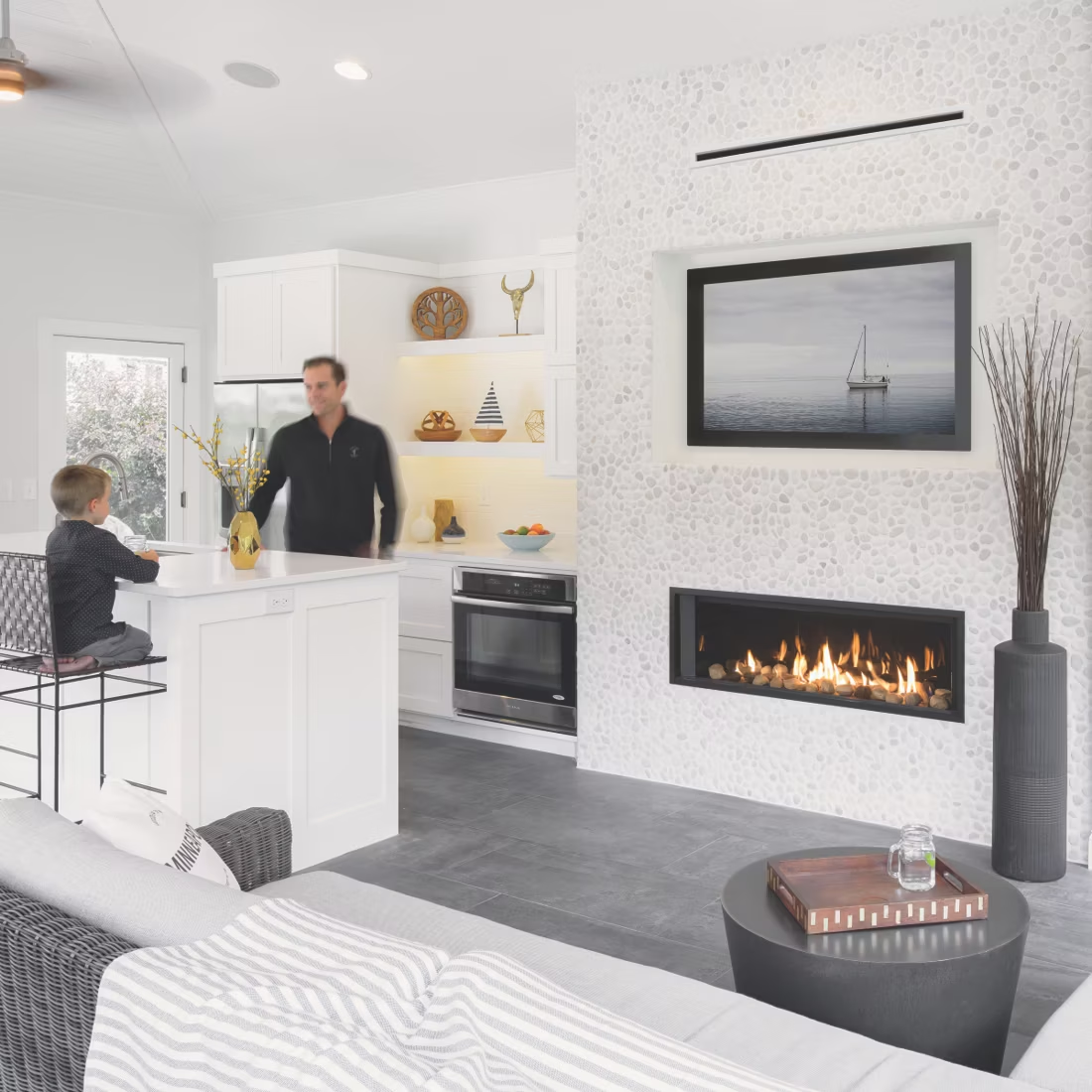
Yes—with an asterisk. Fireplaces are hot and TVs don't like heat. Either put a mantel between them to deflect rising warmth, or choose a fireplace with heat-management technology that creates a cool zone on the wall above—the wall stays around 125 degrees, barely warm, while the room still gets full heat. If you like clean lines and don't want a mantel, heat management is the answer.
Can I install a fireplace myself?
If you're putting a fire in your house on purpose, it's best to work with an expert. Unless you're genuinely experienced in framing, gas line, vent pipe, and the national code on clearances to combustibles, have a professional do it—and ideally the same company that sells you the fireplace, so warranty, service, and liability all live under one roof.
How much should I budget for a fireplace?
For an average home—covering the fireplace, the vent pipe, and basic installation—a budget between $3,900 and $5,500 gives you a lot of options across wood, gas, and pellet. By the time you add finish work, gas line, and electrical, the average complete installation lands between $5,000 and $12,000 all-in. In a remodel or new build, a good rule is to put about 2.5% of the total project cost toward the fireplace.
Find your gas fireplace in Granite County.
Tell us about your home and we'll match you with the right propane fireplace, insert, or stove, plus a free Project Guide & Parts List with the exact parts—including the vent kit—and our recommended local dealer for your Granite County installation.
Find Your Fireplace →