
Heat That Holds Through a Flint Creek Valley Winter.
Wood, gas, pellet, and electric fireplace resources for Philipsburg, Drummond, Hall, Maxville, and the ranches and cabins scattered through Granite County's high valleys and mountain passes.
Every Project Starts From One of These Five Situations
Cold, high, and thinly populated—heating Montana's Flint Creek Range.
Granite County is home to just 1,338 people spread across a rugged stretch of southwestern Montana centered on Philipsburg, an old silver-mining town sitting around 5,265 feet in the Flint Creek Valley. The county falls in climate zone 6B, with winters that rival Bozeman for length and severity once you climb toward the Anaconda-Pintler Wilderness or the passes above Georgetown Lake. Wood heat has deep roots here—lodgepole pine, ponderosa pine, Douglas fir, and aspen are all cut locally, and firewood permits are available through the Beaverhead-Deerlodge and Lolo National Forest offices that border the county on nearly every side.
What you'll find on this hub: dealers, technicians, and fuel suppliers serving every corner of Granite County, from Philipsburg out to Drummond along I-90 and the cabin country around Georgetown Lake and Rock Creek. Because the county's population is so small, some of the trusted pros who cover this area are actually based in Missoula or Butte and travel in for installs and service—we've noted that where it applies. Pick your fuel below to see local costs, dealer options, and what actually holds up through a Flint Creek Valley winter.
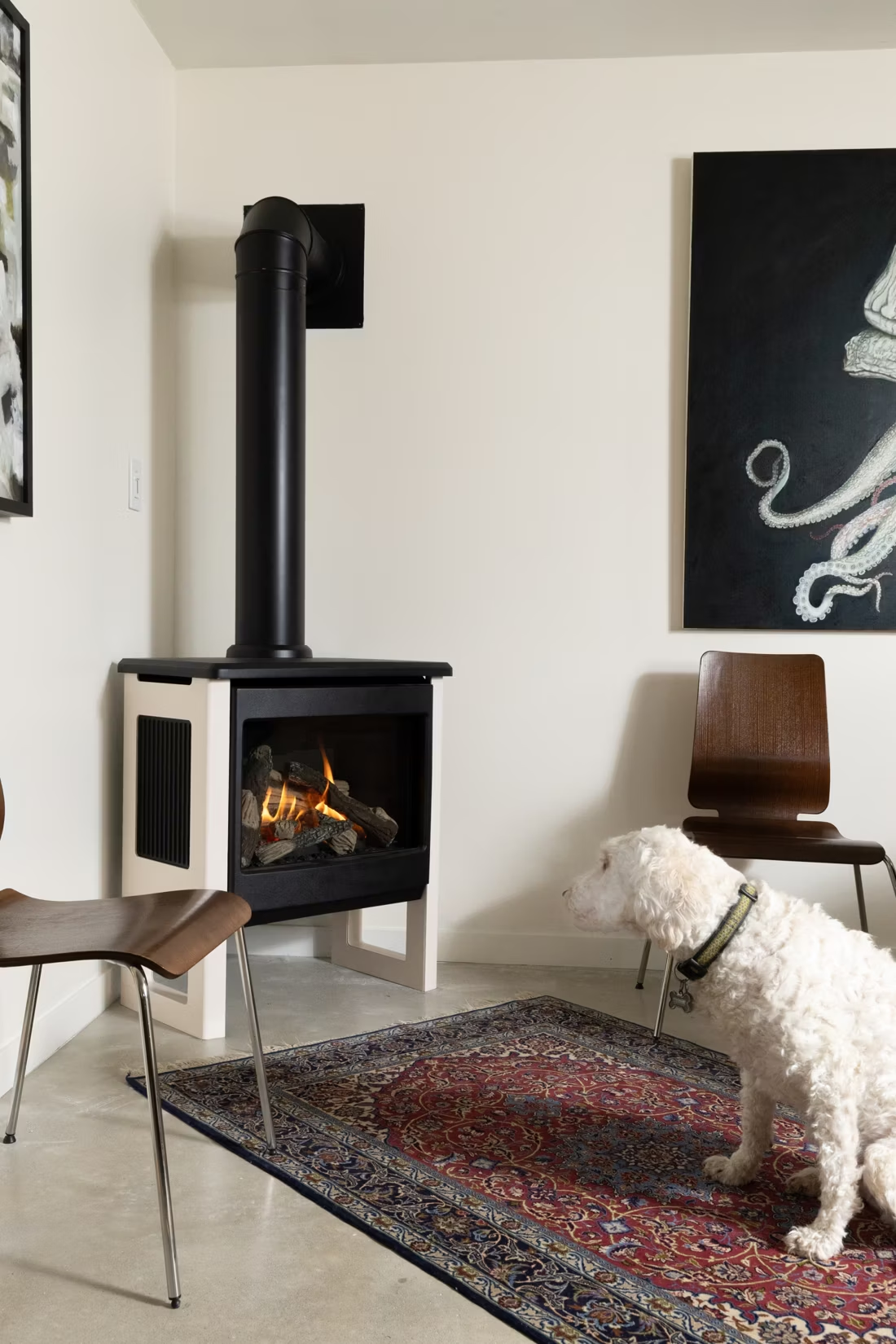
Four fuels. One honest answer for Granite County.
Three steps. No salesperson until you're ready.
Tell us about your project
Your zip code, your situation, and the fuel you're leaning toward—or let the answers point you to one.
See what's actually available
The brands dealers within 100 miles genuinely carry—real options, never a catalog mirage.
Get your dealer & Project Guide
A trusted local dealer, plus the free Project Guide & Parts List that names every component of the job.
Frequently Asked Questions
Which fuel works best in Granite County?
Wood is still the backbone fuel for most Granite County homes—lodgepole pine, ponderosa pine, Douglas fir, and aspen are all cut locally, and a Forest Service firewood permit through the Beaverhead-Deerlodge or Lolo National Forest keeps fuel costs low for anyone willing to cut and split their own. Gas heat here almost always means propane rather than natural gas, since no gas mains reach the rural stretches of the county; a propane fireplace or insert is the low-labor option for a second home or a homeowner who doesn't want to manage a woodpile. Pellet stoves are a solid middle ground—Bear Mountain, Lignetics, and Forest Energy bags are available through Philipsburg and Drummond retailers, though buying ahead of winter matters since deliveries slow once mountain passes get snowy. Electric units are supplemental only in a climate zone 6B county like this—useful for a bedroom or a cabin used only part of the year, but not something to rely on as primary heat through a Flint Creek Valley winter.
Do I need a building permit to install a fireplace in Granite County?
Often no, at least outside town limits. Montana law exempts owner-occupied single-family dwellings from state building code permitting in counties that haven't adopted it, and Granite County is one of the counties where much of the rural, unincorporated area falls under that exemption—so a wood stove, insert, or propane fireplace installed on a rural property may not require a formal county permit. Inside Philipsburg town limits, though, the town does enforce its own building permitting, so an install there should go through the Town of Philipsburg. Regardless of permitting, any new wood stove sold today has to meet EPA 2020 NSPS emissions standards, and propane line and tank work should always go through a licensed propane technician even where no permit is required.
Does wildfire smoke affect wood burning in Granite County?
It affects the county more in summer and fall than winter. Granite County sits inside national forest land that sees regular wildfire activity, and smoke from fires in the Flint Creek Range or nearby drainages can settle in the valley for days at a time during fire season. There's no winter burn-curtailment program here like you'd see in a basin that gets temperature inversions, but fire season habits still matter for wood heat—homeowners who leave firewood stacked loose near structures or skip a chimney sweep after a smoky, dry summer are taking on more risk than they realize. An EPA-certified stove and an annual sweep before heating season starts go a long way in a county this dependent on wood.
What's the typical cost range for fireplace installation across all fuel types in Granite County?
Wood stove or insert: $4,500–$9,000 for a typical install, up to roughly $13,000 for new construction requiring full chimney work at elevation. Propane fireplace, insert, or stove: $5,000–$10,000, with the higher end reflecting new tank placement and line runs on rural properties without existing propane service. Pellet stove or insert: $4,500–$7,500 for a typical install. Electric fireplace: $200–$3,000 for the unit itself, plus $400–$1,200 in labor for anything beyond a simple plug-in placement. Rural properties without existing gas or propane infrastructure should expect costs toward the higher end of these ranges—a local dealer can walk through exactly what your site needs before you commit to a fuel.
How does fuel supply work in a remote county like Granite?
Firewood is the most reliable local fuel—a Forest Service permit through the Beaverhead-Deerlodge or Lolo National Forest lets residents cut their own from lodgepole pine, ponderosa pine, Douglas fir, or aspen stands, and most households plan a season ahead. Propane comes by delivery truck, and ranches and cabins on the outskirts of Philipsburg or up toward Georgetown Lake should keep a buffer in the tank going into winter in case a storm delays a scheduled fill. Pellet fuel is available locally—Bear Mountain, Lignetics, and Forest Energy bags are carried at stores in Philipsburg and Drummond—but supply can tighten in a hard winter, so buying your season's pellets in the fall rather than waiting for a cold snap is the safer approach here.
Can I find a dealer that carries all four fuel types in Granite County?
Not locally, in most cases. With a county population under 1,500, Philipsburg and Drummond have hardware and feed stores that stock pellets or propane tanks, but full hearth showrooms carrying wood, gas, pellet, and electric side by side are typically 60 to 90 minutes away in Missoula or Butte. That's not a dealbreaker—what matters is getting matched with a dealer who actually services Granite County, understands how climate zone 6B and the elevation around Philipsburg affect venting and stove sizing, and can get parts and permits sorted even from out of town. That's the gap Find My Fireplace is built to close.
How much should I budget for a fireplace?
For an average home—covering the fireplace, the vent pipe, and basic installation—a budget between $3,900 and $5,500 gives you a lot of options across wood, gas, and pellet. By the time you add finish work, gas line, and electrical, the average complete installation lands between $5,000 and $12,000 all-in. In a remodel or new build, a good rule is to put about 2.5% of the total project cost toward the fireplace.
Wood, gas, pellet, or electric—how do I choose?
Match the fuel to your life, not the other way around. Wood: lowest fuel cost and total power-outage independence, but you're hauling and stacking. Gas: press a button, set a thermostat, no maintenance to speak of. Pellet: wood economics with automatic feeding, in exchange for weekly cleaning and a need for electricity. Electric: plugs in anywhere with honest supplemental heat. Nobody regrets the fuel that fits how they actually live.
Does a fireplace add value to my home?
On average, a fireplace adds back to the home about the same amount you spent installing it. Add the monthly savings from heating the rooms you actually use instead of the whole house—often hundreds of dollars a year—and the value case is strong before you even count what a fire does for how your family uses the room.
Can a fireplace actually lower my heating bill?
Yes—by creating a comfort zone. A furnace heats every square foot of the house just to warm the one room you're in; a gas fireplace on low burns roughly a sixth of the gas a typical furnace does. Set the furnace around 55–60 degrees as a baseline, then heat the rooms your family actually uses. Families who heat this way commonly save $20–$60 a month.
Stove and Fireplace Dealers in Granite County
Listings include WhyFire partner dealers, dealers we have verified as authorized for the brands we recommend, and established local businesses that carry hearth products. Every listing shows which one it is. The ones marked Preferred run on WhyFire's software, so they can show you real pricing and book your appointment right here. No manufacturer pays for placement. How we verify dealers →
Energy Partners Propane Mt
Anderson Masonry Hearth & Home
S.j. Perry Co
Ridgeline Heating
Find your fireplace in Granite County.
Pick your fuel below to see what's realistic for a Flint Creek Valley winter, and get matched with a trusted local dealer plus a free Project Guide & Parts List for your install.
Find Your Fireplace →