
Reliable heat for the cabins and homes of Granite County.
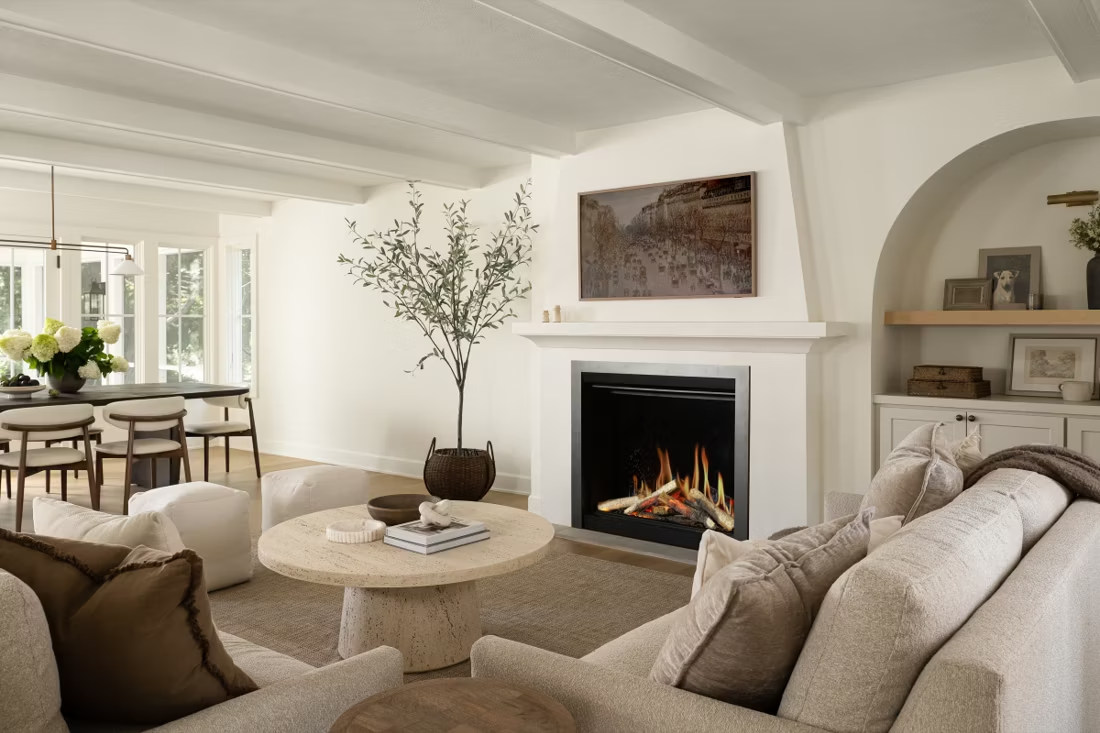
From Philipsburg to Georgetown Lake, electric fireplaces add safe, no-hassle heat to homes already running on wood or propane—and to seasonal cabins where a chimney isn't practical. Find the right unit and connect with a trusted local dealer.
Every Project Starts From One of These Five Situations
A supplemental heat source built for remote, high-elevation living.
Granite County is one of Montana's least populated counties—just 1,338 people spread across a high mountain landscape anchored by Philipsburg, Drummond, and the seasonal cabin communities around Georgetown Lake and Rock Creek. Sitting in climate zone 6B at roughly 5,200 feet, winters here run long and hard, and wood heat—split from local lodgepole pine, ponderosa pine, Douglas fir, and aspen—remains the backbone of how most homes stay warm. Propane fills in where wood isn't practical. Electric fireplaces aren't trying to replace either of those as a primary heat source through a Granite County winter; their role here is more targeted, and that's exactly why they work.
Where electric earns its place is supplemental zone heat: a bedroom or den that doesn't need a full wood stove running, a Georgetown Lake cabin used only on weekends where nobody wants to maintain a chimney between visits, or a rental property where liability and upkeep matter more than BTU output. NorthWestern Energy serves electric accounts across the county, and because these units don't burn fuel or vent outside, there's no flue to sweep, no wildfire-season smoke to worry about, and often no building permit at all—just a licensed electrician sizing the circuit correctly. For older homeowners or second-home owners who want real-looking flame and instant warmth without wood handling, that simplicity matters as much as the heat.
Three steps. No salesperson until you're ready.
Tell us about your project
Your zip code, your situation, and the fuel you're leaning toward—or let the answers point you to one.
See what's actually available
The brands dealers within 100 miles genuinely carry—real options, never a catalog mirage.
Get your dealer & Project Guide
A trusted local dealer, plus the free Project Guide & Parts List that names every component of the job.
Frequently Asked Questions
How much does an electric fireplace installation cost in Granite County?
Plug-in electric inserts and freestanding stoves are the cheapest path—often $300 to $800 installed, since they run on a standard outlet and need no electrical work beyond what's already in the wall. Built-in wall units or larger inserts that require a dedicated 20-amp circuit run higher, typically $800 to $2,000, once you factor in an electrician's time to run new wiring—which matters in Granite County's older housing stock in Philipsburg and Drummond, where panels weren't built with a fireplace circuit in mind. Cabin installs around Georgetown Lake or Rock Creek sometimes carry a small travel charge given the distance from the nearest licensed contractor.
What size electric fireplace do I need for my home?
Electric units are rated by room coverage rather than whole-home heating capacity, and in Granite County that's the right expectation to have—even a well-built model is meant to warm a single room, not carry a house through a 6B-zone winter on its own. A 1,500-watt insert or stove comfortably heats a bedroom or den up to around 400 square feet; larger great rooms or open-concept cabins near Georgetown Lake typically do better with a wall-mounted unit paired with the home's existing wood stove or propane furnace for real cold-weather backup. If you're heating a drafty older Philipsburg-area home, plan for supplemental heat rather than a single-source solution.
Do I need a licensed electrician for the installation?
For a plug-in insert, no—it's no different than plugging in any other appliance. For built-in units, wall-mounted fireplaces, or anything requiring a dedicated circuit, yes, and it's worth insisting on it. Granite County's rural service area means electrical work should be pulled by someone familiar with local code and, where applicable, the Granite County Building Department's permitting process. A trusted local dealer will typically coordinate the electrician as part of the installation rather than leaving you to find one separately—especially useful for cabin owners who aren't in the county full-time to manage the project.
What's the difference between an electric insert, a wall-mount, and an electric stove?
An electric insert is built to slide into an existing masonry fireplace opening—a common retrofit for older Philipsburg homes that have an unused wood fireplace they want converted to something lower-maintenance. A wall-mount unit installs flush or recessed into a wall like a piece of art, popular in newer cabin builds around Georgetown Lake. A freestanding electric stove mimics the look of a wood stove and can sit anywhere near an outlet, which makes it a good fit for outbuildings, bunkhouses, or seasonal cabins without an existing hearth. None of the three need venting, a chimney, or a gas line, which is part of why they show up so often as the easy second unit in a home already heated by wood.
Do I need a permit to install an electric fireplace in Granite County?
In most cases, no building permit is required for a plug-in electric fireplace since there's no venting, gas line, or structural chimney work involved. If the installation requires new wiring or a dedicated circuit, an electrical permit through the Granite County Building Department may apply, and any electrician doing the work should be able to confirm what's needed for your specific address. This is one of the real advantages of electric in a county this size and this rural—it sidesteps the inspection and code hurdles that come with wood or gas installations.
What's the best electric fireplace for a Granite County home or cabin?
For year-round homes in Philipsburg or Drummond, a wall-mount or insert with a built-in thermostat and a strong flame-effect display tends to get the most actual use as ambiance in the evenings, with the heater running only when it's genuinely useful. For seasonal cabins around Georgetown Lake or Rock Creek, look for units rated for use in unheated buildings during shoulder seasons, and consider a model with a physical on/off switch rather than one that relies solely on a remote—easy to lose track of a remote in a cabin that sits empty for weeks. Since electric won't carry the load during a hard winter storm, most local homeowners pair it with their existing wood stove rather than trying to make it the sole heat source.
How much maintenance does an electric fireplace need?
Very little compared to wood or gas. There's no chimney to sweep, no gas line to inspect, and no combustion byproducts to manage. Occasional dusting of the heating element and a check that the fan isn't clogged with debris—more of a concern in cabins that sit closed up for months near Rock Creek—is about all that's needed. LED flame technology in most current models is rated for tens of thousands of hours, so the bulk of maintenance is really just occasional cleaning rather than scheduled service calls.
How much does an electric fireplace cost to run?
Most electric fireplaces draw around 1,500 watts on the heater setting (the flame effect alone uses very little power), which on NorthWestern Energy's residential rates works out to a modest per-hour cost—well below what most homeowners assume. Because these units are almost always used for supplemental heat in a single room rather than whole-home heating, the practical cost is limited to however many hours you're actually running it in that space, not a full winter of continuous operation the way a furnace or wood stove would be.
Electric vs. wood—which is right for my Granite County home?
Wood remains the practical choice for primary heat in Granite County—it doesn't rely on the grid, it's sourced from lodgepole pine and Douglas fir already common on local land, and it will carry a home through a hard winter storm when the power is out. Electric can't do that; it needs the grid running to produce any heat at all. Where electric wins is convenience and safety for secondary spaces—a bedroom, a den, a cabin used only part of the year—and for households that want fire ambiance without the wood handling, ash cleanup, or annual chimney inspection. Most local homeowners who add electric aren't replacing their wood heat, they're supplementing it.
Can I put a TV above my fireplace?
Yes—with an asterisk. Fireplaces are hot and TVs don't like heat. Either put a mantel between them to deflect rising warmth, or choose a fireplace with heat-management technology that creates a cool zone on the wall above—the wall stays around 125 degrees, barely warm, while the room still gets full heat. If you like clean lines and don't want a mantel, heat management is the answer.
Does an electric fireplace need a vent or chimney?
No—that's its superpower. An electric fireplace needs a wall and an outlet, period. No vent pipe, no gas line, no clearances to design around, which is why it works in bedrooms, offices, apartments, and walls where venting a gas or wood unit would be impractical or impossible. Installation is typically the simplest and least expensive of any fireplace type.
Does a fireplace add value to my home?
On average, a fireplace adds back to the home about the same amount you spent installing it. Add the monthly savings from heating the rooms you actually use instead of the whole house—often hundreds of dollars a year—and the value case is strong before you even count what a fire does for how your family uses the room.
What is an in-home preview and do I need one?
It's a visit where a hearth professional measures your space, confirms the model you picked actually works in your home, and walks the specs—framing, gas line, venting, finish work—before anything is ordered. Some details you just can't know until you see the house. Never make a down payment without one; it's the single most-skipped step that burns buyers.
Find your electric fireplace in Granite County.
Tell us a bit about your home or cabin and we'll match you with the right electric fireplace, insert, or stove—plus a free Project Guide & Parts List and a trusted local dealer to handle the install.
Find Your Fireplace →