
Real ambiance and zone heat, without a chimney.
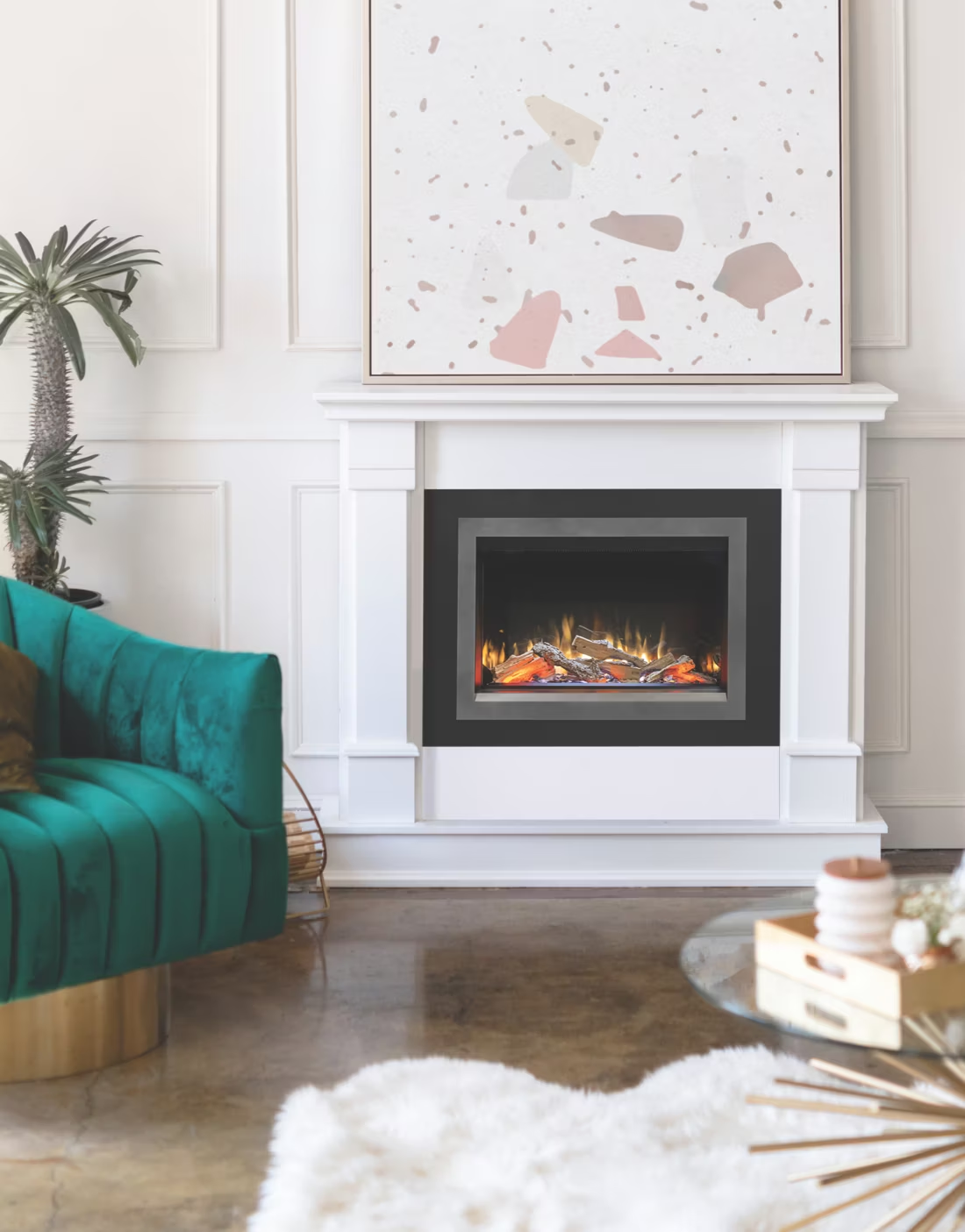
From Bozeman condos to Big Sky vacation homes, electric fireplaces bring instant warmth with no venting, no gas line, and no wood to haul—a smart fit for Gallatin County's fastest-growing neighborhoods. Find the right unit and connect with a trusted local dealer.
Every Project Starts From One of These Five Situations
The easiest fireplace to add to a growing county.
Gallatin County is one of the fastest-growing counties in Montana, and most of that growth—new condos in downtown Bozeman, townhomes in Four Corners, ski-in units at Big Sky, second homes near West Yellowstone—is happening in buildings where a masonry chimney or a new gas line simply isn't practical. With a long, cold winter season and a winter low average of 15°F, comparable to Duluth, Minnesota, Gallatin County homeowners still need real heat in the shoulder seasons and cold snaps. Electric fireplaces fill that gap without triggering a building permit fight over venting or clearances.
Most electric units here serve as zone heat and ambiance rather than a home's primary heat source—supplementing a furnace or boiler in a bedroom, basement, or bonus room, or standing in for a wood-burning appliance in an HOA-restricted condo where open flame isn't allowed. NorthWestern Energy serves most of the county's electric load, and because electric fireplaces produce zero combustion byproducts, they're also a clean option during the winter inversions and wildfire-smoke season that periodically trigger air quality advisories across the Gallatin Valley—no permit needed from Custer Gallatin National Forest, no wood smoke, and no flue to maintain.
Three steps. No salesperson until you're ready.
Tell us about your project
Your zip code, your situation, and the fuel you're leaning toward—or let the answers point you to one.
See what's actually available
The brands dealers within 100 miles genuinely carry—real options, never a catalog mirage.
Get your dealer & Project Guide
A trusted local dealer, plus the free Project Guide & Parts List that names every component of the job.
Frequently Asked Questions
How much does it cost to install an electric fireplace in Gallatin County?
Plug-in electric fireplaces and stoves are the least expensive option—often a few hundred dollars for the unit itself, with no professional installation required beyond a standard 120-volt outlet. Built-in electric inserts and wall-mount units that require a dedicated circuit or in-wall wiring typically run higher once an electrician is involved, but even on the high end, electric installations cost far less than a vented gas fireplace or a wood stove with Class A chimney pipe, since there's no venting, no gas line, and no masonry work involved. Local dealers serving Bozeman, Belgrade, and Big Sky can give you a firm quote based on the specific unit and whether new wiring is needed.
Is electric heat enough to keep a Gallatin County home warm through winter?
Not as a stand-alone primary heat source—not with a winter heating season as long and demanding as Gallatin County's, and winter lows that regularly sit in the teens or single digits. Electric fireplaces are built and sized for zone heating: warming a single room, taking the chill off a basement, or providing backup ambiance in a bedroom or living area while a furnace, boiler, or wood stove handles the rest of the house. Most units top out around 400 to 1,000 square feet of supplemental heating capacity. If you're looking for a whole-home heat source for a Big Sky cabin or a rural property outside Belgrade, a wood stove or gas fireplace is a better primary fit—electric works best alongside one of those, not in place of it.
Do I need a permit to install an electric fireplace in Gallatin County?
In most cases, no. Plug-in units that use a standard outlet don't require a permit. If you're installing a built-in electric insert or a wall-mount unit that needs a new dedicated circuit, an electrical permit is typically required and your electrician will pull it as part of the job—whether that's through the City of Bozeman Building Division or the Gallatin County Building Department for unincorporated areas and Big Sky. There's no chimney inspection, no gas line permit, and no Custer Gallatin National Forest cutting permit involved, which is part of what makes electric the fastest fireplace project to get through inspection.
What happens to my electric fireplace during a power outage?
It won't run. That's the trade-off with electric heat in a county where winter storms occasionally knock out power for hours at a time. NorthWestern Energy's grid is generally reliable, but rural parts of Gallatin County—especially outside Bozeman and Belgrade, and up toward Big Sky—can see longer outage windows during a hard winter storm. If backup heat during an outage matters to you, most local homeowners pair an electric fireplace for everyday ambiance with a wood stove or fireplace insert for actual emergency heat; Custer Gallatin National Forest issues cutting permits from May through October for $5 to $20 per cord if you want to build a supply of lodgepole pine, ponderosa pine, or Douglas fir for that backup unit.
What kind of electric fireplace works best for a condo or rental property?
Wall-mount and built-in electric inserts are the most popular choice for the condo and townhome developments going up around Four Corners, downtown Bozeman, and the Big Sky base area, mostly because HOA rules in these buildings often prohibit anything that requires venting or an open flame. A recessed wall-mount unit reads like a real fireplace without any structural changes to a shared building, and it's also the go-to choice for the area's large short-term rental and Airbnb market near Big Sky and West Yellowstone, where property owners want the visual of a fireplace without the liability or maintenance of a wood-burning unit.
How much does it cost to run an electric fireplace?
Running costs depend on the wattage of the heater element and how many hours a day you use it, but most electric fireplaces draw somewhere between 750 and 1,500 watts on the heat setting. At typical NorthWestern Energy residential rates, that generally works out to well under the cost of running a space heater around the clock—and most owners in Gallatin County run their unit a few hours in the evening rather than continuously, since it's supplementing rather than replacing the home's main heat source.
Electric vs. gas vs. wood—which fireplace is right for my Gallatin County home?
Wood offers real heat output, operation during power outages, and pairs with the low-cost cutting permits available through Custer Gallatin National Forest—a common choice for rural properties outside Bozeman and Belgrade. Gas delivers instant, consistent heat and works well where natural gas or propane is already available, without the ash and wood-hauling of a wood stove. Electric offers the lowest installation cost, zero emissions (a real advantage during winter inversion or wildfire-smoke air quality advisories), and no venting requirements at all—but it won't function without power and isn't sized to be a home's primary heat source. Many households in Gallatin County end up with two: wood or gas for real heat, electric for ambiance in a secondary room or a condo where venting isn't an option.
Can an electric fireplace be installed anywhere in the house?
Almost. Because there's no venting, chimney, or gas line to route, electric fireplaces can go in interior rooms, basements, bedrooms, and upper-floor condo units that would never qualify for a wood stove or vented gas insert. The only real constraints are electrical—a plug-in unit needs a nearby outlet on an unshared circuit, and a hardwired built-in needs an electrician to run a dedicated line. That flexibility is a big part of why electric has become common in the newer construction going up across Bozeman, Belgrade, and the Big Sky area, where floor plans don't always include a masonry chase or a place to run B-vent.
Do electric fireplaces produce real heat or just the look of a flame?
Both, depending on the model and setting. Every electric fireplace has an LED or flame-effect display that can run with the heater off, purely for ambiance—useful during Gallatin Valley's wildfire smoke season when burning wood outdoors or running an open-flame appliance isn't advisable. Flip on the heat setting and most units put out real, usable warmth for a single room via a built-in fan-forced or infrared heater. It's not going to replace a furnace on a 15-degree January night, but for supplemental zone heat or a smoke-free flame during an air quality advisory, it does both jobs well.
Can I put a TV above my fireplace?
Yes—with an asterisk. Fireplaces are hot and TVs don't like heat. Either put a mantel between them to deflect rising warmth, or choose a fireplace with heat-management technology that creates a cool zone on the wall above—the wall stays around 125 degrees, barely warm, while the room still gets full heat. If you like clean lines and don't want a mantel, heat management is the answer.
Do electric fireplaces actually produce heat?
Yes—most put out around 4,800–5,000 BTUs from a standard outlet, which comfortably warms a bedroom, office, or den as a comfort-zone heater. What they won't do is carry a whole house the way wood, gas, or pellet can. Think of electric as ambiance-first with honest supplemental heat: flames on with no heat in July, flames plus warmth in January.
Can a fireplace actually lower my heating bill?
Yes—by creating a comfort zone. A furnace heats every square foot of the house just to warm the one room you're in; a gas fireplace on low burns roughly a sixth of the gas a typical furnace does. Set the furnace around 55–60 degrees as a baseline, then heat the rooms your family actually uses. Families who heat this way commonly save $20–$60 a month.
What is an in-home preview and do I need one?
It's a visit where a hearth professional measures your space, confirms the model you picked actually works in your home, and walks the specs—framing, gas line, venting, finish work—before anything is ordered. Some details you just can't know until you see the house. Never make a down payment without one; it's the single most-skipped step that burns buyers.
Stove and Fireplace Dealers in Gallatin County
Listings include WhyFire partner dealers, dealers we have verified as authorized for the brands we recommend, and established local businesses that carry hearth products. Every listing shows which one it is. The ones marked Preferred run on WhyFire's software, so they can show you real pricing and book your appointment right here. No manufacturer pays for placement. How we verify dealers →
Bozeman Fireplaces
Find your electric fireplace in Gallatin County.
Tell us about your home—condo, cabin, or new build—and we'll match you with the right electric fireplace or insert, plus a free Project Guide & Parts List with the exact parts and a trusted local dealer to install it.
Find Your Fireplace →