
Add Real Warmth Without Adding a Chimney.
Zone heat and ambiance for Gallatin Valley homes, with no venting, no gas line, and no wood to split. Find the right unit and connect with a trusted local dealer.
Every Project Starts From One of These Five Situations
Heat that plugs in and works.
Manhattan sits in the Gallatin Valley at 4,233 feet, just west of Bozeman, and it earns its cold: a winter heating load in roughly the same range as Fargo, North Dakota, with average winter lows around 10 degrees and colder snaps common during valley temperature inversions. In a climate this demanding, an electric fireplace is not going to replace the propane furnace, wood stove, or heat pump doing the primary heavy lifting in most Manhattan homes. What it does well is zone heat: a back bedroom, a converted garage, a home office, or a basement that the main system never quite reaches.
NorthWestern Energy serves the electric grid here at roughly 14.23 cents per kWh, which makes running an electric insert or built-in for supplemental heat inexpensive compared to extending gas lines or adding a second wood stove. There is also an air-quality angle worth noting: Gallatin County deals with winter inversions and wildfire-season smoke, and an electric unit adds zero particulate emissions to a valley that already traps wood smoke on cold, still days. For homeowners who want the look and instant ambiance of a fire without touching a chimney, a plug-in or built-in electric unit is a straightforward, low-risk addition.
Three steps. No salesperson until you're ready.
Tell us about your project
Your zip code, your situation, and the fuel you're leaning toward—or let the answers point you to one.
See what's actually available
The brands dealers within 100 miles genuinely carry—real options, never a catalog mirage.
Get your dealer & Project Guide
A trusted local dealer, plus the free Project Guide & Parts List that names every component of the job.
Frequently Asked Questions
How much does an electric fireplace installation cost in Manhattan?
A plug-in electric insert that slides into an existing fireplace opening or media console typically runs $300 to $700 installed, since it just needs a standard 120-volt outlet. A built-in electric fireplace with custom framing, a mantel surround, and a dedicated 240-volt circuit runs higher, usually $1,500 to $4,000, depending on the wall construction and whether an electrician needs to run new wiring from the panel. Because Manhattan homes vary widely in age and panel capacity, a local dealer will confirm your electrical setup before quoting a firm number.
Will an electric fireplace actually heat my house in a Manhattan winter?
Not as a primary system, and any honest local dealer will tell you the same. With a winter heating load on par with Fargo, North Dakota and average lows around 10 degrees, Manhattan homes need a furnace, boiler, heat pump, or wood stove carrying the real heating load. Electric fireplaces are resistance heaters, most putting out 4,600 to 5,000 BTUs on high, which is enough to noticeably warm a single room but not a whole house on a subzero night. Think of it as a zone heater for the room you're actually sitting in, not a replacement for central heat.
What does it cost to run an electric fireplace on NorthWestern Energy rates?
Most electric fireplace inserts draw about 1,500 watts on their heat setting. At NorthWestern Energy's residential rate of roughly 14.23 cents per kWh, that works out to about 21 cents an hour to run on high, or a few dollars for an evening of use with the flame effect on and the heater cycling. Running just the flame effect without heat draws only 30 to 100 watts, which costs a fraction of a cent per hour, so many owners run the visual effect year-round and reserve the heater for cold evenings.
Do I need a permit to install an electric fireplace in Manhattan?
A plug-in unit that uses an existing outlet doesn't require a permit. A built-in electric fireplace that needs a new dedicated circuit does involve electrical work, and Gallatin County requires a permit for new circuit installations, typically pulled by the licensed electrician doing the wiring. Most hearth dealers who install built-in units either handle this directly or coordinate with an electrician as part of the job, so it's rarely something the homeowner has to manage alone.
What happens to my electric fireplace during a power outage?
It won't run. Electric fireplaces need grid power for both the flame effect and the heater, so during a winter outage they go dark along with everything else. That's a real consideration in the Gallatin Valley, where storms occasionally knock out power for hours at a time. Homeowners who want fire that works when the grid doesn't typically keep a wood stove or a vented propane unit as backup, using the electric fireplace for everyday convenience and ambiance rather than emergency heat.
Electric vs. wood—which makes more sense for a Manhattan home?
Wood is still the practical choice for real heat output and off-grid reliability here, and the Custer Gallatin National Forest issues cutting permits for $5 to $20 per cord from May through October, so self-cut lodgepole pine, ponderosa pine, and douglas fir are affordable if you're willing to do the work. Electric wins on convenience and air quality—no smoke, no ash, no chimney maintenance, and no contribution to the wood smoke that builds up during winter inversions in the valley. Many Manhattan households end up with both: a wood stove for serious cold and backup heat, and an electric fireplace in a secondary room for daily ambiance without hauling wood every time.
What's the difference between an electric fireplace, insert, and stove?
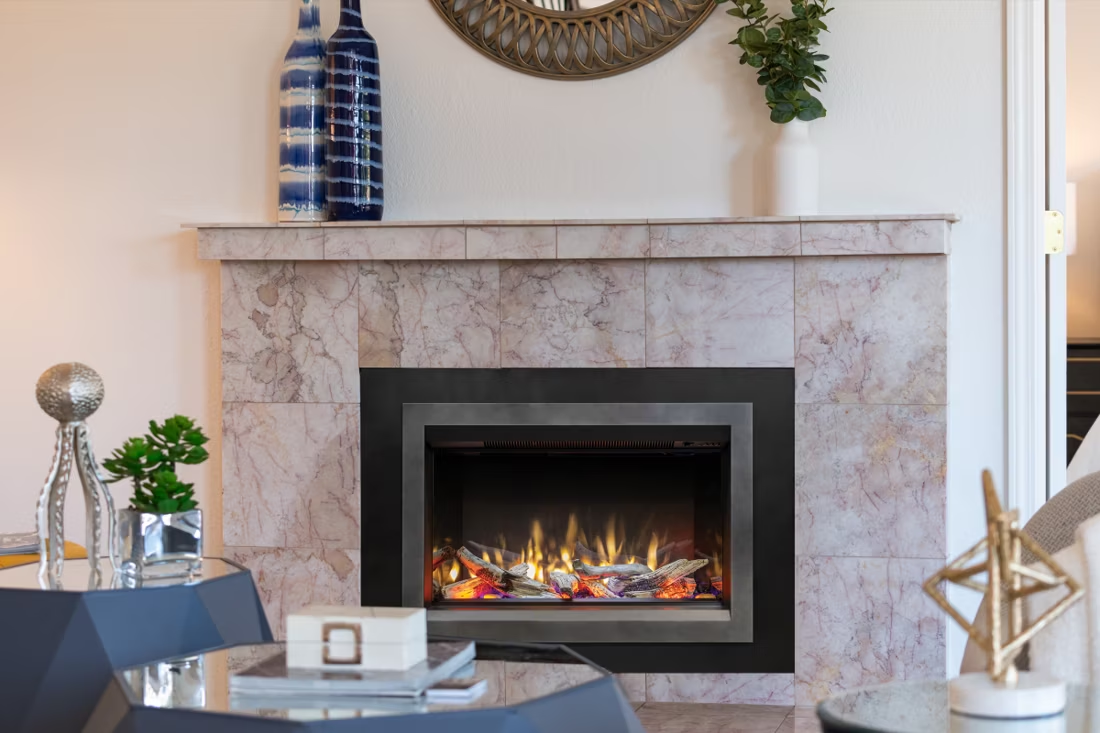
An electric fireplace is usually a built-in unit set into a wall or media cabinet, designed to look like a finished feature rather than a freestanding appliance. An electric insert is sized to slide into an existing masonry or factory-built fireplace opening, giving an old unused fireplace a working flame effect and some supplemental heat without any venting changes. An electric stove is a freestanding cabinet styled like a wood or pellet stove, useful in a room without any existing fireplace opening. All three plug into standard household power and skip venting entirely, so the choice mostly comes down to the look you want and whether you're filling an existing opening or starting from scratch.
What should I look for in an electric fireplace for a Montana home?
Look for a unit with a strong heater rating (most top out around 5,000 BTUs) if you want real supplemental warmth, and a realistic flame technology if ambiance matters most to you—brands like Dimplex, Napoleon, and Amantii are common choices carried by hearth dealers in the Bozeman-Manhattan area. If the unit will run daily through a long winter, check the fan noise level and look for models with a thermostat rather than just high/low settings, since that gives more control over both comfort and your electric bill.
Where can I get a firm quote for an electric fireplace installation near Manhattan?
Because pricing depends on your electrical panel capacity, wall construction, and whether you're filling an existing opening or building a new surround, the only reliable way to get a firm number is an in-home look from a local dealer. A trusted installer serving the Gallatin Valley can confirm what your home's wiring supports, size the right unit for the room, and tell you honestly whether a plug-in insert will do the job or whether a dedicated circuit is worth the extra cost.
Can I put a TV above my fireplace?
Yes—with an asterisk. Fireplaces are hot and TVs don't like heat. Either put a mantel between them to deflect rising warmth, or choose a fireplace with heat-management technology that creates a cool zone on the wall above—the wall stays around 125 degrees, barely warm, while the room still gets full heat. If you like clean lines and don't want a mantel, heat management is the answer.
Do electric fireplaces actually produce heat?
Yes—most put out around 4,800–5,000 BTUs from a standard outlet, which comfortably warms a bedroom, office, or den as a comfort-zone heater. What they won't do is carry a whole house the way wood, gas, or pellet can. Think of electric as ambiance-first with honest supplemental heat: flames on with no heat in July, flames plus warmth in January.
Can a fireplace actually lower my heating bill?
Yes—by creating a comfort zone. A furnace heats every square foot of the house just to warm the one room you're in; a gas fireplace on low burns roughly a sixth of the gas a typical furnace does. Set the furnace around 55–60 degrees as a baseline, then heat the rooms your family actually uses. Families who heat this way commonly save $20–$60 a month.
Can I install a fireplace myself?
If you're putting a fire in your house on purpose, it's best to work with an expert. Unless you're genuinely experienced in framing, gas line, vent pipe, and the national code on clearances to combustibles, have a professional do it—and ideally the same company that sells you the fireplace, so warranty, service, and liability all live under one roof.
Nearby Dealers
Hearth shops serving Manhattan and the surrounding area. Every listing shows whether it is a WhyFire partner, a dealer we have verified as authorized for the brands we recommend, or a local business carrying hearth products. No manufacturer pays for placement. How we verify dealers →
Bozeman Fireplaces
Electric Service in Manhattan
An electric fireplace's heater draws about 1,500 watts—pennies per hour at local rates.
Northwestern Energy LLC - (Mt)
Find your electric fireplace in Manhattan.
Tell us a bit about your home and we'll put together a free Project Guide & Parts List for your electric fireplace project, matched with a trusted local dealer who can size the unit, handle any electrical work, and get it installed right.
Find Your Fireplace →