
Add Real Ambiance to Your Bozeman Home—No Chimney Required.
Zone heat and real flame-look ambiance for Gallatin Valley homes, condos, and rentals—without venting, gas lines, or a masonry chimney. Find the right unit and connect with a trusted local dealer.
Every Project Starts From One of These Five Situations
The no-venting option for Bozeman's long heating season.
Bozeman sits at 4,800 feet in the Gallatin Valley, where winter lows average 15°F and the area logs a long, demanding heating season—nearly as long and demanding as Madison, Wisconsin's. That kind of cold means most Bozeman homes lean on a furnace or heat pump as primary heat, with wood and gas appliances doing the heavy lifting for supplemental zone heat. Electric fireplaces occupy a different, still useful lane here: they don't replace a furnace on a sub-zero January night, but they're the go-to option for downtown condos, MSU-area rentals, and HOA-restricted buildings where a wood or gas appliance simply isn't allowed.
Because there's no combustion, no flue, and no gas line to run, electric units install almost anywhere with a standard outlet, which keeps costs and timelines far lower than wood or gas projects. That matters during Gallatin Valley's winter inversions and wildfire-smoke summers, when adding another combustion source to a tightly sealed home isn't ideal. NorthWestern Energy serves electric accounts throughout Bozeman at a residential rate around $0.1423 per kWh, so running an electric insert or wall unit for a few hours of evening ambiance costs only pennies more than any other plug-in appliance in the house.
Three steps. No salesperson until you're ready.
Tell us about your project
Your zip code, your situation, and the fuel you're leaning toward—or let the answers point you to one.
See what's actually available
The brands dealers within 100 miles genuinely carry—real options, never a catalog mirage.
Get your dealer & Project Guide
A trusted local dealer, plus the free Project Guide & Parts List that names every component of the job.
Frequently Asked Questions
How much does an electric fireplace installation cost in Bozeman?
Electric fireplaces are the least expensive hearth option to install in Bozeman precisely because there's no venting, chimney, or gas line involved. A basic plug-in insert or freestanding unit can run as little as a few hundred dollars in equipment with no installation labor at all. Built-in wall units or linear electric fireplaces set into a custom surround typically land between roughly $1,500 and $4,000 once framing, an electrician for a dedicated circuit, and finish carpentry are factored in. Compare that to the $4,500+ starting point for wood or gas projects in Gallatin County, and it's clear why electric is popular for secondary rooms, basements, and rental units.
Can an electric fireplace actually heat a room in Bozeman's climate?
Yes, but with a caveat worth being honest about. Most residential electric fireplaces top out around 5,000–5,200 BTU, which is enough to noticeably warm a single bedroom or living area on a mild evening but won't keep pace with a Gallatin Valley night at 15°F or below without backup from your furnace. Local homeowners typically use electric units for zone heating—taking the edge off a chilly home office or guest room—rather than as a stand-alone heat source. If you're trying to heat a drafty older Bozeman home through a full winter, a wood insert or gas unit sized for our long, demanding heating season is the more realistic primary option.
Do I need a permit to install an electric fireplace in Bozeman?
In most cases, no. A plug-in electric fireplace that uses an existing outlet doesn't trigger a building permit through the City of Bozeman or Gallatin County. If you're having a built-in wall unit installed that requires a new dedicated circuit, the electrical work itself typically needs to be pulled by a licensed electrician and may require an electrical permit—but there's no chimney, flue, or combustion-appliance inspection to coordinate the way there is with wood or gas. This is one of the reasons electric is the fastest option to get installed in condos and apartments around downtown Bozeman and the MSU campus area.
Electric vs. wood—which makes more sense for my Bozeman home?
Wood remains a strong choice here: the Custer Gallatin National Forest issues cutting permits from May through October for $5 to $20 per cord, and species like lodgepole pine, ponderosa pine, Douglas fir, and aspen are all locally abundant. Wood also keeps working during a power outage, which matters when a Gallatin Valley storm knocks out lines. Electric can't do that—it's fully dependent on grid power from NorthWestern Energy. Where electric wins is convenience, cost, and flexibility: no wood to split and stack, no ash, no chimney sweep, and it's often the only hearth option allowed in a condo lease or HOA. Many Bozeman households end up with both—wood or gas for real heat and backup, electric for a low-maintenance secondary room.
Will an electric fireplace work during a power outage in Bozeman?
No—this is worth being direct about. Electric fireplaces require grid power to run their heating element, flame effect, and fan, so they shut off the moment NorthWestern Energy service drops, which can happen during a heavy Gallatin Valley snowstorm. If backup heat during outages is a priority for your household, a wood stove or a battery-backup gas unit is a better fit than electric. Electric fireplaces are best thought of as a convenience and ambiance appliance for a home that already has a reliable primary heat source.
What size electric fireplace or insert do I need?
Sizing an electric unit is mostly about the space and look you want rather than raw heat output, since even the largest residential models max out around 5,000 BTU regardless of size. A 30-to-40-inch linear unit suits a standard living room wall or basement rec room; smaller 26-to-30-inch inserts work well retrofitted into an existing fireplace opening in an older Bozeman home. If you want the fireplace to meaningfully warm a chilly upstairs bedroom or a converted garage, look for a model with a higher-wattage heater (1,500 watts is standard) and plan to run it alongside your existing furnace rather than in place of it.
What does it cost to run an electric fireplace in Bozeman?
At NorthWestern Energy's residential rate of about $0.1423 per kWh, a standard 1,500-watt electric fireplace running on high heat costs roughly 21 cents per hour to operate—about $1.70 for an eight-hour evening. Most owners run the heater intermittently and the flame-only effect (which uses only a few watts) far more often, so realistic monthly costs for evening ambiance use typically land in the $10 to $25 range. That's meaningfully cheaper than running a whole-house furnace to compensate for a chilly single room.
What types of electric fireplaces are available for Bozeman homes?
Three main formats work well locally: electric inserts that slide into an existing masonry fireplace opening (a good retrofit for older Bozeman homes with an unused wood-burning fireplace), built-in wall units or linear fireplaces framed into new construction or a remodel, and freestanding electric stoves that mimic a wood stove's look without any venting. Condos and rentals near downtown or MSU most often go with a plug-in insert or freestanding stove since neither requires electrical or structural work, while homeowners doing a remodel more often choose a built-in linear unit for a clean, modern look.
Which electric fireplace brands hold up well for supplemental heat in Montana homes?
Look for units with a true 1,500-watt heating element and a thermostat rather than a single fixed setting—that gives you actual room-warming capability rather than flame effect alone. Brands like Dimplex and Napoleon are widely carried by hearth dealers in the region and offer both insert and linear wall-unit formats. For a Bozeman home, ask your local dealer about models with a remote thermostat and a realistic flame technology, since the appliance is doing double duty here as both a heat source on shoulder-season evenings and a visual focal point through the long Gallatin Valley winter.
Do electric fireplaces actually produce heat?
Yes—most put out around 4,800–5,000 BTUs from a standard outlet, which comfortably warms a bedroom, office, or den as a comfort-zone heater. What they won't do is carry a whole house the way wood, gas, or pellet can. Think of electric as ambiance-first with honest supplemental heat: flames on with no heat in July, flames plus warmth in January.
Can I put a TV above my fireplace?
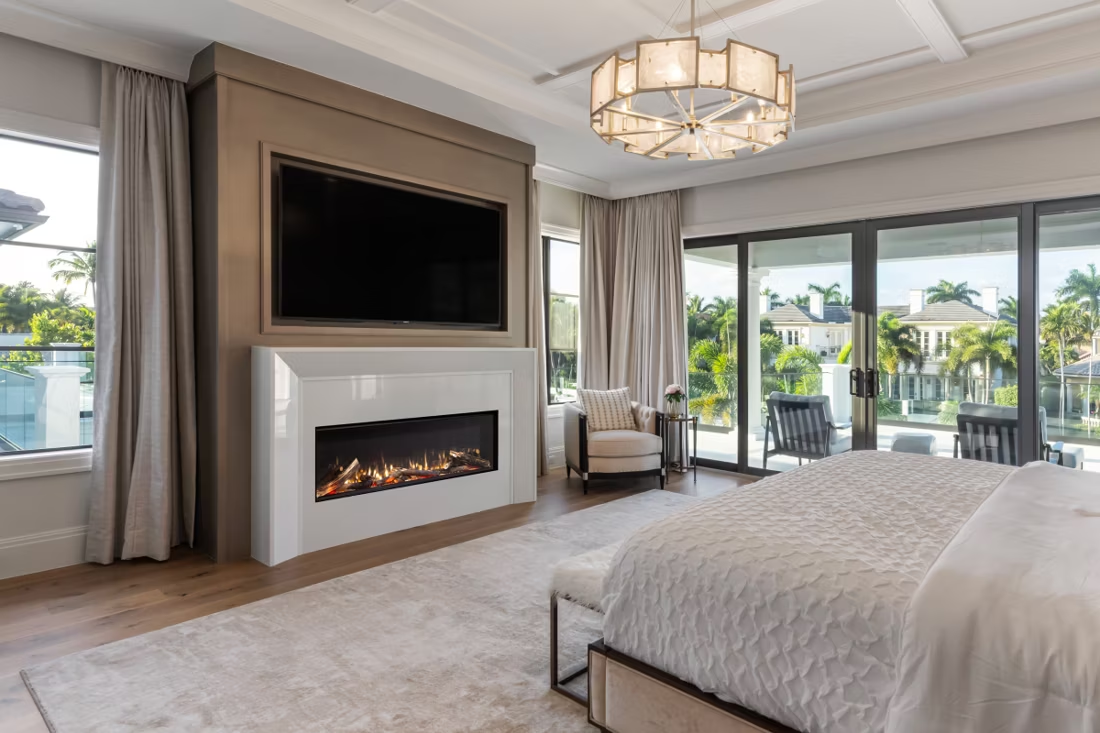
Yes—with an asterisk. Fireplaces are hot and TVs don't like heat. Either put a mantel between them to deflect rising warmth, or choose a fireplace with heat-management technology that creates a cool zone on the wall above—the wall stays around 125 degrees, barely warm, while the room still gets full heat. If you like clean lines and don't want a mantel, heat management is the answer.
How much should I budget for a fireplace?
For an average home—covering the fireplace, the vent pipe, and basic installation—a budget between $3,900 and $5,500 gives you a lot of options across wood, gas, and pellet. By the time you add finish work, gas line, and electrical, the average complete installation lands between $5,000 and $12,000 all-in. In a remodel or new build, a good rule is to put about 2.5% of the total project cost toward the fireplace.
What is an in-home preview and do I need one?
It's a visit where a hearth professional measures your space, confirms the model you picked actually works in your home, and walks the specs—framing, gas line, venting, finish work—before anything is ordered. Some details you just can't know until you see the house. Never make a down payment without one; it's the single most-skipped step that burns buyers.
Nearby Dealers
Hearth shops serving Bozeman and the surrounding area. Every listing shows whether it is a WhyFire partner, a dealer we have verified as authorized for the brands we recommend, or a local business carrying hearth products. No manufacturer pays for placement. How we verify dealers →
Bozeman Fireplaces
Warmstone Fireplaces & Designs
Electric Service in Bozeman
An electric fireplace's heater draws about 1,500 watts—pennies per hour at local rates.
Northwestern Energy LLC - (Mt)
Find your electric fireplace in Bozeman.
Tell us about your home and we'll put together a free Project Guide & Parts List—the right electric fireplace or insert for your space, plus a trusted local Bozeman dealer to install it.
Find Your Fireplace →