
Reliable heat for Judith Basin winters—without the wood pile.
With a winter season comparable to Bismarck, ND and winter lows averaging 13°F, Fergus County heats hard and heats long. A pellet stove or insert delivers thermostat-controlled warmth for Lewistown and the surrounding basin without the bucking, splitting, and stacking that cordwood heat demands.
Every Project Starts From One of These Five Situations
Consistent output for a county built around a long heating season.
Fergus County sits in the Judith Basin, ringed by the Snowy, Judith, and Moccasin Mountains, with Lewistown as the county seat. At a 6B climate zone with a heating season comparable to Bismarck, ND, the winters here run long, cold, and windy enough that a heat source you don't have to babysit through a January night has real appeal. Winter lows average 13°F across the basin, and ranch and farm properties outside town often deal with longer stretches without easy road access to town for firewood runs.
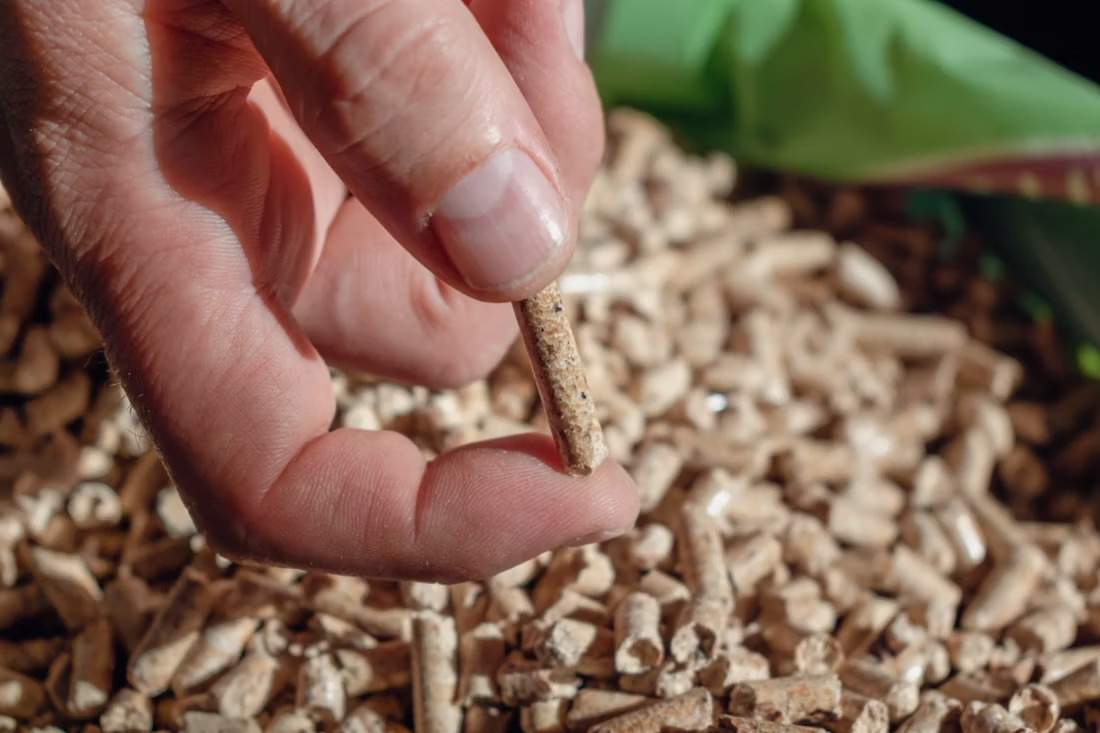
The county's wood species—lodgepole pine, ponderosa pine, douglas fir, and aspen—have long supported traditional cordwood heating, but not every household has the time, tools, or storage for a woodpile, and wildfire smoke concerns in late summer and early fall have pushed some homeowners toward cleaner-burning alternatives. Pellet appliances burn compressed wood fuel from regional brands like Bear Mountain, Lignetics, and Forest Energy, producing far less visible smoke than an open wood fire and giving Fergus County homeowners a hands-off, thermostat-controlled option that still qualifies as genuine supplemental or primary heat during outages of the propane truck or a cold snap on the grid.
Three steps. No salesperson until you're ready.
Tell us about your project
Your zip code, your situation, and the fuel you're leaning toward—or let the answers point you to one.
See what's actually available
The brands dealers within 100 miles genuinely carry—real options, never a catalog mirage.
Get your dealer & Project Guide
A trusted local dealer, plus the free Project Guide & Parts List that names every component of the job.
Frequently Asked Questions
How much does a pellet stove installation cost in Fergus County?
A typical pellet stove or insert installation runs in the neighborhood of $3,000 to $6,500, depending on the unit, whether it's a freestanding stove or an insert into an existing fireplace, and whether venting needs to be run through an exterior wall versus an existing chimney. Rural properties outside Lewistown—out toward Hilger, Grass Range, or Winifred—sometimes see a modest travel charge added to the install quote given the distances a certified installer has to cover across the basin. A local dealer will give you a firm number after seeing your home and existing venting setup.
What size pellet stove do I need for a Fergus County home?
Sizing depends on square footage, insulation, ceiling height, and whether the stove is meant to be your primary heat or a supplement to a furnace. Given the county's long, cold winter season comparable to Bismarck, ND and 13°F average winter low, most Fergus County homes should size toward the upper end of a manufacturer's recommended range rather than the lower end—older farmhouses and ranch homes with less insulation in particular. A mid-size unit (rated for 1,500–2,000 sq ft) covers most in-town Lewistown homes; larger or draftier rural properties often do better with a unit rated for 2,000+ sq ft, or with supplemental heat in a second zone. A local dealer will size this correctly during an in-home visit rather than off a square-footage chart alone.
Where can I buy wood pellets in Fergus County?
Regional brands including Bear Mountain, Lignetics, and Forest Energy are the pellets most commonly stocked or ordered through farm and ranch supply stores and hardware retailers serving the Lewistown area. Given the distances involved in central Montana, many homeowners buy pellets by the pallet (roughly a ton per pallet, 50 forty-pound bags) rather than by the bag, both for cost efficiency and to avoid multiple trips into town during winter storms. Ask your local dealer which brands they stock or can order—freight costs from pellet mills can affect price more in a rural county like Fergus than in denser markets.
Will my pellet stove work during a power outage?
No—pellet stoves rely on electricity to run the auger that feeds fuel and the fan that distributes heat, so a standard unit will shut down when the power goes out. This matters in Fergus County, where winter storms and wind events can knock out rural power lines for hours or longer. Homeowners who want pellet convenience but also need outage-proof backup heat often pair a pellet stove with a small generator (many units draw under 100 watts and can run off a modest backup power source) or keep a wood-burning appliance as a secondary heat source. Ask your local dealer about a unit's exact power draw if outage resilience is a priority for your property.
Do I need a permit to install a pellet stove in Fergus County?
Most new pellet stove and insert installations require a building permit, typically through Fergus County's building department for installations outside city limits, or through the City of Lewistown if the home is within town. The permit process generally covers verifying clearances, venting, and hearth pad requirements against current codes. Most established local dealers handle this paperwork as part of the installation, so it's worth asking upfront whether permitting is included in your quote.
Pellet stove vs. wood stove—which makes more sense for my Fergus County home?
Wood stoves burning local lodgepole pine, ponderosa pine, douglas fir, or aspen offer the lowest ongoing fuel cost if you can cut or source your own cordwood, and they keep working with zero electricity—a real advantage during rural power outages. Pellet stoves trade that off-grid resilience for convenience: load a hopper instead of splitting and stacking a woodpile, and get more even, thermostat-controlled heat with far less visible smoke, which matters during wildfire smoke season when air quality is already a concern. For in-town Lewistown homes with reliable power and no interest in a woodpile, pellet usually wins on convenience. For ranch and farm properties further from town where power interruptions are more common, wood remains the more resilient primary choice, sometimes paired with a pellet unit for everyday convenience.
How often does a pellet stove need to be cleaned and serviced?
Pellet stoves need more frequent attention than most people expect, even though they're cleaner-burning than cordwood. The ash pan should be emptied every few days to weekly depending on use, the burn pot cleaned weekly during heavy winter use, and the exhaust venting and hopper should get a full inspection and cleaning at least once a season—typically in late summer before the Fergus County heating season ramps up in earnest. Neglecting the burn pot is the most common cause of poor ignition and reduced heat output in pellet units, so staying ahead of it during a long central Montana winter is worth the habit.
Are pellet stoves affected by wildfire smoke restrictions in Fergus County?
Wildfire smoke is a recognized air quality concern in the region during late summer and early fall, and open burning or debris burning restrictions can go into effect during those periods. Pellet stoves burn compressed wood fuel far more completely and cleanly than an open wood fire, and they're generally not the target of the kind of curtailment periods that sometimes apply to older, uncertified wood stoves in other Montana counties. That said, rules can vary and change, so it's worth checking current guidance with your local dealer or county office if you're installing right before fire season.
Which pellet brand should I buy—Bear Mountain, Lignetics, or Forest Energy?
All three are established regional brands with good track records, and the right choice often comes down to what your local dealer stocks reliably rather than a meaningful difference in heat output. Bear Mountain and Lignetics pellets are widely distributed across the Northwest and Northern Rockies, while Forest Energy has a strong presence as well. Ash content and consistency can vary slightly between brands and even between batches, so if you notice more clinkers or ash buildup than expected, it's worth trying a different brand before assuming there's a problem with the stove itself. Your local dealer can tell you which brand burns most consistently in the units they install.
Why is a fireplace insert so efficient?
An insert does two things: it seals the chimney completely, so you stop losing air you already paid to heat, and it radiates warmth into the room through the firebox and glass. Most add a heat-exchange fan that pulls cool room air underneath, wraps it around the hot firebox, and pushes it back out warm. Your home is more efficient before you've even lit the first fire.
How often does a pellet stove need cleaning?
A clean pellet stove is a happy pellet stove. Plan on cleaning the burn pot about once a week when you're burning regularly—ash and clinkers gum up the air holes just like a pellet barbecue. Most pellet stove problems trace back to skipped cleaning that nobody explained up front. Some designs make it easy with a trapdoor burn pot: pull a lever and the gunk drops into the ash pan.
How much should I budget for a fireplace?
For an average home—covering the fireplace, the vent pipe, and basic installation—a budget between $3,900 and $5,500 gives you a lot of options across wood, gas, and pellet. By the time you add finish work, gas line, and electrical, the average complete installation lands between $5,000 and $12,000 all-in. In a remodel or new build, a good rule is to put about 2.5% of the total project cost toward the fireplace.
Can a fireplace actually lower my heating bill?
Yes—by creating a comfort zone. A furnace heats every square foot of the house just to warm the one room you're in; a gas fireplace on low burns roughly a sixth of the gas a typical furnace does. Set the furnace around 55–60 degrees as a baseline, then heat the rooms your family actually uses. Families who heat this way commonly save $20–$60 a month.
Stove and Fireplace Dealers in Fergus County
Pellet Brands Stocked Around Fergus County
Manufacturers will point you to the nearest stocking dealer.
Find your pellet stove in Fergus County.
Tell me a bit about your home and I'll match you with a trusted local dealer serving Fergus County, plus a free Project Guide & Parts List—the exact parts, including your vent kit, for your pellet stove project in the Judith Basin.
Find Your Fireplace →