
Warm a room without touching your chimney in Fergus County.
For homes around Lewistown and the Judith Basin, electric heat fills the gaps a woodstove or propane furnace can't reach—no venting, no gas line, no masonry work. Find the right unit and connect with a trusted local dealer.
Every Project Starts From One of These Five Situations
A plug-in heat source for a place where wood and propane still do the heavy lifting.
Fergus County is ranch country—roughly 4,000 square miles of Judith Basin farmland and Missouri River Breaks, with a population under 8,000 concentrated around Lewistown. With a long, cold heating season and an average winter low of 13°F, this is a climate more comparable to Bismarck, ND, or International Falls, MN, than to anywhere along the coast, and it's a place where wood (lodgepole pine, ponderosa pine, Douglas fir, aspen) and propane have historically carried the primary heating load, since natural gas infrastructure is limited outside town. Electric fireplaces are standard here, but their role is specific: they're zone heat for a bonus room, a converted porch, a manufactured home addition, or a bedroom too far from the woodstove—not a stand-alone answer to a Fergus County winter.
There's also a clean-air angle worth mentioning. Central Montana summers bring wildfire smoke, and on the days when a burn ban or heavy haze makes running the woodstove unappealing, an electric insert gives you fire-like ambiance and real supplemental warmth without adding a single particle to the air. What electric can't do is keep you warm through a rural power outage—a real consideration on the Judith Basin's open plains, where a February ground blizzard can knock out lines for hours or longer. Most homeowners here treat electric as the convenient, no-installation-hassle option for everyday rooms, and lean on wood or propane for the nights when the grid can't be trusted.
Three steps. No salesperson until you're ready.
Tell us about your project
Your zip code, your situation, and the fuel you're leaning toward—or let the answers point you to one.
See what's actually available
The brands dealers within 100 miles genuinely carry—real options, never a catalog mirage.
Get your dealer & Project Guide
A trusted local dealer, plus the free Project Guide & Parts List that names every component of the job.
Frequently Asked Questions
How much does an electric fireplace installation cost in Fergus County?
Plug-in electric fireplace inserts and freestanding units—the kind that drop into an existing opening or sit against a wall on a standard 120V outlet—typically run $400 to $1,500 installed, including any surround or mantel work. Larger built-in electric fireplaces that need a dedicated 240V circuit run higher, often $1,200 to $2,500, once an electrician runs new wiring in an older Lewistown-area home. Because there's no combustion, no flue, and no gas line, electric installs are consistently the least expensive and fastest option of any fuel type in the county—most jobs are done in a day.
Do I need a 240V circuit, or will a standard outlet work?
Most electric fireplace inserts and mantel units on the market run on a standard 120V household outlet—no electrician required beyond confirming the circuit isn't overloaded. Larger built-in units, especially wide linear models meant to be a room's focal point, often call for a dedicated 240V circuit for full heat output. If you're retrofitting an older farmhouse or ranch home around Fergus County that wasn't wired with a spare 240V line, budget for an electrician to add one. A local dealer can tell you which spec a given model needs before you buy.
Is an electric fireplace enough heat for a Fergus County winter?
On its own, no—not as a primary heat source. Most electric fireplace inserts top out around 5,000 to 10,000 BTU, which is fine for taking the chill off a single room but not enough to carry a home through an average winter low of 13°F, let alone the sub-zero stretches that hit the Judith Basin most winters. Electric works best paired with a home's existing furnace, propane system, or woodstove—heating the room you're actually sitting in without running the whole house's system harder than it needs to.
Will my electric fireplace still work if the power goes out?
No—and this matters more in Fergus County than in most places. Electric fireplaces require grid power to run, so during a rural outage (common during winter storms across the Judith Basin) they go dark along with everything else, unlike a wood stove that keeps producing heat independent of the electrical grid. If a Fergus County home's only heat source is electric, that's worth reconsidering. Most local homeowners pair an electric unit for everyday convenience with a wood or propane appliance as the actual cold-weather and outage backup.
Do I need a permit to install an electric fireplace in Fergus County?
Usually not for a plug-in unit—there's no combustion, no venting, and no gas line, so most jurisdictions, including Fergus County's building office, don't require a permit for a standard 120V insert or freestanding electric fireplace. If your installation involves adding a new 240V circuit or any panel work, the electrician doing that portion will typically pull an electrical permit as a matter of code compliance, separate from any fireplace-specific approval.
What's the best electric fireplace for a cold-climate home like mine?
Look for units with a true heater rating (5,000 BTU or higher) rather than purely decorative models, since a Fergus County room can lose heat quickly through single-pane windows in an older ranch house. Brands like Dimplex and Napoleon build electric inserts with variable-speed fan heaters designed to actually warm a room, not just flicker. For a bonus room or addition without existing ductwork, a 240V built-in linear unit will outperform a small 120V plug-in model on cold days. A local dealer can match wattage to your room's square footage and window exposure.
What's the difference between an electric insert, a built-in electric fireplace, and a freestanding electric stove?
An electric insert is sized to slide into an existing fireplace opening or mantel surround, often replacing a wood-burning firebox that's no longer used. A built-in electric fireplace is installed into new framing—common in additions or remodels around Lewistown where there's no existing chimney at all. A freestanding electric stove looks like a traditional wood stove but plugs in and sits anywhere with an outlet nearby, no clearance-to-combustibles work required. For most Fergus County homes converting an old, rarely-used fireplace, an insert is the simplest path; new construction usually calls for a built-in.
Electric vs. wood—which should I install in Fergus County?
Wood—burning lodgepole pine, ponderosa pine, Douglas fir, or aspen from the surrounding forest—remains the go-to for real cold-weather heat and outage-proof reliability across the Judith Basin, and it's the fuel most Fergus County homes lean on through the coldest stretches. Electric wins on convenience: no wood handling, no ash, no chimney to sweep, and instant on-off operation from a remote. For a primary living space in a cold-climate home, wood or propane still makes more sense; for a guest room, sunroom, or secondary space where you just want ambiance and a little warmth, electric is the easier, lower-cost answer.
Electric vs. pellet stove—what's the real difference for my home?
Both require electricity to operate—a pellet stove's auger and blower won't run without power, so neither is a true outage backup on its own, which matters given how often rural Fergus County loses power in winter storms. Where they differ is heat output and fuel: a pellet stove burning regional brands like Bear Mountain, Lignetics, or Forest Energy pellets can throw serious BTUs and genuinely heat a room or small home, while an electric fireplace tops out at a fraction of that output and is really built for ambiance plus light supplemental warmth. If you want a secondary heat source that can meaningfully offset your propane use, pellet is the stronger choice; if you mainly want the look and feel of a fire with minimal installation, electric wins.
Can I put a TV above my fireplace?
Yes—with an asterisk. Fireplaces are hot and TVs don't like heat. Either put a mantel between them to deflect rising warmth, or choose a fireplace with heat-management technology that creates a cool zone on the wall above—the wall stays around 125 degrees, barely warm, while the room still gets full heat. If you like clean lines and don't want a mantel, heat management is the answer.
Does an electric fireplace need a vent or chimney?
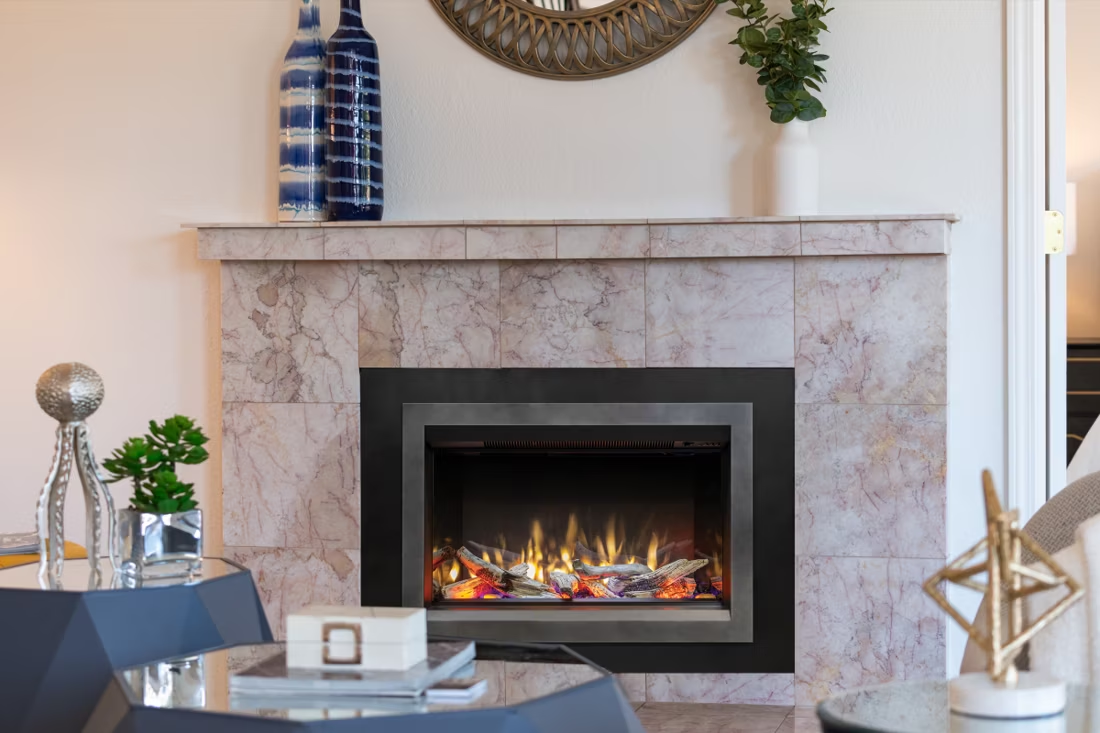
No—that's its superpower. An electric fireplace needs a wall and an outlet, period. No vent pipe, no gas line, no clearances to design around, which is why it works in bedrooms, offices, apartments, and walls where venting a gas or wood unit would be impractical or impossible. Installation is typically the simplest and least expensive of any fireplace type.
Does a fireplace add value to my home?
On average, a fireplace adds back to the home about the same amount you spent installing it. Add the monthly savings from heating the rooms you actually use instead of the whole house—often hundreds of dollars a year—and the value case is strong before you even count what a fire does for how your family uses the room.
What is an in-home preview and do I need one?
It's a visit where a hearth professional measures your space, confirms the model you picked actually works in your home, and walks the specs—framing, gas line, venting, finish work—before anything is ordered. Some details you just can't know until you see the house. Never make a down payment without one; it's the single most-skipped step that burns buyers.
Stove and Fireplace Dealers in Fergus County
Find your electric fireplace in Fergus County.
Tell us about your room and how you plan to use it, and we'll match you with a trusted local dealer and send over a free Project Guide & Parts List—the exact parts and a recommended installer for your Fergus County home.
Find Your Fireplace →