
Steady, thermostat-controlled heat for Chouteau County winters.
With 7,545 heating degree days and stretches near 10 degrees, a pellet stove gives Fort Benton, Big Sandy, and Geraldine homes automated, even heat without daily wood splitting. Find the right unit and connect with a trusted local dealer.
Every Project Starts From One of These Five Situations
Consistent heat for a long, hard winter—with less labor than cordwood.
Chouteau County sits on the high plains along the Missouri River, and its climate zone 6B classification with 7,545 heating degree days puts it in the same cold-climate bracket as places like Bismarck, ND or Fargo. Winter lows average around 10 degrees, and this stretch of north-central Montana sees long, wind-exposed cold snaps between fall harvest and spring calving. For a county with just over 4,000 residents spread across small towns like Fort Benton, Big Sandy, and Geraldine, and a lot of rural acreage in between, heating that doesn't demand constant attention matters.
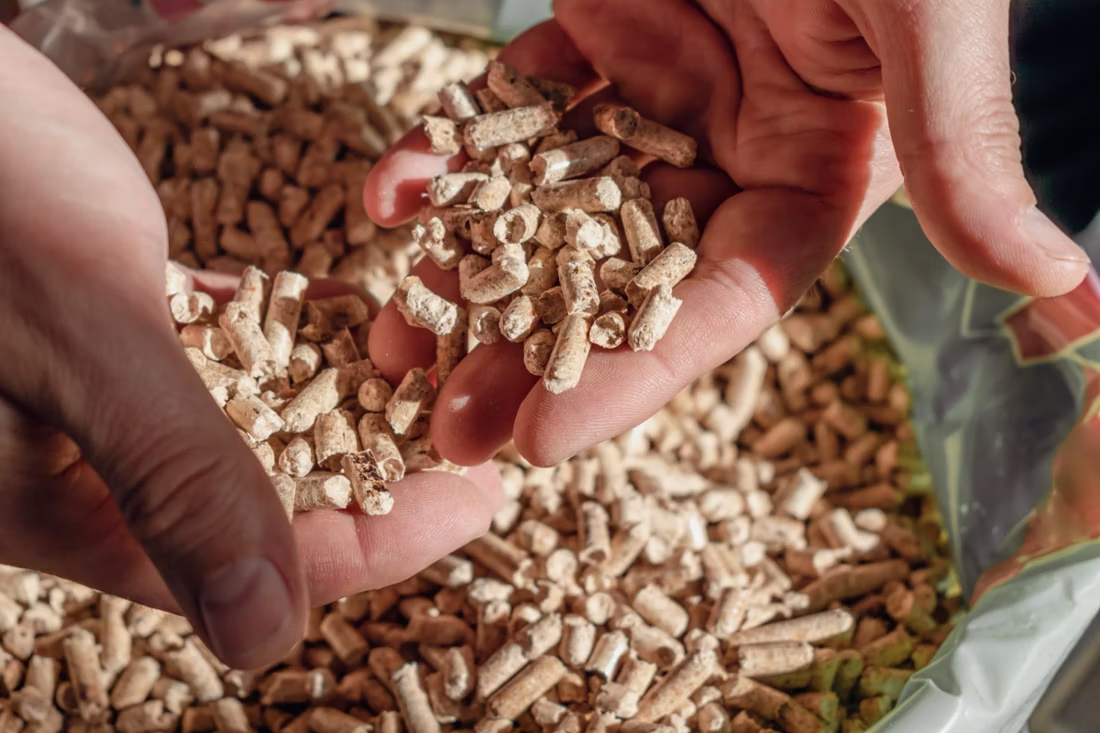
Pellet stoves fit that need well. A hopper loaded with bagged pellets from regional brands like Bear Mountain, Lignetics, or Forest Energy can run a thermostat-controlled burn for 24 hours or more, which suits households where someone is often out checking cattle or working ground rather than home tending a fire. Wildfire smoke is a real seasonal concern here too, and pellet appliances burn cleaner than cordwood with far less particulate output—a practical plus during smoky late-summer stretches even though the appliance itself is a winter-heat investment. A local dealer will size the stove to your square footage and help you plan for reliable pellet supply through a long Chouteau County heating season.
Three steps. No salesperson until you're ready.
Tell us about your project
Your zip code, your situation, and the fuel you're leaning toward—or let the answers point you to one.
See what's actually available
The brands dealers within 100 miles genuinely carry—real options, never a catalog mirage.
Get your dealer & Project Guide
A trusted local dealer, plus the free Project Guide & Parts List that names every component of the job.
Frequently Asked Questions
How much does a pellet stove installation cost in Chouteau County?
Pellet stove and insert installations in Chouteau County typically run in the same general range seen across rural Montana, usually landing between roughly $4,000 and $8,000 depending on the unit and venting work involved. Freestanding stoves generally cost less to install than inserts going into an existing masonry fireplace, since inserts require running a vent liner through the existing chimney. Homes outside Fort Benton or Big Sandy may see a modest travel charge added by installers covering the wider county, since distances between towns here are significant.
How often do I need to load a pellet stove during a Chouteau County winter?
Most pellet stoves need loading once or twice a day when running steadily through the coldest stretches, since a full hopper generally holds enough fuel for roughly 24 to 30 hours of burn on a mid setting. With winter lows averaging around 10 degrees and 7,545 heating degree days accumulating over the season, a Chouteau County home relying on pellets as a primary heat source should plan on daily attention during January and February cold snaps, with longer stretches between loads in shoulder months like October or April.
Where do I buy pellets near Chouteau County, and should I stock up?
Regional brands including Bear Mountain, Lignetics, and Forest Energy are the pellets most commonly stocked by dealers serving north-central Montana, and your local retailer can typically special-order a season's supply if you buy ahead. Given Chouteau County's rural layout and the distance between towns like Fort Benton, Big Sandy, and Geraldine, buying pellets by the ton pallet rather than individual bags before winter sets in is the more practical approach for most households—it avoids repeat trips and protects against short-notice supply gaps during a hard cold spell.
What size pellet stove do I need for my home?
Sizing depends on square footage, insulation, and whether the stove is primary or supplemental heat. In a cold-climate county like Chouteau, with 7,545 heating degree days, most installers size slightly larger than they would in a milder region—a stove rated for 1,500 square feet in a temperate climate may only comfortably cover 1,200 here on the coldest nights. Older farmhouses and drafty older construction common in the smaller towns and rural properties around the county often need the larger end of a stove's rated range. A local dealer will walk your home and size it properly rather than relying on the box rating alone.
Do pellet stoves work during a power outage?
No—this is an important limitation to understand before choosing pellet. Pellet stoves rely on an electric auger to feed fuel and a blower to distribute heat, so they stop working the moment power is lost. In a rural county like Chouteau, where winter storms can knock out power for extended periods across the plains, this is worth weighing seriously if you need a heat source that works without electricity. Some households pair a pellet stove for daily convenience with a wood stove or battery backup system for storm resilience—ask your local dealer about battery backup options for pellet units if outages are a real concern for your property.
Do I need a permit to install a pellet stove in Chouteau County?
Most pellet stove installations require a building permit, since the appliance involves venting through an exterior wall or roof and connecting to a structure. Requirements are typically handled through the county building office, and most local installers coordinate the permit as part of the installation rather than leaving homeowners to file it themselves. Because pellet stoves vent through smaller-diameter pipe than wood stoves and don't require full masonry chimney work, the permitting and inspection process is generally more straightforward than a wood-burning installation.
How does a pellet stove compare to a wood stove for Chouteau County homes?
Wood stoves burn local species like lodgepole pine, ponderosa pine, douglas fir, and aspen, work without electricity, and are the better choice for true off-grid backup heat during storms. Pellet stoves are more convenient day to day—no splitting, stacking, or hauling cordwood, more even and thermostat-controlled heat, and a cleaner burn, which matters given the wildfire smoke concerns that affect this part of Montana in late summer. For a working farm or ranch property in Chouteau County where someone is often away from the house for stretches, the automated feed of a pellet stove is a real advantage, but it comes at the cost of dependence on grid power. Many rural households in the county end up with one of each.
How often does a pellet stove need cleaning and maintenance?
Pellet stoves need more frequent attention than a furnace but less than a wood stove chimney. The burn pot should be cleaned every few days during heavy winter use to keep ash from choking airflow, and a full professional cleaning and inspection is recommended annually—typically before burning season starts in the fall. For Chouteau County homes running the stove hard through a long winter with 7,545 heating degree days, sticking to the manufacturer's cleaning schedule matters more than it would in a milder climate, since the appliance is doing more work over a longer season.
Is a pellet stove a good fit for a rural Chouteau County property?
Pellet stoves are a strong fit for many rural properties in the county, particularly as supplemental or zone heat in a well-insulated space, since they offer more hands-off operation than cordwood and cleaner burning during wildfire smoke season. The main consideration for rural acreage here is electricity reliability and the practical logistics of keeping a season's worth of pellets on hand given the distance to dealers in towns like Fort Benton or Big Sandy. A local dealer familiar with the county's rural layout can help you plan fuel storage and weigh pellet against wood or a hybrid approach for your specific property.
What's the difference between an insert and a zero-clearance fireplace?
An insert is a fireplace that slides into a pre-existing wood-burning fireplace—if you don't have one, there's nothing to insert it into. A zero-clearance fireplace is built into a framed wall, which makes it the answer for remodels and new construction. Simple test: existing masonry fireplace means insert; blank or framed wall means zero-clearance.
Why is my open fireplace making my house colder?
Open fireplaces suck—literally. As the fire burns, it consumes air your furnace already paid to heat and pulls it out through the chimney, so the house is actually colder after the fire goes out than before you lit it. An insert fixes this: it seals the chimney, puts fixed glass across the front, and turns that hole in your house into a real heat source.
How much should I budget for a fireplace?
For an average home—covering the fireplace, the vent pipe, and basic installation—a budget between $3,900 and $5,500 gives you a lot of options across wood, gas, and pellet. By the time you add finish work, gas line, and electrical, the average complete installation lands between $5,000 and $12,000 all-in. In a remodel or new build, a good rule is to put about 2.5% of the total project cost toward the fireplace.
Does a fireplace add value to my home?
On average, a fireplace adds back to the home about the same amount you spent installing it. Add the monthly savings from heating the rooms you actually use instead of the whole house—often hundreds of dollars a year—and the value case is strong before you even count what a fire does for how your family uses the room.
Pellet Brands Stocked Around Chouteau County
Manufacturers will point you to the nearest stocking dealer.
Find your pellet stove in Chouteau County.
Tell us a bit about your home and we'll match you with the right pellet stove or insert, plus a free Project Guide & Parts List with the exact parts—including the vent kit—and a recommended local dealer for your Chouteau County project.
Find Your Fireplace →