
Warm up a Chouteau County room without cutting a hole in the wall.
From Fort Benton to Big Sandy, Geraldine, and Highwood, electric fireplaces add real zone heat and honest ambiance to farmhouses, rentals, and additions where running a flue or gas line isn't worth the trouble. We'll match you with a trusted local dealer who can tell you exactly what fits.
Every Project Starts From One of These Five Situations
Supplemental heat and real ambiance—no chimney required.
Chouteau County is wheat and cattle country along the Missouri River—Fort Benton's historic riverfront, Big Sandy and Geraldine out on the bench, Highwood tucked against the mountains that share its name. It's also genuinely cold: Climate Zone 6B, an average winter low around 10°F, and a long, demanding heating season—in the same range as Bismarck, North Dakota. That kind of cold means electric fireplaces here are honestly a supplement, not a substitute for the propane furnace, forced-air system, or wood stove doing the primary heavy lifting through a Chouteau County winter.
Where electric earns its place is everywhere a whole-house heating overhaul doesn't make sense: a sunroom addition off an older Fort Benton farmhouse, a converted bedroom in Big Sandy, a manufactured home in Geraldine where running new gas line isn't practical, or a rental property where landlords want warmth without a chimney to maintain. There's no venting, no gas line, and—a real plus in a county that already deals with summer wildfire smoke drifting through the region—zero combustion byproducts added to the air. Plug it in or have an electrician wire a 240-volt unit, and you have heat and firelight the same day.
Three steps. No salesperson until you're ready.
Tell us about your project
Your zip code, your situation, and the fuel you're leaning toward—or let the answers point you to one.
See what's actually available
The brands dealers within 100 miles genuinely carry—real options, never a catalog mirage.
Get your dealer & Project Guide
A trusted local dealer, plus the free Project Guide & Parts List that names every component of the job.
Frequently Asked Questions
How much does an electric fireplace installation cost in Chouteau County?
Plug-in electric fireplaces—freestanding stoves, mantel packages, and most wall-mount units—run anywhere from $300 to $1,500 for the unit itself, with no real installation cost beyond mounting hardware since they plug into a standard household outlet. Built-in linear units or electric inserts that require a dedicated 240-volt circuit typically add $400 to $1,200 in electrical work, since you'll need a licensed electrician to run the circuit—not a big job, but not a DIY one either if your farmhouse's wiring is older. There's no chimney, no gas line, and no venting to budget for, which keeps electric the cheapest fuel type to install by a wide margin in Chouteau County.
Can an electric fireplace actually heat my house through a Chouteau County winter?
Not on its own, and it's worth being honest about that up front. With an average winter low near 10°F and a long, demanding heating season, Chouteau County winters ask more of a heating system than a 1,500-watt electric unit can deliver across a whole house. Most electric fireplaces are rated to comfortably heat a single room of 400 to 600 square feet. They work well as zone heat for a living room, den, or office while your furnace or wood stove handles the rest of the house—and they're genuinely useful for keeping one room comfortable without running the whole system harder than it needs to.
Do I need a permit to install an electric fireplace in Chouteau County?
Usually not for a standard plug-in unit—there's no gas line, flue, or combustion appliance involved, so most plug-in electric fireplaces and inserts fall outside the building permit process entirely. If you're having a 240-volt unit hardwired, that electrical work should be pulled by a licensed electrician, who will typically handle any required electrical permit as part of the job. Manufactured and mobile homes in Chouteau County occasionally have their own wiring quirks worth having an electrician check before you commit to a hardwired unit.
What's the best electric fireplace option for an older Fort Benton or Big Sandy farmhouse?
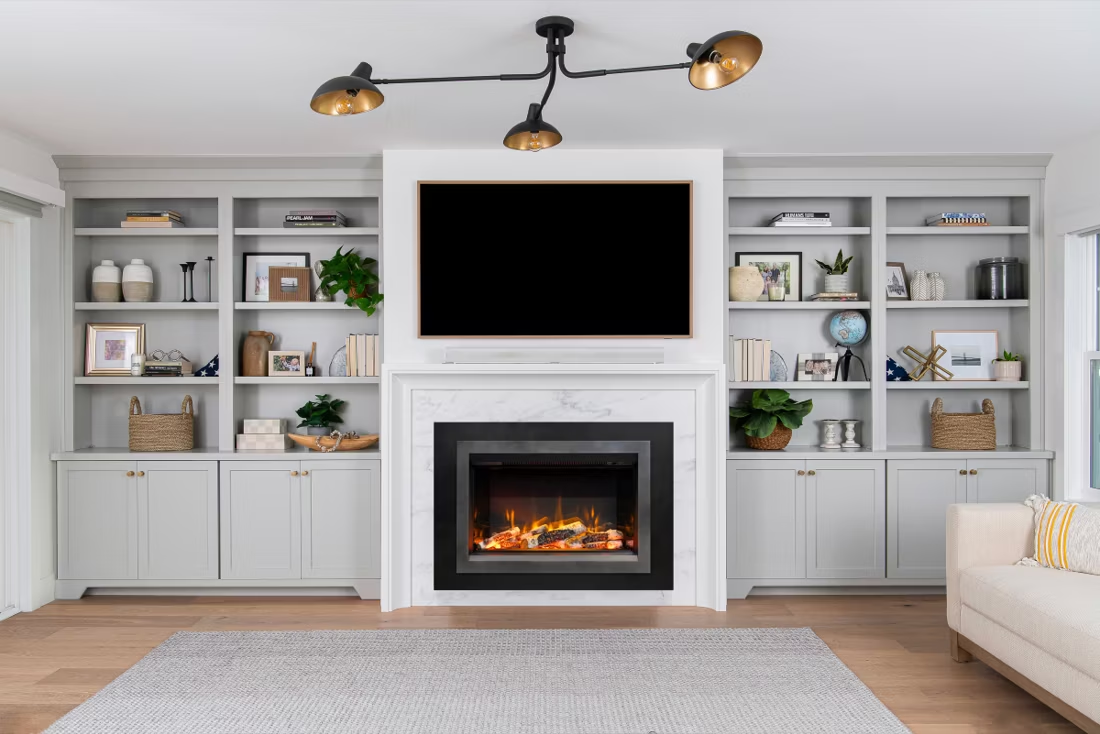
For homes with an existing masonry fireplace that's no longer used, an electric insert is often the simplest fix—it slides into the opening, plugs in or gets wired, and gives you controllable heat and flame effect without touching the chimney. For rooms with no existing fireplace, a wall-mounted linear unit or a freestanding stove-style unit are both good fits for the older, smaller rooms common in Chouteau County farmhouses—they don't demand the framing or clearance requirements a wood or gas unit would. A local dealer can walk your specific room and tell you which option actually looks and heats right.
Electric vs. wood stove—which makes more sense out here?
Wood stoves burning local lodgepole pine, ponderosa pine, Douglas fir, or aspen remain the backbone of backup and primary heat for a lot of Chouteau County homes, precisely because they don't need the grid to run. Electric fireplaces depend entirely on power staying on, and rural Chouteau County isn't immune to winter wind events and ice that can knock out lines for hours or longer. If you need heat that survives an outage, wood wins. If you want low-maintenance ambiance and zone heat for a room where you're not worried about outages—a finished basement, an in-town rental, an addition—electric is simpler to live with day to day.
Electric vs. pellet stove—what's the real difference for Chouteau County?
Pellet stoves burning bagged pellets from brands like Bear Mountain, Lignetics, or Forest Energy put out real heat—enough to serve as a primary or near-primary source in a well-insulated Chouteau County home—but they also need electricity to run the auger and blower, so they share electric's vulnerability to outages. Where they differ is heat output and running cost: a pellet stove will out-heat an electric unit by a wide margin per hour of run time, at the cost of needing a vent, an annual sweep, and a place to store pellet bags. Electric skips all of that in exchange for lower heat output and simpler upkeep.
How much will an electric fireplace add to my power bill?
A typical electric fireplace draws 1,500 watts on the heater setting, which costs roughly 15 to 25 cents an hour to run depending on your electric rate—whether you're on NorthWestern Energy or served by a rural electric cooperative elsewhere in the county. Running one for a few hours a night through a Chouteau County winter adds up to somewhere in the range of $15 to $40 a month, a fraction of what running the same square footage on electric baseboard or resistance heat would cost. Most owners use it as supplemental heat rather than running it around the clock, which keeps the bill modest.
Does an electric fireplace make sense during wildfire smoke season?
Yes—it's one of the better arguments for having one in Chouteau County. When smoke from regional wildfires settles into the Missouri River valley in late summer, a wood-burning appliance isn't something you want adding to indoor particulates even if outdoor air quality is already poor. An electric fireplace produces zero combustion byproducts, so you can run it for ambiance or supplemental warmth on a cool, smoky evening without touching your indoor air quality at all.
Where can I actually see and buy an electric fireplace near Chouteau County?
Given the county's population of a little over 4,200 spread across Fort Benton, Big Sandy, Geraldine, and Highwood, there isn't a hearth showroom on every corner—most residents end up working with a dealer based in Great Falls or another regional hub who delivers and installs throughout north-central Montana. That's exactly the gap Find My Fireplace closes: tell us about your room and your home, and we'll match you with a trusted local dealer who actually services Chouteau County, plus a free Project Guide & Parts List so you know what you're buying before anyone shows up.
Can I put a TV above my fireplace?
Yes—with an asterisk. Fireplaces are hot and TVs don't like heat. Either put a mantel between them to deflect rising warmth, or choose a fireplace with heat-management technology that creates a cool zone on the wall above—the wall stays around 125 degrees, barely warm, while the room still gets full heat. If you like clean lines and don't want a mantel, heat management is the answer.
Do electric fireplaces actually produce heat?
Yes—most put out around 4,800–5,000 BTUs from a standard outlet, which comfortably warms a bedroom, office, or den as a comfort-zone heater. What they won't do is carry a whole house the way wood, gas, or pellet can. Think of electric as ambiance-first with honest supplemental heat: flames on with no heat in July, flames plus warmth in January.
Can I install a fireplace myself?
If you're putting a fire in your house on purpose, it's best to work with an expert. Unless you're genuinely experienced in framing, gas line, vent pipe, and the national code on clearances to combustibles, have a professional do it—and ideally the same company that sells you the fireplace, so warranty, service, and liability all live under one roof.
Does a fireplace add value to my home?
On average, a fireplace adds back to the home about the same amount you spent installing it. Add the monthly savings from heating the rooms you actually use instead of the whole house—often hundreds of dollars a year—and the value case is strong before you even count what a fire does for how your family uses the room.
Find your electric fireplace in Chouteau County.
Tell us about your home and your room, and we'll match you with a trusted local dealer serving Chouteau County—plus a free Project Guide & Parts List with the exact unit, mounting hardware, and electrical requirements for your project.
Find Your Fireplace →