
Steady heat for Carter County's wide-open ranch country.
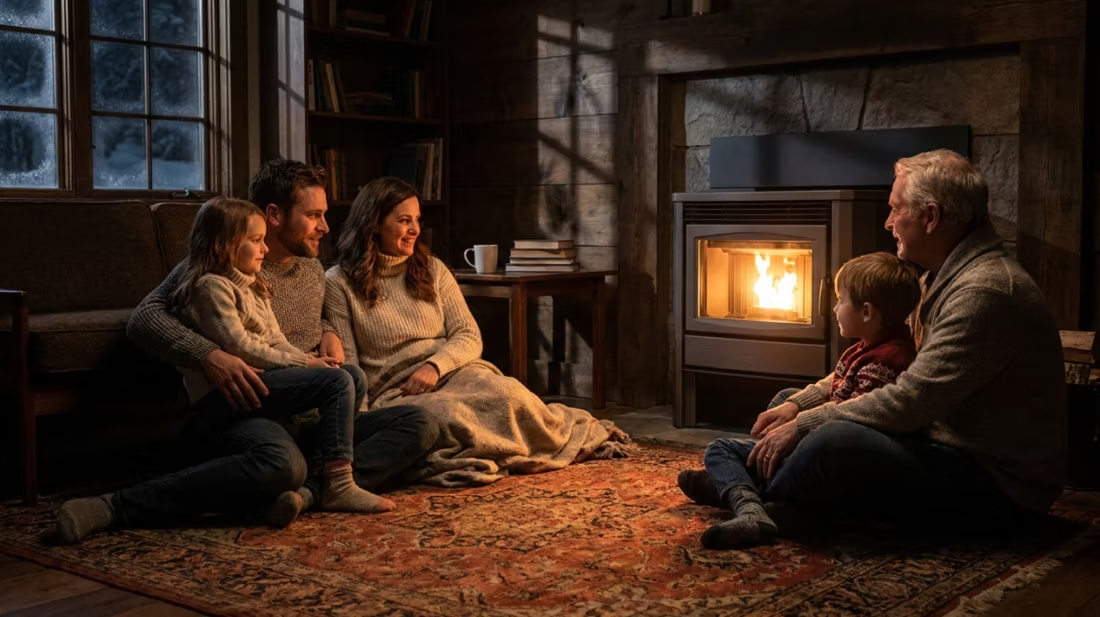
Clean-burning, thermostat-controlled heat for Ekalaka and the ranches spread across Carter County's climate zone 6B winters. I'll match you with a trusted local dealer who knows what actually works out here.
Every Project Starts From One of These Five Situations
A clean-burning option across Carter County's wide distances.
Carter County is about as remote as Montana gets—roughly 386 residents spread across nearly 3,300 square miles of southeastern plains and pine breaks around Ekalaka, the county seat. Winters here fall in climate zone 6B, closer in severity to Bismarck than to the milder valleys west of the Rockies, and the nearest big-box hearth retailer is a long haul toward Miles City or across the South Dakota line to Rapid City. Local wood stands of lodgepole pine, ponderosa pine, Douglas fir, and aspen—much of it managed through the Custer Gallatin National Forest's Sioux Ranger District—have supported wood heat here for generations, but pellet appliances have carved out a real niche for households that want that same steady radiant warmth without the daily wood-splitting and hauling that comes with ranch life.
Regional pellet brands like Bear Mountain, Lignetics, and Forest Energy are milled and trucked in from the Inland Northwest, which means Carter County households generally do best stocking up on a winter's worth of bags before snow closes county roads rather than restocking mid-season. A pellet stove's automated hopper and thermostat control also makes it easier to maintain consistent heat in the kind of drafty, older ranch houses common across the county, and its cleaner burn matters on the days when wildfire smoke drifts in during late summer and fall and outdoor burning gets discouraged. The trade-off worth planning around: pellet stoves run on an electric auger and blower, so a generator or battery backup is worth discussing with your dealer given how spread out utility service is across the county.
Three steps. No salesperson until you're ready.
Tell us about your project
Your zip code, your situation, and the fuel you're leaning toward—or let the answers point you to one.
See what's actually available
The brands dealers within 100 miles genuinely carry—real options, never a catalog mirage.
Get your dealer & Project Guide
A trusted local dealer, plus the free Project Guide & Parts List that names every component of the job.
Frequently Asked Questions
How much does a pellet stove installation cost in Carter County?
Pellet stove and insert installations typically run in the $3,000 to $6,500 range nationally, and that range holds reasonably well for Carter County—though your final quote depends on the unit, whether venting needs to be run through an exterior wall, and hearth pad requirements. Because the nearest hearth dealers are based out of Miles City or across into South Dakota, expect a trip charge folded into the estimate for a rural Ekalaka-area install. Ask any dealer you're matched with for a firm number after they've walked through your home or ranch layout.
What size pellet stove do I need for my home?
In Carter County's climate zone 6B winters, sizing tends to run larger than a simple square-footage chart suggests, especially for the older, less-insulated ranch houses common across the county. A stove rated for 1,000 to 1,800 square feet is typical for a single main living area with supplemental heat elsewhere in the house; homes looking for whole-house primary heat in a drafty older structure often need to size up a step. A local dealer will factor in ceiling height, insulation, and how the home is laid out before recommending a specific model—that's a better answer than a general chart for a county this spread out.
Where can I find a certified pellet stove installer near Ekalaka?
Given Carter County's small population, most certified hearth installers covering Ekalaka and the surrounding ranch country are based out of Miles City or make regular trips from the Rapid City, SD area. Look for NFI (National Fireplace Institute) certification specifically for pellet appliances, and confirm upfront whether the quote includes travel to your property—for a county this size, that's often the biggest cost variable. Avoid a DIY or general-contractor install on venting; pellet exhaust runs need to be sized and sealed correctly to avoid backdraft issues in a tightly built ranch home.
What's the difference between a pellet stove and a pellet insert?
A pellet stove is a freestanding unit that sits on its own hearth pad and vents through a wall or existing chimney chase—it can go almost anywhere in a home with the right clearances. A pellet insert is built to slide into an existing masonry fireplace opening, converting an old wood-burning fireplace into a hopper-fed, thermostat-controlled heat source. For Carter County homes with an existing fireplace from an earlier wood-heat era, an insert is often the simpler retrofit; new construction or additions without a fireplace already in place usually call for a freestanding stove instead.
Do I need a permit to install a pellet stove in Carter County?
Most unincorporated areas of Carter County handle building permits through the county courthouse in Ekalaka, and a new pellet stove installation typically needs a permit covering the venting and hearth clearance work, even though pellet appliances burn cleaner than open wood fires. Most dealers who install the unit will pull the permit as part of the job. It's worth confirming directly with the county before work starts, since permit requirements can shift and Carter County's small size means there isn't a dedicated inspections office handling this daily.
What's the best pellet stove brand for Carter County's climate?
For sustained cold, look for a stove with a large hopper capacity so you're not refilling constantly during the coldest stretches—this matters more in a zone 6B county than in milder climates. Regional pellet supply through Bear Mountain, Lignetics, and Forest Energy makes fuel sourcing straightforward once you've settled on a stove; ask your dealer which stove models they stock parts and service for locally, since that support matters more than brand name when the nearest technician is an hour or more away.
How often does a pellet stove need to be serviced?
Plan on cleaning the burn pot and ash area every few days during regular heating season use, a full glass and exhaust cleaning monthly, and a professional annual service before the season starts—typically in late summer or early fall, ahead of the wildfire-smoke season that sometimes limits outdoor burning locally. Given the driving distance to a certified technician from most points in Carter County, scheduling that annual service early avoids being stuck waiting for a mid-winter repair visit.
Where can I buy pellet fuel in Carter County?
Regional brands like Bear Mountain, Lignetics, and Forest Energy are the pellets most commonly stocked by dealers serving southeastern Montana, though Carter County's remote location means most households do better buying a full winter's supply—usually by the pallet—before roads get difficult in late fall rather than restocking bag by bag. Ask your dealer about delivery options when you're matched, since hauling pallets out to a rural Ekalaka-area address is often easier to arrange upfront than after snow sets in.
Pellet stove vs. wood stove—which is right for my Carter County home?
Wood stoves burn cordwood cut from local lodgepole pine, ponderosa pine, Douglas fir, or aspen, work without electricity, and are the traditional backup heat source many Carter County ranch households already rely on. Pellet stoves are more convenient—load the hopper, set the thermostat, less ash and less hauling—but the auger and blower need electricity, which is worth weighing against how often power interruptions happen on your specific stretch of the county. Many households here end up with both: pellet for daily convenience, wood as the fallback when the power's out.
Why is my open fireplace making my house colder?
Open fireplaces suck—literally. As the fire burns, it consumes air your furnace already paid to heat and pulls it out through the chimney, so the house is actually colder after the fire goes out than before you lit it. An insert fixes this: it seals the chimney, puts fixed glass across the front, and turns that hole in your house into a real heat source.
What's the difference between an insert and a zero-clearance fireplace?
An insert is a fireplace that slides into a pre-existing wood-burning fireplace—if you don't have one, there's nothing to insert it into. A zero-clearance fireplace is built into a framed wall, which makes it the answer for remodels and new construction. Simple test: existing masonry fireplace means insert; blank or framed wall means zero-clearance.
How much should I budget for a fireplace?
For an average home—covering the fireplace, the vent pipe, and basic installation—a budget between $3,900 and $5,500 gives you a lot of options across wood, gas, and pellet. By the time you add finish work, gas line, and electrical, the average complete installation lands between $5,000 and $12,000 all-in. In a remodel or new build, a good rule is to put about 2.5% of the total project cost toward the fireplace.
Can I install a fireplace myself?
If you're putting a fire in your house on purpose, it's best to work with an expert. Unless you're genuinely experienced in framing, gas line, vent pipe, and the national code on clearances to combustibles, have a professional do it—and ideally the same company that sells you the fireplace, so warranty, service, and liability all live under one roof.
Pellet Brands Stocked Around Carter County
Manufacturers will point you to the nearest stocking dealer.
Find your pellet stove in Carter County.
Tell me a bit about your home near Ekalaka and I'll match you with a trusted local dealer and send over a free Project Guide & Parts List—the exact parts, including the vent kit, for your pellet project.
Find Your Fireplace →