
Steady pellet heat for Hi-Line winters that hit hard and stay awhile.
With winters in the same range as International Falls, MN and winter lows averaging 4°F, Blaine County needs heat that runs all night without hand-feeding a fire. I'll match you with a trusted local dealer who knows the pellet brands that actually reach Chinook and Harlem, and the backup-power setup that keeps a stove running when a Hi-Line storm takes the grid down.
Every Project Starts From One of These Five Situations
A clean, steady burn for a county that already breathes enough wildfire smoke each summer.
Blaine County covers roughly 4,200 square miles of north-central Montana's Hi-Line, from the Milk River valley around Chinook and Harlem up into the Bear Paw Mountains and across the Fort Belknap Indian Reservation. With only 5,551 people spread across that ground, homes here are often set well back from town, and the heating season is long and unforgiving—a winter as demanding as International Falls, MN sees, with an average winter low of 4°F. Wood cut from lodgepole pine, ponderosa pine, Douglas fir, and aspen in the Bear Paws has heated homes here for generations, but pellet appliances have become a real alternative for households that want a long, even burn overnight without feeding a stove by hand every few hours through a Hi-Line blizzard.
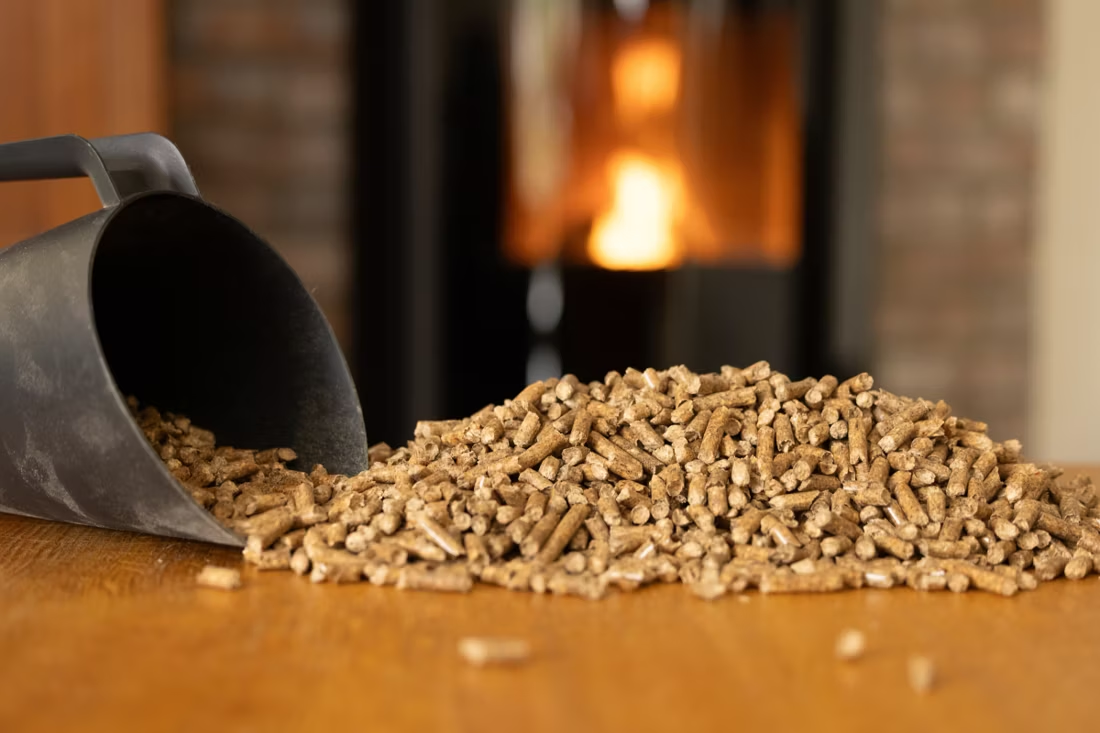
The county's air quality concern is wildfire smoke, which settles over the region in late summer from fires burning across Montana and into Canada. A pellet stove doesn't add to that seasonal burden the way open wood burning can—pellets burn hotter and more completely, with far less particulate than an old-style wood stove, which matters if anyone in the household is already managing smoke exposure by August. The tradeoff is electricity: a pellet stove's auger and blower need power to run, and Hi-Line power lines across open plains take a real beating in winter storms. Most local dealers will talk you through a battery backup or small generator setup as part of the install, not as an afterthought, given how exposed rural Blaine County service can be.
Three steps. No salesperson until you're ready.
Tell us about your project
Your zip code, your situation, and the fuel you're leaning toward—or let the answers point you to one.
See what's actually available
The brands dealers within 100 miles genuinely carry—real options, never a catalog mirage.
Get your dealer & Project Guide
A trusted local dealer, plus the free Project Guide & Parts List that names every component of the job.
Frequently Asked Questions
How much does a pellet stove installation cost in Blaine County?
Most pellet stove installations run somewhere in the $3,000 to $6,500 range, depending on the unit and whether venting can run straight through an exterior wall or needs a longer horizontal or vertical run. Homes farther out from Chinook or Harlem—toward the Bear Paws or out on the reservation roads—may see a modest travel charge added by installers based in town, since a fair amount of Blaine County is a long drive from the nearest hearth dealer. Ask your installer to walk through hopper capacity and hearth clearance requirements before you settle on a model; those two factors move the price more than the stove's sticker cost alone.
What size pellet stove do I need for a Blaine County home?
Sizing has to account for both square footage and how hard the county's winters push a stove. With a heating season as demanding as International Falls, MN and lows that regularly sit in single digits, a stove rated for a home's exact square footage often runs flat-out on the coldest nights rather than cycling comfortably. Homes on the open plain around Chinook and Harlem, exposed to wind with little windbreak, typically want to size up from a standard chart recommendation; homes tucked into the Bear Paw foothills with more tree cover can often run the stated rating. A local dealer sizing the stove in person, rather than off a generic BTU chart, is worth the visit.
Do I need a permit to install a pellet stove in Blaine County?
Most new pellet stove installations need a building permit, whether that's through your town office if you're inside Chinook or Harlem city limits, or through the county building department if you're out in unincorporated Blaine County or on reservation land, where permitting may run through Fort Belknap's own building office instead. A full-service hearth dealer typically handles the permit and inspection as part of the install, which is one reason to go through a dealer rather than a straight equipment purchase and DIY hookup.
What happens to my pellet stove during a power outage?
It stops running. A pellet stove depends on electricity to run the auger that feeds pellets and the blower that pushes heat into the room, so a straight power outage—which happens more than once a winter along exposed Hi-Line power lines during a bad storm—takes the stove offline along with everything else. That's why most Blaine County installers recommend at minimum a small battery backup sized to the stove's draw, and often a generator plan for households that can't risk going without heat for more than a few hours. If outage risk is a top concern for your property, it's worth discussing a wood-burning backup option with your dealer alongside the pellet install.
What pellet brands are actually available near Blaine County?
Bear Mountain, Lignetics, and Forest Energy are the regional brands that show up most consistently through hearth dealers and farm supply retailers serving Chinook and Harlem. Given the distances involved in getting freight out to a county this rural, it's worth asking your dealer which brand they can reliably restock through the winter rather than picking based on a single bag's price—running low on pellets in February, when roads can be tough to travel, is a bigger problem than paying a bit more per ton up front.
Does wildfire smoke affect how I should run a pellet stove here?
Not the operation of the stove itself—pellet appliances are a sealed, controlled burn that doesn't interact with outdoor wildfire smoke the way an open wood fire or outdoor burning does. Where it matters is household air quality overall: Blaine County sees wildfire smoke drift in during late summer from fires across Montana and into Canada, and a pellet stove's much lower particulate output compared to an old uncertified wood stove means one less source of indoor smoke exposure on top of what's already coming in from outside during a bad fire season.
How much maintenance does a pellet stove need through a Blaine County winter?
Plan on scooping ash and cleaning the burn pot every few days during steady winter use, given how many hours a stove here runs through a winter as demanding as International Falls, MN sees. A full teardown cleaning of the venting and hopper feed system once a season, ideally before the first hard cold snap in October or November, keeps the auger from jamming and the stove burning efficiently. Homes running the stove as a primary heat source rather than a supplement will want to check the manual for hour-based service intervals rather than relying on a once-a-year rule of thumb.
Pellet stove vs. wood stove—which makes more sense in Blaine County?
Wood, cut as lodgepole pine, ponderosa pine, Douglas fir, or aspen off Bear Paws timber, works with no electricity at all, which is a real advantage during a winter outage on exposed Hi-Line power lines. Pellet stoves burn cleaner and hold a more even temperature overnight without reloading, but they need power to run the auger and blower, so they're not a fallback during an outage unless you've added battery or generator backup. A lot of Blaine County households end up with one of each—pellet for daily convenience and even heat, wood as the backup that keeps running no matter what the grid is doing.
How do I make sure I don't run out of pellets mid-winter?
Buy your season's supply early, ideally by early fall, rather than restocking a bag or two at a time through winter. Blaine County's distance from major distribution routes means local hardware and farm supply stores serving Chinook and Harlem don't always get quick restocks once demand spikes during a cold stretch, and a bad snowstorm can make travel to town difficult right when you'd need more fuel. A dry, covered storage area sized for a full season's worth of Bear Mountain, Lignetics, or Forest Energy pellets is worth the space it takes up.
How often does a pellet stove need cleaning?
A clean pellet stove is a happy pellet stove. Plan on cleaning the burn pot about once a week when you're burning regularly—ash and clinkers gum up the air holes just like a pellet barbecue. Most pellet stove problems trace back to skipped cleaning that nobody explained up front. Some designs make it easy with a trapdoor burn pot: pull a lever and the gunk drops into the ash pan.
What do I measure to size a fireplace insert?
Four numbers tell you what fits: the front width, the front height, the back width, and the overall depth of your existing fireplace opening. Grab a tape measure, jot those down, and snap a photo of the wall—those two things do more to move your project forward than anything else you can do today.
Can I install a fireplace myself?
If you're putting a fire in your house on purpose, it's best to work with an expert. Unless you're genuinely experienced in framing, gas line, vent pipe, and the national code on clearances to combustibles, have a professional do it—and ideally the same company that sells you the fireplace, so warranty, service, and liability all live under one roof.
Can a fireplace actually lower my heating bill?
Yes—by creating a comfort zone. A furnace heats every square foot of the house just to warm the one room you're in; a gas fireplace on low burns roughly a sixth of the gas a typical furnace does. Set the furnace around 55–60 degrees as a baseline, then heat the rooms your family actually uses. Families who heat this way commonly save $20–$60 a month.
Pellet Brands Stocked Around Blaine County
Manufacturers will point you to the nearest stocking dealer.
Get your free Project Guide & Parts List for a pellet stove in Blaine County.
Tell me about your home, how far out you are from Chinook or Harlem, and whether backup power is a concern, and I'll match you with a trusted local dealer and send a free Project Guide & Parts List—the exact equipment, vent kit, and recommended installer for your pellet project, no big-box guesswork.
Find Your Fireplace →