
Add real warmth to a Blaine County room—without the woodpile.
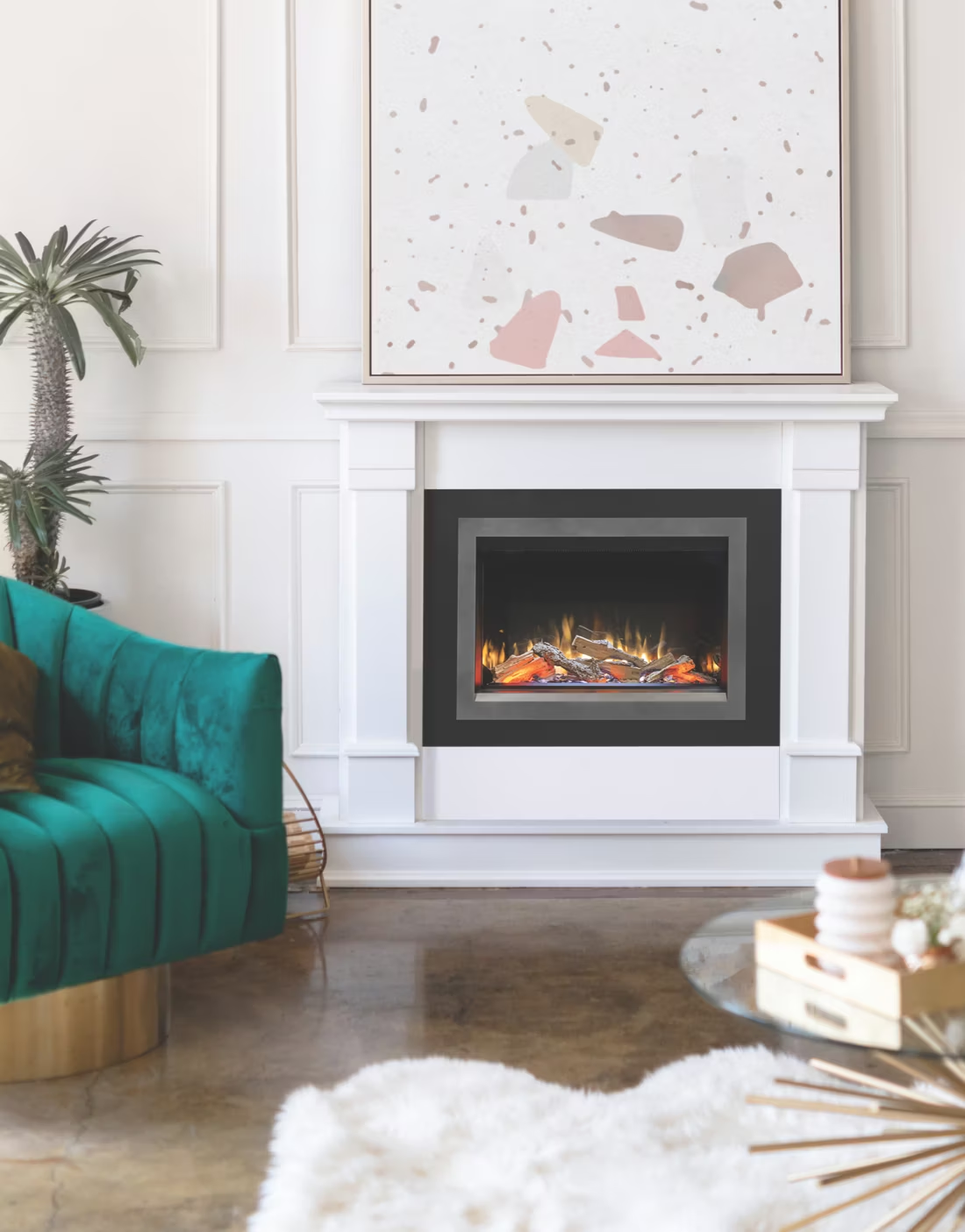
From Chinook to Harlem and out along the Milk River Valley, electric fireplaces give Blaine County homes clean, no-venting warmth for a bedroom, addition, or finished basement. Find the right unit and get matched with a trusted local dealer.
Every Project Starts From One of These Five Situations
A smart supplement to Blaine County's serious winters—not a replacement for them.
Blaine County sits in climate zone 6B, with roughly 8,571 heating degree days and an average winter low around 4°F—cold on par with Bismarck or International Falls, and colder than most of Montana's western valleys. The county runs from the Bear Paw Mountain foothills above Chinook down through the Milk River Valley and across the Fort Belknap Indian Community near Harlem. Most homes here rely on wood—lodgepole pine, ponderosa, Douglas fir, and aspen are all common locally—or propane as their primary heat source, and that's the honest starting point for any electric fireplace conversation in this county.
Electric fireplaces earn their place here as zone heat and ambiance, not whole-home heating. A 1,500-watt electric insert can take the edge off a chilly bedroom or sunroom without running ductwork or a gas line, and it installs in places wood and gas units can't—rentals, additions, mobile homes around Chinook and Harlem, or interior rooms with no chimney access. Hill County Electric Cooperative serves much of this part of north-central Montana, and running electric resistance heat as a home's only heat source through an 8,571-HDD winter gets expensive fast. Most Blaine County households are better served pairing an electric fireplace with their existing wood stove or propane furnace than trying to replace it.
Three steps. No salesperson until you're ready.
Tell us about your project
Your zip code, your situation, and the fuel you're leaning toward—or let the answers point you to one.
See what's actually available
The brands dealers within 100 miles genuinely carry—real options, never a catalog mirage.
Get your dealer & Project Guide
A trusted local dealer, plus the free Project Guide & Parts List that names every component of the job.
Frequently Asked Questions
How much does an electric fireplace installation cost in Blaine County?
Electric fireplaces are the least expensive hearth option to install, and that holds true in Blaine County. A plug-in wall-mount or freestanding unit can run as low as $300 to $800 installed, since it needs no venting, chimney, or gas line—just a standard outlet. A built-in electric fireplace or insert with a dedicated 20-amp circuit typically runs $1,000 to $2,500, factoring in electrician time to run that circuit, which matters in older Chinook and Harlem homes on older panels. Compare that to the venting and chimney work a wood or propane install requires, and electric is the fastest, least disruptive project on the list—though it also produces far less heat per dollar than either.
What size electric fireplace do I need for my room?
Most electric fireplaces are sized by room square footage for supplemental heat rather than whole-home heating—a standard 1,500-watt unit is rated for roughly 400 to 1,000 square feet, but that's under ideal conditions, not the drafty, older farmhouse construction common around Blaine County. In practice, treat the heater function as a bonus for a single room—a bedroom, den, or finished basement—rather than a way to cut your propane or wood use significantly. For a larger open living area, you'll get more useful warmth from a properly sized wood stove or gas insert than from stacking electric units room to room.
Do I need an electrician to install an electric fireplace?
Plug-in models don't require an electrician—if the unit comes with a standard cord, you can put it anywhere near an outlet. Built-in electric fireplaces and most inserts, though, need a dedicated 120V or 240V circuit, which does require a licensed electrician, especially in older Chinook and Harlem homes where the existing panel may already be near capacity. A local hearth dealer will tell you upfront whether your chosen model needs new circuit work, and most coordinate directly with an electrician as part of the installation rather than leaving you to find one yourself.
What's the difference between an electric insert, a wall-mount, and a freestanding electric stove?
An electric insert is built to slide into an existing masonry or wood-burning fireplace opening, giving an old, unused hearth a heat source and a flame effect without touching the chimney. A wall-mount unit hangs like a piece of art and works well in a room with no existing fireplace—a common choice for additions or finished basements in the county. A freestanding electric stove mimics the look of a wood stove and sits on the floor, which some Blaine County homeowners prefer for the traditional appearance without the wood handling. All three plug in or wire the same way; the choice comes down to whether you have an existing opening to fill and how you want the room to look.
Do I need a permit to install an electric fireplace in Blaine County?
A plug-in electric fireplace generally doesn't require a permit since there's no venting or structural change involved. If your installation includes new electrical circuit work—running a dedicated line for a built-in unit, for example—that portion typically needs an electrical permit through Blaine County's building department in Chinook. Most local dealers or the electricians they work with will pull that permit as part of the job, so it's rarely something homeowners have to manage themselves.
What's the best electric fireplace for a Blaine County home?
For rooms where you actually want usable heat—a bedroom, office, or sunroom—look for a unit with a true 1,500-watt heating element and a thermostat, not just a decorative flame with a low-wattage heater. For rooms where you mainly want the visual and ambiance—a living room that's already heated by your primary wood stove or propane furnace—a flame-only or lower-wattage model is fine and cheaper to run. Given how cold Blaine County gets, I'd frame the electric unit as a comfort add-on for one specific room rather than a heating strategy for the whole house.
Will my electric fireplace work during a power outage?
No—and this is the most important honest answer for Blaine County. Electric fireplaces need power to run, full stop, and rural winter storms here can knock out electricity for hours or longer. If backup heat during an outage matters to you, an electric fireplace shouldn't be your only hearth appliance; a wood stove or a propane unit with a battery-backed ignition system will keep working when the grid doesn't. Plenty of Blaine County homes run an electric fireplace for daily convenience and ambiance while keeping a wood stove as the real cold-weather insurance policy.
How much does it cost to run an electric fireplace in Blaine County?
A 1,500-watt electric fireplace running on the heat setting costs roughly 15 to 25 cents an hour depending on current Hill County Electric Cooperative rates, or a few dollars for an evening of use. Run flame-only without the heater, and the draw drops to just a few watts—essentially pennies. That's cheap for occasional supplemental warmth in one room, but it adds up fast if you tried to use it as a primary heat source through a winter with 8,571 heating degree days, which is exactly why most local homes lean on wood or propane for the bulk of their heating load.
Electric vs. wood or propane—which is right for my Blaine County home?
Wood and propane are the primary heat sources for a reason in this county—they produce real, sustained heat through winters that regularly sit near or below zero, and wood keeps working when the power doesn't. Electric fireplaces don't compete on heat output or outage reliability, but they win on installation simplicity: no venting, no gas line, no chimney, and a fraction of the install cost. The right answer for most Blaine County households is both—a wood stove or propane furnace carrying the real heating load, and an electric unit adding ambiance and spot warmth to a room that doesn't need, or can't easily get, a vented appliance.
Can I put a TV above my fireplace?
Yes—with an asterisk. Fireplaces are hot and TVs don't like heat. Either put a mantel between them to deflect rising warmth, or choose a fireplace with heat-management technology that creates a cool zone on the wall above—the wall stays around 125 degrees, barely warm, while the room still gets full heat. If you like clean lines and don't want a mantel, heat management is the answer.
Does an electric fireplace need a vent or chimney?
No—that's its superpower. An electric fireplace needs a wall and an outlet, period. No vent pipe, no gas line, no clearances to design around, which is why it works in bedrooms, offices, apartments, and walls where venting a gas or wood unit would be impractical or impossible. Installation is typically the simplest and least expensive of any fireplace type.
How much should I budget for a fireplace?
For an average home—covering the fireplace, the vent pipe, and basic installation—a budget between $3,900 and $5,500 gives you a lot of options across wood, gas, and pellet. By the time you add finish work, gas line, and electrical, the average complete installation lands between $5,000 and $12,000 all-in. In a remodel or new build, a good rule is to put about 2.5% of the total project cost toward the fireplace.
Can I install a fireplace myself?
If you're putting a fire in your house on purpose, it's best to work with an expert. Unless you're genuinely experienced in framing, gas line, vent pipe, and the national code on clearances to combustibles, have a professional do it—and ideally the same company that sells you the fireplace, so warranty, service, and liability all live under one roof.
Find your electric fireplace in Blaine County.
Tell us about your home and how you plan to use it, and we'll match you with a trusted local dealer and send you a free Project Guide & Parts List—a clear plan for your electric fireplace project, including the exact parts and a dealer recommendation for Blaine County.
Find Your Fireplace →