
Steady, hands-off heat for Wright County's Ozark winters.
From Mountain Grove to Hartville to Norwood, pellet stoves give Wright County homeowners a cleaner, lower-maintenance alternative to splitting oak and hickory all winter. Find the right unit and get matched with a trusted local dealer.
Every Project Starts From One of These Five Situations
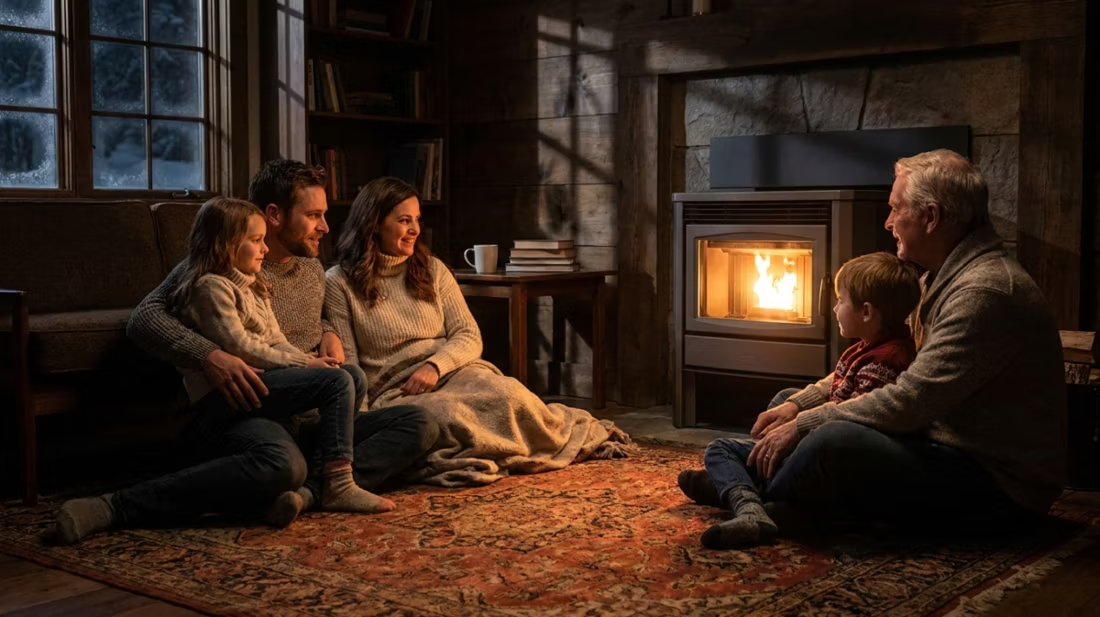
Pellet heat brings modern convenience to Ozark oak country.
Wright County sits on the Ozark Plateau in south-central Missouri, climate zone 4A, with roughly 4,738 heating degree days and average winter lows around 22°F. That's a real heating season—colder than the Missouri bootheel, though nowhere near what a place like Duluth, Minnesota deals with—and most of the county's 7,427 residents are spread across small towns and farmsteads around Mountain Grove, Hartville, and Norwood rather than concentrated in one city. It's also hardwood country: oak, hickory, walnut, and maple grow thick across the county, which is exactly why firewood has traditionally been the default heat source out here.
Pellet stoves carve out a different niche in that landscape. Instead of felling and splitting your own oak, you load a hopper with bagged fuel from suppliers like Lignetics or Indeck Energy Services and let a thermostat-controlled auger do the rest. Wright County has no air quality non-attainment issues or burn curtailment periods to navigate, so the appeal here isn't regulatory—it's convenience, more consistent heat output than an open wood fire, and a cleaner burn for households that don't want to manage ash and creosote all season. The tradeoff worth knowing about going in: pellet stoves run on electricity, and ice storms aren't unheard of in the Ozarks, so backup power is a real planning question for rural properties.
Three steps. No salesperson until you're ready.
Tell us about your project
Your zip code, your situation, and the fuel you're leaning toward—or let the answers point you to one.
See what's actually available
The brands dealers within 100 miles genuinely carry—real options, never a catalog mirage.
Get your dealer & Project Guide
A trusted local dealer, plus the free Project Guide & Parts List that names every component of the job.
Frequently Asked Questions
How much does a pellet stove installation cost in Wright County?
Most pellet stove installations run somewhere between $3,000 and $6,500 in a county like Wright, depending on the stove itself, whether you're venting through an existing masonry fireplace or need a fresh through-wall vent kit, and how much electrical work is involved for a dedicated outlet. Installing a pellet insert into an existing fireplace opening tends to land on the lower end since the chimney or masonry opening does most of the structural work already. New installs in homes without an existing fireplace—common on Wright County farmsteads with older wood-heat setups—run a bit higher once venting and framing are factored in. A local dealer can give you a firm number after seeing your home.
What size pellet stove do I need for my home?
With Wright County's winter lows averaging around 22°F and roughly 4,738 heating degree days a season, most homes don't need the largest hopper capacity on the market—this isn't Duluth-level cold. A small-to-medium pellet stove (rated for 1,000–1,800 sq ft) covers most farmhouses and ranch-style homes in and around Mountain Grove, Hartville, and Norwood. Older, less-insulated farmhouses with high ceilings or drafty additions may want to size up, and homes using the stove as primary heat rather than a supplement to propane or electric furnace should also lean larger. A local dealer will walk your square footage and insulation before recommending a specific model.
Where can I find pellet stove installers near me in Wright County?
Wright County itself is small—about 7,427 people spread across Mountain Grove, Hartville, and Norwood—so dealer density is thinner here than in a metro area. Many Wright County homeowners end up working with hearth retailers based in Springfield, roughly 30 miles northwest, who cover the county as part of their service area. Look for installers who handle the electrical hookup, venting, and hearth pad clearances as a package rather than treating the stove as a plug-and-play appliance—proper venting and clearance to combustibles matter for pellet stoves just as they do for wood stoves.
What's the difference between a pellet stove and a pellet insert?
A pellet stove is a freestanding unit that sits on a hearth pad and vents through a wall or existing chimney—it can go in almost any room with the right clearances. A pellet insert is built to slide into an existing masonry fireplace opening, which is common in older Wright County farmhouses that were originally built around a wood-burning hearth. If you've got an existing fireplace you rarely use because it's inefficient, an insert is usually the more cost-effective route since it reuses the opening and often the flue liner. If you're starting from a bare wall with no fireplace, a freestanding stove is the more practical choice.
Do I need a permit to install a pellet stove in Wright County?
Requirements are lighter here than in larger Missouri counties—Wright County doesn't have the kind of air-quality non-attainment restrictions or burn curtailment rules you'll see in places like Klamath County, Oregon. That said, most municipalities and the county building department still expect a permit for a new vent penetration through an exterior wall or roof, and for the electrical circuit a pellet stove requires. Reputable local dealers typically handle this paperwork as part of the installation, so it's worth asking upfront rather than assuming it's not needed.
What's the best pellet stove for Wright County's climate?
Given winter lows averaging around 22°F rather than sustained sub-zero cold, Wright County homes generally don't need the biggest cold-climate-rated units on the market. Mid-size stoves with a standard hopper (40–60 lb capacity) that give you 24 hours or so of burn time on a load are plenty for most houses in Mountain Grove, Hartville, and Norwood. What matters more locally is fuel supply—Lignetics and Indeck Energy Services both distribute pellets in this region, so it's worth confirming with a dealer which brands they stock and recommend for the stove you're considering, since combustion efficiency varies by pellet quality.
How often does a pellet stove need cleaning and maintenance?
Pellet stoves need more frequent attention than people expect, even though they're cleaner-burning than cordwood. The ash pan typically needs emptying every few days during regular winter use, the burn pot should be scraped clean every week or two to keep the auger feeding properly, and the exhaust venting and hopper should get a full inspection and cleaning at least once a year—usually before the season starts. Because pellet stoves rely on electric components (auger motor, igniter, blower), an annual service check on those parts is worth budgeting for alongside the mechanical cleaning, especially given the occasional ice storm and power interruption that comes with an Ozark winter.
Where can I buy pellets locally in Wright County?
Lignetics and Indeck Energy Services both distribute pellets into the south-central Missouri region, and bags are commonly stocked at farm and hardware stores serving Mountain Grove, Hartville, and Norwood, with larger volume available through dealers based in Springfield. Buying a season's supply early—before cold weather hits and demand spikes—is the usual local strategy, since availability can tighten during hard winters. Pricing fluctuates with regional supply, so it's worth checking with your installing dealer about current per-ton costs and whether they offer any delivery or bulk-purchase arrangement.
Pellet stove vs. wood stove—which makes more sense in Wright County?
Wright County is genuinely oak, hickory, walnut, and maple country, and a lot of longtime residents already have a wood supply, a chainsaw, and the know-how to keep a wood stove running—which is exactly why traditional wood heat still has a strong foothold here. A pellet stove makes more sense if you want thermostat-controlled, consistent heat without cutting, splitting, and stacking cordwood, and if you're comfortable with the tradeoff that pellet stoves need electricity to run the auger and blower—meaning they're not a backup heat source during a power outage the way a wood stove is. For households with an existing wood supply and a tolerance for the work, wood often still wins on cost. For households prioritizing convenience and consistent heat over ritual, pellet is usually the better fit.
How often does a pellet stove need cleaning?
A clean pellet stove is a happy pellet stove. Plan on cleaning the burn pot about once a week when you're burning regularly—ash and clinkers gum up the air holes just like a pellet barbecue. Most pellet stove problems trace back to skipped cleaning that nobody explained up front. Some designs make it easy with a trapdoor burn pot: pull a lever and the gunk drops into the ash pan.
Why is my open fireplace making my house colder?
Open fireplaces suck—literally. As the fire burns, it consumes air your furnace already paid to heat and pulls it out through the chimney, so the house is actually colder after the fire goes out than before you lit it. An insert fixes this: it seals the chimney, puts fixed glass across the front, and turns that hole in your house into a real heat source.
Does a fireplace add value to my home?
On average, a fireplace adds back to the home about the same amount you spent installing it. Add the monthly savings from heating the rooms you actually use instead of the whole house—often hundreds of dollars a year—and the value case is strong before you even count what a fire does for how your family uses the room.
Can a fireplace actually lower my heating bill?
Yes—by creating a comfort zone. A furnace heats every square foot of the house just to warm the one room you're in; a gas fireplace on low burns roughly a sixth of the gas a typical furnace does. Set the furnace around 55–60 degrees as a baseline, then heat the rooms your family actually uses. Families who heat this way commonly save $20–$60 a month.
Stove and Fireplace Dealers in Wright County
Pellet Brands Stocked Around Wright County
Manufacturers will point you to the nearest stocking dealer.
Find your pellet stove in Wright County, Missouri.
Tell us a bit about your home and we'll match you with the right pellet stove or insert, plus a free Project Guide & Parts List—the exact parts, including the vent kit, and a recommended local dealer for your Wright County home.
Find Your Fireplace →