
Ambiance and heat, no chimney required, for Wright County homes.
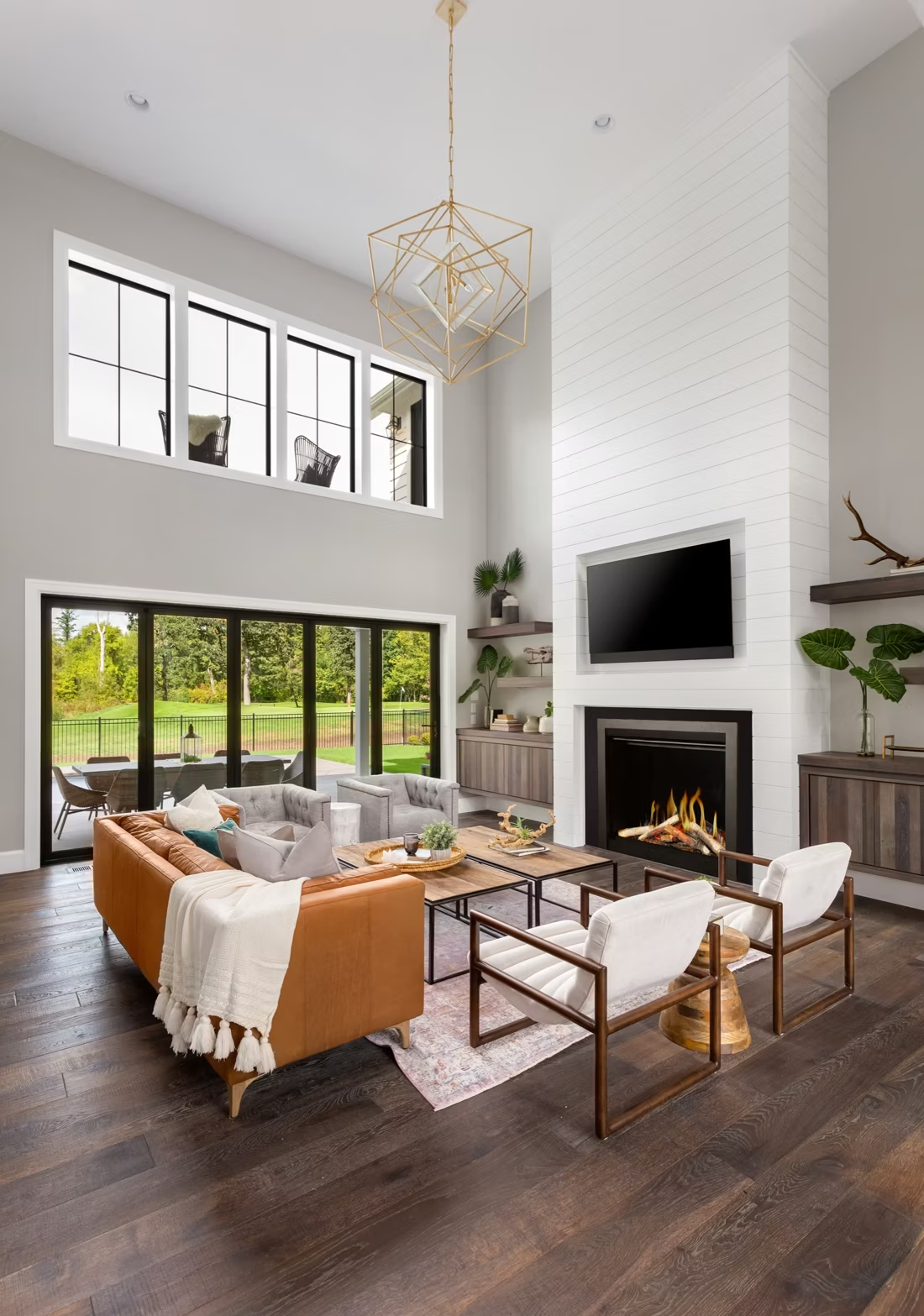
From Hartville to Mountain Grove to Norwood, electric fireplaces give Wright County homes real-looking flame and supplemental warmth without a flue, a gas line, or a new chimney. Find the right unit and connect with a trusted local dealer.
Every Project Starts From One of These Five Situations
The easiest heating upgrade for older Ozark farmhouses.
Wright County sits in the south-central Missouri Ozarks—a rural county of roughly 7,400 people spread across Hartville (the county seat), Mountain Grove, Norwood, and a lot of farmland in between. Winters here average lows around 22°F, which is real cold but nowhere near the deep freeze a place like Fargo, ND sees, where the heating season runs nearly twice as long. That means most Wright County homes need meaningful heat for several months a year, not brutal round-the-clock heating—which is exactly the kind of climate where a well-placed electric fireplace earns its keep as supplemental, room-by-room heat.
A lot of Wright County housing stock is older farmhouses and manufactured homes, many still burning oak, hickory, walnut, or maple as a primary or backup heat source out of Ozark tradition. Electric fireplaces don't replace that—they solve a different problem: heating the den, the primary bedroom, a finished basement, or a rental unit without extending a gas line or cutting a new chimney chase. For homes served by Intercounty Electric Cooperative Association and other rural co-ops in this part of the state, an electric insert or stove is often the fastest, least invasive way to add real heat and real ambiance to a single room.
Three steps. No salesperson until you're ready.
Tell us about your project
Your zip code, your situation, and the fuel you're leaning toward—or let the answers point you to one.
See what's actually available
The brands dealers within 100 miles genuinely carry—real options, never a catalog mirage.
Get your dealer & Project Guide
A trusted local dealer, plus the free Project Guide & Parts List that names every component of the job.
Frequently Asked Questions
How much does it cost to install an electric fireplace in Wright County?
Plug-in electric inserts and stoves—the kind that run on a standard 120V outlet—typically cost $150 to $700 for the unit itself, with no installation labor required beyond mounting or setting it in place. Built-in electric fireplaces or wall units that need a dedicated 240V circuit run higher, often $1,500 to $3,500 once you add an electrician for the circuit and a carpenter for the surround or mantel. In rural parts of Wright County—outside Hartville, Mountain Grove, and Norwood—expect a small travel charge if you're bringing in a licensed electrician, since service calls cover more ground here than in denser counties.
Does my electric fireplace need an electrician, or can I just plug it in?
Most freestanding and insert-style electric fireplaces plug into a standard 15- or 20-amp outlet and don't require an electrician at all—you plug it in, mount it or set it into an existing fireplace opening, and you're done. Larger built-in units, wall-mounted linear fireplaces, and anything drawing more than a standard outlet can supply will need a dedicated circuit, which does require a licensed electrician. If you're converting an existing masonry fireplace in an older Wright County farmhouse, ask your dealer whether the insert you're considering needs a new outlet run behind the firebox—that's the one step homeowners most often miss.
Do I need a permit to install an electric fireplace in Wright County?
For a plug-in electric fireplace or insert, no permit is typically required since there's no venting, gas line, or structural work involved. If your installation requires a new dedicated electrical circuit, that work should be pulled under an electrical permit and inspected—check with the Wright County Courthouse in Hartville, which handles permitting for the unincorporated county, or your local city hall if you're inside Mountain Grove or Norwood city limits. Most licensed electricians in the area will handle this step for you as part of the job.
Will an electric fireplace actually heat a room, or is it just for looks?
Most electric fireplaces sold today put out a real 4,000 to 5,000 BTUs on the heat setting—enough to comfortably warm a 300 to 400 square foot room, which covers a bedroom, den, or finished basement in a typical Wright County home. They won't replace a wood stove or propane furnace as whole-house heat, but they're genuinely effective as zone heat: run the furnace lower and let the electric unit carry the room you're actually sitting in. The flame effect runs independently of the heater, so you can have ambiance without the heat running at all on milder days.
Electric vs. wood—which is right for my Wright County home?
Wood has deep roots here—oak, hickory, walnut, and maple are all common local species, and a lot of Wright County homes still lean on a wood stove for primary or backup heat, especially useful when winter storms knock out power. Electric fireplaces can't do that; they go dark the moment the power does, which matters in a rural co-op service area where outages can run longer than in town. Where electric wins is convenience and placement—no ash, no chimney maintenance, no wood to split and stack, and the ability to add heat to a room that will never have a flue. Many Wright County homeowners run both: wood for primary or emergency heat, electric for the rooms wood heat doesn't reach.
Where can I actually put an electric fireplace?
Almost anywhere with an outlet. Electric fireplaces don't need a chimney, exterior wall, or vent of any kind, which makes them a good fit for interior rooms, apartments, rental properties, and manufactured or modular homes common throughout Wright County. Inserts can drop into an existing but unused masonry fireplace opening, wall units can be recessed or surface-mounted, and freestanding stoves can go against nearly any wall. The main constraint is the outlet or circuit, not the structure of the house.
What size electric fireplace do I need for my Wright County home?
For a single room—bedroom, den, or living room addition—a standard 1,400 to 1,500 watt unit rated for roughly 400 square feet covers most Wright County room sizes. Larger open-concept living areas or rooms with vaulted ceilings, common in some of the newer builds around Mountain Grove, may need a larger insert or a second unit rather than relying on one fireplace to carry the whole space. Because heat output caps out around 5,000 BTUs regardless of the model, sizing an electric fireplace is really about matching wattage to the specific room you want warm, not the whole house.
Electric vs. pellet—which makes more sense for me?
Pellet stoves burn compressed wood pellets from brands like Lignetics or Indeck Energy Services, both distributed regionally, and put out serious heat—enough to serve as primary heat for a whole home. But they need pellet storage, a hopper to load, an exterior vent, and electricity to run the auger and blower, so they still go down in a power outage. Electric fireplaces skip the fuel, venting, and hopper entirely, trading real heating capacity for simplicity and instant ambiance. If you're heating a whole Wright County home through winter, pellet is the stronger primary option; if you just want a warm, good-looking focal point in one room, electric is simpler and cheaper to own.
Is an electric fireplace cheaper to run than wood or propane?
It depends on how you use it. Running an electric fireplace on the heat setting for a few hours an evening typically costs somewhere between $0.10 and $0.30 an hour depending on your Intercounty Electric Cooperative or other local co-op rate—cheap for supplemental use in one room. It won't compete with free or low-cost self-cut oak and hickory for whole-home heat, and propane, while pricier per BTU, still wins for larger square footage. Where electric pulls ahead is avoiding the standby cost of running a furnace or propane system just to heat one occupied room—that's the scenario where an electric fireplace actually saves money.
Can I put a TV above my fireplace?
Yes—with an asterisk. Fireplaces are hot and TVs don't like heat. Either put a mantel between them to deflect rising warmth, or choose a fireplace with heat-management technology that creates a cool zone on the wall above—the wall stays around 125 degrees, barely warm, while the room still gets full heat. If you like clean lines and don't want a mantel, heat management is the answer.
Do electric fireplaces actually produce heat?
Yes—most put out around 4,800–5,000 BTUs from a standard outlet, which comfortably warms a bedroom, office, or den as a comfort-zone heater. What they won't do is carry a whole house the way wood, gas, or pellet can. Think of electric as ambiance-first with honest supplemental heat: flames on with no heat in July, flames plus warmth in January.
Does a fireplace add value to my home?
On average, a fireplace adds back to the home about the same amount you spent installing it. Add the monthly savings from heating the rooms you actually use instead of the whole house—often hundreds of dollars a year—and the value case is strong before you even count what a fire does for how your family uses the room.
What is an in-home preview and do I need one?
It's a visit where a hearth professional measures your space, confirms the model you picked actually works in your home, and walks the specs—framing, gas line, venting, finish work—before anything is ordered. Some details you just can't know until you see the house. Never make a down payment without one; it's the single most-skipped step that burns buyers.
Stove and Fireplace Dealers in Wright County
Find your electric fireplace in Wright County.
Tell us a bit about your home and we'll match you with the right electric fireplace or insert, plus a free Project Guide & Parts List and a trusted local Wright County dealer to install it.
Find Your Fireplace →