
Steady, low-maintenance pellet heat for Worth County winters.
From Grant City to the farmhouses along the Iowa line, Worth County families are choosing pellet stoves for consistent, thermostat-controlled heat without the woodpile. We'll match you with a trusted local dealer who can size and install the right unit.
Every Project Starts From One of These Five Situations
Consistent heat for a county built on hard winters and hard work.
Worth County sits in Missouri's Zone 5A climate belt, hard against the Iowa border, where winters bring long stretches of below-freezing cold across the rolling farmland surrounding Grant City. As Missouri's least populous county—just over 1,300 residents spread across working farms and small acreages—heating decisions here are practical ones. Oak, hickory, walnut, and maple grow throughout the county's timber stands and have long supplied local woodstoves, but a growing number of homeowners are turning to pellet stoves for the hands-off convenience: load the hopper, set the thermostat, and let the auger do the rest, even during calving season or a stretch of bad weather when there's no time to split wood.
Worth County has no air quality nonattainment designations and no winter burn curtailment periods to plan around, which simplifies pellet stove ownership compared to counties with inversion-related restrictions. Regional pellet supply comes primarily through brands like Lignetics and Indeck Energy Services, both distributed across northwest Missouri. Because Worth County's population is so small, there isn't a hearth dealer physically located in the county—most homeowners work with a dealer based in a nearby northwest Missouri town who travels in for installation and service, and Find My Fireplace's matching accounts for that when it recommends a shop.
Three steps. No salesperson until you're ready.
Tell us about your project
Your zip code, your situation, and the fuel you're leaning toward—or let the answers point you to one.
See what's actually available
The brands dealers within 100 miles genuinely carry—real options, never a catalog mirage.
Get your dealer & Project Guide
A trusted local dealer, plus the free Project Guide & Parts List that names every component of the job.
Frequently Asked Questions
How much does a pellet stove installation cost in Worth County?
Costs depend mainly on the stove itself, whether you're installing into an existing fireplace opening or as a new freestanding unit, and what electrical and venting work is required, since pellet stoves need a dedicated outlet for the auger and blower motor plus PL-rated vent pipe through an exterior wall. Most rural installations in this part of Missouri land in the $3,000 to $6,000 range once the hearth pad, venting kit, and labor are included. Homes without an existing 120V outlet near the install location, or farmhouses needing a longer vent run through thick exterior walls, tend to sit at the higher end. Your matched dealer will give you a firm number after seeing the space.
Do I need a permit to install a pellet stove in Worth County?
Most likely yes, though Worth County is small enough that building permits for a residential heating appliance installation are typically handled through the Worth County Courthouse in Grant City rather than a dedicated building department. It's worth a quick call before installation to confirm requirements, especially if you're adding a new wall penetration for venting. Most dealers serving the county are familiar with this process and can tell you what paperwork, if any, applies to your specific project.
What size pellet stove do I need for a Worth County home?
Zone 5A winters call for stoves sized to actually carry your home through sustained cold snaps, not just take the edge off. A small unit rated for 1,000-1,500 square feet suits an insulated ranch home or a single main-floor living area, while older farmhouses with less insulation and higher ceilings often need a mid-size unit rated closer to 2,000 square feet to keep pace. If you're heating an uninsulated outbuilding, shop, or detached space in addition to the house, mention that during your consultation—that's a separate sizing conversation from whole-home heat.
How does pellet stove venting work compared to a wood stove chimney?
Pellet stoves use a forced-draft system, so they vent through a smaller PL-rated pipe run horizontally through an exterior wall rather than requiring a full vertical masonry chimney. That makes them a practical retrofit option for Worth County homes that don't already have a chimney—a common situation in the county's mid-century farmhouses and manufactured homes. If you do have an existing wood-burning chimney, a pellet insert can sometimes use it with the right liner, but a direct wall vent is usually simpler and cheaper to install.
Where do I get pellets, and how should I store them in Worth County?
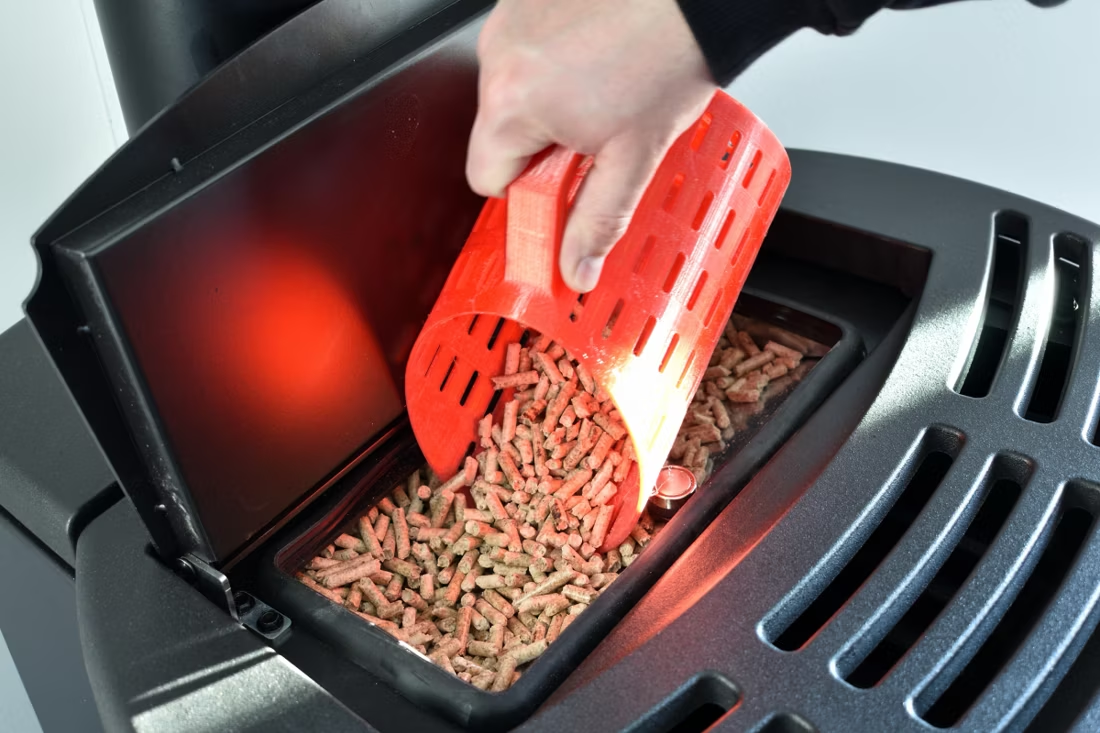
Lignetics and Indeck Energy Services both distribute bagged pellets throughout northwest Missouri, and dealers or farm supply stores serving the county typically stock or special-order them by the ton (roughly 50 forty-pound bags). Given how rural Worth County is, most homeowners buy a season's supply in the fall rather than restocking bag by bag through winter—an outbuilding, barn, or garage keeps pellets dry and off a concrete floor, which matters since damp pellets swell and jam the auger. Plan on 2 to 3 tons for a typical heating season if the stove is your primary or near-primary heat source.
How much maintenance does a pellet stove need?
Pellet stoves need the ash pan emptied every few days to weekly depending on use, and the burn pot scraped out periodically to keep airflow clean—both quick jobs. Beyond that, plan on an annual professional cleaning and inspection that covers the auger, exhaust blower, gaskets, and venting, ideally scheduled in late summer before the heating season starts. It's a lighter maintenance load than a wood-burning chimney sweep, which is part of why pellet stoves appeal to Worth County households juggling farm work through the fall.
When should I install a pellet stove before winter hits?
Late summer through early fall is the ideal window, both to avoid the harvest-season crunch on farms and because pellet demand regionally tends to tighten once cold weather actually arrives. Ordering your first ton or two of pellets early also avoids scrambling if a supplier runs low mid-winter. Installers serving Worth County are generally less booked in August and September than in November, so scheduling early tends to mean faster turnaround.
Are there rebates or tax credits available for a pellet stove in Worth County?
The federal Energy Efficient Home Improvement Credit (Section 25C) currently covers 30 percent of the cost of a qualifying biomass stove—including most EPA-certified pellet stoves rated at 75 percent efficiency or higher—up to a $2,000 annual credit, covering both equipment and installation. Missouri doesn't currently layer a state-level rebate on top of that for pellet appliances, so the federal credit is the main incentive to ask your installer about; they can confirm whether the specific model you're considering qualifies.
Pellet stove or wood stove—which makes more sense for a Worth County home?
With oak, hickory, walnut, and maple all common on Worth County timber ground, plenty of households have easy access to firewood and lean toward a wood stove for that reason, plus the ability to burn without electricity during a storm-related outage. Pellet stoves trade that self-sufficiency for convenience—no splitting or stacking, a thermostat instead of a damper, and cleaner burns—but they do need electricity to run the auger and blower, so they're not a fallback heat source if the power goes out unless paired with a battery backup. For a primary residence with reliable power, pellet tends to win on ease of use; for a hunting cabin, shop, or backup heat setup, wood still has the edge in this county.
Why is my open fireplace making my house colder?
Open fireplaces suck—literally. As the fire burns, it consumes air your furnace already paid to heat and pulls it out through the chimney, so the house is actually colder after the fire goes out than before you lit it. An insert fixes this: it seals the chimney, puts fixed glass across the front, and turns that hole in your house into a real heat source.
What do I measure to size a fireplace insert?
Four numbers tell you what fits: the front width, the front height, the back width, and the overall depth of your existing fireplace opening. Grab a tape measure, jot those down, and snap a photo of the wall—those two things do more to move your project forward than anything else you can do today.
Can I install a fireplace myself?
If you're putting a fire in your house on purpose, it's best to work with an expert. Unless you're genuinely experienced in framing, gas line, vent pipe, and the national code on clearances to combustibles, have a professional do it—and ideally the same company that sells you the fireplace, so warranty, service, and liability all live under one roof.
How much should I budget for a fireplace?
For an average home—covering the fireplace, the vent pipe, and basic installation—a budget between $3,900 and $5,500 gives you a lot of options across wood, gas, and pellet. By the time you add finish work, gas line, and electrical, the average complete installation lands between $5,000 and $12,000 all-in. In a remodel or new build, a good rule is to put about 2.5% of the total project cost toward the fireplace.
Pellet Brands Stocked Around Worth County
Manufacturers will point you to the nearest stocking dealer.
Get matched with a pellet stove dealer serving Worth County.
Tell us about your home and we'll match you with a trusted local dealer and send a free Project Guide & Parts List—the right pellet stove, vent kit, and install plan for your Worth County property.
Find Your Fireplace →