
Find the right electric fireplace for your Worth County home.
No chimney, no gas line, no permit headaches—just plug-in warmth for farmhouses and homes scattered across Missouri's smallest county by population. Get matched with a trusted local dealer.
Every Project Starts From One of These Five Situations
Simple heat for a county where distance is the real challenge.
Worth County sits at Missouri's northwest corner against the Iowa line, with a population just north of 1,300 spread across a landscape of rolling farmland and small towns like Grant City, Sheridan, and Allendale. Climate zone 5A means real winter here—cold enough that hickory, oak, walnut, and maple have long been the go-to firewood species for the county's wood-burning households. But not every home needs, wants, or can easily support a chimney and cordwood supply, and that's where electric fireplaces earn their place.
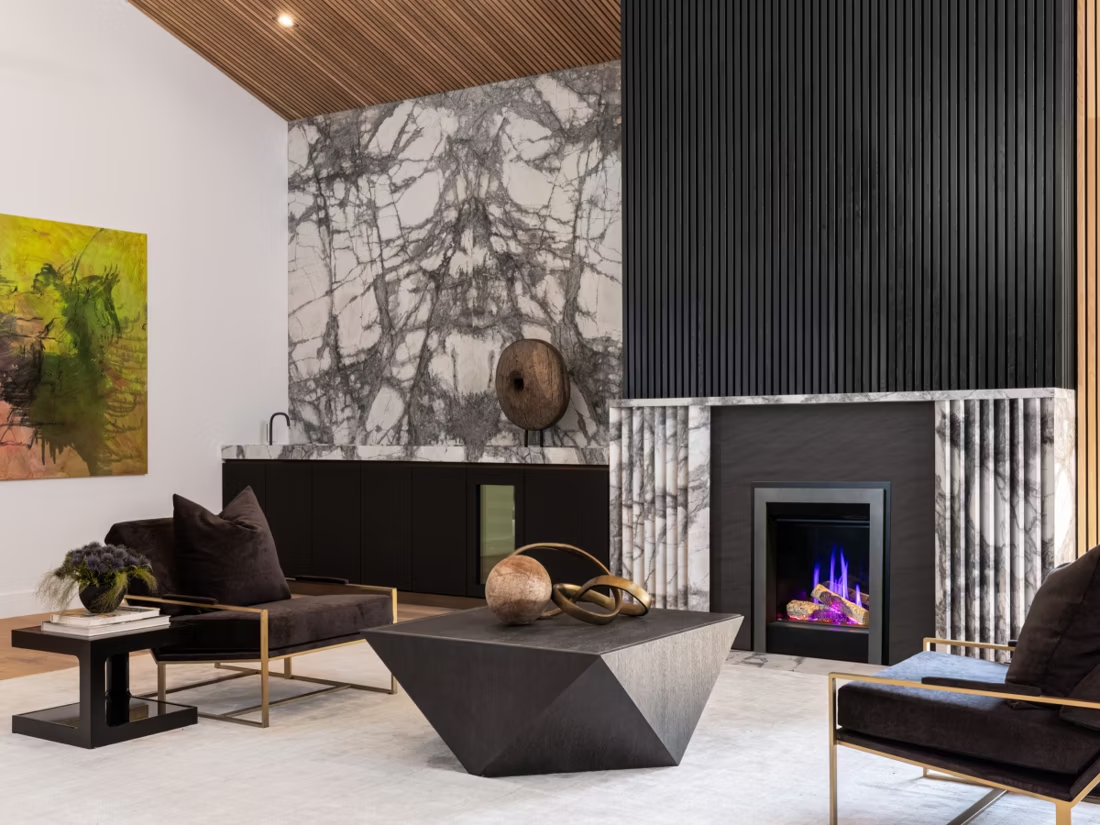
For a supplemental heat source in a bedroom, a converted porch, or an older farmhouse where running new gas line or building a masonry chimney isn't practical, an electric fireplace or insert plugs into a standard outlet and starts producing heat immediately—no venting, no combustion byproducts, no annual chimney inspection. In a rural county where the nearest hearth specialist may be a drive away, that simplicity matters. A qualified local dealer can size the right unit for a drafty older home versus a newer, well-insulated one, and get it installed without the logistics of a full masonry or gas project.
Three steps. No salesperson until you're ready.
Tell us about your project
Your zip code, your situation, and the fuel you're leaning toward—or let the answers point you to one.
See what's actually available
The brands dealers within 100 miles genuinely carry—real options, never a catalog mirage.
Get your dealer & Project Guide
A trusted local dealer, plus the free Project Guide & Parts List that names every component of the job.
Frequently Asked Questions
How much does an electric fireplace installation cost in Worth County?
Typical electric fireplace and insert installations in Worth County run $400 to $1,200, and that range covers most projects—a plug-in freestanding unit needs no installation labor at all, while a built-in wall unit or an insert retrofitted into an existing masonry fireplace opening involves some carpentry and possibly a dedicated circuit. Because electric units don't require venting, gas line work, or chimney modification, costs stay well below wood or gas installs. A local dealer can tell you quickly whether your existing outlet is adequate or whether an electrician needs to add a dedicated 20-amp circuit, which is common for larger 1,500-watt units.
Will an electric fireplace actually heat my house?
Most electric fireplaces are built for supplemental, zone heating rather than whole-house heat—a typical unit puts out around 5,000 BTUs, enough to noticeably warm a single room of 400 square feet or so. In a Worth County farmhouse with drafty older construction, an electric insert can take the edge off a chilly bedroom or sitting room without running the furnace harder, but it won't replace a wood stove or gas furnace as a home's primary heat source. For homes where a bigger heating gap needs filling, it's worth discussing wood or gas options with a local dealer alongside electric.
Do I need a permit to install an electric fireplace in Worth County?
In most cases, no—because electric fireplaces don't involve combustion, venting, or gas lines, they generally fall outside the building permit requirements that apply to wood and gas installations. If your project involves adding a new dedicated electrical circuit, that portion of the work should be done by a licensed electrician to code, but the fireplace unit itself typically doesn't trigger a separate permit. If you're unsure for your specific property, a local dealer can confirm requirements before work begins.
What's the difference between an electric fireplace, insert, and stove?
An electric fireplace is typically a built-in or wall-mounted unit designed to look like a framed fireplace, often with a mantel surround. An electric insert is sized to slot into an existing masonry fireplace opening, letting Worth County homeowners with an old, unused wood fireplace convert it to instant, no-mess heat without touching the chimney. An electric stove is a freestanding unit styled like a wood or pellet stove, useful where you want the cast-iron look without the venting requirements. All three plug into standard household power and are sized primarily on visual fit and room heating needs rather than BTU output for whole-home heating.
Can I use an electric fireplace in an old farmhouse without rewiring the whole place?
Usually, yes. Many electric fireplace models run on a standard 120-volt, 15-amp household circuit, which most Worth County homes—even older farmhouses—already have somewhere near the intended install location. Larger units or those with stronger heating elements may call for a dedicated 20-amp circuit, which an electrician can typically add without a major rewiring project. A local dealer walking through your home can tell you in a few minutes which unit fits your existing wiring and where an upgrade would be worth the small added cost.
Is an electric fireplace a good option for a rental or older home I'm not renovating?
Yes—this is one of the strongest use cases for electric in a county like Worth, where much of the housing stock is older and full renovations aren't always in the cards. A plug-in electric fireplace or a simple insert into an existing but unused masonry fireplace opening adds heat and ambiance without construction, permitting, or venting work. For landlords or homeowners in Grant City, Sheridan, or the surrounding rural areas who want to improve a room without a major project, electric is often the lowest-friction option available.
How does electric compare to wood heat in a county like Worth?
Worth County's winters are cold enough—zone 5A—that wood heat using local oak, hickory, walnut, or maple remains a serious primary or supplemental heat source for many households, especially given the rural acreage that makes cutting and storing firewood practical. Electric fireplaces don't compete with wood on heat output or resilience during a power outage—an electric unit does nothing if the power's out, while a wood stove keeps working. Where electric wins is simplicity: no chimney, no wood stacking, no ash cleanup, and instant heat at the flip of a switch for the rooms that need it. Many rural homes here end up using both—wood as the workhorse, electric for convenience in a specific room.
Do electric fireplaces work during a power outage?
No—electric fireplaces require household power to operate the heating element and any flame-effect lighting, so they go dark along with everything else during an outage. For a rural county like Worth, where winter storms can knock out power for stretches longer than in denser areas, this is a real consideration. If backup heat during outages matters to your household, a wood stove or a propane-fueled option is worth discussing alongside electric with a local dealer, rather than relying on electric as your only heat source.
Where can I find a dealer who installs electric fireplaces near Worth County?
Because Worth County's population is small and spread across a handful of towns, the nearest qualified hearth dealer may be based in a neighboring county rather than in Grant City or Sheridan itself. That's fine for electric installs—since there's no venting or gas line to worry about, a dealer covering the wider region can typically handle delivery and setup without added complication. We match Worth County homeowners with a trusted dealer who serves the area and can size the right unit for your specific room and wiring.
Can I put a TV above my fireplace?
Yes—with an asterisk. Fireplaces are hot and TVs don't like heat. Either put a mantel between them to deflect rising warmth, or choose a fireplace with heat-management technology that creates a cool zone on the wall above—the wall stays around 125 degrees, barely warm, while the room still gets full heat. If you like clean lines and don't want a mantel, heat management is the answer.
Does an electric fireplace need a vent or chimney?
No—that's its superpower. An electric fireplace needs a wall and an outlet, period. No vent pipe, no gas line, no clearances to design around, which is why it works in bedrooms, offices, apartments, and walls where venting a gas or wood unit would be impractical or impossible. Installation is typically the simplest and least expensive of any fireplace type.
Can a fireplace actually lower my heating bill?
Yes—by creating a comfort zone. A furnace heats every square foot of the house just to warm the one room you're in; a gas fireplace on low burns roughly a sixth of the gas a typical furnace does. Set the furnace around 55–60 degrees as a baseline, then heat the rooms your family actually uses. Families who heat this way commonly save $20–$60 a month.
Can I install a fireplace myself?
If you're putting a fire in your house on purpose, it's best to work with an expert. Unless you're genuinely experienced in framing, gas line, vent pipe, and the national code on clearances to combustibles, have a professional do it—and ideally the same company that sells you the fireplace, so warranty, service, and liability all live under one roof.
Get your Worth County electric fireplace Project Guide.
Tell us about your home and we'll match you with a trusted local dealer and send a free Project Guide & Parts List—the exact unit, mounting or insert parts, and a recommended installer for your electric fireplace project in Worth County.
Find Your Fireplace →