
Keep Your Family Warm and Safe—No Matter What
Most homes in this historic streetcar suburb run on gas or electric heat, but a wood-burning insert still has a place for backup warmth and a real fire in an older hearth. Here's what actually works locally.
Every Project Starts From One of These Five Situations
A gas-and-electric suburb with deep hardwood roots.
Webster Groves is a dense, tree-canopied streetcar suburb dating to the 1890s, with narrow lots, mature oak, hickory, walnut, and maple trees lining nearly every block, and winters that are moderate by national standards—an average winter low near 25°F and a comparatively short, mild heating season. That's a fraction of what a place like Madison, WI sees each winter, and it's part of why wood was never the default heating choice here the way it is in colder, more rural parts of the Midwest.
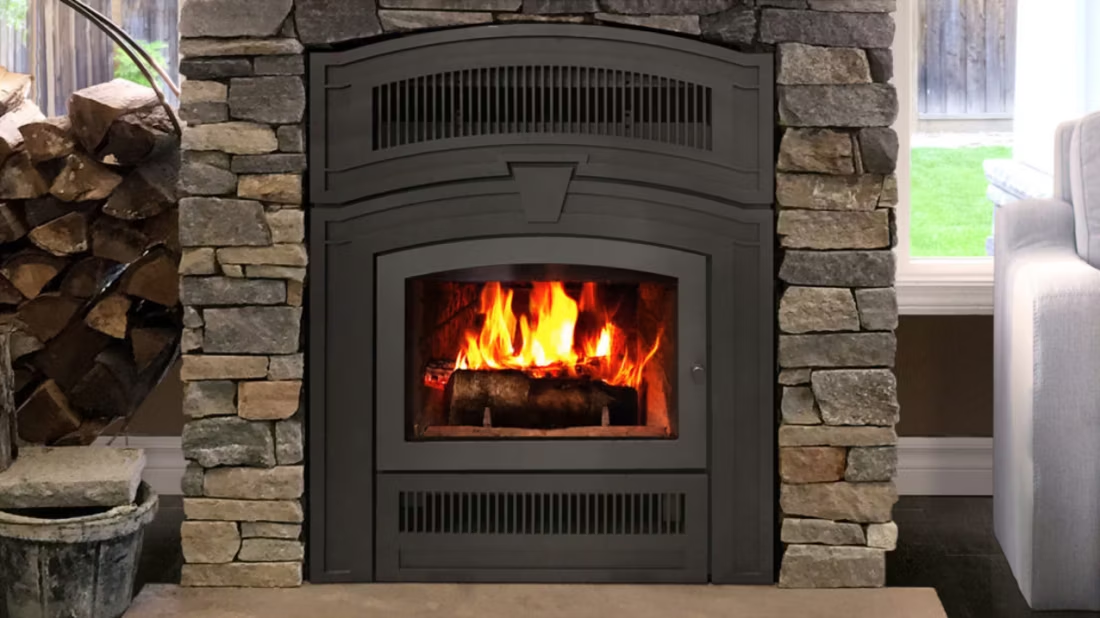
There's also no national forest or BLM land anywhere near St. Louis County, so the self-cut firewood culture that drives wood heat in places with public timber simply doesn't exist here—firewood comes from local tree services and arborists working the same oak and hickory that shade Webster Groves' yards. What does still make sense: a wood-burning insert in one of the neighborhood's many 1920s–40s brick Colonials and bungalows that already have a working masonry fireplace, used for backup heat during Ameren Missouri ice-storm outages or simply for the ambiance of a real fire on a cold night.
Three steps. No salesperson until you're ready.
Tell us about your project
Your zip code, your situation, and the fuel you're leaning toward—or let the answers point you to one.
See what's actually available
The brands dealers within 100 miles genuinely carry—real options, never a catalog mirage.
Get your dealer & Project Guide
A trusted local dealer, plus the free Project Guide & Parts List that names every component of the job.
Frequently Asked Questions
How much does a wood stove or insert cost to install in Webster Groves?
Wood-burning installs are uncommon enough here that there isn't a large pool of local pricing to draw from, but based on typical St. Louis-metro installer rates, a wood insert into an existing masonry fireplace generally runs $3,500 to $7,500, and a freestanding stove with new Class A chimney venting can run higher—$6,000 to $10,000—since most Webster Groves homes weren't built with a wood-stove flue in mind. Get a firm number from a local dealer after they've looked at your existing chimney or framing.
Is a wood stove even practical on a small Webster Groves lot?
It can be, but clearances matter more here than in a rural setting. Many homes in Webster Groves sit close together on lots platted before 1940, so a freestanding stove's required clearance-to-combustibles and the chimney's setback from the property line need to be checked carefully. This is exactly the kind of detail a local installer who's worked in the neighborhood's older housing stock will already know how to navigate—it's usually the deciding factor between a freestanding stove and a insert that reuses your existing masonry chimney.
Where do I get firewood in Webster Groves if there's no public land nearby?
Since St. Louis County has no national forest or state cutting permits within reach, virtually all local firewood comes from tree services, arborists, and firewood dealers rather than self-cut permits. That's actually good news on quality: oak, hickory, walnut, and maple—all dense, high-BTU hardwoods—are the trees regularly coming down across the metro, so seasoned local firewood tends to be excellent burning wood. Expect to pay by the rick or cord from a local supplier rather than a Forest Service permit fee.
Do I need a permit to install a wood stove in Webster Groves?
Yes—any new wood-burning appliance requires a building permit through the City of Webster Groves, which will review chimney placement, clearances, and hearth pad requirements against current code. Because wood installs are relatively rare here, it's worth using an installer who has pulled these permits before in the city rather than one only familiar with rural Missouri or unincorporated county jobs, where the process can differ.
Insert or freestanding stove—which fits an older Webster Groves home?
Most of the housing stock that can support wood heat in Webster Groves already has a working masonry fireplace, which makes a wood insert the more natural fit—it uses the chimney you already have and turns a decorative, heat-losing fireplace into a real secondary heat source. Freestanding stoves are the better call only in homes without an existing chimney, and even then, tight lot lines and close-set houses mean venting and clearance planning takes more care than it would in a more rural setting.
What size wood stove makes sense for this climate?
With a comparatively short, mild heating season and winter lows that average around 25°F, Webster Groves doesn't demand the extreme-cold, 20-plus-hour catalytic burn times that stoves in places like Madison, WI or Fargo, ND are built for. A mid-size non-catalytic insert or stove is usually plenty, since wood heat here is almost always supplemental—backing up a gas furnace during a cold snap or an Ameren Missouri outage rather than carrying the whole heating load through winter.
How often does a wood-burning chimney need inspection here?
An annual inspection before burning season is still the right call even with occasional-use wood heat, which is how most Webster Groves installs get used. A CSIA-certified sweep will check the older masonry and flue liner common in this neighborhood's prewar homes—chimneys of that age often need a liner assessment even if the fireplace itself looks fine—and clear any creosote buildup from the prior season.
Why do most homes in Webster Groves use gas or electric instead of wood?
Gas service is widely available throughout Webster Groves and electric service runs through Union Electric (Ameren Missouri) at a residential rate around 12.5 cents per kWh, and both are simply more convenient for a suburb where most homes are heated primarily by a furnace, not a hearth. Wood requires storage space, hauling, and ash cleanup that don't fit as naturally on a smaller in-town lot, which is why the wood-burning installs that do happen here tend to be supplemental—a second heat source for a finished basement or a backup for winter storm outages—rather than a home's main heating plan.
Does a wood stove make sense as backup heat for ice storms?
For a lot of Webster Groves homeowners, this is actually the main reason to install one. Ice storms are a recurring risk in the St. Louis area and can knock out Ameren Missouri service for days at a time, and a wood stove or insert is one of the few heat sources that keeps working with zero electricity. If backup heat during outages is the goal, a simple, well-built non-catalytic stove or insert without electronic blowers tends to be the more reliable choice—a local dealer can point you toward models that truly don't depend on power to function.
Why is a fireplace insert so efficient?
An insert does two things: it seals the chimney completely, so you stop losing air you already paid to heat, and it radiates warmth into the room through the firebox and glass. Most add a heat-exchange fan that pulls cool room air underneath, wraps it around the hot firebox, and pushes it back out warm. Your home is more efficient before you've even lit the first fire.
Why won't my new wood stove get going like my old one?
New wood stoves are 70%+ efficient, so far less heat goes up the flue—which also means less draft to get a fire established. The rule: build a genuinely hot fire for about 45 minutes before you choke it down. Skip that and you get smoke in the room, creosote in the chimney, and a fire that never takes off. Most performance complaints trace straight back to this.
What is an in-home preview and do I need one?
It's a visit where a hearth professional measures your space, confirms the model you picked actually works in your home, and walks the specs—framing, gas line, venting, finish work—before anything is ordered. Some details you just can't know until you see the house. Never make a down payment without one; it's the single most-skipped step that burns buyers.
How much should I budget for a fireplace?
For an average home—covering the fireplace, the vent pipe, and basic installation—a budget between $3,900 and $5,500 gives you a lot of options across wood, gas, and pellet. By the time you add finish work, gas line, and electrical, the average complete installation lands between $5,000 and $12,000 all-in. In a remodel or new build, a good rule is to put about 2.5% of the total project cost toward the fireplace.
Nearby Dealers
Hearth shops serving Webster Groves and the surrounding area. Every listing shows whether it is a WhyFire partner, a dealer we have verified as authorized for the brands we recommend, or a local business carrying hearth products. No manufacturer pays for placement. How we verify dealers →
Savvy Surroundings
Forshaws
English Sweep
Villa Lighting Supply
Fireplace And Grill Center
Fireside Hearth & Grill Center
Gas Appliance Service LLC
Arnold Stove & Fireplace Center
Summer Classics By Forshaw
Brighthouse Living
Hearthside Grill & Fireplace
Bel-O Fireplaces & More
Find your wood fireplace option in Webster Groves.
Tell us about your home and whether you're after backup heat or ambiance, and we'll match you with a local dealer who installs wood inserts and stoves in this area—plus a free Project Guide & Parts List for your specific setup.
Find Your Fireplace →