
Steady, low-maintenance heat for Webster County winters.
Webster County's Ozark Plateau winters average lows near 22°F with about 4,689 heating degree days a year—cold enough to matter, mild enough that a pellet stove's auto-feed convenience makes real sense. Find the right unit and connect with a trusted local dealer.
Every Project Starts From One of These Five Situations
A modern option for oak and hickory country.
Webster County sits in the rolling Ozark Plateau of south-central Missouri, with Marshfield as the county seat and smaller communities—Rogersville, Fordland, Seymour, Niangua, Diggins—spread across hardwood ridges and pasture. Climate zone 4A puts the county in genuinely moderate territory: nowhere near the sub-zero stretches you'd see in a place like Madison, Wisconsin, but cold enough for real winter heating demand from November through March. Unlike parts of the country dealing with wood-smoke non-attainment zones, Webster County has no listed air quality restrictions, so the appeal of pellet heat here isn't regulatory—it's about convenience, consistent heat output, and not having to split, stack, or haul cordwood every season.
The county's oak, hickory, walnut, and maple forests have long supported a strong wood-heat culture, and pellet stoves give homeowners a lot of that same radiant warmth without the daily firewood work. Regional pellet supply runs through brands like Lignetics and Indeck Energy Services, both of which move hardwood pellets through Missouri and Midwest distribution networks, so local dealers generally have decent access to bagged fuel even in a smaller county like this one. The one thing to plan around is electricity—pellet stoves depend on it to run the auger and combustion blower, and Webster Electric Cooperative, which serves much of the county, can see outages during Ozark ice storms. A battery backup or small generator is worth discussing with your installer if reliable winter heat matters to you.
Three steps. No salesperson until you're ready.
Tell us about your project
Your zip code, your situation, and the fuel you're leaning toward—or let the answers point you to one.
See what's actually available
The brands dealers within 100 miles genuinely carry—real options, never a catalog mirage.
Get your dealer & Project Guide
A trusted local dealer, plus the free Project Guide & Parts List that names every component of the job.
Frequently Asked Questions
How much does a pellet stove installation cost in Webster County?
Most pellet stove installations in Webster County land somewhere between $3,000 and $6,000, depending on the unit, whether it's a freestanding stove or an insert going into an existing masonry fireplace, and how much venting work is involved. A pellet insert into an existing fireplace is typically on the lower end since it reuses the existing opening and often just needs a smaller-diameter vent liner run through the chase. New construction or a stove going into a room with no existing chimney runs higher once wall or roof penetration and venting are factored in. A local dealer will give you a firm number after seeing your space.
What size pellet stove do I need for my home?
Webster County's climate zone 4A and roughly 4,689 heating degree days put most homes in the small-to-medium range rather than needing a maxed-out unit. A stove rated for 1,000 to 1,600 square feet handles a typical living area or open-plan main floor here; larger farmhouses or homes with less insulation may want something rated closer to 2,000 square feet. Older homes on the ridges around Fordland or Niangua, which tend to be draftier, often do better sized up rather than down. A local retailer can walk your space and size it properly rather than guessing off square footage alone.
Pellet stove vs. wood stove—which makes more sense in Webster County?
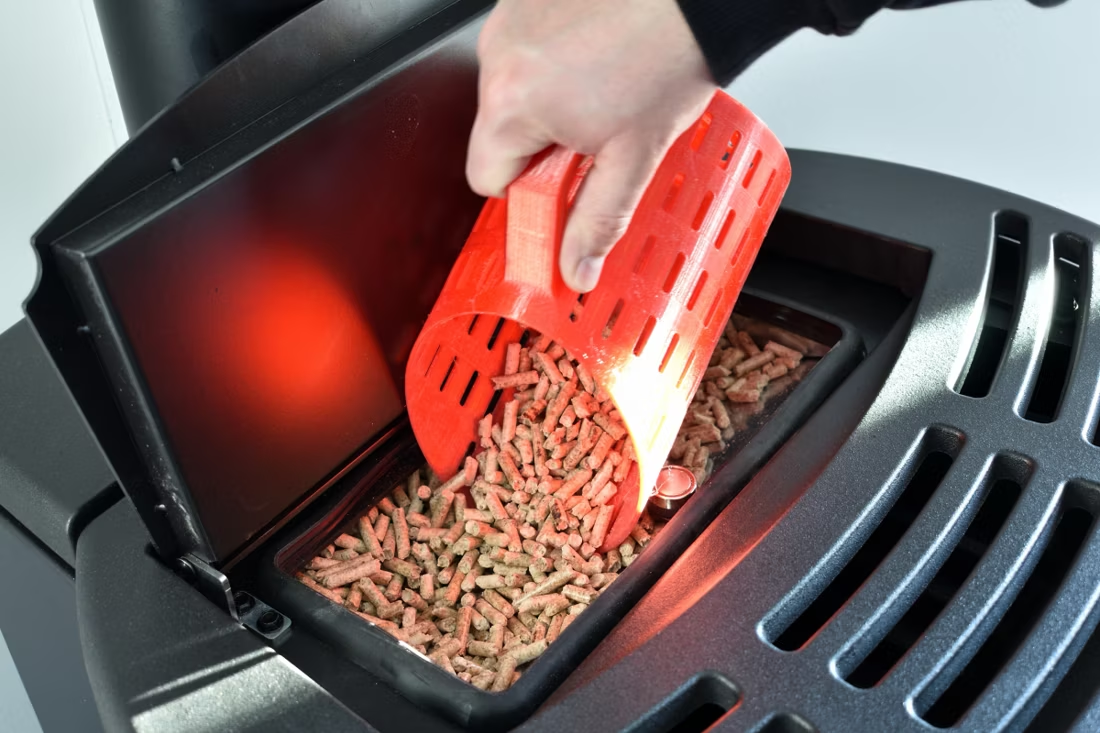
With oak, hickory, walnut, and maple all common on Webster County properties, plenty of homeowners here still burn cordwood, and a wood stove will out-produce a pellet stove on raw heat per dollar if you're cutting your own firewood. But a pellet stove trades that labor for convenience—load the hopper, set the thermostat, and it runs itself for a day or more without tending. Pellet stoves also burn cleaner with far less ash and no chimney creosote buildup to worry about. The tradeoff is electricity dependency: a wood stove keeps working in a power outage, a pellet stove doesn't unless it's on battery backup. For a primary living space where convenience matters most, pellet often wins; for backup heat during winter storms, wood still has the edge.
Do I need a permit to install a pellet stove in Webster County?
Most jurisdictions in Missouri require a building permit for a new solid-fuel appliance installation, including pellet stoves, and Webster County is no exception for construction covered under the county building code. The stove itself needs to be UL-listed and installed to the manufacturer's clearance and venting specifications. Most established local dealers handle the permit paperwork as part of the installation, so you typically aren't the one filing it. It's worth confirming with your installer up front whether your specific property—inside a town like Marshfield or Rogersville versus unincorporated county land—falls under a different permitting process.
Where can I buy pellet fuel in Webster County, and what does it cost?
Regional supply in this part of Missouri runs largely through brands like Lignetics and Indeck Energy Services, both of which distribute hardwood pellets through Midwest dealer networks, so local hearth retailers can usually keep bagged fuel in stock through the winter. Expect to pay somewhere in the range of $250 to $320 per ton for standard hardwood pellets, sold by the bag (40 lb) or by the pallet (a ton per pallet, roughly 50 bags). Buying by the pallet ahead of the coldest months, rather than bag by bag mid-winter, is usually the better deal and avoids running out during a cold stretch.
Will my pellet stove still work if the power goes out?
Not without a backup plan. Pellet stoves rely on electricity to run the auger that feeds fuel and the blower that pushes combustion air and heat into the room—no power means no fire, even with a full hopper. Webster Electric Cooperative serves much of the county, and while outages aren't constant, Ozark ice storms can knock out power for hours or occasionally days during the coldest stretches of winter. Homeowners who want pellet convenience but also want heat during an outage typically pair the stove with a small battery backup unit or a portable generator sized to run the stove's electrical load. Ask your local dealer about backup options when you're sizing the unit.
How often does a pellet stove need cleaning and service?
Pellet stoves need more frequent attention than a lot of people expect, just not the kind of work a wood chimney requires. Plan on emptying and cleaning the ash pot every few days to weekly depending on use, cleaning the burn pot and glass regularly, and having a full professional service—including the venting, exhaust fan, and auger mechanism—once a year, usually before the start of the season. Because pellet stoves vent through a smaller-diameter pipe than a wood stove chimney, that vent can clog with fly ash and creosote buildup if skipped for multiple seasons, so annual service isn't optional if you want reliable heat through a Webster County winter.
Pellet stove vs. gas insert—which is a better fit?
Gas offers instant on-off heat at the flip of a switch with no fuel loading or ash to deal with, and it's a strong option for homes on natural gas or propane in Webster County. Pellet stoves take a bit more hands-on management—loading the hopper, emptying ash—but they burn a renewable, often locally sourced hardwood fuel and typically cost less to run per BTU than propane, which is the common alternative to natural gas in the more rural parts of the county. If your priority is zero-maintenance convenience, gas is simpler. If you'd rather burn a wood-based fuel without the labor of cordwood, pellet is the middle ground.
Is a pellet stove a good fit for Webster County's climate?
Yes—Webster County's zone 4A climate, with winter lows averaging around 22°F and roughly 4,689 heating degree days a year, is close to the sweet spot for pellet heat. It's cold enough that a pellet stove will see real, regular use as either a primary or strong supplemental heat source, but not so extreme that you need the kind of 20-plus-hour catalytic wood burn times homes further north rely on. Compared to a genuinely harsh climate like Duluth, Minnesota, Webster County's winters are manageable enough that a mid-sized pellet unit, properly sized to your square footage, can carry a typical home through the coldest months without strain.
Why is a fireplace insert so efficient?
An insert does two things: it seals the chimney completely, so you stop losing air you already paid to heat, and it radiates warmth into the room through the firebox and glass. Most add a heat-exchange fan that pulls cool room air underneath, wraps it around the hot firebox, and pushes it back out warm. Your home is more efficient before you've even lit the first fire.
What does it take to replace an existing fireplace?
Fireplaces are like icebergs—bigger behind the wall than in front of it. Replacement means removing the surrounding tile or stone (the finish material laps onto the fireplace face), pulling the old unit, setting the new one in the same enclosure, and re-finishing the wall. A hearth professional can determine what's behind your wall without demolition during an in-home preview.
What is an in-home preview and do I need one?
It's a visit where a hearth professional measures your space, confirms the model you picked actually works in your home, and walks the specs—framing, gas line, venting, finish work—before anything is ordered. Some details you just can't know until you see the house. Never make a down payment without one; it's the single most-skipped step that burns buyers.
How much should I budget for a fireplace?
For an average home—covering the fireplace, the vent pipe, and basic installation—a budget between $3,900 and $5,500 gives you a lot of options across wood, gas, and pellet. By the time you add finish work, gas line, and electrical, the average complete installation lands between $5,000 and $12,000 all-in. In a remodel or new build, a good rule is to put about 2.5% of the total project cost toward the fireplace.
Stove and Fireplace Dealers in Webster County
Pellet Brands Stocked Around Webster County
Manufacturers will point you to the nearest stocking dealer.
Find your pellet stove in Webster County.
Tell us a bit about your home and we'll match you with a trusted local dealer and send over a free Project Guide & Parts List—a plan for your pellet project in Webster County with the exact parts, including the vent kit, and the dealer we recommend for your area.
Find Your Fireplace →