
Zone heat built for Ozark plateau winters.
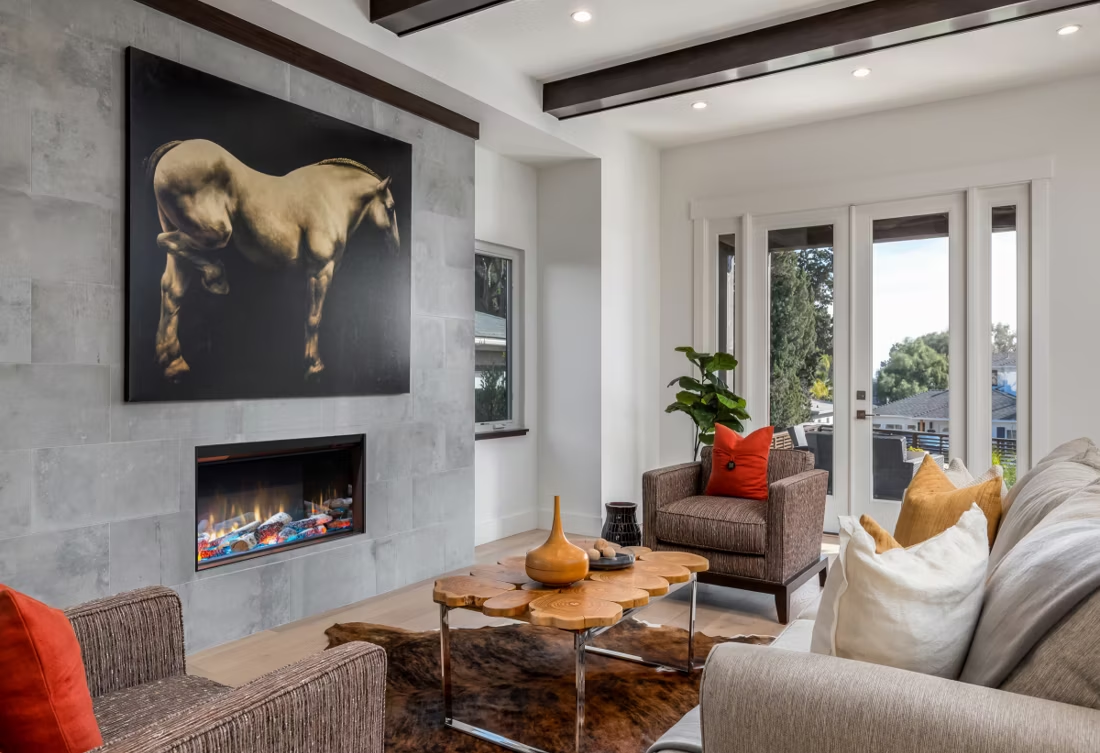
With winter lows averaging 22°F and 4,689 heating degree days, Webster County doesn't need a wood-burning commitment to stay warm. An electric fireplace or insert adds real, controllable heat to a bedroom, sunroom, or finished basement with no chimney, no gas line, and no permit fight. I'll match you with a trusted local dealer who knows what your home's wiring can actually support.
Every Project Starts From One of These Five Situations
A mild-cold climate where zone heating makes sense.
Webster County sits on the Springfield Plateau in the southwest Missouri Ozarks, a rolling landscape of pasture and hardwood timber anchored by the county seat of Marshfield, with smaller communities like Seymour, Rogersville, Fordland, and Diggins spread across the county's roughly 10,895 residents. Winters here are real but comparatively mild: an average low of 22°F and 4,689 heating degree days put Webster County closer to a typical Missouri season than the sustained deep freezes you'd see in Fargo, ND, or Minneapolis. That's exactly the kind of climate where an electric fireplace earns its keep—it's not shouldering the whole heating load through a five-month cold stretch, it's adding fast, thermostat-controlled warmth to the room people actually spend time in.
Most of unincorporated Webster County has no natural gas main, so homes lean on propane, wood, or all-electric systems, and a good share of the rural county is served by Webster Electric Cooperative rather than a municipal utility. That electric-heavy baseline is part of why electric fireplaces fit naturally here: a homeowner running a heat pump that loses efficiency once outdoor temperatures drop into the low 20s can add a 1,500-watt electric insert to the main living area and cut back on expensive resistance backup heat, without an electrician doing more than confirming a standard outlet can carry a plug-in unit or running a dedicated 240-volt circuit for a larger built-in. Oak, hickory, walnut, and maple still heat plenty of farmhouses on wood alone, and pellet stoves stocked with Lignetics or Indeck Energy Services fuel are an option too, but for manufactured homes, rentals, and rooms without a chimney, electric is often the simplest way to add real heat.
Three steps. No salesperson until you're ready.
Tell us about your project
Your zip code, your situation, and the fuel you're leaning toward—or let the answers point you to one.
See what's actually available
The brands dealers within 100 miles genuinely carry—real options, never a catalog mirage.
Get your dealer & Project Guide
A trusted local dealer, plus the free Project Guide & Parts List that names every component of the job.
Frequently Asked Questions
How much does an electric fireplace installation cost in Webster County?
A plug-in freestanding or wall-mount electric fireplace that runs on a standard 120-volt outlet is the least expensive route, with most installed projects landing in the low hundreds to around $1,500 including mounting and trim work. A built-in electric insert or linear unit that needs a dedicated 240-volt circuit run from the panel typically costs more once an electrician is involved, often $1,500 to $3,500 depending on how far the run is from the breaker box. Because Webster County is a small, largely rural county, some specialty hearth dealers and electricians are based out of Springfield in neighboring Greene County, so homes farther out toward Seymour or Fordland may see a modest trip charge worked into the quote.
What size electric fireplace do I need to heat a room?
Most 1,500-watt electric fireplace inserts are rated to comfortably heat 400 to 1,000 square feet, which covers a typical living room or den in a Webster County ranch house or manufactured home. Older farmhouses around Marshfield or Northview with open floor plans and less insulation may need a larger unit or a second zone unit in an adjoining room to feel the difference on a 22°F morning. Keep in mind these units are built for supplemental, zone-based heating rather than whole-home heating—they're meant to take the edge off a specific room, not replace your furnace or heat pump.
Do I need a permit to install an electric fireplace in Webster County?
Like most rural Missouri counties, unincorporated Webster County does not enforce a countywide building or electrical code, so a straightforward electric fireplace install typically doesn't require a county permit. If your home is inside Marshfield or Seymour city limits, it's worth a quick call to the city office, since some incorporated towns in the county have adopted their own electrical permitting for new dedicated circuits. Either way, a licensed electrician wiring a new 240-volt circuit should pull whatever permit is applicable and have the work inspected—it's a small step that protects you if you ever sell the house.
Does my home's wiring support an electric fireplace insert?
It depends on the unit and your panel. A small plug-in fireplace pulls about the same load as a space heater and works fine on an existing 15-amp circuit, as long as nothing else demanding is sharing that circuit. A larger built-in insert or linear fireplace usually calls for a dedicated 20-amp, 240-volt circuit, which means an electrician needs to confirm your panel has room and run new wire. This comes up often in older Webster County farmhouses with dated fuse panels and in manufactured homes, where panel capacity can be tighter than in newer construction—a local electrician or your matched dealer can check this before you buy a unit that draws more than your panel can handle.
How does an electric fireplace compare to a wood-burning fireplace in this county?
Wood heat has deep roots here—oak, hickory, walnut, and maple are all common on Webster County's Ozark timberland, and plenty of households still split and stack cordwood every fall. But wood requires a chimney, annual sweeping, and someone tending the fire, which isn't practical for every home. Electric fireplaces need none of that: no venting, no creosote, no combustion byproducts, and they turn on and off with a remote. That makes electric a good fit for manufactured homes, rentals, condos, and any room without an existing chimney—or simply for a homeowner who wants ambiance and supplemental warmth without the maintenance a wood stove demands.
How much does it cost to run an electric fireplace through a Webster County winter?
A typical 1,500-watt electric fireplace run for several hours a day costs roughly a dollar or two per day in electricity, depending on your rate through Webster Electric Cooperative or your local utility, and most units let you run the flame effect alone without the heater for near-zero-cost ambiance. Because Webster County's winters are moderate compared to the northern Midwest—4,689 heating degree days versus well over 8,000 in a place like Minneapolis—an electric fireplace used for zone heating rather than as a full furnace replacement tends to be an affordable way to reduce reliance on a heat pump's backup resistance strips on the coldest nights.
Can I install an electric fireplace in a manufactured or mobile home?
Yes, and it's one of the more common installs across Webster County's rural housing stock, which includes a significant share of manufactured and mobile homes. Electric units avoid the clearance-to-combustible and chimney requirements that make wood stoves difficult or impossible in many manufactured homes, and a plug-in or surface-mounted unit can usually go in without any structural changes. If you're aiming for a built-in look, just confirm wall cavity depth and panel capacity with your dealer first, since manufactured-home wiring and framing can differ from site-built construction.
Electric or propane—which makes more sense for supplemental heat here?
Since natural gas mains don't reach most of unincorporated Webster County, propane is the common alternative to electric for supplemental heating, usually in the form of a freestanding propane heater or a vent-free log set. Propane can put out more raw heat and doesn't depend on your electric panel's capacity, but it means maintaining a tank, scheduling deliveries, and dealing with fuel price swings. Electric fireplaces trade some heat output for simplicity—no tank, no delivery, no combustion venting—and tend to be the lower-hassle choice for a homeowner who wants supplemental warmth in one or two rooms rather than a backup heating system for the whole house.
How long do electric fireplaces last, and what maintenance do they need?
Most electric fireplace units are rated for 15,000 to 20,000+ hours of use on their heating element and considerably longer on the LED flame display, which for typical supplemental use in a Webster County home translates to well over a decade of service. Maintenance is minimal compared to a wood-burning system: no annual chimney sweep, no creosote to manage, just occasional dusting of the vents and an eye on the fan for noise, which usually signals it's time to clean out accumulated dust. If a heating element does fail, most manufacturers sell replacement parts, and a local dealer can usually swap it without replacing the whole unit.
Can I put a TV above my fireplace?
Yes—with an asterisk. Fireplaces are hot and TVs don't like heat. Either put a mantel between them to deflect rising warmth, or choose a fireplace with heat-management technology that creates a cool zone on the wall above—the wall stays around 125 degrees, barely warm, while the room still gets full heat. If you like clean lines and don't want a mantel, heat management is the answer.
How much does an electric fireplace cost to run?
With the heater on, a typical unit draws about 1,500 watts—at average electric rates that's roughly 20 cents an hour. Run the flame effect alone and it costs pennies; the flames are LED-driven and use about as much power as a light bulb. There's no pilot light, no fuel delivery, and essentially no maintenance.
How much should I budget for a fireplace?
For an average home—covering the fireplace, the vent pipe, and basic installation—a budget between $3,900 and $5,500 gives you a lot of options across wood, gas, and pellet. By the time you add finish work, gas line, and electrical, the average complete installation lands between $5,000 and $12,000 all-in. In a remodel or new build, a good rule is to put about 2.5% of the total project cost toward the fireplace.
Does a fireplace add value to my home?
On average, a fireplace adds back to the home about the same amount you spent installing it. Add the monthly savings from heating the rooms you actually use instead of the whole house—often hundreds of dollars a year—and the value case is strong before you even count what a fire does for how your family uses the room.
Stove and Fireplace Dealers in Webster County
Get your free Project Guide & Parts List for an electric fireplace in Webster County.
Tell me about your home, its wiring, and where you want the heat, and I'll match you with a trusted local Webster County dealer and send over a free Project Guide & Parts List—the right unit, the circuit requirements, and a recommended installer for your electric fireplace project, no big-box guesswork.
Find Your Fireplace →