
Consistent, hands-off heat for Washington County winters.
From Potosi to Belgrade and out along Highway 21, a pellet stove gives Ozark foothill homes thermostat-controlled heat without the daily wood-splitting. Find the right unit and connect with a trusted local dealer.
Every Project Starts From One of These Five Situations
A modern option in Ozark hardwood country.
Washington County sits in the eastern Ozark foothills of Missouri, old Lead Belt country around Potosi, with oak, hickory, walnut, and maple stands covering much of the rural landscape. Winters here are moderate by national standards—climate zone 4A, average lows around 21°F, and a fairly long, steady heating season—but they're long enough, and rural power can be spotty enough, that a lot of homeowners want something more reliable than a space heater and less demanding than a wood stove. That's where pellet heat has carved out a real niche in a county of just under 3,700 people spread across small towns and unincorporated stretches.
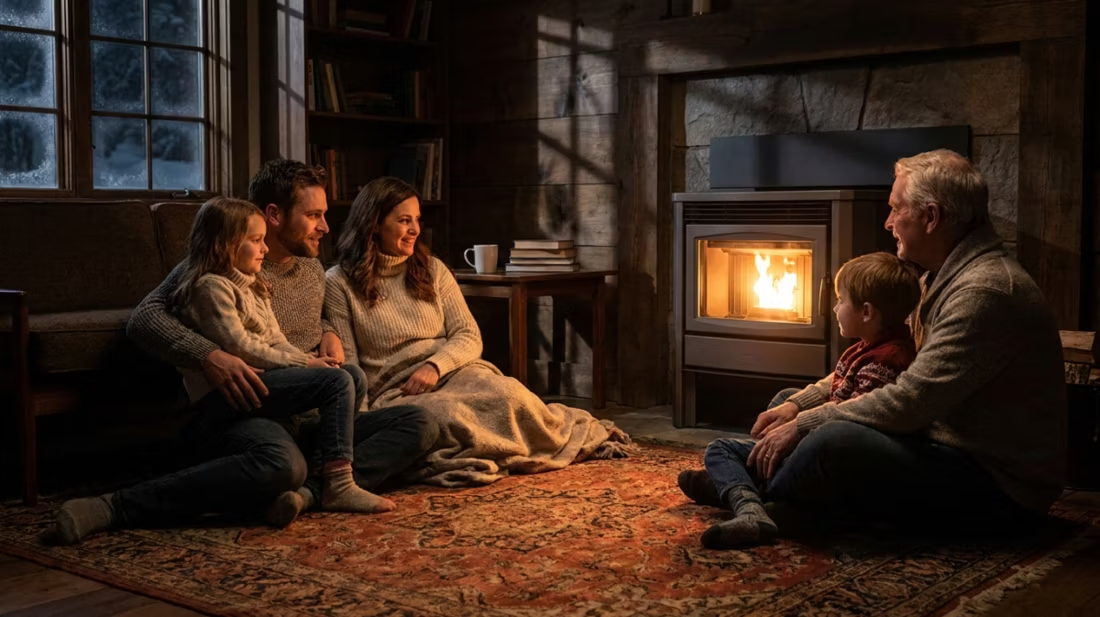
A pellet stove burns compressed hardwood pellets fed automatically from a hopper, so you set a thermostat instead of tending a firebox. There are no local air quality restrictions or burn-ban concerns in Washington County, and pellet units burn cleaner than cordwood by a wide margin, which matters if you're heating a smaller home or a room close to neighbors. Regional suppliers including Lignetics and Indeck Energy Services keep pellets reasonably available in this part of Missouri, and a trusted local dealer can size a unit correctly, handle the wall venting, and get you a stove that actually fits your square footage and your home's insulation—not a big-box guess.
Three steps. No salesperson until you're ready.
Tell us about your project
Your zip code, your situation, and the fuel you're leaning toward—or let the answers point you to one.
See what's actually available
The brands dealers within 100 miles genuinely carry—real options, never a catalog mirage.
Get your dealer & Project Guide
A trusted local dealer, plus the free Project Guide & Parts List that names every component of the job.
Frequently Asked Questions
How much does a pellet stove installation cost in Washington County?
Most pellet stove installations in this part of Missouri run between roughly $3,000 and $6,000, including the unit and the PL-vent (pellet vent) run through an exterior wall. Costs land toward the lower end for a straightforward through-wall installation in an existing room and climb toward the higher end if you're converting an old masonry fireplace to a pellet insert, need electrical work added for the hopper and blower, or are installing in new construction without existing venting infrastructure. A local dealer will give you a firm number after seeing the space, but pellet installs are generally simpler and less expensive than wood stove chimney work since the venting is smaller diameter and doesn't require a full masonry chimney.
What size pellet stove do I need for my home?
It depends on your square footage and how the home is insulated—a real consideration in a county with a mix of older farmhouses and newer construction. A smaller unit rated for roughly 1,000-1,500 square feet works well for a single main living area or an older, drafty home used as supplemental heat. A mid-size unit in the 1,500-2,200 square foot range covers most Washington County homes looking for primary or near-primary heat through the winter. Larger, open-concept homes may need a bigger hopper capacity and higher BTU output to keep up on the coldest nights near that 21°F average low. A local dealer can walk your space and size it properly rather than guessing off square footage alone.
Where do I buy pellets, and how much should I store?
Pellets are sold by the 40-pound bag or by the ton (roughly fifty bags), and regional brands like Lignetics and Indeck Energy Services are commonly stocked by dealers serving this part of Missouri. A typical Washington County home burning a pellet stove as primary heat through a full winter uses somewhere between 2 and 3 tons of pellets, less if it's supplemental heat alongside a furnace. Pellets need to stay bone dry, so plan for indoor storage—a garage, basement, or dedicated storage room—since a damp bag of pellets will jam the auger and won't burn efficiently. Buying a season's supply in late summer or early fall, before demand picks up, is generally the more cost-effective approach.
Do I need a permit to install a pellet stove in Washington County?
Yes, a building permit is typically required for a new pellet stove installation through the Washington County building department, or the applicable city office if you're inside Potosi city limits. The permit process confirms the unit is properly vented and clears combustible materials by code. Most local dealers handle the permit paperwork and inspection scheduling as part of the installation, so it's rarely something the homeowner has to manage directly. Unlike wood stoves in some states, there's no EPA curtailment or burn-ban restriction to navigate here—Washington County has no listed air quality concerns that affect pellet stove operation.
How much maintenance does a pellet stove need?
Pellet stoves need more routine attention than a gas unit but less than a wood stove. Plan on emptying the ash pan every few days to weekly depending on use, cleaning the burn pot and glass regularly, and vacuuming the hopper and auger area every few weeks during heavy-use months. Most manufacturers recommend a full professional service annually—checking the auger motor, combustion blower, gaskets, and venting—typically before the start of the heating season in early fall. A local dealer or service tech can handle that annual visit, which also keeps the warranty intact on most units.
What happens to my pellet stove during a power outage?
This is worth planning for in rural Washington County, where ice storms and downed lines aren't rare. Unlike a wood stove, a pellet stove depends on electricity to run the auger, igniter, and combustion blower—no power means no heat from the unit, even with a full hopper. Some homeowners pair a pellet stove with a small battery backup unit or a portable generator sized to run the stove's low draw (usually under 500 watts), which keeps heat available through shorter outages. If backup, no-electricity heat is a priority for your household, it's worth discussing a wood stove as a secondary option alongside your pellet unit—plenty of local homes run both.
Pellet stove vs. wood stove—which makes more sense here?
Washington County has abundant oak and hickory, and a long tradition of cutting and burning cordwood, so a wood stove is a completely viable choice here too. The tradeoff is convenience versus self-sufficiency: a pellet stove means no splitting, stacking, or hauling wood, cleaner glass, and thermostat control, but it needs electricity and a steady pellet supply. A wood stove runs with zero power, can burn wood you cut or bought locally, and holds a fire longer on a cold night, but demands more physical work and daily attention. Many homeowners in the county end up choosing pellet for the main living space where convenience matters most, with a wood stove or fireplace elsewhere as backup.
What pellet stove brands are available through local dealers?
Local hearth dealers serving Washington County typically carry a mix of established pellet stove manufacturers alongside regional pellet fuel from suppliers like Lignetics and Indeck Energy Services, both of which distribute in this part of Missouri. Availability varies by dealer, so it's worth asking specifically which stove brands a given retailer stocks, installs, and services locally—a stove that's easy to get parts and service for nearby matters more long-term than a brand name alone. A trusted local dealer will steer you toward units they can actually support with parts and technicians in this area.
Are there rebates or tax credits for installing a pellet stove?
At the federal level, biomass stoves—including qualifying pellet stoves rated at 75% efficiency or higher—are eligible for a tax credit covering 30% of the total cost (equipment and installation) up to $2,000 per year, under the current federal energy efficiency tax credit rules. Missouri doesn't currently layer a state-specific pellet stove rebate on top of that, so the federal credit is the main incentive to factor into your budget. A local dealer can confirm which specific models they carry meet the efficiency threshold and provide the documentation you'll need for tax filing.
How often does a pellet stove need cleaning?
A clean pellet stove is a happy pellet stove. Plan on cleaning the burn pot about once a week when you're burning regularly—ash and clinkers gum up the air holes just like a pellet barbecue. Most pellet stove problems trace back to skipped cleaning that nobody explained up front. Some designs make it easy with a trapdoor burn pot: pull a lever and the gunk drops into the ash pan.
What's the difference between an insert and a zero-clearance fireplace?
An insert is a fireplace that slides into a pre-existing wood-burning fireplace—if you don't have one, there's nothing to insert it into. A zero-clearance fireplace is built into a framed wall, which makes it the answer for remodels and new construction. Simple test: existing masonry fireplace means insert; blank or framed wall means zero-clearance.
Can I install a fireplace myself?
If you're putting a fire in your house on purpose, it's best to work with an expert. Unless you're genuinely experienced in framing, gas line, vent pipe, and the national code on clearances to combustibles, have a professional do it—and ideally the same company that sells you the fireplace, so warranty, service, and liability all live under one roof.
How much should I budget for a fireplace?
For an average home—covering the fireplace, the vent pipe, and basic installation—a budget between $3,900 and $5,500 gives you a lot of options across wood, gas, and pellet. By the time you add finish work, gas line, and electrical, the average complete installation lands between $5,000 and $12,000 all-in. In a remodel or new build, a good rule is to put about 2.5% of the total project cost toward the fireplace.
Pellet Brands Stocked Around Washington County
Manufacturers will point you to the nearest stocking dealer.
Find your pellet stove in Washington County.
Tell us a bit about your home and we'll match you with the right pellet stove or insert, plus a free Project Guide & Parts List and a trusted local dealer to install it.
Find Your Fireplace →