
Heat your Washington County home right, whatever the fuel.
Wood, gas, pellet, and electric fireplace resources for Potosi and the smaller communities scattered across Washington County's Ozark foothills. Find the right unit for your home and get matched with a local hearth retailer who can actually install it.
Every Project Starts From One of These Five Situations
Ozark foothills heating in Washington County, Missouri.
Washington County sits in the Ozark foothills of east-central Missouri, with a winter heating load a bit lighter than places like Duluth MN or Fargo ND—winter lows averaging around 21°F—but still cold enough that a poorly sized system leaves rooms cold from December through February. The county's oak-hickory forest—oak, hickory, walnut, and maple—has supplied firewood to farms and homesteads here for generations, and that supply hasn't dried up. Private timber, farm woodlots, and small-scale firewood dealers keep wood a practical, low-cost fuel for a lot of households, especially outside of Potosi where propane is often the only gas option.
This hub covers hearth retailers, service technicians, and fuel suppliers serving Washington County—Potosi, the county seat, plus the smaller unincorporated communities spread across the county's hills and hollows. Unlike parts of the St. Louis metro to the northeast, Washington County has no air-quality nonattainment designation and no mandated burn curtailment days, so wood-burning decisions here come down to home fit and fuel cost, not regulatory restriction. Pick your fuel below for local dealers, install costs, and recommended units.
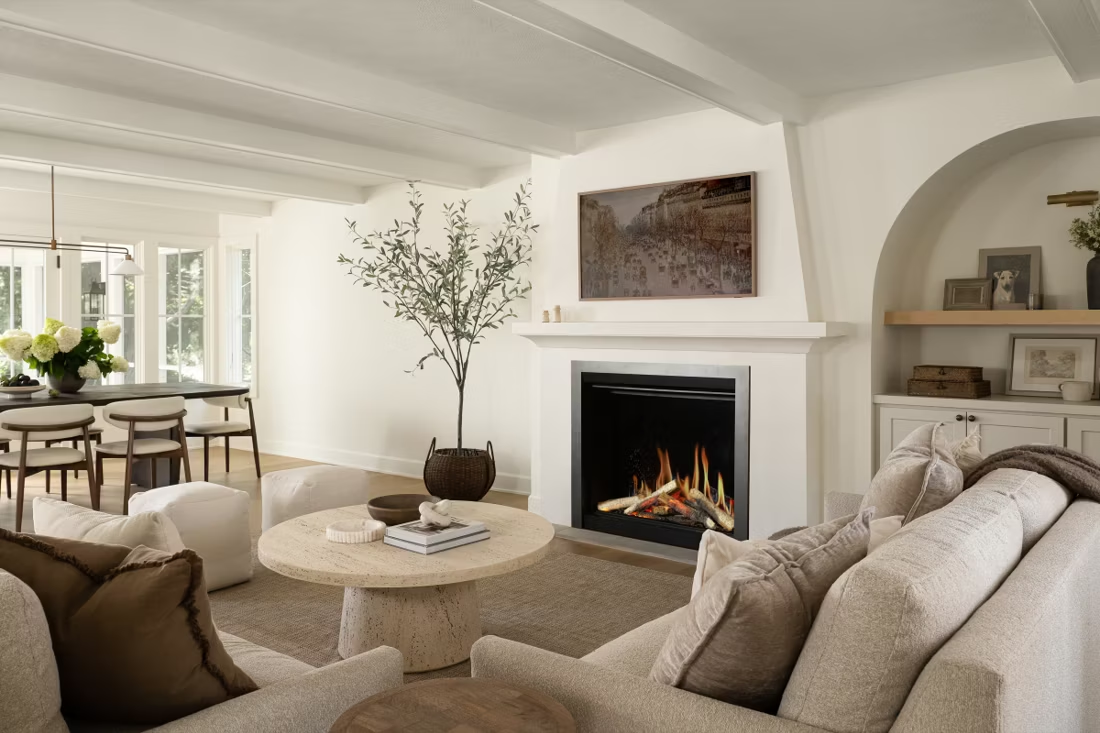
Four fuels. One honest answer for Washington County.
Three steps. No salesperson until you're ready.
Tell us about your project
Your zip code, your situation, and the fuel you're leaning toward—or let the answers point you to one.
See what's actually available
The brands dealers within 100 miles genuinely carry—real options, never a catalog mirage.
Get your dealer & Project Guide
A trusted local dealer, plus the free Project Guide & Parts List that names every component of the job.
Frequently Asked Questions
Which fuel works best in Washington County?
It depends on the home and how much labor you want to put in. Wood is the practical default for a lot of rural Washington County households—oak, hickory, and walnut are abundant locally, firewood costs stay low if you have land or a woodlot, and a wood stove keeps working during a power outage, which matters out in the county's more remote hollows. Gas is mostly propane here rather than piped natural gas, so it's a convenience fuel for households willing to keep a tank filled—instant heat, no wood-splitting. Pellet is a middle path: less labor than wood, and Lignetics and Indeck Energy Services both distribute into this part of Missouri, so supply isn't a problem. Electric works well as a supplemental heater in a bedroom or den, but with winter lows averaging around 21°F, it's rarely anyone's only heat source. Most households here end up pairing wood or propane as primary heat with pellet or electric in secondary rooms.
Do I need a permit to install a fireplace in Washington County?
In most cases, yes, though requirements vary depending on whether you're inside Potosi city limits or out in the unincorporated county. New wood stoves, inserts, gas appliances, and pellet stoves typically require a building permit, and any gas line work should go through a licensed propane installer given how much of the county relies on tank propane rather than piped gas. Since Washington County has no large incorporated cities beyond Potosi, most rural permitting runs through the county courthouse in Potosi rather than a separate city building department. Electric fireplaces usually skip the permit unless you're hardwiring a built-in unit. A local hearth retailer handling your installation will typically pull the permit for you—worth confirming before work starts.
Are there air quality restrictions on wood burning in Washington County?
No. Washington County has no air-quality nonattainment designation and, unlike some Missouri counties closer to the St. Louis metro, no wood-burning advisory program or mandated curtailment days. That means the decision to burn wood on a given winter day comes down to your own home and chimney, not a regional smoke advisory. It's still worth installing an EPA-certified stove for efficiency and lower particulate output—you'll burn less wood for the same heat—but there's no local ordinance forcing that choice here the way there is in some western states.
Can one local hearth retailer handle all four fuel types?
In a county with a population under 4,000, the hearth retail market is small, so most dealers serving Washington County carry a mix rather than every fuel. Expect wood and gas (propane) to be the most common combination, since those are the two dominant heating choices in the rural county outside Potosi. A few dealers stock pellet stoves as well, particularly given the reliable Lignetics and Indeck Energy Services pellet supply in this part of Missouri. Electric fireplaces are more likely to be a secondary line item than a dedicated display. If you're cross-shopping fuels, ask directly what's in stock and installable—in a market this size, showroom inventory can shift.
How does service work in rural parts of Washington County?
Most chimney sweeps, gas techs, and pellet stove technicians serving Washington County are based in or near Potosi and drive out to the surrounding hollows and unincorporated communities, sometimes crossing into neighboring counties for the nearest qualified tech. Expect to schedule a travel fee for calls well outside Potosi, and expect longer lead times in fall as everyone tries to get their chimney swept or gas unit checked before the first cold snap. Booking service in August or September, ahead of the county's typical November-through-February cold stretch, is easier than trying to get an emergency appointment in January.
What's the typical cost range for fireplace installation across all fuel types in Washington County?
Costs run lower here than in metro markets, though ranges still shift by fuel. Wood stove or insert installation: roughly $3,500–$8,000 depending on chimney condition and whether new hearth clearances are needed. Gas fireplace, insert, or stove (propane in most of the county): roughly $4,000–$9,000, with tank setup and line work pushing costs toward the higher end for households without existing propane service. Pellet stove or insert: roughly $3,500–$6,500 for a typical install. Electric fireplace: $200–$2,500 for the unit itself, plus $400–$1,000 in labor for anything beyond a simple plug-in placement. See the county + fuel pages above for retailer-specific pricing.
Does a fireplace add value to my home?
On average, a fireplace adds back to the home about the same amount you spent installing it. Add the monthly savings from heating the rooms you actually use instead of the whole house—often hundreds of dollars a year—and the value case is strong before you even count what a fire does for how your family uses the room.
Wood, gas, pellet, or electric—how do I choose?
Match the fuel to your life, not the other way around. Wood: lowest fuel cost and total power-outage independence, but you're hauling and stacking. Gas: press a button, set a thermostat, no maintenance to speak of. Pellet: wood economics with automatic feeding, in exchange for weekly cleaning and a need for electricity. Electric: plugs in anywhere with honest supplemental heat. Nobody regrets the fuel that fits how they actually live.
What is an in-home preview and do I need one?
It's a visit where a hearth professional measures your space, confirms the model you picked actually works in your home, and walks the specs—framing, gas line, venting, finish work—before anything is ordered. Some details you just can't know until you see the house. Never make a down payment without one; it's the single most-skipped step that burns buyers.
Should the dealer who sells my fireplace also install it?
Ideally, yes. A fireplace project involves vent pipe, gas line, electrical, and often tile or stone. Hire three or four separate trades and you own the liability and the game of telephone between them. One company selling and installing means one accountable party, start to finish—ask about factory training, on-time completion records, and what happens if an inspection fails.
Stove and Fireplace Dealers in Washington County
Listings include WhyFire partner dealers, dealers we have verified as authorized for the brands we recommend, and established local businesses that carry hearth products. Every listing shows which one it is. The ones marked Preferred run on WhyFire's software, so they can show you real pricing and book your appointment right here. No manufacturer pays for placement. How we verify dealers →
Kasten
Ozark Insulation
Victorian Sales
Get matched with a Washington County dealer.
Pick your fuel below and I'll match you with a trusted local dealer serving Washington County, plus a free Project Guide & Parts List—the exact parts, including the vent kit, and the local pro who can actually install it.
Find Your Fireplace →