
Steady, efficient heat for the Ozark hills of Stone County.
With roughly 4,500 heating degree days and winter lows averaging in the low 20s, Stone County doesn't need the marathon burn times a Duluth, MN winter demands—but it does need consistent, low-hassle heat for lake homes, hollows, and hillside cabins from Galena to Kimberling City. Find the right pellet stove or insert, and connect with a trusted local dealer.
Every Project Starts From One of These Five Situations
Consistent warmth without the wood pile.
Stone County sits in the Ozark hill country of southwest Missouri, wrapped around Table Rock Lake and stretching from the county seat in Galena out through Reeds Spring, Crane, Kimberling City, and Branson West. Climate zone 4A means genuinely mixed weather—warm, humid summers and winters that dip into the teens and low 20s, with the occasional ice storm rolling off the plains. At roughly 4,523 heating degree days, it's a far gentler heating season than places like Bismarck, ND or Duluth, MN, but cold enough that a lot of full-time residents and second-home owners around the lake want dependable heat that doesn't require splitting and stacking cordwood every fall.
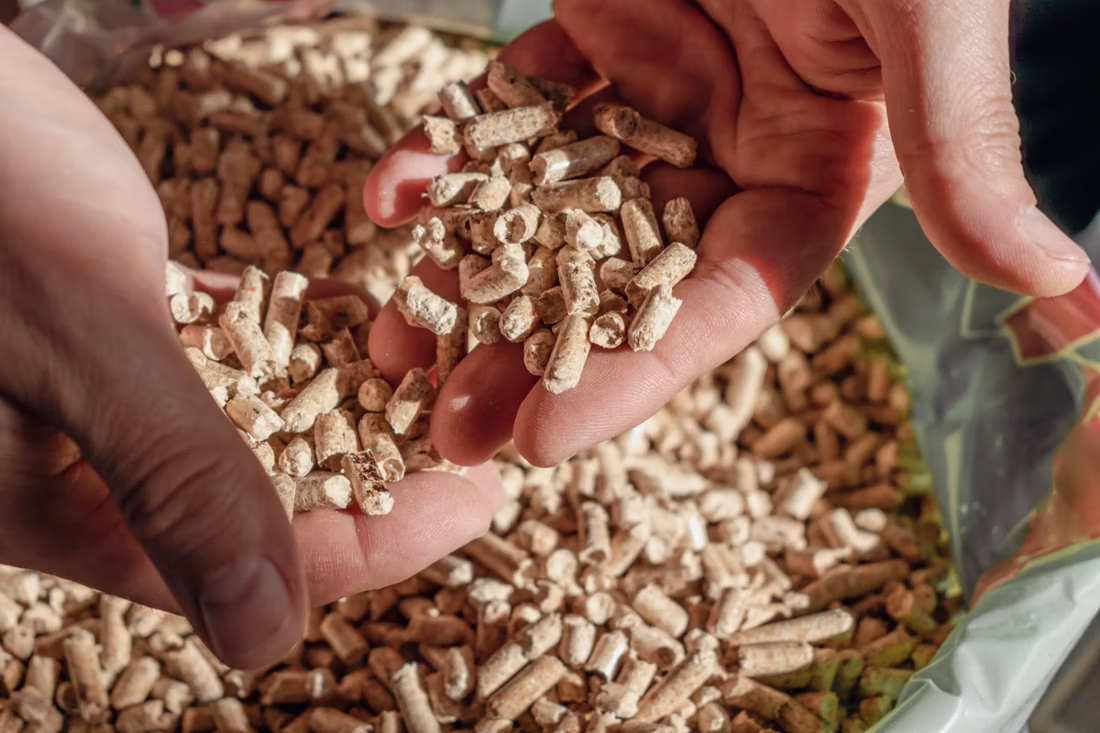
That's where pellet appliances earn their place here. The Ozark hills around Stone County have long supported hardwood logging and milling—oak, hickory, walnut, and maple all grow thick on the ridgelines—and that same regional hardwood stream feeds pellet production from suppliers like Lignetics and Indeck Energy Services. Local dealers can typically keep bagged hardwood pellets in stock rather than special-ordering from out of state. Air quality in the county isn't a constraint either—there's no non-attainment designation or burn-curtailment program here, so a pellet stove or insert runs clean and unregulated beyond standard EPA certification. For a lot of homeowners around Table Rock Lake, that adds up to thermostat-like convenience with a real, visible flame.
Three steps. No salesperson until you're ready.
Tell us about your project
Your zip code, your situation, and the fuel you're leaning toward—or let the answers point you to one.
See what's actually available
The brands dealers within 100 miles genuinely carry—real options, never a catalog mirage.
Get your dealer & Project Guide
A trusted local dealer, plus the free Project Guide & Parts List that names every component of the job.
Frequently Asked Questions
How much does a pellet stove installation cost in Stone County?
Most pellet stove and insert installations run in the $3,000 to $6,000 range, with the low end covering a freestanding stove venting through an existing wall or chimney chase, and the higher end covering a pellet insert dropped into an existing masonry fireplace with a full liner kit. Homes in unincorporated parts of the county—much of the area outside Galena, Reeds Spring, and the other incorporated towns—often see slightly simpler installs since there's less red tape to navigate, but venting, electrical access for the auger and blower, and hearth clearance still need to be done to code regardless of jurisdiction. A local dealer will give you a firm number after seeing the room and chimney situation in person.
What size pellet stove do I need for my home?
With Stone County's roughly 4,500 heating degree days and winter lows averaging in the low 20s, most homes don't need the largest hopper-capacity units built for harsher climates. A small to mid-size pellet stove (rated for 1,000–1,800 sq ft) handles most main living areas, and larger, better-insulated homes or those aiming for whole-house primary heat should look at units rated for 2,000+ sq ft. Lake-area homes with a lot of glass and vaulted ceilings—common around Table Rock Lake—often need to size up a notch compared to a similarly sized ranch house in a hollow. A local dealer can walk your space and give you an actual BTU recommendation rather than a square-footage guess.
Where can I find certified pellet stove installers near me?
Look for dealers whose installers carry NFI (National Fireplace Institute) pellet-specialist certification—it signals they understand hopper placement, auger feed systems, and the direct-vent or PL-vent requirements specific to pellet appliances, which differ from wood stove venting. Given how spread out Stone County is between Galena, Crane, Reeds Spring, and the lake communities, confirm whether a travel charge applies for installs outside a dealer's home base. Pellet appliances have more moving mechanical parts than a wood stove—the auger motor, exhaust blower, and igniter all need to be wired and vented correctly—so this is not a project for a general handyman.
What's the difference between a pellet stove and a pellet insert?
A pellet stove is a freestanding appliance that sits on a hearth pad and vents out a nearby wall or up an existing chimney chase using small-diameter PL vent pipe—it can go almost anywhere with a nearby exterior wall. A pellet insert is built to slide into an existing masonry wood fireplace opening, sealing it up and using the existing chimney (with a proper liner) as the exhaust path. For Stone County homes with an old open masonry fireplace—common in older farmhouses and cabins around the hollows—an insert is often the more natural fit, since it reuses what's already there. Newer construction or rooms without a fireplace usually go with a freestanding stove instead.
Do I need a permit to install a pellet stove in Stone County?
It depends on where in the county you're located. Missouri has no statewide building code, and Stone County itself doesn't enforce a county-wide building permit requirement outside its incorporated cities. Inside city limits—Galena, Reeds Spring, Crane, Kimberling City, and Branson West—check with the city hall, since some do require a permit for new venting or electrical work tied to the install. In unincorporated areas, a permit usually isn't required, but manufacturer installation instructions and NFPA 211 clearances still apply, and your homeowners insurance carrier may want proof of a professional install regardless of what the county requires.
What's the best pellet stove for Stone County's climate?
Because Stone County's winters are moderate compared to a place like Madison, WI or Bismarck, ND, most homeowners don't need a stove built for round-the-clock, sub-zero primary heat—a mid-efficiency unit from a mainstream brand covers the vast majority of homes here just fine. What matters more locally is hopper capacity and ease of loading, since a lot of Stone County residents are running these as supplemental heat in a main living room or as primary heat in a smaller lake cabin. Ask your dealer about auto-ignition models if you want set-it-and-forget-it operation, and confirm the unit is rated to burn the hardwood pellet blends actually stocked locally rather than premium softwood pellets that may need to be special-ordered.
Where can I buy pellets in or near Stone County?
Hardwood pellets from producers like Lignetics and Indeck Energy Services are the most commonly stocked options at dealers and farm supply stores serving the Stone County and Table Rock Lake area, since both companies draw on the same regional hardwood mill byproduct that comes from all the oak, hickory, and walnut harvested in the Ozarks. Bagged pellets typically run in the $5–$7 per 40-lb bag range depending on the season and retailer, which works out to roughly $250–$300 per ton if you buy by the pallet—buying a full ton or more ahead of the season is the standard way to lock in a price before winter demand pushes it up.
How much maintenance does a pellet stove need?
Pellet stoves need more routine attention than a gas unit but less than a wood stove chimney sweep. Plan on emptying the ash pan every few days during regular use, cleaning the burn pot and glass weekly, and vacuuming the hopper and auger area monthly. An annual professional service—checking the exhaust blower, auger motor, gaskets, and vent pipe—is worth scheduling before the season starts, typically running $150–$250 locally. Skipping the annual service is the most common reason pellet stoves start jamming or losing efficiency by their third or fourth winter.
Pellet stove vs. wood stove—which is right for my home?
Wood is essentially free heat if you're already managing hardwood timber on your own property—oak, hickory, and walnut are all abundant around Stone County—and a wood stove keeps working during a power outage, which matters when an ice storm knocks out lines around the lake. A pellet stove trades that off for real convenience: load the hopper, set the thermostat, and walk away, with a cleaner burn and far less ash and creosote to manage—but it needs continuous electricity to run the auger and combustion blower, so it goes dark the moment the power does unless you add a battery backup. For a full-time residence where you want low-effort daily heat, pellet usually wins. For a cabin or second home where storm-related outages are a real concern, many Stone County homeowners keep a wood stove as backup even if pellet is their primary.
What's the difference between an insert and a zero-clearance fireplace?
An insert is a fireplace that slides into a pre-existing wood-burning fireplace—if you don't have one, there's nothing to insert it into. A zero-clearance fireplace is built into a framed wall, which makes it the answer for remodels and new construction. Simple test: existing masonry fireplace means insert; blank or framed wall means zero-clearance.
Can a pellet stove heat a whole house?
It genuinely can. I burned a pellet stove as my only heat source for years after a furnace died, and it kept the entire house warm. Pellets feed automatically from a hopper, so you get wood-heat economics with thermostat-style control. Two honest caveats: it needs weekly cleaning during the season, and most models need electricity to run—ask about battery backup if outages are a concern.
Does a fireplace add value to my home?
On average, a fireplace adds back to the home about the same amount you spent installing it. Add the monthly savings from heating the rooms you actually use instead of the whole house—often hundreds of dollars a year—and the value case is strong before you even count what a fire does for how your family uses the room.
What is an in-home preview and do I need one?
It's a visit where a hearth professional measures your space, confirms the model you picked actually works in your home, and walks the specs—framing, gas line, venting, finish work—before anything is ordered. Some details you just can't know until you see the house. Never make a down payment without one; it's the single most-skipped step that burns buyers.
Pellet Brands Stocked Around Stone County
Manufacturers will point you to the nearest stocking dealer.
Find your pellet stove in Stone County.
Tell us a bit about your home near Table Rock Lake or the surrounding hills, and we'll match you with a trusted local dealer and send over a free Project Guide & Parts List—the exact parts, including the vent kit, for your pellet stove or insert project.
Find Your Fireplace →