
Add real fireplace warmth without the chimney, in Stone County.
From lake cabins along Table Rock Lake to homes in Galena and Reeds Spring, electric fireplaces give Stone County homeowners a clean, no-venting way to add heat and ambiance. Find the right unit and connect with a trusted local dealer.
Every Project Starts From One of These Five Situations
Simple heat for lake houses, cabins, and everyday living.
Stone County sits in the Missouri Ozarks along the shoreline of Table Rock Lake, with Galena as the county seat and Reeds Spring and Branson West anchoring the northern part of the county. Winters here are moderate compared to the northern Plains—climate zone 4A, a moderate winter heating load, and an average winter low near 22°F. It's a real heating season, but nothing like Bismarck ND or Duluth MN. A lot of Stone County's housing stock is seasonal or vacation property around the lake, plus older homes and cabins with existing wood fireplaces that owners want to modernize without tearing into a chimney.
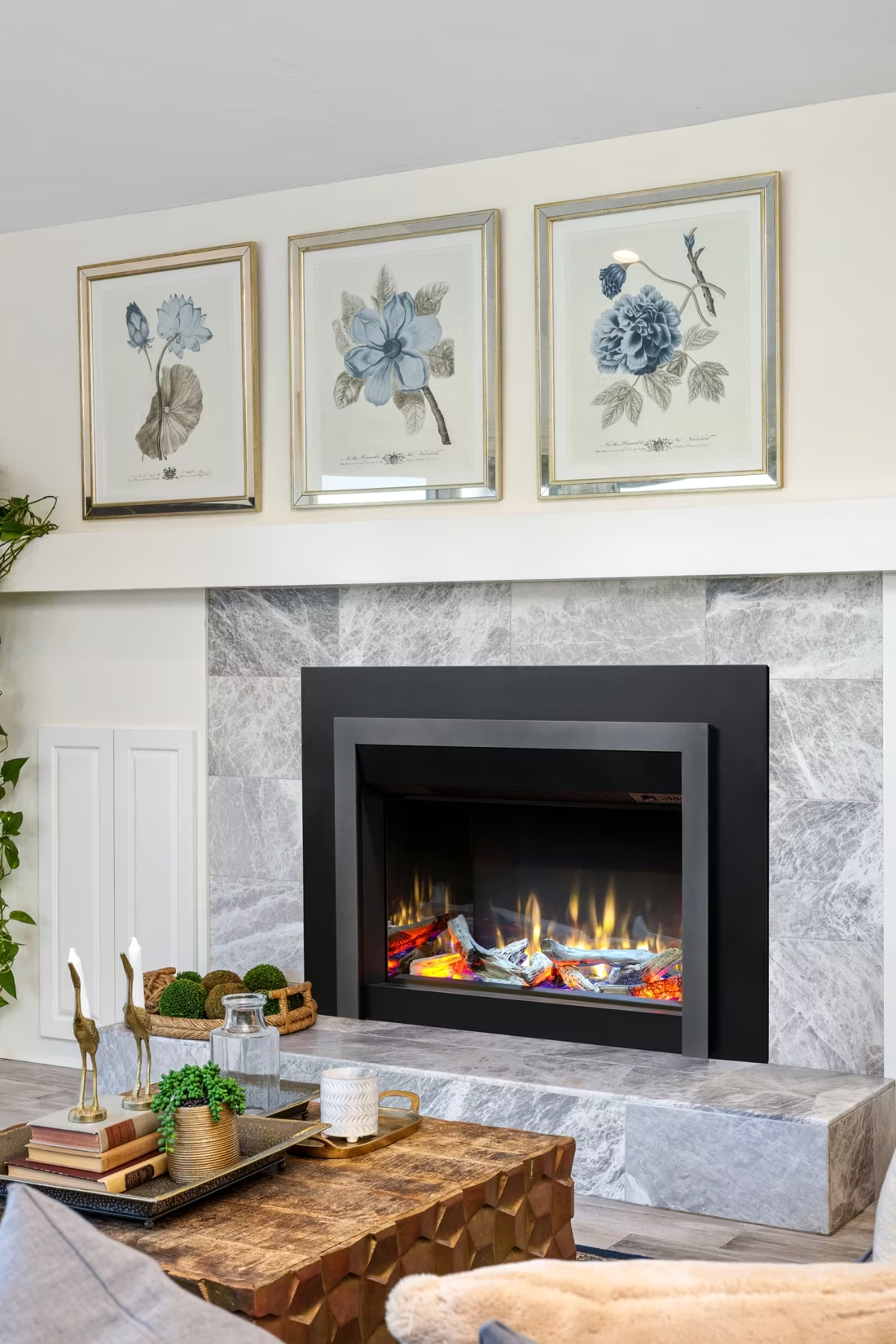
That mix is exactly where electric fireplaces earn their place. There's no flue, no gas line, and no combustion byproducts to vent, which makes them a practical fit for lake cabins, finished basements, additions, and rental properties where running new venting isn't realistic or worth the cost. Power in most of Stone County comes through White River Valley Electric Cooperative, and a plug-in or 120V-hardwired electric unit draws modestly compared to central heat—useful as supplemental zone heat in a den, bedroom, or lake-house living room during the shoulder seasons when firing up the whole-house system feels like overkill.
Three steps. No salesperson until you're ready.
Tell us about your project
Your zip code, your situation, and the fuel you're leaning toward—or let the answers point you to one.
See what's actually available
The brands dealers within 100 miles genuinely carry—real options, never a catalog mirage.
Get your dealer & Project Guide
A trusted local dealer, plus the free Project Guide & Parts List that names every component of the job.
Frequently Asked Questions
How much does an electric fireplace installation cost in Stone County?
Most electric fireplace projects in Stone County run $400 to $2,500. A plug-in insert or wall-mount unit on the low end needs no electrical work beyond an existing outlet. Built-in electric fireplaces or larger wall units often call for a dedicated 120V or 240V circuit, which pushes the cost toward the middle and upper end once a licensed electrician is involved. Converting an existing wood-burning fireplace to an electric insert is usually one of the more affordable projects in the county since it uses the opening you already have—no chimney work, no gas line, no masonry changes.
What size electric fireplace do I need for my home?
Electric fireplaces are built for supplemental zone heat, not whole-home heating—a typical 1,500-watt unit puts out around 5,000 BTU, enough to noticeably warm a single room in the 250-400 square foot range. For a Table Rock Lake cabin or a finished basement in Reeds Spring or Galena, that's usually plenty to take the edge off during shoulder-season evenings. For larger open living areas common in newer lake homes, a wider linear unit or a model with a higher-wattage heater will cover more ground, but you'll still want your central system as the primary heat source through the coldest stretch of a Stone County winter.
Do I need a permit or an electrician to install an electric fireplace in Stone County?
A simple plug-in electric fireplace or insert generally doesn't require a permit—it's no different from plugging in a space heater. Built-in units that need a new dedicated circuit are electrical work, and depending on whether the property is inside Galena, Reeds Spring, Branson West, or unincorporated Stone County, that work may need to go through the applicable building department and be pulled by a licensed electrician. Most local dealers either employ a licensed electrician or coordinate with one as part of the installation, so homeowners typically don't have to manage the permitting themselves.
What's the difference between an electric insert, an electric fireplace, and an electric stove?
An electric insert is sized to slide into an existing masonry or prefab firebox—a common upgrade for Stone County homes with an old, rarely-used wood fireplace. A built-in electric fireplace is a wall unit, often recessed and framed like a TV mount, popular in newer construction and lake-house remodels where there's no existing firebox. An electric stove is a freestanding cabinet-style unit that mimics a wood stove's look without any venting requirement—a good fit for cabins or additions where you want the visual of a stove but not the chimney.
Can an electric fireplace be my main source of heat?
Not in most Stone County homes. With a moderate winter heating load and winter lows regularly near freezing, a central heating system—propane furnace, heat pump, or electric furnace—is still doing the real work through the winter. Electric fireplaces are best used as zone heat for a specific room, or as a comfort feature for a lake cabin that's occupied seasonally and doesn't need a full furnace running around the clock. Where they shine is exactly that in-between use: knocking the chill off a lake house on a cool spring weekend without firing up the whole system.
What's the best electric fireplace for a lake house or rental property?
For Table Rock Lake rentals and seasonal cabins, look for units with a remote or app-based thermostat, an adjustable flame-only mode (heat off, ambiance on—useful in the humid Ozark summer when you still want the visual without added warmth), and a sturdy housing rated for less-supervised use by renters or guests. Because there's no open flame or combustion byproducts, electric units are also one of the lower-risk fireplace options for a property you don't occupy full-time. Local dealers carrying lines like those distributed alongside Lignetics and Indeck Energy Services pellet products in the region can point you toward models suited to rental or seasonal use.
How much does it cost to run an electric fireplace in Stone County?
Running costs depend on your rate through White River Valley Electric Cooperative or your local provider, but a typical 1,500-watt unit run on high for a few hours an evening adds a modest amount to a monthly bill—generally far less than heating an entire lake house with central heat for the same hours. That's part of why electric fireplaces work well as supplemental heat in Stone County: you get warmth in the room you're actually using without paying to heat the whole house.
Electric vs. wood—which is right for my Stone County home?
Wood has deep roots here—oak, hickory, walnut, and maple are all common Ozark species, and a lot of older Stone County homes still have a working wood fireplace or stove. Wood offers real heat output and works without power during outages, which matters on rural stretches of the county. Electric offers none of the upkeep—no cutting, stacking, ash cleanup, or chimney sweeping—and it's a much better fit for a lake cabin or rental where nobody wants to manage a woodpile between visits. Plenty of homeowners keep the wood fireplace for ambiance and backup heat while adding an electric insert or stove somewhere else in the house for everyday convenience.
Electric vs. gas—which makes more sense for a lake cabin?
Propane is the common alternative fuel in rural stretches of Stone County where natural gas isn't run, and a propane fireplace delivers stronger, more consistent heat output than an electric unit. But propane means a tank, a gas line, and venting considerations. Electric needs none of that—just power, which every lake property already has. For a cabin used mainly on weekends or in the warmer months, where the goal is ambiance plus a bit of supplemental warmth rather than serious heat output, electric is usually the simpler and less expensive path. For a home used as a primary residence through the full Ozark winter, propane is worth the extra installation complexity for the heat it delivers.
Can I put a TV above my fireplace?
Yes—with an asterisk. Fireplaces are hot and TVs don't like heat. Either put a mantel between them to deflect rising warmth, or choose a fireplace with heat-management technology that creates a cool zone on the wall above—the wall stays around 125 degrees, barely warm, while the room still gets full heat. If you like clean lines and don't want a mantel, heat management is the answer.
Do electric fireplaces actually produce heat?
Yes—most put out around 4,800–5,000 BTUs from a standard outlet, which comfortably warms a bedroom, office, or den as a comfort-zone heater. What they won't do is carry a whole house the way wood, gas, or pellet can. Think of electric as ambiance-first with honest supplemental heat: flames on with no heat in July, flames plus warmth in January.
Can a fireplace actually lower my heating bill?
Yes—by creating a comfort zone. A furnace heats every square foot of the house just to warm the one room you're in; a gas fireplace on low burns roughly a sixth of the gas a typical furnace does. Set the furnace around 55–60 degrees as a baseline, then heat the rooms your family actually uses. Families who heat this way commonly save $20–$60 a month.
What is an in-home preview and do I need one?
It's a visit where a hearth professional measures your space, confirms the model you picked actually works in your home, and walks the specs—framing, gas line, venting, finish work—before anything is ordered. Some details you just can't know until you see the house. Never make a down payment without one; it's the single most-skipped step that burns buyers.
Find your electric fireplace in Stone County.
Tell us a bit about your home or lake property and we'll match you with the right electric fireplace, insert, or stove—plus a free Project Guide & Parts List and a trusted local dealer to install it.
Find Your Fireplace →