
Pellet heat is the exception, not the rule, in St. Peters.
Most homes in St. Charles County heat with natural gas or electric. If you still want a pellet stove—for a sunroom, a rural property, or backup heat during an ice storm—we'll connect you with a local dealer who can tell you straight whether it makes sense.
Every Project Starts From One of These Five Situations
Natural gas, not pellet fuel, heats most St. Peters homes.
St. Peters sits in climate zone 4A with a moderate winter heating season and an average winter low near 21°F—cold enough for real heating demand, but nowhere near the biomass-heavy climates of the Upper Midwest or Rockies. Union Electric Co. (Ameren Missouri) and Cuivre River Electric Cooperative serve the area's electric load, and natural gas lines run through nearly every subdivision built since the 1970s. That infrastructure is exactly why pellet stoves never became a default heating choice here the way they have in colder, more rural parts of the country—gas furnaces and gas fireplace inserts already do the job most homeowners want done.
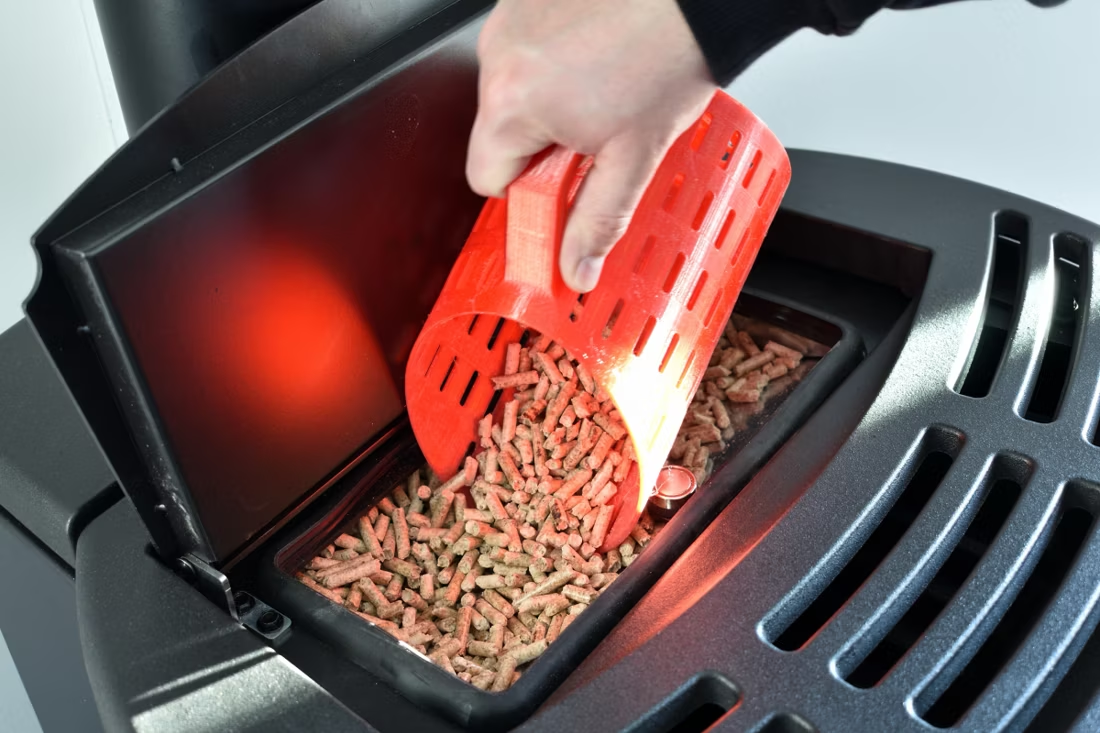
That said, a pellet stove still solves specific problems for specific households. Homeowners on acreage outside city limits, where a gas line was never run, sometimes choose a pellet stove or insert as a standalone heat source. Others want a hopper-fed unit in a den or sunroom for zone heat without opening a wall for gas piping. And some simply like that pellets—often milled from oak, hickory, and other regional hardwood byproduct through suppliers like Lignetics—burn cleaner and produce less ash than cordwood, without asking the homeowner to split, stack, or season anything. It's a smaller market here than gas, but it's a real one, and a local dealer can tell you honestly whether your situation is one where pellet makes sense.
Three steps. No salesperson until you're ready.
Tell us about your project
Your zip code, your situation, and the fuel you're leaning toward—or let the answers point you to one.
See what's actually available
The brands dealers within 100 miles genuinely carry—real options, never a catalog mirage.
Get your dealer & Project Guide
A trusted local dealer, plus the free Project Guide & Parts List that names every component of the job.
Frequently Asked Questions
How much does a pellet stove installation cost in St. Peters?
Because pellet installs are less common here than gas conversions, there isn't a deep local pricing history the way there is for gas fireplaces. Based on typical installs across the greater St. Louis region, a freestanding pellet stove with new venting through an exterior wall generally runs $3,000 to $6,000. A pellet insert set into an existing masonry fireplace, using the existing chimney chase for the vent pipe, often lands in the $4,000 to $7,000 range. Get a firm number from a local dealer after they've seen your home—venting path and electrical access (pellet stoves need a standard outlet) are the two biggest cost swings.
Are pellet stoves even a good fit for a St. Peters home?
For most St. Peters homes, no—not as primary heat. With natural gas already piped to the house in most neighborhoods, a gas insert or gas fireplace typically delivers more heat for less installed cost and no fuel storage headache. Pellet stoves make more sense in specific cases: homes on the edge of St. Charles County without a gas line, detached workshops or sunrooms where running new gas piping is impractical, or households that specifically want a lower-ash, self-feeding alternative to cordwood. A local dealer will usually tell you upfront if gas is the better call for your situation—that's the point of getting a real assessment instead of guessing from a catalog.
Where can I buy wood pellets near St. Peters?
Pellets aren't stocked in the volume you'd see in Minnesota or Wisconsin, but they're available. Lignetics distributes hardwood pellets throughout the Midwest and is carried by several regional hearth and hardware retailers, and Indeck Energy Services supplies biomass pellet product into the broader St. Louis market as well. Expect to pay somewhere in the $230–$300 per ton range for bagged premium hardwood pellets at retail, though because turnover is lower here than in pellet-heavy states, it's worth confirming stock before winter rather than assuming a store has pallets on hand in January.
Do I need a permit to install a pellet stove in St. Peters?
Yes. A pellet stove or insert installation requires a building permit, typically through the City of St. Peters Building Division if you're inside city limits, or St. Charles County if your property falls outside them. The permit covers the venting termination, hearth clearance, and electrical connection for the unit's auger and blower. Most established hearth dealers pull this permit as part of the installation, which is one good reason to work with a dealer who regularly does pellet work rather than a general handyman—pellet venting rules differ from wood-stove chimney requirements and not every contractor is current on them.
Will my pellet stove work if the power goes out?
No—and this matters more in St. Peters than people expect, because St. Charles County gets its share of winter ice storms that knock out power from Ameren Missouri or Cuivre River Electric Cooperative for hours or occasionally days. A pellet stove's auger, igniter, and combustion blower all run on standard household electricity; without power, the stove simply won't feed fuel or run. Some homeowners pair a pellet stove with a small battery backup or generator specifically to keep it running through an outage. If backup heat during outages is your main goal, a wood-burning stove or a battery-backed gas insert is a more dependable choice.
Pellet stove or gas insert—which makes more sense for my St. Peters home?
For most homes already served by natural gas, a gas insert or gas fireplace wins on installed cost, heat output, and long-term convenience—you're not buying, storing, or hauling fuel bags, and modern direct-vent gas units can even run during a power outage with battery-backup ignition. A pellet stove pulls ahead when there's no gas line to the property, when you want the specific look and feel of a self-feeding hopper stove, or when you'd rather buy bagged hardwood pellets than deal with propane delivery on a rural lot in St. Charles County. If you're on Ameren Missouri or Cuivre River Electric Cooperative's grid with gas already run to the house, ask a local dealer to walk through both options—the answer is usually gas, but not always.
Pellet stove or wood stove—is either common in St. Peters?
Honestly, neither is standard here. St. Peters' mild-to-moderate climate (4A, a moderate winter heating season) and near-universal natural gas access mean most homeowners never consider biomass heat at all. Between the two, wood stoves show up slightly more often on larger rural lots where oak, hickory, walnut, or maple firewood is easy to source and split. Pellet stoves are chosen instead when a homeowner wants the convenience of thermostat-like operation and lower ash without processing cordwood—but wants to skip a masonry chimney and full-time wood handling. Both are minority choices in this market, and a dealer who installs both regularly is worth seeking out.
Can a pellet stove go into my existing fireplace?
If you have an existing masonry fireplace, a pellet insert can often be set into the firebox opening, using the chimney chase to route a smaller vent pipe up and out, or straight out the back if the chimney configuration doesn't suit it. Homes without an existing fireplace need a freestanding pellet stove vented horizontally through an exterior wall, which is usually simpler and cheaper than adding new masonry. Either way, the unit needs a nearby standard electrical outlet for the auger and blower—something a dealer will check during the home visit before quoting the job.
How much maintenance does a pellet stove need?
Pellet stoves need more frequent attention than a gas insert but less than a wood stove chimney sweep. Plan on emptying the ash pot every few days during regular use, cleaning the burn pot and heat exchanger tubes weekly during the season, and having the unit professionally serviced once a year—typically before the fall heating season starts—to check the auger motor, blower, and vent for buildup. Because pellet-specific service techs are less concentrated in the St. Louis metro than gas or HVAC technicians, it's worth confirming with your installing dealer that they offer ongoing service, not just the sale.
How often does a pellet stove need cleaning?
A clean pellet stove is a happy pellet stove. Plan on cleaning the burn pot about once a week when you're burning regularly—ash and clinkers gum up the air holes just like a pellet barbecue. Most pellet stove problems trace back to skipped cleaning that nobody explained up front. Some designs make it easy with a trapdoor burn pot: pull a lever and the gunk drops into the ash pan.
What's the difference between an insert and a zero-clearance fireplace?
An insert is a fireplace that slides into a pre-existing wood-burning fireplace—if you don't have one, there's nothing to insert it into. A zero-clearance fireplace is built into a framed wall, which makes it the answer for remodels and new construction. Simple test: existing masonry fireplace means insert; blank or framed wall means zero-clearance.
Can a fireplace actually lower my heating bill?
Yes—by creating a comfort zone. A furnace heats every square foot of the house just to warm the one room you're in; a gas fireplace on low burns roughly a sixth of the gas a typical furnace does. Set the furnace around 55–60 degrees as a baseline, then heat the rooms your family actually uses. Families who heat this way commonly save $20–$60 a month.
What is an in-home preview and do I need one?
It's a visit where a hearth professional measures your space, confirms the model you picked actually works in your home, and walks the specs—framing, gas line, venting, finish work—before anything is ordered. Some details you just can't know until you see the house. Never make a down payment without one; it's the single most-skipped step that burns buyers.
Nearby Dealers
Hearth shops serving St. Peters and the surrounding area.
Pellet Brands Stocked Around St. Peters
Manufacturers will point you to the nearest stocking dealer.
Find your pellet stove in St. Peters.
Tell us about your home and why pellet heat interests you, and we'll match you with a trusted local dealer and a free Project Guide & Parts List—a straight-talk plan for your project, including venting parts and whether pellet or gas is really the better fit.png
Find Your Fireplace →