
Automated warmth for Saline County's long, cold stretches.
With a long, cold heating season and winter lows that settle into the high teens, Saline County homes from Marshall to Slater to Sweet Springs need heat that keeps running without someone tending a fire every few hours. A pellet stove does that. Find the right unit and connect with a trusted local dealer.
Every Project Starts From One of These Five Situations
Convenience heat for Missouri River farm country.
Saline County sits along the Missouri River in a landscape of row crops, bottomland timber, and small towns—Marshall as the county seat, Slater and Sweet Springs to the east, historic Arrow Rock along the river bluffs. Zone 4A winters here bring a 19-degree average low and a long, cold heating season, enough cold to make a serious dent in a propane or electric bill if a home is relying on those alone. Oak, hickory, walnut, and maple are the backbone of the local woodlot, and plenty of Saline County households still burn cordwood—but a growing number are adding or switching to pellet stoves for the parts of the season when nobody has time to split and haul.
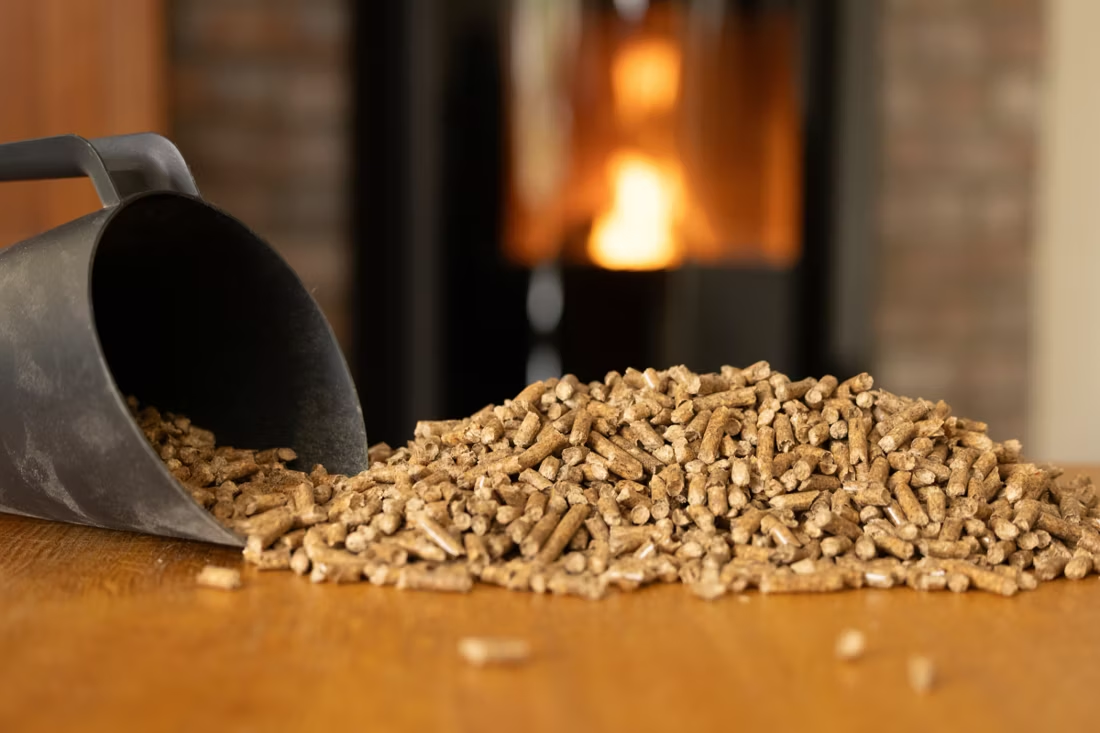
Saline County has no air quality non-attainment designation and no winter burn curtailment periods, so the appeal of pellet heat here isn't regulatory—it's practical. A hopper full of pellets from a brand like Lignetics or Indeck Energy Services runs a thermostat-controlled stove for a full day with no tending, no splitting, and a fraction of the ash a wood stove produces. For a working farm household or anyone who wants real supplemental heat without the daily wood-stove routine, that trade-off is the whole story. The right dealer will also tell you honestly where pellet doesn't fit—mainly, homes that lose power often and want a heat source that runs with no electricity at all.
Three steps. No salesperson until you're ready.
Tell us about your project
Your zip code, your situation, and the fuel you're leaning toward—or let the answers point you to one.
See what's actually available
The brands dealers within 100 miles genuinely carry—real options, never a catalog mirage.
Get your dealer & Project Guide
A trusted local dealer, plus the free Project Guide & Parts List that names every component of the job.
Frequently Asked Questions
How much does a pellet stove installation cost in Saline County?
Most pellet stove installations in Saline County run in the $3,000 to $6,500 range, with the spread depending on the stove model, whether you're venting through an existing masonry chimney with a liner or running new PL vent pipe through an exterior wall, and whether the hearth pad needs upgrading for code clearance. A pellet insert going into an existing fireplace tends to land on the lower end since it uses the chimney you already have. New installations in homes without any existing venting—common in older Marshall and Slater farmhouses—run a bit higher once wall penetration and venting materials are factored in. A local dealer will give you a firm number after seeing the space.
What size pellet stove do I need for my home?
Sizing depends on square footage, ceiling height, and how well-insulated the home is—and that last factor matters a lot in Saline County, where a good number of homes are older farmhouses with less insulation than newer construction. As a rough guide: smaller units (up to 1,000 sq ft) suit a single room or a supplemental-heat setup, while larger units (1,500-2,200 sq ft) can carry a whole main living area through a stretch of single-digit nights. Given the county's long, demanding heating season, it's usually smarter to size toward the upper end of a stove's rated range rather than the low end—a stove running near its max capacity all winter wears out faster than one with some headroom. A local dealer will walk your space and give you a specific recommendation.
Where can I find certified pellet stove installers near me?
Look for installers with NFI (National Fireplace Institute) certification, which covers pellet-specific venting and clearance requirements—pellet stoves vent differently than wood stoves and the rules aren't identical. Trusted local dealers serving Saline County handle Marshall, Slater, Sweet Springs, and the rural areas around Arrow Rock and Gilliam without issue, though homes further from Marshall may see a modest travel charge added to the quote. Having the same company handle both the sale and the install is worth prioritizing—it keeps warranty coverage and code compliance under one roof instead of split between a retailer and a separate contractor.
Does a pellet stove work if the power goes out?
This is the honest tradeoff to know before buying: no, not without a backup plan. A pellet stove's auger, igniter, and blower all run on electricity, so a power outage shuts it down even with a full hopper. In rural Saline County, where ice storms and summer line damage can knock out power for a stretch, that matters. Some homeowners pair a pellet stove with a small battery backup or a portable generator sized to run the stove's low electrical draw, which keeps the heat going through most outages. If backup heat during outages is the priority over convenience, a wood stove burning local oak or hickory is the more reliable choice—plenty of Saline County homes run both, pellet for daily convenience and wood as the fallback.
Do I need a permit to install a pellet stove in Saline County?
Most permanently installed pellet stoves and inserts require a building permit through the Saline County building department, or through the applicable city office if you're inside Marshall, Slater, or another incorporated town. There's no air quality non-attainment designation covering Saline County, so unlike some parts of the country, there are no seasonal burn curtailment periods to plan around—you can run a pellet stove whenever you want without checking an air quality advisory first. Most local dealers handle the permit paperwork as part of the installation.
What's the best pellet stove for Saline County's winters?
For a county with a long, cold heating season, look for a stove with a large hopper (40-plus pounds) so it can run a full overnight cycle without a refill, and a proven auger feed system—established brands like Harman, Quadra-Fire, and Englander are common choices among local dealers and have a long track record in Midwest cold. For fuel, Lignetics and Indeck Energy Services both distribute pellets into this part of Missouri and are widely stocked at regional dealers and farm supply stores, so sourcing fuel through the winter isn't a concern. A local dealer can match hopper size and BTU output to your specific square footage.
How often does a pellet stove need to be cleaned and serviced?
Pellet stoves need less maintenance than wood stoves, but they're not maintenance-free. Plan on cleaning the burn pot and ash pan weekly during heavy use, a full glass and hopper cleaning monthly, and a professional service—checking the auger motor, exhaust blower, and venting for buildup—once a year, typically before the season starts. Annual venting inspections matter here too: even though pellet venting is smaller-diameter than a wood chimney, blocked or corroded vent pipe is still a real safety issue. Local dealers who sell pellet stoves generally offer this service directly.
Where can I buy pellet fuel in Saline County?
Lignetics and Indeck Energy Services both distribute wood pellets into this region of Missouri, and bags are typically available through local hearth dealers and farm supply retailers in and around Marshall. Pellets run roughly $220 to $300 per ton depending on brand and season, and buying a full season's supply (typically 2 to 3 tons for a primary-heat home, less for supplemental use) before cold weather hits is the standard approach, since demand and price both tend to rise once winter sets in. Buying in bulk from a local dealer is usually cheaper per bag than picking up a few at a time.
Pellet stove vs. wood stove—which is right for my Saline County home?
Wood stoves burning local oak, hickory, walnut, or maple keep working with no electricity, which matters during the ice storms that occasionally knock out power in rural Saline County, and fuel can be self-sourced from a woodlot at little cost. Pellet stoves trade that off for real convenience—a thermostat-controlled hopper feed, far less ash, and no splitting or stacking—but they stop running the moment the power does, unless paired with a battery backup. For a primary residence with reliable grid power, pellet is usually the easier day-to-day choice. For a farm property that regularly loses power, or a household that already has a woodlot and enjoys the work, wood still makes a strong case. A number of local homes run both.
How often does a pellet stove need cleaning?
A clean pellet stove is a happy pellet stove. Plan on cleaning the burn pot about once a week when you're burning regularly—ash and clinkers gum up the air holes just like a pellet barbecue. Most pellet stove problems trace back to skipped cleaning that nobody explained up front. Some designs make it easy with a trapdoor burn pot: pull a lever and the gunk drops into the ash pan.
Why is a fireplace insert so efficient?
An insert does two things: it seals the chimney completely, so you stop losing air you already paid to heat, and it radiates warmth into the room through the firebox and glass. Most add a heat-exchange fan that pulls cool room air underneath, wraps it around the hot firebox, and pushes it back out warm. Your home is more efficient before you've even lit the first fire.
What is an in-home preview and do I need one?
It's a visit where a hearth professional measures your space, confirms the model you picked actually works in your home, and walks the specs—framing, gas line, venting, finish work—before anything is ordered. Some details you just can't know until you see the house. Never make a down payment without one; it's the single most-skipped step that burns buyers.
How much should I budget for a fireplace?
For an average home—covering the fireplace, the vent pipe, and basic installation—a budget between $3,900 and $5,500 gives you a lot of options across wood, gas, and pellet. By the time you add finish work, gas line, and electrical, the average complete installation lands between $5,000 and $12,000 all-in. In a remodel or new build, a good rule is to put about 2.5% of the total project cost toward the fireplace.
Stove and Fireplace Dealers in Saline County
Pellet Brands Stocked Around Saline County
Manufacturers will point you to the nearest stocking dealer.
Find your pellet stove in Saline County.
Tell us about your home and heating goals, and we'll match you with a trusted local dealer and send over a free Project Guide & Parts List—the exact parts, including the vent kit, for your pellet stove project in Saline County.
Find Your Fireplace →